
Commercial Sod Installation Irvine CA
for Office Parks, HOA Common Areas, and Multifamily Lawns
On a commercial property, a lawn is rarely replaced because someone simply wants fresh grass. It is replaced because a courtyard has gone patchy in front of tenants, a recreation lawn at an apartment community has worn down to dirt along the paths people actually walk, or an HOA board has fielded one too many complaints about a common area that never seems to recover. Commercial Sod Installation Irvine CA projects usually begin with that kind of decision: the turf has stopped responding to maintenance, and the property needs a planned replacement rather than another season of patching.
We install new natural grass lawns for commercial properties across Irvine, including office parks and professional campuses, retail centers, multifamily communities, and HOA-managed common areas. The work itself is familiar: measure the area, remove the old turf, prepare the soil and grade, confirm the irrigation, and lay sod with tight seams and firm soil contact. What makes a commercial project different is everything around that work. Tenants still need to reach their suites, residents still walk their dogs, deliveries still arrive, and someone on your side has to approve the scope, the schedule, and the budget.
This page is written for the property owners, facility managers, community managers, and board members who make those decisions. It covers when commercial lawn replacement in Irvine makes sense, what a site assessment should reveal before anything is ordered, how turf is chosen, how installation is scheduled around an occupied property, and how the new lawn is handed to your maintenance team. If you are a homeowner, our page on general sod installation in Irvine is the better starting point. For an overview of how we approach turf projects at every property type, see our commercial sod installation services.

Free Estimates for Commercial Lawn Replacement in Irvine
Tell us about the lawn areas you are planning to replace, and we will walk the site, measure, check the irrigation, and give you a written scope at no cost. Call (888) 601-1117 or email info@landscaper-near-me.com.
When Does Commercial Lawn Replacement in Irvine Make More Sense Than Another Repair?
Replacement makes sense when the turf keeps failing in the same places after the obvious fixes have been tried. If the irrigation has been adjusted, the mowing height corrected, and fertilization kept on schedule, yet the same areas thin out every summer, the problem is usually underneath the grass or in how the area is used. Overseeding and spot patching can carry a lawn for a while, but they rarely solve a lawn that is mismatched to its site.
A few patterns tend to push a property toward a full commercial lawn renovation with sod:
- More of the lawn is thin, weedy, or bare than healthy, so patching would mean replacing most of it piece by piece anyway.
- Several grass types have crept in over the years, leaving a mottled surface that never looks uniform no matter how it is maintained.
- The lawn was installed over poorly prepared soil, and compaction or uneven grade has become the limiting factor.
- The way the space is used has changed. A lawn that was once mostly visual now carries daily foot traffic, events, or pets.
Three Irvine Situations We Plan Around
Consider a shared courtyard between two office buildings. It looks fine from the parking lot, but the center has worn thin where employees cut across at lunch, and the strip along the north-facing building wall never filled in at all. Replacing the whole courtyard with the same grass would repeat both failures. The better plan may combine a more wear-tolerant turf in the open center with a different treatment along the shaded edge.
At a multifamily community, the recreation lawn near the pool or clubhouse often takes the hardest use on the property. Residents gather there, children play there, and pets cross it several times a day. Replacement there is as much about timing and access as it is about the sod itself.
In an HOA common area, the challenge is often scale and approval. A board may want to replace a long greenbelt in sections over several budget cycles, which means each phase has to blend visually with the next and with turf that is staying in place for now.
What Should a Site Assessment Uncover Before New Sod Is Ordered?
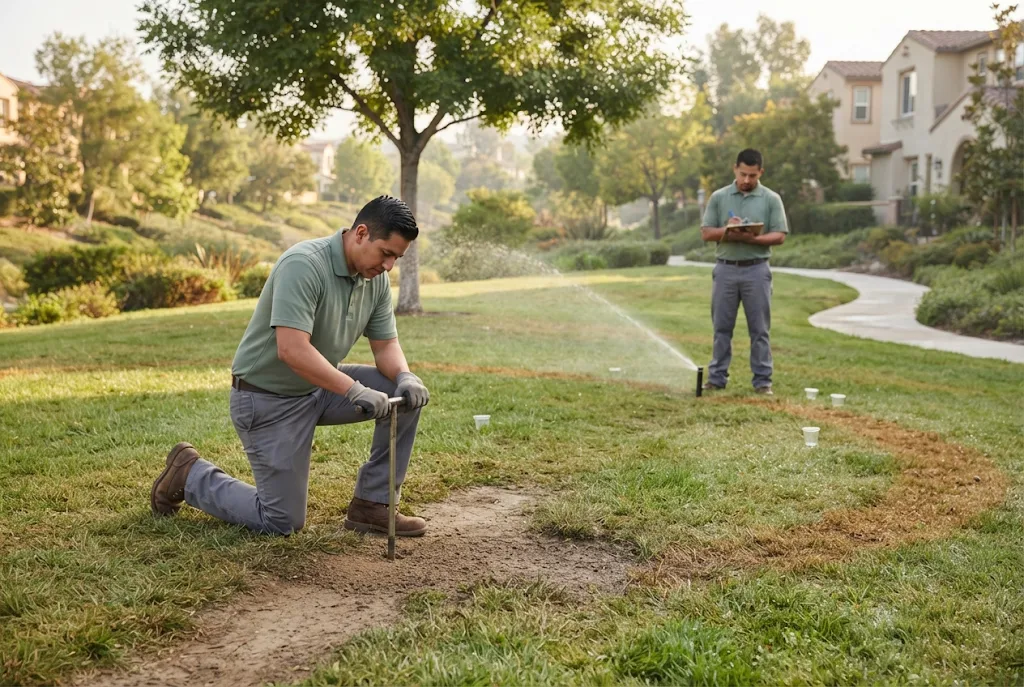
A site assessment should explain why the existing turf declined, because new sod laid over the same conditions tends to decline the same way. We look at the lawn as a system: water, soil, grade, light, and how people actually use the space.
Irrigation Coverage
Poor coverage is one of the most common reasons commercial turf fails. Heads tilt, sink, or get blocked as shrubs grow; nozzles get swapped over the years until a zone no longer applies water evenly; and pressure problems leave dry arcs at the edges of spray patterns. We run the zones that serve the lawn, watch where water actually lands, and note broken, misaligned, or mismatched components. Minor adjustments are usually part of preparing for sod. When the assessment shows that a zone or system needs redesign or replacement, that becomes a separate scope, and our team handling commercial irrigation installation in Irvine can address it before installation day.
Soil Compaction and Drainage
Turf that carries regular foot traffic, maintenance equipment, or construction activity often sits on compacted soil that roots struggle to penetrate. We probe the soil, look for standing water after irrigation, and check whether the grade moves water away from buildings and walkways. Low spots that stay soggy, or slopes that shed water before it soaks in, may need regrading or further investigation. A commercial lawn drainage assessment before turf replacement is sometimes the right first step when water problems are severe or recurring.
Foot Traffic and Shade
Worn paths tell us where people want to walk. Sometimes the right answer is turf that tolerates more wear; sometimes it is a stepping-stone path or a widened walkway so the lawn is not asked to do a sidewalk’s job. Shade from buildings and maturing trees changes over the years as well, and a grass that thrived when the trees were young may no longer get enough light. We note how many hours of direct sun each area receives through the day, because that observation drives turf selection more than almost anything else.
Is New Turf Still the Right Choice for This Area of the Property?
Before a commercial property invests in new sod, it is worth confirming that turf is the right fit for each area and that the area can be irrigated the way the property intends. California law now treats decorative lawns on many non-residential properties differently from lawns people actually use, and that distinction can affect where new grass belongs.
Functional and Nonfunctional Turf
Under Assembly Bill 1572, potable (drinking) water may not be used to irrigate nonfunctional turf on commercial, industrial, and institutional properties beginning January 1, 2028, and on HOA common areas beginning January 1, 2029. Nonfunctional turf generally means grass kept only for appearance, such as strips along parking lots, medians, and building edges. Turf used for recreation or community purposes, such as a picnic lawn or a play area, is treated as functional. According to the Municipal Water District of Orange County’s overview of the nonfunctional turf law, the law does not require removing turf, and areas irrigated with recycled water fall outside the restriction.
Recycled Water in Irvine
That recycled-water point matters in Irvine. The Irvine Ranch Water District reports that about 80 percent of the public and commercial irrigated landscape in its service area, including community association property, is watered with recycled water. Many office parks and HOA common areas here may therefore be in a different position than similar properties elsewhere. That is not something to assume from a general statistic, though. Each irrigation meter and each lawn area should be confirmed individually.
Confirming the Rules for Your Site
Before any decision about where turf will be installed or irrigated, we recommend that the property verify current requirements with its water provider and the City of Irvine. Larger landscape rehabilitations that require a permit, plan check, or design review may also be subject to state and local water-efficient landscape rules. We can flag which areas of a site look functional or decorative during the assessment, but the property owner and the relevant agencies make the final determination. Where a decorative strip no longer makes sense as lawn, we can talk through alternatives as part of a broader landscape plan.
Find Out Why the Turf Declined Before You Pay to Replace It
Our site assessment looks at irrigation coverage, soil compaction, drainage, shade, and foot traffic, and notes which areas look functional or decorative, so new sod is not laid over the problems that wore out the old lawn. Call (888) 601-1117 to set one up.
What Is Included in a Commercial Sod Installation Scope?
For Commercial Sod Installation Irvine CA projects, the scope should describe every step between the existing lawn and the finished one, so the property knows what it is approving and what it is not. The items below are typical, though each project includes only what the site actually needs.
Measuring the Lawn Area
We measure each lawn area on site rather than relying on old plans, because planting beds get reshaped, walkways get added, and lawn edges drift over time. Accurate measurements keep the sod order close to the real need and make it easier to compare one estimate with another.
Removing the Existing Turf
Old turf, roots, and the weeds mixed into it are removed rather than buried under new sod. Laying fresh sod over a failing lawn leaves a weak layer between the new roots and the soil. Removal and disposal are listed as their own scope item, since the volume of material hauled away can be significant on a large common area.
Preparing the Soil and Grade
Once the area is cleared, the soil is loosened where compaction calls for it, debris is removed, and amendments are worked in when the existing soil needs them. The surface is then graded so water moves away from buildings and does not pond, and the finished grade is set low enough that the new sod sits flush with walkways, curbs, and edging rather than above them.
Checking Irrigation Coverage
Before the first roll goes down, the sprinkler zones that serve the lawn are run again at finished grade. Heads are raised or lowered to the new surface and adjusted so coverage is even. Finding a coverage problem now is far easier than finding it after a dry stripe appears in the new turf.
Laying the Sod
Sod is installed promptly after delivery so it does not heat up or dry out on the pallet. Rows are laid with staggered ends, seams are pushed tight without overlapping, and pieces are cut cleanly around heads, trees, and edges. The finished lawn is rolled to press the sod into firm contact with the prepared soil, and watering begins right away.
How Do We Choose the Right Sod for Sun, Shade, Use, and Water Supply?
The right sod is the one that matches the site’s light, traffic, and irrigation capacity, not simply the one that looks best on the delivery truck. Commercial lawns in Irvine often include several different conditions on one property, and a single grass may not suit all of them.
Sun Exposure
Warm-season grasses such as hybrid bermudagrass generally perform best in full sun and recover well from wear, but they tend to thin out in shade. St. Augustinegrass and many tall fescue blends tolerate partial shade better. An open recreation lawn and a courtyard edge shaded by a three-story building may call for different choices, or for a design that keeps turf out of the deepest shade altogether.
Anticipated Use
A lawn that hosts tenant events, daily dog walking, or children’s play needs wear tolerance and the ability to recover. A lawn that is mostly seen rather than walked on can prioritize appearance and lower water demand. We ask how each area is used today and how the property expects it to be used, because the answer often differs from what the original landscape plan assumed.
Irrigation Capacity
Different grasses have different water needs, and the irrigation system has to be able to meet them. If a zone already struggles to cover an area evenly, choosing a thirstier grass will make the problem more visible. Water source also matters: recycled-water sites may have their own use requirements, and those should be part of the conversation before the turf type is settled.
When a lawn will be replaced in phases, we also consider how each new section will match the sections that follow, so the finished lawn reads as one surface rather than a patchwork of different varieties.
How Is Sod Installed Around Tenants, Residents, and Public Access?
On an occupied property, installation is scheduled around the people who use the site, not the other way around. Sod replacement for office parks, retail centers, and residential communities depends on access planning as much as on the turf itself.
Working Around Tenant Hours and Public Access
At office parks, noisy work such as turf removal is often best scheduled for early mornings, weekends, or other low-occupancy periods the property identifies. At retail centers, storefront access and parking during business hours come first. For sod installation for HOA and apartment common areas, residents need advance notice of which lawns will be closed and for how long. We work out these windows with the property manager before the schedule is final.
Delivery, Staging, and Walkway Protection
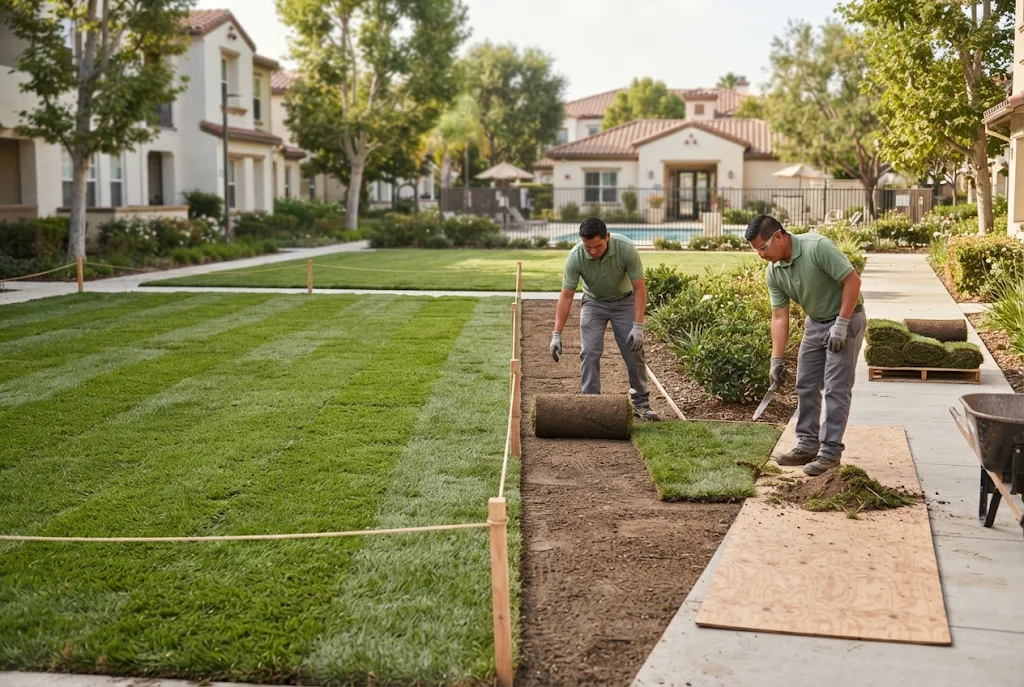
Sod arrives on pallets, and removed turf leaves in trucks or bins, so the plan needs a delivery point, a staging area, and a route between them that does not block fire lanes, building entrances, or accessible paths. Walkways along the work area are protected from equipment and soil, cleaned at the end of each workday, and kept open or clearly rerouted with signage the property approves.
Phased Installation Where Practical
Large lawns can be divided into phases so only part of the site is closed at a time. Phases might follow natural boundaries such as walkways or building frontages, or they might follow irrigation zones so each section can be watered independently during establishment. Phasing usually extends the overall timeline, but it keeps the property usable and can spread the cost across budget periods. When phasing is planned, each section is completed and protected before the next one is opened.
Plan a Phased Sod Installation That Keeps Your Property Open
We will map phases, staging, walkway protection, and resident or tenant notices with you before work starts, then hand the new lawn to your maintenance team with clear care instructions. Call (888) 601-1117, email info@landscaper-near-me.com, or request a callback.
What Does Establishment Care Look Like After the Sod Is Down?
New sod needs consistent moisture, protection from traffic, and patience while its roots grow into the soil below. The first few weeks decide whether the investment holds up, which is why establishment care is planned before installation rather than improvised afterward.
Watering Adjustments
Right after installation, the goal is to keep both the sod and the top layer of soil beneath it moist, which usually means shorter, more frequent irrigation cycles than an established lawn receives. As roots knit into the soil, watering is gradually shifted toward longer, less frequent cycles. How fast that shift happens depends on the season, the grass type, the soil, and the weather, so we adjust the schedule to what the site shows rather than following a fixed calendar. A warm, dry spell or a Santa Ana wind event may call for extra attention, while cool, overcast weeks may call for less water. Our guide to helping new sod take root explains what is happening below the surface during this period.
Protection From Early Foot Traffic
Sod that is walked on before it roots can shift, separate at the seams, or develop depressions. On commercial properties we typically mark new areas with temporary rope or stake barriers and signage, and we coordinate with the property so tenants, residents, and vendors know which areas to avoid. Pets are one of the hardest variables at multifamily communities, so we may recommend a temporary alternative relief area while the new lawn establishes.
The First Mowing
The first mowing happens once the sod has rooted firmly enough that it resists a gentle tug and the grass has grown to an appropriate height for its type. Mowing too early can lift pieces or scalp the surface. The first cuts are kept light, with the mower set high, and the soil is allowed to dry enough that equipment does not leave ruts.
How Is the New Lawn Handed Off to Your Maintenance Team?
A sod project is not finished when the last roll is laid. It is finished when the people who will care for the lawn have the information they need to keep it healthy. A clear handoff protects the property’s investment and avoids the common situation where a new lawn is quietly put on the same irrigation schedule that helped ruin the old one.
What the Handoff Should Include
- The grass variety installed in each area, along with notes on any areas that received a different turf.
- The current irrigation settings for each zone and the plan for tapering establishment watering.
- Any irrigation components that were adjusted, replaced, or flagged for future attention.
- When the first mowing is expected, the recommended mowing height, and when the barriers can come down.
- Any areas to watch, such as a corner where drainage remains marginal or a high-traffic path that may need extra care.
Coordinating With the Existing Maintenance Provider
Many properties already have a landscape maintenance contractor, and the handoff works best when that crew knows the plan before installation day. We can walk the new lawn with your maintenance provider or your facilities staff so watering and mowing changes happen on schedule. If the property is looking for ongoing care, our team for commercial landscape maintenance in Irvine can take over, but recurring maintenance is a separate service from the installation itself.
How Do You Request Commercial Sod Installation Estimates in Irvine?
The fastest way to an accurate estimate is to share what you already know about the site, then let us confirm the rest on a walkthrough. Commercial sod installation estimates in Irvine come together faster when the first conversation includes the details below.
What Helps Us Scope the Project
- Site address and the names of the buildings or common areas involved.
- Approximate square footage, even a rough figure from a site plan or a measuring app.
- Photos of each lawn area, including close-ups of the worst spots.
- Current lawn condition and what has already been tried.
- Irrigation status, including known problem zones and whether the area runs on recycled or potable water.
- Access restrictions, such as tenant hours, gate codes, delivery limits, or board notice requirements.
- Target completion window, including any budget-cycle or event deadlines.
Scope Items to Confirm in Writing
When you review proposals from commercial sod installers in Irvine, check that each one treats these as separate, clearly described items: site preparation and grading, turf removal and disposal, irrigation corrections beyond routine adjustment, the sod itself, and establishment care. Proposals that bundle everything into a single line are harder to compare and easier to misunderstand. If an estimate assumes something about your irrigation or your water source, it should say so.
Some properties are replacing turf as one part of a larger update that includes planting, irrigation, and hardscape. In that case, our commercial landscaping services in Irvine can bring those pieces into a single plan.
Whether you manage a single office courtyard or a community with acres of common area, the right new lawn starts with an honest look at why the old one struggled and a schedule that respects the people who use the property every day. Call us at (888) 601-1117, email info@landscaper-near-me.com, or request a callback, and we will arrange a walkthrough and a free estimate for your Commercial Sod Installation Irvine CA project.
FAQ's - Frequently Asked Questions
It depends on the size of the area, whether irrigation corrections are needed first, and how long board or owner approval takes. Assessment, written scope, approvals, scheduling around tenants, and any irrigation work all come before installation day, so starting the conversation early leaves room for each step.
Recycled water is widely used for landscape irrigation in Irvine. Recycled-water sites can have their own use requirements, so we coordinate the establishment watering schedule with the property’s site contact and the water provider’s rules rather than assuming a standard schedule will apply.
We do not recommend it. Old turf, roots, and weeds left in place create a weak layer between the new sod and the soil, which slows rooting and can let the original problems return. Removal and soil preparation are part of a sound installation.
Sod roots fastest when the grass is actively growing. Warm-season grasses generally establish best in the warmer months, while cool-season blends such as tall fescue tend to do well in spring and fall. Irvine’s mild climate allows installation much of the year, but extreme heat calls for closer watering attention.
Boards usually want a written scope, a map of the areas and any phases, an expected schedule, a plan for resident notices and access, and a clear statement of what is and is not included. We can provide those details with the estimate so the board can review them in one package.
Yes, though partial replacement works best when the new sod matches or blends with the existing grass and the cause of the decline in those sections has been addressed. If the surrounding turf is also near the end of its life, phasing the full replacement may give a more uniform result.
That is agreed in the scope. Some properties have us manage establishment watering and early checks, while others hand it to their existing maintenance provider. Either way, we document the irrigation settings and the plan for tapering them so whoever is responsible has clear instructions.
Yes. A free estimate includes a site visit, measurements, notes on irrigation and soil conditions, and a written scope that separates preparation, removal and disposal, irrigation corrections, sod, and establishment care. Call (888) 601-1117 or email info@landscaper-near-me.com to get started.