
Sod Installation Huntington Beach CA
for Front Yards and Backyards
A fresh roll of sod can turn bare dirt or a tired, patchy yard into a green lawn in a single day. That speed is the reason most homeowners choose it, and it is also the reason so many sod projects disappoint a few months later. The grass arrives finished; the ground beneath it does not. Successful Sod Installation Huntington Beach CA depends on what happens before the first piece is unrolled: understanding why the old lawn struggled, preparing the soil and grade, confirming that the sprinklers actually reach every square foot, and choosing a grass that fits the way the yard is lit, watered, and used.
This page is written for Huntington Beach homeowners and residential property owners planning a new front lawn, a backyard play area, or the replacement of turf that has worn out. Rental owners, multifamily managers, and HOA managers evaluating suitable lawn areas will find notes for their projects as well. Through Landscaper-Near-Me.com, you can request a free estimate and be connected with a sod installation provider serving Huntington Beach. Below, we walk through what a well-planned project includes, where coastal conditions matter, what drives cost, and what the first weeks after installation require.
What Does Professional Sod Installation in Huntington Beach Include?
Professional sod installation covers far more than laying grass. A complete project usually moves through assessment, removal of the existing turf, soil preparation, finish grading, irrigation checks, delivery, installation, and an aftercare handoff. Which of those steps your property needs, and who is responsible for each one, should be spelled out before work begins. You can read a broader overview of our sod installation services for the general process; here we focus on how it applies to Huntington Beach properties.
It helps to separate two milestones that are often blurred together. A newly laid lawn looks complete, but its roots have not yet grown into the soil below. A rooted, traffic-ready lawn has knitted into the ground and can handle mowing, foot traffic, and normal watering. The gap between the two is the establishment period, and it is where most of the owner’s responsibility lies.
Common Residential Sod Installation Projects in Huntington Beach
- Sod replacement Huntington Beach homeowners request most often: removing thin, weedy, or worn-out turf and replacing it with new sod on a corrected base.
- New lawn installation Huntington Beach properties need after construction or remodeling: establishing grass on prepared bare ground where no lawn existed, or where a project left disturbed soil.
- Front yard and backyard sod installation: renovating a street-facing lawn for appearance, or a backyard lawn built for children, pets, and outdoor gatherings.
- Partial renovations: replacing one failing section while keeping healthy areas, which requires careful matching of grass type and surface height.
Residential sod installation Huntington Beach owners plan for a front yard often prioritizes a uniform, finished look, while a backyard lawn usually needs to tolerate wear. That difference should influence grass selection, preparation depth, and how long the area stays roped off afterward.
Why Did Your Current Lawn Fail — and Will New Sod Fix It?
New sod fixes the symptom of a bad lawn but not necessarily the cause. If grass thinned out because of shade, dry spots, compaction, standing water, or heavy wear, fresh sod installed over the same conditions tends to fail in the same places. Before committing to natural grass lawn replacement, it is worth asking what the old lawn was telling you.
Look at the pattern of damage rather than the overall impression. A few patterns point to fairly specific causes:
- Brown crescents or circles in the same spots every summer often indicate gaps in sprinkler coverage, a clogged or misaligned head, or low pressure in one zone.
- Thin grass along the north side of the house, a fence, or under trees usually reflects too little sunlight for the grass that was planted.
- Bare, hard ground along paths and play areas suggests compaction and repeated foot traffic.
- Soft, mossy, or persistently soggy areas point toward drainage problems or overwatering.
- Yellow or burned spots in a backyard with pets may come from urine concentration, digging, or a regular running path along a fence line.
Diagnosing recurring bare patches before replacing a lawn keeps you from paying twice for the same problem. Likewise, addressing lawn drainage problems before installing sod matters on properties where water collects near the house or at the low edge of the yard. Planning sod installation around dogs and backyard use may mean choosing a more wear-tolerant grass, leaving a mulched or hardscaped strip where pets patrol, or accepting that a heavily used corner will need periodic patching.
Sometimes the honest answer is that a particular area is not a good candidate for grass at all. Deep shade under a mature canopy or a narrow side yard with no sun may be better served by another groundcover. A good assessment should say so rather than install sod where it is unlikely to last.
How Coastal Huntington Beach Conditions Shape a Sod Project
Huntington Beach sits on the coast, and that location influences lawns, though not identically from one street to the next. Properties nearer the ocean tend to see more marine-layer cloud cover in late spring and early summer, steadier onshore breezes, and, in some exposed spots, airborne salt. Lots farther inland may have warmer afternoons and more sun. Soil also varies across the city; some yards have sandy, fast-draining soil, while others have heavier soil that holds water longer. None of these traits should be assumed—they should be observed on the property.
A practical site evaluation for sod installation in Huntington Beach should record:
- Lawn dimensions and the actual square footage to be sodded
- Access for delivery pallets and equipment, including gate widths and side-yard routes
- The type and condition of the existing turf and weeds
- Soil texture, compaction, and any visible drainage concerns
- Hours of direct sun in different parts of the yard, including shade from structures and trees
- Slope and how water moves across the surface
- Wind exposure and any signs of salt-related leaf burn on existing plants
- Irrigation coverage, zone layout, and controller condition
- How the lawn will be used: display, play, pets, or entertaining
Coastal conditions can work in a lawn’s favor. Cooler temperatures and cloud cover often reduce how quickly new sod dries out, which can make establishment watering more forgiving than it is in hotter inland areas. On the other hand, persistent breezes can dry exposed edges and seams quickly, and a mild, cloudy spell may slow the growth of grasses that prefer heat. Neighboring coastal cities face many of the same questions; owners comparing projects nearby can also review our page on sod installation in Newport Beach.

Plan Your Huntington Beach Sod Installation With a Free Estimate
Tell us about your lawn area, what is growing there now, and how you use the yard. We can connect you with a sod installation provider for a free estimate that explains removal, soil preparation, irrigation checks, and grass options. Call (888) 601-1117 or email info@landscaper-near-me.com.
Which Grass Should You Choose for a Coastal Huntington Beach Lawn?
The right grass depends on sunlight, traffic, the look you want, the maintenance you are willing to do, and how much irrigation you can support. No single grass is best for every Huntington Beach yard. Grass selection for coastal lawns comes down to matching a species to the specific conditions identified during the site evaluation.
Sod grasses in Southern California generally fall into two groups:
- Cool-season grasses, most commonly tall fescue blends, tend to stay green through the mild coastal winter and are widely available as sod. They usually need more water than warm-season grasses during summer, and many tolerate partial shade better than bermudagrass.
- Warm-season grasses, such as hybrid bermudagrass, St. Augustinegrass, and zoysiagrass, grow most actively in warm weather and generally use less water once established. Many lose color or go partially dormant in cooler months, and near the coast, where summers stay relatively mild, they may grow more slowly than they would inland.
Matching Grass to How the Yard Is Used
A sunny backyard that serves as a play field may call for a wear-tolerant grass that recovers quickly, such as a hybrid bermudagrass, as long as the owner is comfortable with winter color change. A front lawn partly shaded by the house may be better suited to a tall fescue blend or, in some cases, St. Augustinegrass. Zoysiagrass forms a dense, attractive turf but establishes and recovers slowly, which can matter if the lawn will see heavy use soon after installation.
Ask what varieties local sod farms actually have available when you are ready to schedule, because availability changes. For a deeper side-by-side comparison, see our guide to choosing grass for Southern California conditions. If water use is a priority, we also cover drought-tolerant grass options for Southern California in more detail, including what lower water use does and does not mean for appearance.
Old Lawn Removal, Soil Preparation, and Grading Before Sod Goes Down
Preparation is the part of a sod project that you cannot see once the lawn is finished, and it is where the long-term quality of the lawn is decided. Old lawn removal and sod installation are usually priced and performed together, but the depth and detail of preparation should be based on what the assessment found rather than a one-size-fits-all routine.
Removing the Existing Lawn
Existing turf is typically cut out with a sod cutter so the roots and thatch come up with it, then hauled away. Laying new sod over old grass is not a sound shortcut; the old layer prevents good soil contact and can leave the surface uneven. Persistent spreading weeds, such as bermudagrass invading a fescue lawn, may need additional attention before the new lawn goes in, since they can grow back through fresh sod. Debris such as old edging, rocks, buried roots, and construction leftovers should come out at the same time.
Soil Preparation for Sod Installation
Soil preparation for sod installation generally means loosening compacted ground so new roots can penetrate, then correcting the surface. Amendments such as compost or a starter fertilizer should be added where the soil condition calls for them; a soil test can show whether nutrients or pH actually need correcting. On sandy coastal soil, organic matter may help hold moisture; on heavy soil, improving structure and drainage may matter more. Adding material simply because it is customary is not the same as preparing the soil the lawn needs.
Finish Grading and Transitions
Finish grading shapes the surface so water drains away from the house and does not pond in the lawn. It also sets the final height of the lawn against walks, patios, driveways, and planting beds. The prepared soil is usually set slightly below adjacent hard surfaces—roughly the thickness of the sod pad—so the finished grass sits flush instead of forming a raised lip that is hard to mow and edge. A firm, smooth, lightly settled surface helps every piece of sod make even contact with the soil.
Is Your Irrigation Ready for New Sod?
Irrigation should be confirmed working before sod is installed, not after. New sod has only a thin root zone, so it depends on even, reliable watering during establishment. A dry corner that an established lawn might tolerate for a few days can kill freshly laid sod.
An irrigation readiness check should include:
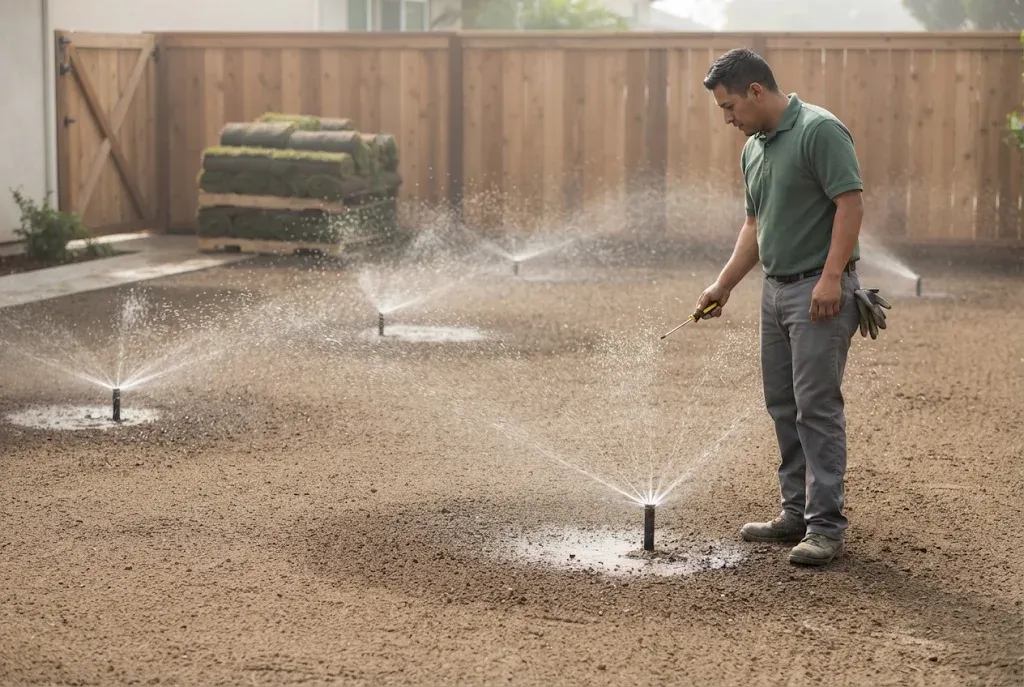
- Running each zone to confirm heads pop up, rotate, and spray where intended
- Looking for leaks, broken heads, and heads tilted or sunk below grade
- Checking head-to-head coverage so spray patterns overlap and reach the edges
- Confirming heads will clear the height of the new sod once it is installed
- Making sure the controller works and can be programmed for establishment watering
Any corrections are far easier to make while the ground is open. Arranging sprinkler repair before installing new sod avoids having to cut into a brand-new lawn to fix a line or move a head. Where the existing system is outdated, poorly laid out, or missing entirely, it may make sense to plan a sprinkler system installation as part of the same project. Either way, verify current watering requirements, allowed watering days, and any establishment provisions for new landscaping with the City of Huntington Beach or whichever water supplier serves your address before you schedule installation.
Replace a Failing Lawn Without Repeating the Same Problems
Dry spots, shade, compaction, and sprinkler gaps can undo new sod quickly. Ask for a site review that checks grass selection, soil preparation, grading, and irrigation coverage before installation, so your replacement lawn starts on a corrected foundation.
When Is the Best Time to Install Sod in Huntington Beach?
The best time to install sod in Huntington Beach depends mainly on the grass you choose and on your ability to water and protect it during establishment. Sod roots fastest when the grass is actively growing, so timing should follow the species.
- Cool-season grasses such as tall fescue usually establish well in fall and spring, when temperatures are moderate and the grass is growing actively.
- Warm-season grasses such as bermudagrass, St. Augustinegrass, and zoysiagrass usually establish best from late spring through summer, when soil and air temperatures are warm.
Huntington Beach’s mild coastal climate gives owners more flexibility than many inland areas, but weather still matters. A hot, dry stretch or strong Santa Ana winds increase watering demands, while unusually wet weather can delay preparation. It is also worth scheduling around your own calendar—planning a project right before a long trip leaves no one to monitor new sod. Rooting speed varies with temperature, soil, and grass type; our article on how long sod takes to root explains what to expect and how to check.
What Happens on Installation Day
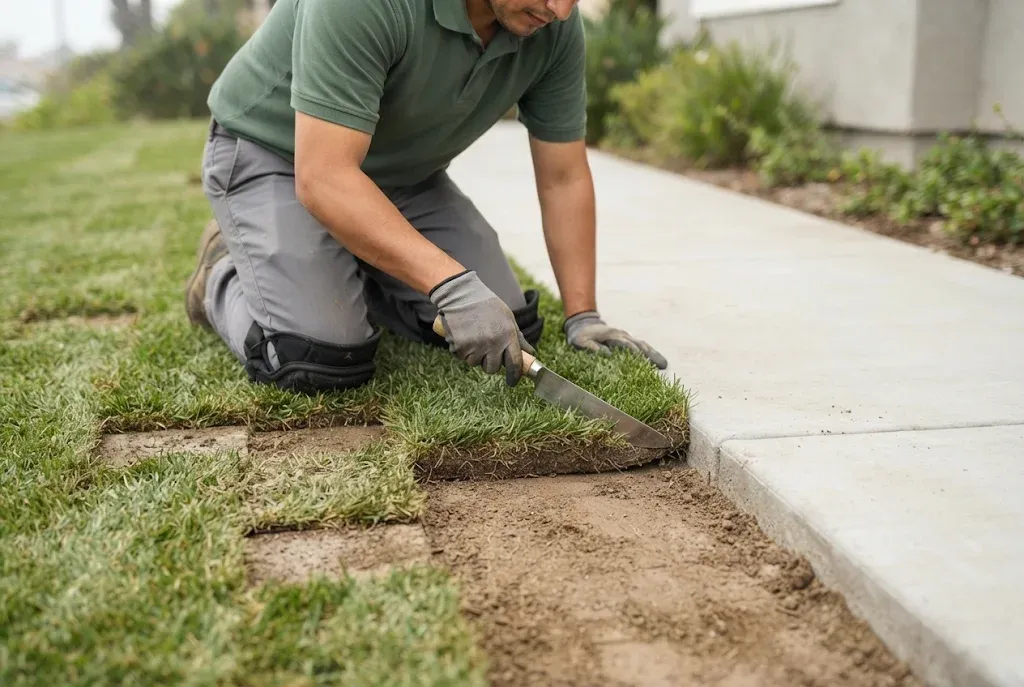
Sod is a living product and begins to decline once it is cut and stacked, so delivery should be coordinated with a site that is already prepared and irrigation that is ready to run. On installation day, pieces are laid tightly against one another with seams staggered in a brick-like pattern, edges are cut cleanly around curves and obstacles, and the surface is rolled to press the sod into firm contact with the soil. The first thorough watering usually follows soon after a section is complete. For a closer look at these fundamentals, the University of California guidance on installing sod is a helpful reference.
What Affects Sod Installation Cost in Huntington Beach?
Sod installation cost in Huntington Beach depends on the specific property, so a reliable number comes from measuring and assessing the site rather than from a general per-foot figure. Two lawns of the same size can be priced quite differently once removal, access, and preparation are factored in.
The main factors behind sod installation estimates Huntington Beach owners receive include:
- Measured lawn area, including irregular shapes and strips that take more cutting and fitting
- Removal and disposal of existing turf, weeds, and debris
- Access, such as narrow side yards, stairs, or locations where pallets cannot be set close
- Preparation needs, including compaction correction, amendments, and grading
- Grass selection, since prices and availability vary by type
- Delivery and coordination with the sod supplier
- Irrigation corrections identified during the readiness check
- Aftercare responsibilities, and whether any follow-up visit is included
When comparing sod installers Huntington Beach residents are considering, look at what each estimate actually includes. A lower figure that leaves out removal, grading, or irrigation repairs may not be cheaper once those items are added back. Ask each provider to confirm the scope in writing.
Multifamily, Rental, and HOA Lawn Projects
Lawn sod installation Huntington Beach rental owners and community managers plan for raises practical issues beyond the grass itself. Residents need advance notice about work dates, temporary access changes, and the period when new turf should be kept off-limits. Temporary fencing or clear signage helps protect new sod in shared spaces where foot traffic is hard to control. For HOA common areas and certain non-residential properties, California’s AB 1572 phases out the use of potable water on nonfunctional turf—ornamental grass that is not regularly used for recreation or gatherings—with the deadline for HOA common areas set for January 1, 2029. Single-family homes are not covered by that rule. Managers should confirm with their water supplier how it applies before choosing which areas are suitable for new sod.
Establishing Your New Lawn and Planning the Next Step
The work is not finished when the last piece of sod is rolled. The first few weeks decide whether a newly laid lawn becomes a rooted, durable one. Establishment watering should be adjusted to the weather, soil, grass type, and how the irrigation system actually performs. Both extremes cause problems: sod that dries out shrinks at the seams and can die back, while constantly saturated soil invites disease and slows rooting.
During establishment, a sensible handoff covers:
- Checking moisture under the sod, especially at edges, seams, and sunny or windy exposures
- Keeping foot traffic, pets, and play off the lawn until it has rooted
- Gently lifting a corner to see whether roots are anchoring into the soil below
- Waiting for the first mowing until the sod resists a light tug and has grown enough to cut without scalping
- Gradually moving toward deeper, less frequent watering as the lawn establishes
Our step-by-step guide to caring for sod after installation goes further into watering adjustments, the first mow, and fertilizing as the lawn matures.
A Huntington Beach lawn that is diagnosed honestly, prepared properly, watered evenly, and planted with a grass suited to its sun and use has a far better chance of lasting. If you are ready to discuss Sod Installation Huntington Beach CA for your front yard, backyard, or community lawn area, request a free estimate through Landscaper-Near-Me.com. Call (888) 601-1117 or email info@landscaper-near-me.com, and we can help connect you with a sod installation provider who will review your property, confirm the project scope, and answer your questions before work begins.
Talk Through Your New Lawn Before the First Roll Arrives
Have questions about timing, preparation, or what your estimate should include? Request a callback, call (888) 601-1117, or email info@landscaper-near-me.com. We will help you take the next step toward sod installation for your Huntington Beach property.
Lorem ipsum dolor sit amet, consectetur adipiscing elit. Ut elit tellus, luctus nec ullamcorper mattis, pulvinar dapibus leo.
FAQ's - Frequently Asked Questions
We do not recommend it. Old grass and thatch keep new sod from making direct contact with the soil, which slows rooting and often leaves an uneven surface. Removing the existing turf, correcting the soil, and finish grading give the new lawn a much better start.
Not always, but the crew will need access to the yard, the irrigation controller, and a water source. Someone should be available afterward to check moisture and confirm the sprinklers run as planned during the first days of establishment.
Keep play and pets off the lawn until the sod has rooted into the soil, which varies with grass type, temperature, and watering. A gentle tug test helps: when the sod resists lifting, light use can begin and gradually increase.
Some grasses tolerate partial shade better than others, but no lawn grass performs well in deep shade. If an area receives very little direct sun, another groundcover or a mulched planting bed may be a more reliable choice than sod.
Sod provides an immediate, uniform surface, reduces early weed competition, and limits erosion on prepared soil. Seed usually costs less upfront but takes longer to fill in and needs more careful protection. The better choice depends on budget, timing, and how soon the lawn needs to look finished.
Removed turf, roots, and debris are typically hauled away as part of the removal scope. Ask your provider to confirm in the estimate whether removal and disposal are included and whether any soil will be brought in to restore the grade.
A starter fertilizer is sometimes worked into the soil during preparation when a soil test or assessment supports it. After installation, most fertilizing waits until the sod has rooted, so follow the aftercare guidance you receive for your specific grass.
If your home is in a community association, check its landscaping guidelines first, since many associations review front-yard changes. HOA managers planning common-area work should also confirm how current state water rules for ornamental turf apply to the areas being considered.