
Sod Installation Irvine CA: New Lawns Planned From the Soil Up
A fresh roll of sod looks finished the moment it is laid, which is exactly why it is easy to underestimate what happens beneath it. Our approach to sod installation Irvine CA homeowners rely on starts below the grass line: we look at why the current lawn looks the way it does, what the soil and sprinklers can support, and how the new surface will meet your walkways and planting beds. Only then do we talk about which sod to order.
This page focuses on residential sod installation in Irvine — replacing a tired front lawn, rebuilding a backyard play area, or correcting a lawn that was installed once already and never took hold. We also work with rental-property owners, multifamily managers, and HOA landscape committees evaluating replacement of existing lawn areas where natural grass still makes sense. If you are exploring the topic more broadly, our main page on sod installation services covers the service across our full Orange County and Southeast Los Angeles County territory.
Below, we explain what a professional installation includes, how we judge whether a yard is ready for new grass, what preparation and irrigation work may be needed first, how we lay and protect the sod, and what actually drives the estimate. The goal is simple: when you request an estimate, you will already understand the decisions that shape the project.

Free Estimates for Sod Installation in Irvine
Tell us about the lawn you want to replace. We’ll measure the area, review sun, access, and sprinkler coverage, and give you a clear free estimate for your new lawn. Call (888) 601-1117 or request a call back.
What Does Professional Sod Installation in Irvine Include?
Professional sod installation means establishing a living, natural grass lawn from harvested turf — not simply dropping off pallets of grass. Sod supply alone gets the material to your driveway. An installation service takes responsibility for the steps that decide whether that material survives: removing the old lawn, preparing the root zone, setting finished grades, confirming that irrigation will reach every edge, laying the sod tightly, and explaining the care it needs while the roots grow into the soil.
It also helps to be clear about what this service is not. Artificial turf is a separate product with its own base preparation, drainage, and maintenance profile; we do not treat it as a variation of sod. Natural grass needs water, mowing, and seasonal attention, and in return it offers a cooler, softer surface that recovers from wear on its own.
Common Irvine Lawn Projects
- Front yard sod installation where an older lawn has thinned, browned in patches, or been overtaken by weeds and crabgrass.
- Backyard lawn replacement for families who want a usable play or gathering space again after years of foot traffic.
- Corrective installations where a previous lawn failed and the underlying cause has to be identified before new grass goes down.
- Courtyard and side-yard lawns in tighter spaces where access, shade, and drainage need closer attention.
In every case, the new lawn installation in Irvine is only as reliable as the decisions made before the first roll is unloaded.
Is Your Irvine Yard a Good Fit for New Sod?
Most yards can support a natural grass lawn, but not every part of every yard should be sodded. Before recommending natural grass installation in Irvine, we walk the property and look at the conditions that will govern how the lawn performs over the next several years.
- Lawn dimensions and shape. Measured square footage drives material quantities, and narrow strips or tight curves affect cutting and waste.
- Usable access. Gate widths, steps, and side-yard clearance determine how old material comes out and how sod pallets reach the backyard.
- Sun and shade patterns. Shadows from two-story homes, block walls, patio covers, and mature trees shift through the year and can rule out some grasses.
- Foot traffic. Areas used by children, pets, or as daily shortcuts need a grass that tolerates wear and recovers well.
- Existing vegetation. Persistent weedy grasses, tree roots, and encroaching groundcovers influence how thoroughly the old lawn must be removed.
- Soil condition. Compaction, construction debris, and heavy clay layers are common in established neighborhoods and affect rooting and water movement.
- Irrigation coverage and drainage. Dry corners and soggy low spots usually trace back to sprinkler layout or grading rather than the grass itself.
HOA and Water-Provider Checks Before You Commit
Many Irvine neighborhoods are governed by homeowners associations, and some require landscape approval before front-yard changes. We recommend confirming your association’s submittal requirements before scheduling, especially if the project changes lawn boundaries or plant types. It is also worth checking current watering rules with your water provider — most Irvine properties are served by Irvine Ranch Water District — because schedules and restrictions can change. We do not assume that every Irvine property follows identical rules.
Why Did the Old Lawn Fail — and Will New Sod Fix It?
New sod will cover a bare patch immediately, but it will not change the conditions that created the patch. If the same area keeps thinning, we want to know why before recommending lawn replacement in Irvine CA. Otherwise the new grass is likely to decline in the same spot, and the investment goes with it.
The most common contributors we evaluate include:
- Shade that has grown over time. A tree that was small when the lawn went in may now shade the area for most of the day. Some grasses tolerate partial shade better than others; very deep shade may be better suited to a planting bed.
- Compaction. Repeated foot traffic, parked equipment, or construction work can press soil so tightly that roots and water struggle to penetrate.
- Irrigation gaps. Tilted, clogged, or mismatched sprinkler heads often leave crescent-shaped dry areas that look like disease.
- Drainage problems. Low spots that stay wet after watering can weaken roots and invite fungal issues, while slopes may shed water before it soaks in.
- Grass mismatch. A turf type that suited a sunny lot years ago may not suit the same yard after landscaping, additions, or tree growth changed it.
Sometimes the answer is straightforward: the lawn simply aged out. Other times, the right recommendation is to adjust sprinklers, correct a grade, or shrink the lawn footprint before installing. Telling you that up front is part of a responsible estimate.
Lawn Keeps Failing?
Find the Cause Before New Sod Goes Down
Shade, compaction, sprinkler gaps, and poor drainage can undo a new lawn. We’ll look at why the old grass struggled and recommend the preparation that gives your new sod a real chance to root.
Old Lawn Removal and Soil Preparation for Sod
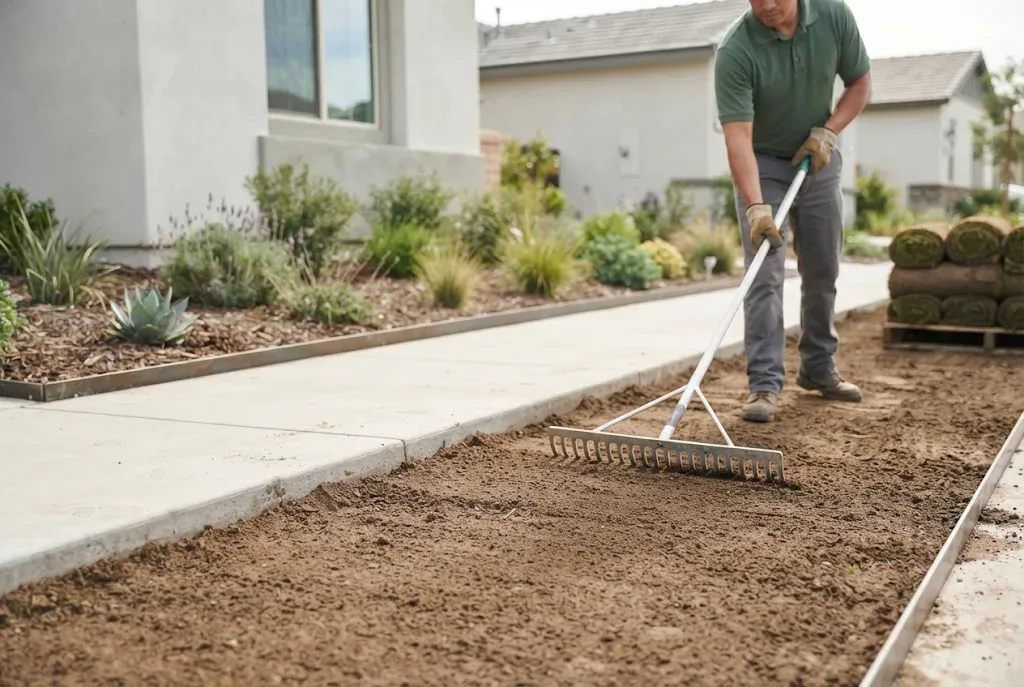
Old lawn removal and sod installation go together because new roots need direct contact with prepared soil, not a mat of dead thatch and stolons. We remove the existing grass and its root layer, clear rocks and debris, and address weedy grasses that could grow back through the new lawn. How aggressively the old lawn must be removed depends on what is growing there; some spreading grasses require more thorough treatment than a thin, declining fescue.
Soil preparation for sod then focuses on the top several inches where new roots will establish. Depending on what the assessment finds, that can include loosening compacted soil, rough grading to move water away from the house, and leveling to remove dips that would hold water or scalp under a mower. We recommend soil amendments only when the site calls for them — for example, when the surface is heavily compacted or lacks organic matter — rather than adding material by default.
Finished Grades at Sidewalks, Patios, and Beds
Sod arrives with a layer of soil attached, so the prepared grade must sit below adjacent hardscape to account for that thickness. If the soil is left too high, the finished lawn ends up above the sidewalk, edges dry out, and mowing becomes awkward. If it is too low, water collects along the edge. We plan these transitions at sidewalks, driveways, patios, edging, and planting beds before laying begins, and we respect existing drainage patterns so runoff continues to move where it was designed to go.
A firm, smooth surface that is lightly moist — not muddy — gives the sod the best possible start.
Grass Selection for Irvine Lawns: Matching Turf to the Site
There is no single best grass for every Irvine lawn. Grass selection for Irvine lawns should come from the site conditions we found during the assessment and from how you plan to use the space. A sunny backyard where children play has different needs than a partly shaded front lawn that is mostly viewed from the street.
The factors we discuss with property owners include:
- Sunlight. Many warm-season grasses perform best in full sun, while some cool-season and shade-tolerant options handle partial shade more gracefully.
- Wear tolerance. Some grasses recover from heavy use by spreading; others hold up better as lightly used ornamental lawns.
- Mowing needs. Mowing height, frequency, and the type of mower required vary by grass.
- Water demand. Warm-season grasses generally use less water than cool-season grasses during the growing season, which matters under local watering rules.
- Seasonal appearance. Warm-season grasses may slow down and lose color in cooler months, while cool-season grasses tend to stay greener through winter but work harder in summer heat.
Sod availability also changes with suppliers and seasons, so we confirm options at the time of the estimate. For a deeper comparison of turf types, see our guide to choosing grass for Southern California.
Irrigation Readiness Before the Sod Arrives
Freshly cut sod has very little root system and depends on consistent moisture from the moment it is laid. That is why we check the irrigation system before the delivery date, not after. A sprinkler problem discovered with pallets sitting in the sun becomes an emergency; the same problem found a week earlier is a routine repair.
Our irrigation readiness check typically looks at:
- Head-to-head coverage across the full lawn area, including corners and strips along walkways.
- Leaks, broken risers, and malfunctioning or clogged heads.
- Heads that are tilted, set at the wrong height for the new grade, or spraying onto hardscape.
- Controller operation and whether zones can be programmed for the short, frequent cycles new sod usually needs.
Minor adjustments are often handled as part of preparation. When valves, lines, or multiple heads need attention, we may recommend sprinkler repairs before installing sod as a separate line item so you can see exactly what that work involves. If the existing system cannot cover the new lawn properly — or there is no system at all — we can discuss sprinkler system installation before the sod is scheduled.

Plan Your Irvine Lawn Replacement With Confidence
From removal and grading to irrigation checks and grass selection, we’ll walk you through every step before work begins. Call (888) 601-1117, email info@landscaper-near-me.com, or request a call back.
How We Lay Sod So Seams Stay Tight
Sod is perishable. Once it is cut at the farm, it begins losing moisture and vigor, so we coordinate delivery with site readiness: grading finished, irrigation tested, and the crew ready to lay the same day the material arrives whenever possible.
During installation, we focus on the details that determine whether the lawn knits together evenly:
- A straight starting line. We begin along a long, straight edge such as a driveway or sidewalk and work outward, fitting cut pieces around curves and boundaries.
- Staggered joints. Rows are offset in a brick-like pattern so seams do not line up across the lawn.
- No gaps, no overlaps. Edges are butted snugly together. Gaps dry out and leave visible lines; overlaps create humps that brown and scalp.
- Soil contact. We roll or press the sod after laying so its root zone sits firmly against the prepared soil, then water it in promptly.
The University of California’s Integrated Pest Management program publishes helpful UC IPM guidance on installing a sod lawn that reflects many of these same practices, including staggering seams and rolling right after laying.
The First Weeks: Establishment Care and Installation Timing
Freshly laid sod gives you immediate surface coverage, but it is not yet an established lawn. For the first several weeks, roots are growing down into the prepared soil, and the lawn needs protection while that happens.
The essentials of establishment care are:
- Moisture without saturation. The sod and the soil just beneath it should stay moist, but persistent puddling can weaken roots. Watering is usually reduced gradually as rooting progresses. Our article on how to help new sod take root explains this transition in more detail.
- Watching edges and seams. Pieces along hardscape and at seams dry out first, so we point out the spots to check daily.
- Limiting traffic. Keeping people and pets off the lawn helps pieces stay in contact with the soil.
- Checking rooting before mowing. A gentle tug on a corner tells you whether roots have anchored. Timing varies with grass type, weather, and care, so we suggest reviewing how long sod takes to root rather than relying on a fixed date.
We provide care guidance at installation, and our full article on caring for sod after installation covers the weeks that follow.
When Is the Right Time to Install?
Irvine’s mild climate allows sod installation across much of the year, but the best timing depends on the grass you choose, the forecast, and your ability to provide establishment care. Warm-season grasses generally root more quickly in warm weather, while cool-season grasses are often easier to establish outside the hottest stretch of summer. A planned vacation in the first few weeks after installation is worth factoring in too.
Multifamily and HOA Lawns
For multifamily properties and HOA common areas, we coordinate access, parking, and residents’ foot paths in advance, and we plan temporary protection — such as signage or roped-off sections — while the new lawn establishes. Managers should also note that California’s AB 1572 restricts potable-water irrigation of decorative, nonfunctional turf on HOA common areas beginning January 1, 2029. It does not apply to residential lawns, and areas irrigated with recycled water are treated differently, so it is worth confirming how a specific common area is classified before replacing it.
What Affects Sod Installation Cost in Irvine?
We do not publish flat per-square-foot pricing because two lawns of the same size can require very different work. The sod installation cost Irvine property owners see in an estimate is driven by several measurable factors:
- Measured lawn area and the amount of cutting required around curves and borders.
- Removal and disposal of the old lawn, roots, and debris.
- Site access, including gate width and whether material must be carried rather than moved by equipment.
- Soil preparation, such as grading, loosening compacted soil, or amendments when the assessment calls for them.
- The selected sod, since varieties differ in availability and price.
- Irrigation work needed to make coverage reliable.
- Installation complexity, such as slopes, multiple small areas, or extensive hardscape transitions.
Sod Installation vs. Turf Replacement Rebates
Local water agencies promote “turf replacement” programs, but those programs generally fund converting grass to water-efficient landscaping — the opposite of installing new sod. Replacing an existing lawn with new sod should not be expected to qualify for those rebates. If you are weighing a smaller lawn alongside drought-tolerant planting areas, we are glad to discuss that option as well.
Helping Us Prepare an Accurate Sod Installation Estimate in Irvine
To start a sod installation estimate in Irvine, it helps to share your property location, approximate lawn dimensions, the current condition of the lawn, how much sun the area receives, any access limitations, a few photographs, and your preferred timing. That information lets us arrive prepared and keep the site visit focused on the details that matter.
Whether you are planning a front yard refresh or a full backyard lawn replacement, our sod installers in Irvine will walk the property with you, explain what the site needs, and turn every part of your sod installation Irvine CA project into a clear written estimate. Call (888) 601-1117, email info@landscaper-near-me.com, or request a call back to schedule your free estimate.
FAQ's - Frequently Asked Questions
We don’t recommend it. Old grass, thatch, and roots keep the new sod from making contact with the soil, which slows rooting and often leads to uneven, browning patches. Removing the existing lawn and preparing the soil gives the new grass a far better start.
Light, occasional foot traffic is best avoided until the sod has anchored into the soil, usually confirmed by gently lifting a corner. Regular play and pet use should wait until the lawn is firmly rooted and has been mowed a few times. Timing varies with grass type and weather.
Generally, no. Turf replacement rebates offered through local water agencies are designed to help property owners remove grass and replace it with water-efficient landscaping. Installing new sod is a different project, so we recommend checking current program terms directly with the agency before assuming any rebate applies.
It depends on your association. Some Irvine HOAs require landscape submittals for front-yard changes, especially when lawn boundaries, plant types, or hardscape edges change. Checking with your HOA before scheduling helps avoid delays.
Often, yes. Narrow access usually means removal and sod are moved by hand or with smaller equipment, which can affect labor time. We note gate widths and pathways during the site visit so the estimate reflects how material will actually get in and out.
Sod provides immediate coverage, reduces exposed soil and early weed pressure, and usually becomes usable sooner than a seeded lawn. Seed costs less in materials but takes longer to fill in and needs careful care during germination. The better choice depends on your timeline, budget, and the grass you want.
Seams and edges along hardscape dry out faster than the center of each piece, so browning there often points to uneven watering, gaps between pieces, or sprinkler coverage that misses the edges. Checking these areas daily during establishment helps catch the problem early.
Clear outdoor furniture, toys, and pet items from the lawn area, make sure gates can be opened, and let us know about any buried lines or features we should avoid. If an HOA approval was required, keep a copy handy. We’ll confirm any irrigation or access details before the sod is delivered.