
Sprinkler System Installation Services for Residential Lawns
A lawn that is watered by hose and portable sprinkler usually tells on itself by midsummer: green rings where the sprinkler sat longest, tan corners it never reached, and a damp strip of sidewalk that got more water than the grass beside it. Our Sprinkler System Installation Services are built for homeowners who are ready to replace that routine with an in-ground system designed around their actual yard, or who already have a system that has aged past the point of patching.
Landscaper-Near-Me.com handles residential sprinkler installation for front and back lawns, the planting beds that border them, and lawns that are being established or renovated. That includes a new sprinkler system installation for a home that has never had one, as well as a full sprinkler system replacement when the existing layout no longer matches the landscape it is supposed to serve.
A good installation is mostly decided before the first trench is cut. Water pressure and flow at the house, the shape of the lawn, how much of the yard sits in full sun, where the slopes run, and which areas are turf versus shrubs all influence how many zones the system needs and where each head belongs. On this page, we walk through how we assess a property, how we plan zones and coverage, what the work involves on your property, how we test the finished system, and what goes into a sprinkler installation estimate, so you know what to expect before you call.
If you are coordinating irrigation with new sod, a yard renovation, or a redesigned planting plan, the sequencing matters as much as the hardware. We cover that here as well.

Get a Free Estimate for Your New Sprinkler System
Whether your home has never had an in-ground system or your current one is no longer worth patching, we will review your lawn, planting beds, and water supply and prepare a free estimate for your project. Call (888) 601-1117 or request a call back to get started.
What Do Sprinkler System Installation Services Include?
Sprinkler System Installation Services cover the planning, layout, and installation of an underground irrigation system that waters a lawn and, where appropriate, nearby planting beds on an automatic schedule. For most homes, the finished system includes a connection to the water supply, underground supply lines, zone valves, sprinkler heads matched to each area, and a controller that runs each zone on its own timing.
Lawn sprinkler system installation is one part of the broader landscape irrigation services we provide. This page focuses on two kinds of residential projects: installing a system where none exists and replacing a system that has reached the end of its useful life.
New Sprinkler System Installation for Homes Without a System
Many older homes, and some newer ones where landscaping was finished quickly, have no in-ground irrigation at all. A new sprinkler system installation gives us a clean slate. We can place valves where they are easy to reach, run lines along the most practical paths, and design zones around how the yard is used today rather than around decisions someone made years ago.
New installations are also common during lawn renovations. When a lawn is being regraded, reshaped, or replaced, its watering needs change with it, and a system designed for the old layout may leave the new one with dry edges or wasteful overspray.
When Sprinkler System Replacement Makes More Sense Than Repair
A single broken head, a stuck valve, or a leak in one line is usually a repair, not a replacement. If that describes your situation, our sprinkler repair services are the better place to start. Sprinkler system replacement becomes worth discussing when problems are spread across the system rather than isolated, such as:
- Repeated leaks or breaks in different parts of the line over a short period
- Coverage that no longer fits the yard after beds were added, trees matured, or the lawn was reshaped
- Mismatched heads and patchwork repairs that make it hard to water evenly
- Valves or a controller that can no longer be serviced reliably
During a replacement, we assess which existing components may be reusable. Sometimes a main line or valve location still serves the new design well; other times, starting fresh is the more dependable choice. We explain which approach fits your yard and why.
How Do We Assess Your Yard Before an In-Ground Sprinkler Installation?
We start every in-ground sprinkler installation with a site assessment, because the design depends on conditions that are specific to your property. Two lawns of the same size can need very different systems.
Lawn Layout, Slopes, and Sun Exposure
Narrow side yards, curved bed lines, and odd-shaped parkway strips all affect which spray patterns and head types will reach the grass without soaking the fence or the walkway. Slopes matter as well: water applied too quickly on a grade tends to run downhill before it soaks in, leaving the top dry and the bottom saturated. Sun exposure changes how fast different parts of the yard dry out, so a shaded north-side lawn and a south-facing front lawn may need separate zones and different run times.
Soil Conditions That Affect Watering
Heavier soils take water in slowly and hold it longer, while sandier soils absorb water quickly and dry out sooner. We look at how your soil behaves because it influences how the system should be scheduled and whether shorter, repeated watering cycles would serve a zone better than one long cycle.
Water Supply, Pressure, and Flow
The water available at the home sets practical limits on how many heads can run at once. We check available pressure and flow so each zone is sized to what the supply can support. A zone with too many heads for the supply tends to produce weak spray and poor coverage, while pressure that is too high can cause misting and drift.
Site Access and Existing Components
We note where lines will need to cross under or around driveways, walkways, and patios, and where gates, utilities, or mature tree roots may affect the route. If a system is already in place, we identify what may be reusable after assessment, such as a valve manifold location or a usable section of main line.
Why Do Lawns and Planting Beds Need Separate Zones?
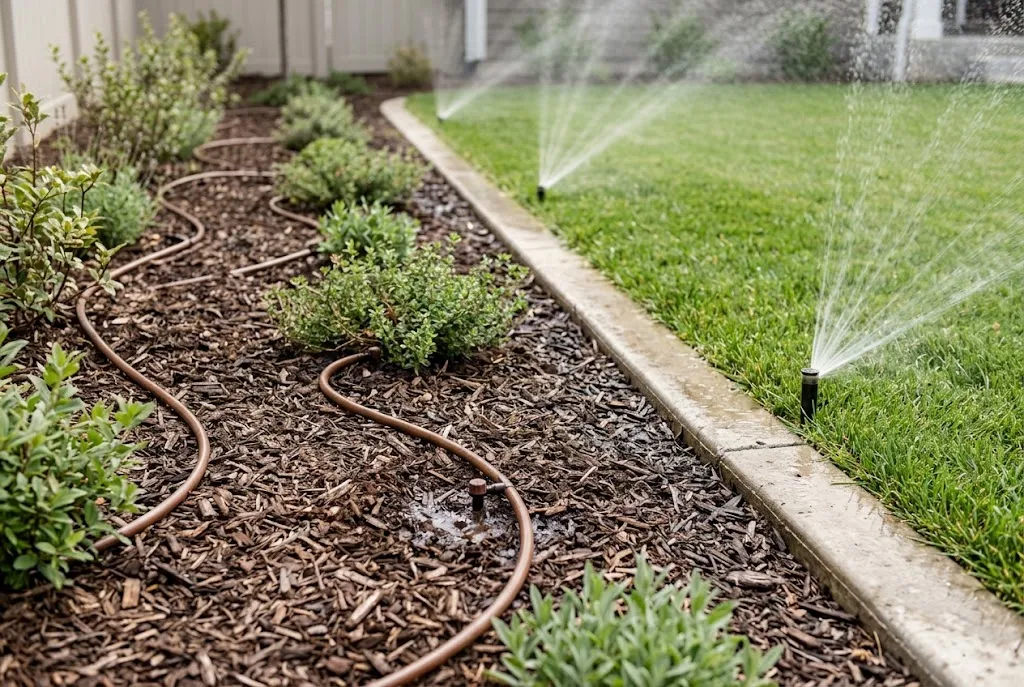
Lawns and planting beds usually need separate zones because turf and shrubs use water differently and are best served by different types of emitters. Grass is typically watered by spray or rotor heads that cover a broad, even area. Shrubs, perennials, and groundcover beds often do better with lower-volume watering placed closer to the roots, which keeps foliage drier and reduces runoff.
Putting both on the same valve forces a compromise: either the lawn is shortchanged or the beds are overwatered. Separate zones let each area run for the time it needs. For readers weighing which method suits their beds, you can compare drip irrigation and sprinkler systems before we finalize the layout.
How Head Placement Affects Coverage
Even coverage depends on spacing heads so their spray patterns overlap. A common design approach is to space heads so that each one throws water to its neighbors, which helps avoid dry gaps in the middle of the lawn. When heads are spaced too far apart, the areas between them tend to brown first in warm weather, even if the total watering time looks generous on the controller.
We also match heads within a zone. Mixing head types with very different application rates on one valve makes some areas wetter than others no matter how the schedule is set.
Reducing Overspray Onto Sidewalks and Driveways
Water that lands on concrete does nothing for the landscape. Along sidewalks, driveways, and patios, we choose spray patterns and positions that keep water on the lawn edge instead of the pavement. Narrow strips may call for specialized nozzles or a different watering method entirely. Good edge design is one of the clearest differences between a planned residential sprinkler installation and heads placed by guesswork.
Map Your Watering Zones Before the First Trench Is Cut
Separate zones for turf and beds, head spacing that reaches the edges, and spray patterns that stay off the driveway all begin with a careful look at your yard. Request a call back and we will talk through your layout, slopes, sun exposure, and water supply.
What Happens During the Installation on Your Property?
Once the design is set, the installation itself follows a logical order: route the lines, set the valves, place and connect the heads, wire the zones to the controller, and restore the disturbed areas. Here is what each part means for you as a homeowner.
Underground Lines and Trenching
Supply lines are buried in narrow trenches that follow the planned routes between the valves and the heads. Trenching does disturb the lawn and beds along those paths, which is why we recommend clarifying the routes, the restoration approach, and what condition the yard will be left in as part of the estimate. On an established lawn, the goal is to keep the disturbed areas as limited as the design allows.
Valves and Controllers
Each zone is controlled by its own valve, and valves are usually grouped in an accessible location so they can be inspected and serviced later. The controller is mounted where it can be reached easily and wired to each valve. We discuss controller options with you, including models that can adjust watering based on weather conditions, and explain the tradeoffs in plain terms.
Sprinkler Heads
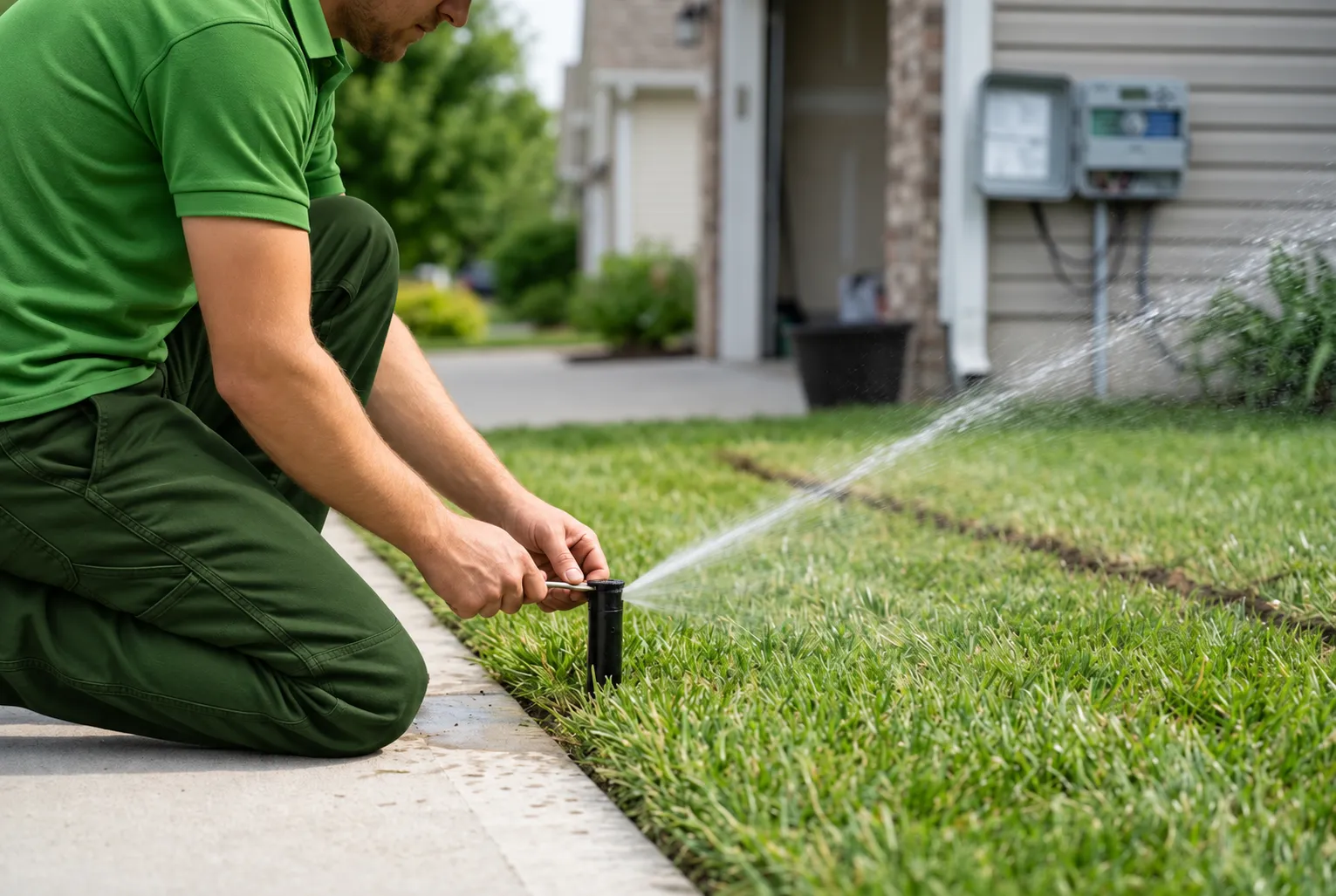
Heads are installed at the planned locations and set at the proper height relative to the finished grade so they pop up clear of the grass and retract below mowing height. Head type and nozzle choice follow the zone design developed during the assessment.
Working Around Paving and Hardscape
Getting water from one side of a driveway or walkway to the other is one of the variables that most affects project scope. Depending on the site, lines may be routed under paving or around it. How access around hardscape will be handled should be spelled out in the estimate so there are no surprises once work begins.
Should Sprinklers Go In Before New Sod or a Yard Renovation?
Yes, in most cases the sprinkler system should be installed before new sod is laid or new plants go in. Trenching through freshly installed turf disrupts the very area you just paid to establish, and new sod needs consistent watering from the day it is installed.
When irrigation and sod are part of the same project, we sequence the work so lines, valves, and heads are in place and tested before the lawn is laid. The heads are set to match the finished grade, which is easier to get right before the turf goes down. If you are planning a new lawn, our sod installation services can be coordinated with the irrigation work so the two phases fit together.
Renovations That Change Coverage Needs
Yard renovations often change the shape of the lawn more than homeowners expect. Converting part of the turf to planting beds, adding a patio, widening a walkway, or reshaping bed lines can all leave existing heads in the wrong places. A renovation is a good moment to step back and decide whether the current system can be adapted or whether a new layout will serve the redesigned landscape better.
Planning Restoration Ahead of Time
For renovation projects, restoration is often handled by the work that follows, such as new sod or fresh plantings. For established lawns, the estimate should describe how trenched areas will be restored. Either way, agreeing on restoration scope at the start keeps expectations aligned.
How Do We Test a New Sprinkler System Before Handoff?
We test a new system zone by zone before we consider the installation complete. Testing confirms that the design works on the ground the way it did on paper and gives us a chance to correct small issues while the crew is still on site.
- Zone-by-zone operation: Each valve is run individually to confirm it opens, closes, and activates the correct heads.
- Visible leaks: We check for leaks at connections, valves, and heads.
- Spray adjustments: Arcs and distances are adjusted so each head covers its intended area.
- Overspray checks: We watch the edges along sidewalks, driveways, walls, and windows and fine-tune patterns that land where they should not.
- Controller orientation: We walk you through the controller basics, including how to run a zone manually, adjust run times, and pause the system.
The right watering schedule depends on the landscape, the season, and any watering rules that apply where you live, so the schedule we set at handoff is a starting point rather than a permanent setting. As the seasons change, run times will likely need adjustment. Learning how to check sprinkler coverage after installation, such as watching each zone run and looking for dry spots or puddling, helps you catch problems early. The EPA WaterSense guidance on inspecting and adjusting sprinkler systems is a useful reference for the routine checks homeowners can do on their own.
See the Full Scope of Your Sprinkler Installation Up Front
We outline trenching routes, work around paving, restoration, and zone-by-zone testing in your estimate so you can review the full plan before crews arrive. Call (888) 601-1117, email info@landscaper-near-me.com, or request a call back to discuss your installation.
What Affects the Cost of a Sprinkler Installation Estimate?
A sprinkler installation estimate is shaped mainly by the size and layout of the areas being irrigated, the number of zones the design requires, the water supply conditions, and how much work is needed around hardscape and during restoration. Because every yard combines these factors differently, we prepare each estimate after reviewing the actual property.
Lawn Size and Layout
A large rectangular lawn is often simpler to cover than a smaller yard with curved beds, narrow strips, and multiple separate lawn areas. Irregular shapes typically require more heads and more careful planning to cover the edges without overspray.
Zone Count
More zones generally mean more valves, more wiring, and more line. Zone count is driven by the mix of lawn and planting beds, sun and shade differences, slopes, and the water supply’s capacity.
Water Supply Conditions
If available pressure or flow limits how many heads can run together, the design may need additional zones. Supply conditions can also affect where and how the system connects to the home’s water line.
Existing Equipment That Can Be Reused
On a sprinkler system replacement, components that remain serviceable after assessment may reduce the scope of new work. We will tell you what we think can stay and what should be replaced.
Access Around Hardscape and Restoration Scope
Crossing under driveways and walkways, working around patios, and restoring trenched areas all add to the scope. A clear estimate should describe how each of these will be handled. Knowing how to read a sprinkler installation estimate, including what is and is not included in restoration, makes it easier to compare your options with confidence.
What Should You Share When Requesting a Sprinkler Installation Estimate?
The more we know about your property up front, the more useful our first conversation will be. When you contact us, it helps to have the following ready:
- Property location: So we can confirm the home is within our service territory in Southeast Los Angeles County and Orange County.
- Photos: A few photos of the front and back yard, including lawn edges, beds, and any driveways or walkways the system will need to work around.
- Areas to irrigate: Whether you want the front lawn, back lawn, planting beds, or all of them included.
- Current system status: Whether a system is already in place, and if so, what problems you are seeing.
- Related projects: Any planned sod installation, renovation, or new planting that should be coordinated with the irrigation work.
Homeowners often start by searching for sprinkler installation near me, but the most important question is whether the team understands how to design around your specific yard. A short conversation about the items above helps us both decide on the right next step.
This page focuses on homes. If you manage an HOA community, apartment property, or commercial site, our commercial irrigation services page covers the planning and scheduling considerations that apply to managed properties.
Ready to Plan Your Residential Sprinkler Installation?
An in-ground system is a long-term part of your landscape, and the decisions that matter most happen early: how the yard is zoned, where the heads go, how the lines reach every area, and how the work fits with any sod or renovation plans. Our Sprinkler System Installation Services are designed to make those decisions clear before the work begins, so the finished system waters the lawn and beds you have rather than the yard someone imagined.
Whether you need a new sprinkler system installation for a home that has never had one or a full sprinkler system replacement for a system that has outlived its layout, we are ready to look at your property and talk through the options. Call Landscaper-Near-Me.com at (888) 601-1117, email info@landscaper-near-me.com, or request a call back to schedule your free estimate.
FAQ's - Frequently Asked Questions
Yes. We provide free estimates for residential sprinkler installation. We review the areas you want irrigated, your water supply, and any existing equipment, then outline the proposed scope so you can decide how to proceed.
Timing depends on lawn size, the number of zones, how much work is needed around driveways and walkways, and the restoration scope. We give you a working timeline with your estimate so you can plan around the project.
Sometimes. During the assessment, we check whether existing valves, lines, or heads are still serviceable and fit the new design. Components that are worn, mismatched, or poorly located are usually better replaced.
Trenching disturbs the lawn along the line routes. We keep those paths as limited as the design allows, and the estimate should describe how trenched areas will be restored so you know what to expect.
In most cases, yes. Installing and testing the system first avoids trenching through new turf and lets the heads be set to the finished grade. New sod also needs reliable watering as soon as it is laid.
We discuss controller options during planning, including models that adjust watering based on weather conditions. At handoff, we show you how to run zones manually, change run times, and pause the system.
Yes. Planting beds are often better suited to drip or other low-volume watering, while lawns typically use spray or rotor heads. A single controller can manage both types of zones.
This page covers homes. For HOA communities, apartment properties, and other managed sites, please see our commercial irrigation services or call (888) 601-1117 to discuss your property.