
Best Sod Companies Near Me:
How to Compare Local Sod Installers
Searching for the best sod companies near me usually returns a long list of names, a few star ratings, and very little that tells you which crew will do a good job on your particular lawn. Ratings can help you build a starting list. They rarely tell you whether a company will remove the old grass properly, prepare the soil, check that your sprinklers reach every corner, or recommend a grass that suits the yard you actually have.
So in this guide, “best” is not a ranking. It is a set of criteria you can hold up against your own lawn and your own written quotes: who serves your area, who has installed sod on yards like yours, who explains exactly what the price includes, and who is clear about what happens after the last roll goes down. We are Landscaper-Near-Me.com, and we install sod for homeowners in Southeast Los Angeles County and Orange County, so we wrote this from the side of the company that prepares those estimates.
The sections below cover how to shortlist local installers, how a sod supplier differs from a sod installer, what a useful site assessment looks at, what belongs in an estimate, the questions worth asking before you sign, and what to send when you request quotes. If you want to see how the installation itself is carried out, our sod installation services page walks through that work step by step.

Shortlisting Sod Companies? Add Our Free Estimate to Your Comparison
Send us your lawn’s approximate size and a few photos. We will visit to measure each area, check sprinkler coverage, and prepare a written free estimate you can compare line by line with other quotes.
What Makes the Best Sod Companies Near Me Worth Hiring?
The best sod company for your yard is the one whose plan fits the site and whose estimate leaves nothing important to assumption. That is a practical definition, and you can test it. A company that measures carefully, asks about your sprinklers, and writes down every part of the job is giving you evidence. A company that quotes a per-square-foot price over the phone without seeing the lawn is giving you a number.
When homeowners ask us how to weigh one installer against another, these are the qualities we suggest looking at first:
- Service area fit. The company works in your city or ZIP code regularly, so travel, delivery, and scheduling are routine rather than a stretch.
- Comparable projects. They can show recent sod jobs on yards like yours, whether that is a sunny front lawn, a shaded backyard, or a narrow side yard.
- A real site assessment. Someone looks at sun exposure, foot traffic, drainage, and sprinkler coverage before recommending a grass or a price.
- A written, itemized scope. Removal, soil preparation, sod variety, delivery, installation, cleanup, and any irrigation work are listed instead of being folded into one total.
- Clear responsibilities after installation. You know who waters the new lawn in the first weeks, who checks on it, and what a written warranty covers if one is offered.
- Straight answers about paperwork. License and insurance documentation is provided when you ask for it.
None of these depend on advertising budget or search position. A small local crew can meet every one of them, and a familiar name can miss several. Judge each company by how it handles your lawn, not by where it shows up in search results.
Sod Supplier vs. Sod Installer: Which One Do You Need?
A sod supplier grows, sells, or delivers turf. A sod installer prepares your yard and lays it. Some businesses do both, and some sod farms deliver straight to homeowners, which is why the two get confused so easily when you are searching for local help.
The distinction matters because the sod is only one part of a new lawn. A supplier’s responsibility generally ends when the pallets are set down on your driveway. Everything after that, including removing the existing grass, hauling away debris, loosening and leveling the soil, adjusting sprinkler heads, and fitting the pieces tightly together, belongs to whoever does the installation. If that person is you, the result rests on your preparation and your timing.
When buying from a supplier can make sense
Homeowners with a small, flat area that is already cleared, a sprinkler system that works well, and time to lay the sod the day it arrives sometimes buy turf directly. Freshly cut sod is perishable. Rolls left stacked on a pallet, especially in warm weather, can heat up and decline quickly, so delivery has to line up with a site that is completely ready.
When a full-service installer is the better fit
If the old lawn still has to come out, the soil is compacted or uneven, water collects in low spots, or you are not sure the sprinklers reach every edge, an installer who handles preparation and installation together is usually the safer route. One company owns the outcome, and you are not left trying to work out whether a problem started with the sod, the grading, or the watering.
When you contact companies, ask each one whether it supplies the sod, sources it from a farm, or expects you to buy it. The answer tells you who stands behind the condition of the turf on delivery day.
How Do You Find Local Sod Installation Companies That Serve Your ZIP Code?
Narrowing a search for the best sod companies near me starts with geography, then experience. Local sod installation companies usually list their service areas on their websites, in their contact forms, or on city pages. If a company names your city or confirms your ZIP code when you call, it clears the first filter. If its listed area stops a few cities short, it may still take the job, but ask how the distance affects scheduling and follow-up visits.
Next, look for evidence of comparable work. A company that mostly handles large commercial grounds may not be the right match for a residential side yard reached through a narrow gate, and a crew that mainly sods open, level lawns may have less practice with a steep front slope. Ask for recent photos, or for addresses of finished jobs you can drive past, that resemble your project in size, sun exposure, and access.
Three to five candidates makes a workable shortlist. With fewer than three, it is hard to tell a reasonable quote from an unusual one; with many more than five, comparing them turns into a chore. As you build the list, jot down a few basics for each company:
- Whether its own crew installs the sod or the work is subcontracted
- Whether it handles old lawn removal and disposal
- Whether it evaluates and repairs irrigation or refers that work out
- How it schedules site visits and how soon written estimates follow
- Who your contact will be from the estimate through the first weeks after installation
These notes do not settle anything on their own, but they make the later steps much easier. When estimates start arriving, you will already know which companies are quoting the same kind of job.
Sod Quotes That Don't Line Up?
Get a Scope You Can Compare
When one quote includes removal, soil preparation, and sprinkler adjustments and another never mentions them, the totals are not comparable. We will walk your lawn and itemize each part of the job, from the grass variety to irrigation work, so you can see exactly what you are paying for.
How to Choose a Sod Installer: What a Good Site Assessment Covers
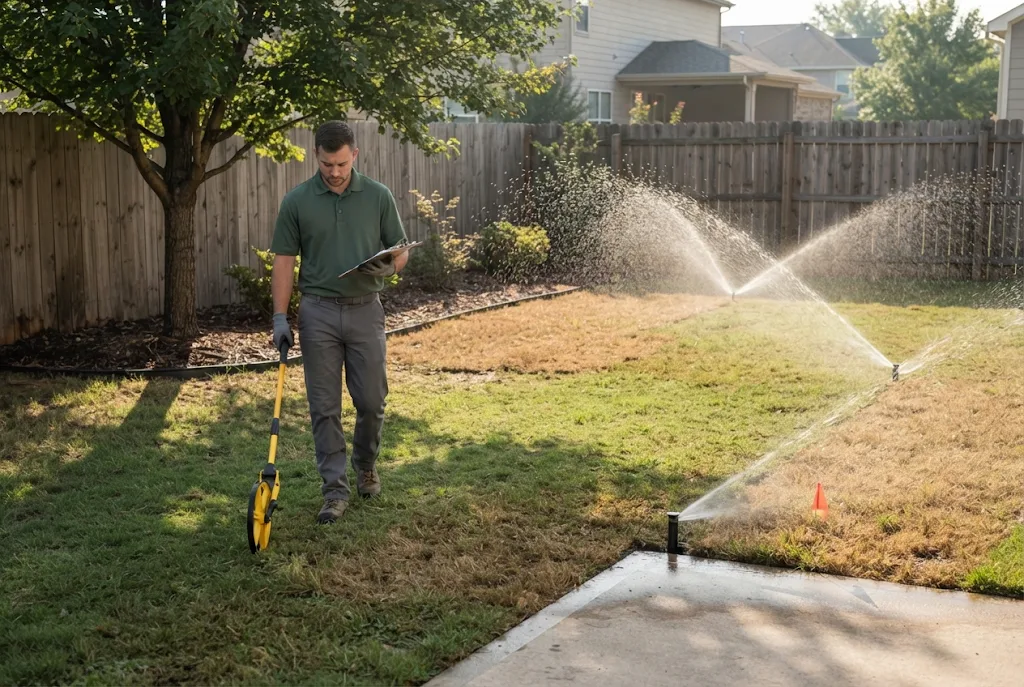
The site visit teaches you more about how to choose a sod installer than any website, because it shows how a company thinks before it has your signature. A careful assessment looks past the brown patches and asks why the old lawn struggled, or what the new one will have to handle.
While walking your yard, a thorough installer should cover at least these points:
Sun exposure through the day
A front lawn in full afternoon sun and a backyard shaded by a neighbor’s tree may call for different grasses, or at least different expectations. The installer should ask where shade falls and for how long, not just judge the yard by how sunny it looks during a short visit.
Foot traffic and how you use the lawn
Children playing, a dog running the fence line, a path worn from the patio to the side gate: these patterns influence turf selection and sometimes the layout itself. Questions about how your household uses the lawn are a sign that the company is thinking about how the grass will hold up, not only how it will look on the first day.
Drainage and grade
Low spots that hold water after irrigation, soil that slopes toward the house, and hard, compacted ground can all undermine new sod. An installer should point these out and tell you whether grading, soil loosening, or amendments are part of the scope or quoted separately.
Sprinkler coverage
New sod depends on even watering while its roots grow down into the soil. A good installer asks to see the system run, looks for heads that are broken, tilted, buried, or spraying onto pavement, and tells you whether coverage needs attention before installation.
Measurements matter as well. Rough dimensions are fine for a first conversation, but a written estimate should rest on the installer’s own measurement of each lawn area. If two companies arrive at very different square footage for the same yard, ask each one how it measured.
Why the Turf Recommendation Should Fit Your Yard
Different companies may recommend different grasses for the same lawn, and that is not automatically a warning sign. What matters is whether each recommendation is explained in terms of your site. A suggestion tied to sun hours, traffic, and watering is worth more than one based on whatever happens to be in stock.
Southern California lawns are commonly installed with warm-season grasses such as hybrid Bermuda, zoysia, St. Augustine, or kikuyu, or with cool-season tall fescue blends. Warm-season grasses generally cope with heat and dry spells well and grow most actively in warm months, though some lose color in cooler weather. Tall fescue tends to stay green through more of the year and usually needs more water in summer. These are broad tendencies; individual varieties differ, and the right choice depends on the conditions in your yard.
For a closer comparison before your site visits, our article on what type of grass grows best in Southern California covers the common options and the conditions each one handles best. Use it to ask sharper questions, not to override what an installer sees on site.
A turf recommendation deserves a second look when:
- The same grass is proposed for every area, even where sun and shade differ sharply
- The installer cannot explain why the variety suits your yard
- Shade tolerance, water needs, and seasonal color changes never come up
- The estimate lists “sod” without naming the variety
Whatever grass a company recommends, ask for the variety by name on the written estimate. That small detail protects you from a substitution and makes quotes far easier to compare.
What Is Included in a Sod Installation Estimate?
A complete sod installation estimate describes the whole job, not just the grass. When you lay two quotes side by side, each one should address the following items, either with a price or with a clear note that the item is excluded:
- Lawn area: the measured square footage of each area being sodded.
- Sod variety: the specific grass, named, rather than “sod” or “turf.”
- Delivery: whether delivery is included and how the sod gets from the truck to the yard.
- Existing lawn removal and disposal: how the old grass and roots come out and whether hauling the debris away is part of the price.
- Soil preparation: loosening the soil, any recommended amendments, and raking to a smooth finish.
- Grading where needed: correcting low spots, slopes toward the house, or uneven areas.
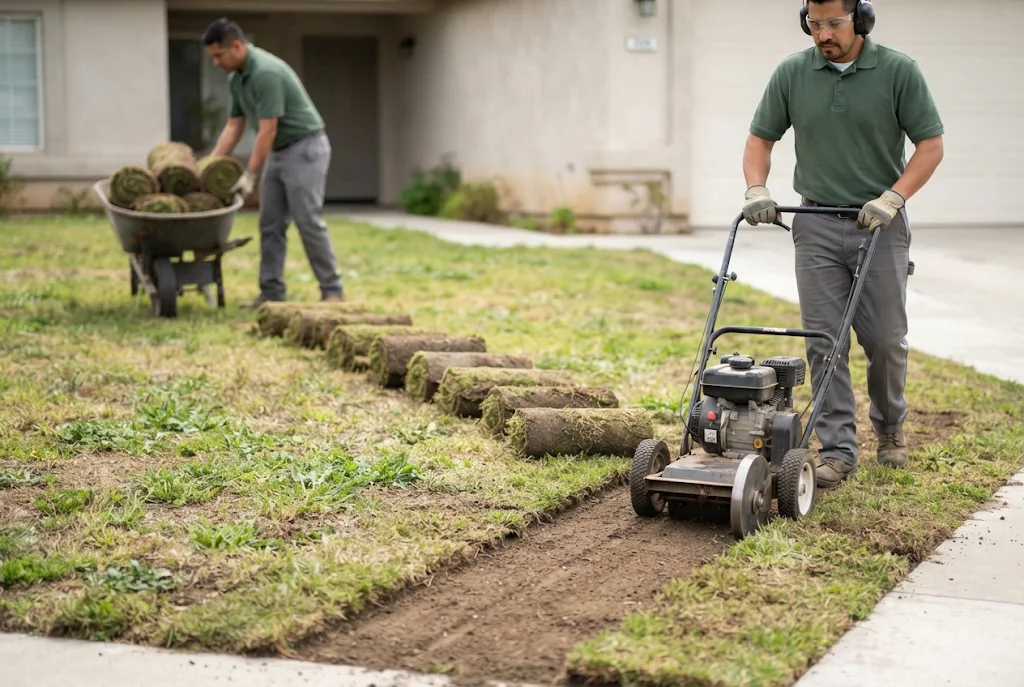
- Installation: laying the sod, cutting around edges and beds, and rolling.
- Cleanup: clearing soil and scraps from walkways, driveways, and planting beds.
- Irrigation work, if any: repairs or adjustments, ideally listed and priced on their own.
Irrigation earns its own line because it varies so much from yard to yard. One lawn needs a few heads raised to the new grade; another has a failed valve or a zone that never reached the back corner. A separate price shows you exactly what that work costs, and it lets you compare installers fairly even when one includes sprinkler work and another does not. If your system already has problems, our sprinkler repair services can be scheduled ahead of the new lawn so coverage is sorted out before the sod arrives.
Many homeowners also want to understand what affects sod installation cost before the quotes come in. The main drivers are usually the size of the lawn, how much removal and soil work it needs, how easily materials reach the yard, the grass variety, and the extent of any irrigation repair. A side yard with no truck access, for example, takes more labor per square foot than an open front lawn beside the driveway.
Finally, read what is left out. An estimate that lists its exclusions, such as watering after installation, ongoing mowing, or return visits, is easier to trust than one that simply says nothing about them.
Bring Your Sod Contractor Questions to Us Before You Decide
Ask who will do the work, how we would prepare your yard, and what happens after the sod is down. Call (888) 601-1117, email info@landscaper-near-me.com, or request a callback and we will talk through your lawn.
Questions to Ask a Sod Contractor Before You Sign
By the time two or three written estimates are in hand, most homeowners have a favorite. Before you commit, these questions to ask a sod contractor help confirm that the company behind the estimate lives up to the paperwork.
Who will actually do the work?
Ask whether the company’s own crew installs the sod or whether the job is subcontracted, and who supervises on installation day. Neither answer is wrong by itself, but you should know who is responsible if something needs correcting.
Can you share recent references?
Ask for a few recent residential sod jobs similar to yours, ideally ones finished several months ago so you can see how the lawn has done since establishment. A short conversation with a past customer often tells you more than a page of online reviews.
What licensing and insurance documentation can you provide?
In California, landscaping projects valued at $1,000 or more in combined labor and materials require a state contractor license, and the Contractors State License Board includes plants and sod among the landscaping work that falls under that rule. The board’s guide to choosing the right landscaper explains how to verify a license, which classification covers landscaping, why you should get certificates of liability and workers’ compensation insurance before work begins, and how much a contractor may ask for as a down payment. Checking takes a few minutes, and it is worth doing for every company on your list, including ours.
When can you start, and how long will the job take?
Ask for an expected start window, how many days the work should take, and what happens if weather or sod availability causes a delay. Find out whether removal and installation happen in one visit or on separate days.
Is there a written warranty, and what does it cover?
Some installers offer a written warranty on the sod or the workmanship, and some do not. If one is offered, ask what it covers, how long it lasts, and what conditions apply, such as following the watering instructions. A verbal promise is hard to rely on later, so ask for the terms in writing.
Who is responsible for watering and follow-up?
New sod is at its most vulnerable during the first few weeks, so settle who waters, who adjusts the irrigation controller, and whether the installer comes back to check rooting. On many residential jobs the homeowner takes over watering right after installation, using the installer’s instructions. Our guide on how to care for newly installed sod covers that period in detail.
How to Compare Sod Installation Quotes Side by Side
To compare sod installation quotes fairly, make sure every estimate describes the same lawn and the same work. Two quotes for “1,200 square feet of sod” can describe very different projects when one includes removal, soil preparation, and sprinkler adjustments and the other assumes you will handle all three.
An easy way to organize the comparison is a simple table: one row for each line item from the estimate list above and one column for each company. Fill in the price, or write “included,” “excluded,” or “not mentioned.” The gaps usually explain most of the difference between a high quote and a low one.
While you fill it in, watch for these warning signs:
- Square footage far from the other quotes with no explanation
- No sod variety named, or a different variety from the one discussed on site
- Removal and disposal mentioned but never described
- A request for a large payment up front, or for cash only
- Vague timing such as “sometime next month” with no start window
- Pressure to sign the same day to hold a price
When the lowest number is not the lowest cost
A low quote that skips soil preparation or ignores a broken sprinkler zone can leave you with sod that settles unevenly, dries out in strips, or struggles to root into compacted ground. Redoing those sections later often costs more than preparing the site properly the first time. That does not make the highest quote the right one; the right quote is the one that covers what your yard actually needs.
Full replacement or targeted sections?
Quotes can also differ because companies see the size of the job differently. One may suggest replacing only the damaged areas while another recommends the entire lawn. Knowing how to tell if an old lawn needs full sod replacement helps here. Thinning across most of the yard, weeds spread throughout, or soil and grade problems that affect the whole lawn usually point toward full replacement, while damage confined to a few areas from a leak, a construction project, or a pet’s favorite route can often be handled with targeted sections. Ask each company to explain why it recommends the scope it does.
How to Request Estimates From the Best Sod Companies Near Me
A clear request gets you faster, more accurate estimates and makes comparison easier. Before you call or fill out a contact form, gather these details:
- Approximate lawn dimensions: the length and width of each area, even if rough. A tape measure or a satellite map view is enough for a first conversation.
- Photos: wide shots of each lawn area plus close-ups of problem spots, sprinkler heads, and slopes.
- Access constraints: gate widths, steps, the distance from the street to the backyard, and where a delivery truck can park.
- Known irrigation or drainage issues: dry corners, broken heads, soggy areas, or water running onto walkways.
- Your goals and timing: a new lawn, a full replacement, or targeted sections, and when you would like the work done.
Send the same information to every company on your shortlist. That keeps the comparison fair, and the companies that come back with thoughtful follow-up questions are showing you how they approach the work.
We provide free estimates for residential sod installation across our service area in Southeast Los Angeles County and Orange County. If you live in Newport Beach, our page on sod installation in Newport Beach covers local details. Homeowners in Beverly Hills can start with our page on sod installation in Beverly Hills.
When you are ready, call Landscaper-Near-Me.com at (888) 601-1117, email info@landscaper-near-me.com, or request a callback. We will set a time to look at your yard, measure the lawn areas, run the sprinklers, and give you a written free estimate you can line up against every other quote on your list.
FAQ's - Frequently Asked Questions
For a small, flat, already-cleared area with good sprinkler coverage, some homeowners lay sod themselves. Most of the effort, though, goes into removal, soil preparation, and grading, and the sod has to go down soon after delivery. When the job includes taking out an old lawn, fixing drainage, or working around slopes and tight access, a company that handles preparation and installation together usually produces a more even result.
Our mild climate allows sod to be installed through much of the year, but it establishes most easily when temperatures are moderate and the grass is actively growing. Warm-season grasses such as Bermuda and zoysia generally root best from late spring into summer, while tall fescue does best in spring or fall. Installing during a heat wave raises watering demands in the first weeks.
Yes. Targeted replacement suits areas damaged by a leak, construction, or heavy wear along a pet route. The replaced section should be prepared the same way as a full lawn, with the new edges fitted tightly against the existing turf. Ask whether your current grass type is available so the new section matches as closely as possible.
Even the same variety can look a little different at first, because the new sod was grown under different conditions. The difference usually fades as the new section roots in and is mowed and watered along with the rest of the lawn. If you do not know your current grass type, a sample or a close-up photo helps an installer find the nearest match.
Not necessarily. It is often better to let each installer see the system running so the estimates reflect the repairs actually needed. Tell every company about problems you already know of, such as dry spots or broken heads. If you repair the system first, keep a record of the work so installers do not quote the same repairs twice.
Many do, but not every company includes it in the base price. On a large lawn, removal and disposal can be a significant part of the job, since old turf, roots, and some soil all have to go somewhere. Confirm that each estimate explains how the old lawn will be removed and whether hauling it away is included.
Ask each company to explain its choice in terms of your sun exposure, foot traffic, and watering. The difference may reflect the varieties each one can source, or a genuine disagreement about your site conditions. The explanation, and how well it matches what you know about your yard, is usually the best tie-breaker.
Some installers accept this arrangement, while others prefer to source sod they can inspect and schedule themselves. If you supply the turf, agree in advance on delivery timing and on who is responsible if it arrives in poor condition. An installer may limit any workmanship warranty when it did not provide the material, so ask about that before you buy.