
Commercial Landscape Services for Property Managers and Owners
Commercial landscape services give a business property a consistent, maintained exterior: mowed turf, tidy beds, working irrigation, trimmed shrubs, and walkways that stay clear. For property managers, facility managers, and association boards, though, the hard part is rarely understanding what a landscape needs in general. It is deciding what your grounds need right now, how that work should be scoped, and who should perform it.
This page is a practical guide to that decision. We explain what commercial landscape maintenance usually covers, how needs shift between an office entrance, a retail frontage, an industrial yard, and an apartment courtyard, where irrigation fits, and when repairs or upgrades should be priced apart from routine upkeep. If you would like the longer definition first, our explainer on what commercial landscaping includes goes deeper.
Landscaper-Near-Me.com connects property owners and managers with relevant landscape services. The sections below therefore also show what to compare in proposals and what to prepare before you request a free estimate.

Start With a Free Estimate for Your Commercial Grounds
Share your property type, location, and what the landscape needs now. We will help connect you with relevant commercial landscape services and a free estimate. Call (888) 601-1117 or email info@landscaper-near-me.com.
What Do Commercial Landscape Services Include, and What Falls Outside Them?
Commercial landscaping services generally include the recurring care of planted and turfed areas around a building, along with related work that is scoped on its own: irrigation repairs, plant replacement, bed renovation, and similar projects. Keeping those categories distinct is the single most useful habit when you read a proposal, because it explains most of the surprises that show up on invoices later.
Routine upkeep versus separately scoped work
Think of the work in three layers, each with its own purpose and its own way of being priced.
- Recurring maintenance keeps the landscape in its current good condition: cutting and edging turf where it exists, shaping shrubs and hedges, tending planting beds, managing weeds, and clearing landscape debris.
- Repairs respond to something that has failed or been damaged, such as a broken sprinkler head, a section of dead turf, or a shrub that has declined.
- Improvements and installation change the landscape rather than maintain it: new plantings, refreshed beds, added mulch, or hardscape alterations.
Why the written proposal controls the scope
No two properties are maintained identically, so the tasks, visit schedule, and exclusions belong in writing. When we talk about commercial landscape management, we mean an arrangement where the property’s expectations, the provider’s scope, and the way problems get reported are all documented rather than assumed. A line such as “grounds maintenance” without detail leaves too much open to interpretation on both sides.
Which Property Priorities Should Commercial Landscape Management Protect?
Commercial property landscaping is judged first by what visitors, tenants, and residents see and walk through. Before comparing tasks, it helps to name the parts of the property that matter most, because they shape what good service looks like.
Entrances and frontage set the first impression, so they usually deserve the closest attention. Common areas should look cared for and remain usable. Pedestrian routes need to stay clear of encroaching branches, spilled mulch, and wet pavement from overspray. Plantings near signs, monument walls, and vehicle entrances should not block visibility. Tenants and residents also notice when work is noisy or disruptive, so service timing often needs to be coordinated around deliveries, business hours, parking demand, or community quiet periods.
Common reasons property managers look for a different approach
Most requests for new or additional landscape services for property managers begin with a pattern of small problems rather than a single failure. Typical triggers include:
- Inconsistent upkeep, where the grounds look good one week and neglected the next.
- Recurring complaints from tenants, residents, or visitors about the same areas.
- Overgrown beds and shrubs that have outgrown their space or crowd walkways.
- Turf that is thinning, patchy, or deteriorating despite regular mowing.
- Irrigation issues that were reported but never resolved.
- Unclear responsibility, with no one certain whether a given problem belongs to maintenance, the property team, or a separate contractor.
How Do Landscape Needs Differ Between Offices, Retail Centers, Industrial Sites, and Residential Communities?
Property type changes what matters most, and a proposal that treats every site the same should prompt questions. The categories below are starting points for discussion, not fixed templates, since each site’s layout and condition vary.
Office buildings and business parks
Entry landscaping carries much of the visual weight here. Clean bed edges, healthy specimen plants, and a tidy approach from the parking area to the door tend to matter more than large lawn areas. Business parks with several buildings also benefit from a consistent standard across shared frontage.
Retail centers
Retail frontage and parking-lot planting areas face heavy foot traffic, vehicle contact, litter, and reflected heat. Visibility around storefront signs and drive entrances is a practical concern, so pruning decisions affect both appearance and customer sightlines.
Industrial and warehouse properties
Landscaping often concentrates on access areas, street frontage, and perimeter plantings. The priority is usually dependable, low-fuss upkeep that keeps truck routes, signage, and drainage areas clear, not elaborate planting design.
Apartment and multifamily communities
Residents live with the grounds every day, so courtyards, pathways, and play or gathering areas see constant use. Turf wear, irrigation around buildings, and resident feedback tend to drive the maintenance conversation.
HOA and association common areas
Shared entries, slopes, medians, and community amenities are often governed by association standards and budgets approved by a board. Clear scope documents and consistent reporting help boards explain what they are paying for. Mixed-use properties may combine several of these situations in one footprint, which makes a site-by-site scope especially useful.
Describe Your Entrance, Frontage, or Common Areas
Office entries, retail frontage, and shared community spaces each need something different. Tell us how your property is used and what visitors, tenants, or residents notice most, and we will help you ask for a scope that fits.

What Does Routine Commercial Landscape Maintenance Involve?
Routine commercial landscape maintenance is the ongoing care that keeps a property presentable between projects. The core tasks are fairly consistent, though which ones apply to your site depends on what is actually planted there.
Where turf exists, mowing and edging keep lawns and borders defined, and our page on commercial lawn care services covers turf maintenance in more detail. Shrub and hedge care keeps plants within their intended size and away from walkways, windows, and signs. Planting-bed upkeep includes removing spent growth, refreshing edges, and keeping beds orderly. Weed management addresses beds, hardscape joints, and turf margins, and landscape debris cleanup removes clippings, leaves, and litter so the results of the work are visible. Seasonal cleanup adds heavier clearing when growth or leaf drop calls for it.
The important qualifier is that not every task happens at every visit, and not every property needs every task. A proposal for commercial grounds maintenance should say which services are included, how often, and where the boundaries are. Business landscape maintenance that looks complete on paper but leaves out beds, slopes, or planters can leave gaps no one notices until a complaint arrives.
How Often Should Commercial Landscape Maintenance Be Scheduled?
The right frequency depends on plant growth, season, how the property is used, the current condition of the landscape, and the standard the owner or association wants. A well-established site in a slow season may need less attention than a high-visibility frontage during active growth.
That is why we caution against assuming a universal weekly schedule. Weekly visits can make sense for some turf-heavy or high-traffic properties during peak growth, while other sites are served adequately by a different rhythm, and some tasks, such as hedge shaping or bed refreshing, may occur only periodically. Ask a provider to explain how they would set frequency for your site, which tasks are tied to each visit, and how the schedule would change with the seasons.
Commercial landscape upkeep also benefits from a defined standard. Agreeing on what “acceptable” looks like for entrances, beds, and turf gives both sides a reference point when conditions change, and it makes follow-up conversations about quality much simpler.
How Are Irrigation Problems Handled Within Commercial Landscape Management?
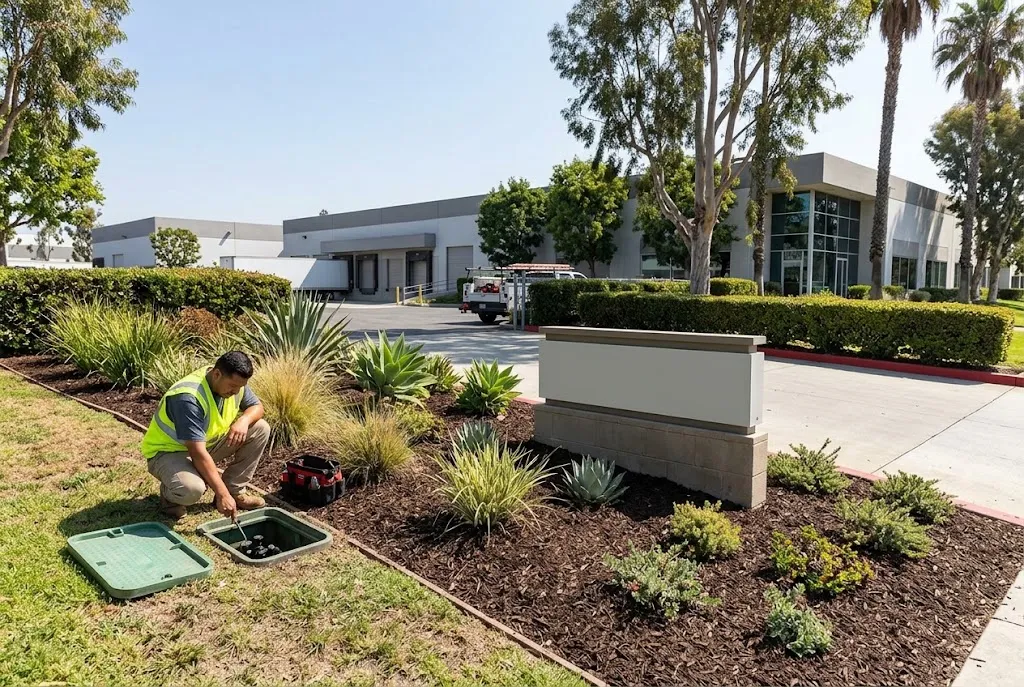
Irrigation problems should be reported, documented, and scoped, not absorbed silently into a general maintenance line. Watering failures damage plants, waste water, and cause secondary problems such as slippery pavement and stained walls.
What to watch for on the property
The most visible issues include leaks and unexplained wet spots, broken or misaligned sprinklers, areas that stay dry while others are soaked, overspray onto walkways, parking areas, or buildings, and runoff flowing off slopes or into gutters. EPA WaterSense guidance on commercial irrigation notes that unexpected wet spots on walks, in parking lots, and in planted areas can point to a leak or a damaged sprinkler head, which is a useful reminder that managers and on-site staff can often spot trouble before it becomes expensive.
Seasonal scheduling and who is responsible
Landscape water needs change through the year, so controller schedules should be reviewed rather than left unchanged. Decide in advance whether routine maintenance includes irrigation checks, whether repairs are quoted separately, and who approves the work. Our irrigation services page provides detailed guidance on system inspection, repair, and installation, so we will keep the specifics there and focus here on how irrigation fits into a broader maintenance arrangement.
Ready to Talk Through Your Commercial Landscaping Needs?
Bring your questions about maintenance scope, irrigation concerns, or comparing proposals. Call (888) 601-1117, email info@landscaper-near-me.com, or ask for a call back.
Trees, Shrubs, Turf, and Upgrades: Where Does Maintenance End and Project Work Begin?
Ordinary upkeep keeps the existing landscape healthy. Project work changes or restores it. Treating the two as separate budget lines protects the maintenance program from being drained by one-time needs, and it lets a property team plan enhancements deliberately.
Pruning, overgrowth, and tree work
Shrub and hedge pruning that keeps plants off paths, signs, and sightlines belongs in regular care. Larger trees are different. Elevated pruning, large-limb removal, and assessment of damaged or declining trees are specialist work and should be scoped separately, which is where our tree trimming services page applies. When any plant appears to be declining, ask for an assessment of the cause before simply replacing it, because the underlying issue may be irrigation, drainage, or pests.
Turf restoration and sod
Localized turf restoration, such as repairing worn entrance lawns or patches damaged by drainage or traffic, is often a project rather than a routine task. Our overview of sod care explains what to consider when new turf is part of the plan.
Refreshing beds and related improvements
Commercial landscape enhancements often start small: replacing declining plants, refreshing planting beds, or replenishing mulch so beds look finished and suppress weeds. Some properties also consider adjacent hardscape improvements, such as edging, borders, or walkway-adjacent features, and our hardscape services page describes those options. Where hardscape and planting are linked, a coordinated scope can reduce rework.
Keeping enhancement budgets separate
Ask for improvements to be quoted individually so you can approve, defer, or phase them. A property team that can see maintenance, repairs, and enhancements as distinct line items can make better decisions across budget cycles.
What Affects Commercial Landscaping Estimates, and How Do You Compare Providers?
Commercial landscaping estimates reflect property size, landscape complexity, current condition, site access, visit frequency, and the tasks included. A large property with mostly turf can be priced differently from a smaller site with intricate beds, slopes, or heavy irrigation needs, and a neglected landscape often requires more initial work than one that has been maintained consistently.
Comparing equivalent scopes
The most reliable way to compare commercial landscape companies is to line up the same scope side by side: same areas, same tasks, same frequency, and the same treatment of irrigation, trees, and cleanups. If one proposal is much lower, find out what it leaves out. If another is higher, check whether it bundles repairs or enhancements that the others price separately. Identify every item that is priced as an extra, since these are where totals most often diverge.
Questions to ask commercial landscaping contractors
The questions below are selection criteria, not promises that any provider will make. A good provider should be able to answer them clearly and put the answers in writing where appropriate.
- What exactly is included in the written scope, and what is excluded?
- How is service scheduled, and how are changes communicated?
- How are issues such as irrigation leaks or plant damage reported, and who approves repair work?
- What documentation is provided for the work, appropriate to the proposed service?
- How are improvements and repairs quoted and approved?
How Do You Request Service or Switch Commercial Landscape Providers?
The process is simpler when you arrive prepared. A short property description and a few photographs let a provider scope the work accurately and reduce back-and-forth.
What to have ready
Useful assessment inputs include the approximate landscaped area, the condition of plants and turf, the condition of the irrigation system, access to the grounds, existing maintenance problems, the appearance you want, and any operational constraints such as business hours or resident quiet times. When you contact us, include the property location, property type, requested services, desired timing, and photographs if you have them.
Planning a transition between providers
If you are replacing a current provider, decide what needs to continue without interruption, document the condition of the grounds, and confirm contract notice terms with your current provider. Start dates and contract terms depend on the provider and the agreement, so we do not promise either, but a defined handoff lowers the risk of gaps in service.
Location pages for specific markets
Local conditions and property mixes differ, so we maintain pages for specific markets. If your property is in the Los Angeles market, see our page on commercial landscaping in Los Angeles. For coastal Orange County properties, read about commercial landscaping in Newport Beach. If your property is elsewhere, contact us with its address and we will let you know what service options are available.
Take the next step
Reliable commercial landscape services start with a clear picture of the property and an honest scope. Request a free estimate, call (888) 601-1117, or email info@landscaper-near-me.com, and we will help connect your property with the landscape services it needs.
FAQ's - Frequently Asked Questions
It depends on the written proposal. Recurring service commonly covers mowing and edging where turf exists, shrub and hedge care, planting-bed upkeep, weed management, and debris cleanup. Irrigation repair, tree work, plant replacement, and improvements are often priced separately, so confirm the inclusions before you compare.
Maintenance keeps the existing landscape healthy and presentable on a recurring basis. Improvements, such as new plantings, refreshed beds, localized turf restoration, or hardscape work, change the landscape and are normally quoted as separate projects.
Property size, landscape complexity, current condition, site access, visit frequency, and the tasks included all influence an estimate. Separately priced items like repairs and enhancements can also change the total, so ask providers to itemize them.
There is no single schedule. Frequency depends on plant growth, season, how the property is used, its condition, and the standard you want. Ask each provider to explain how they would set and adjust visit frequency for your site.
Document what you see, including wet spots, broken heads, overspray, or dry areas, with photographs if possible. Report it promptly and ask for the repair to be scoped in writing. Our irrigation services page offers more detailed guidance.
Line up the same areas, tasks, frequency, and exclusions in each proposal, then identify anything priced as an extra. Comparing equivalent scopes matters more than comparing the bottom-line number alone.
Have the property location and type, an approximate landscaped area, the services you want, desired timing, known problems, and photographs if available. Mention operational constraints such as business hours or resident quiet times.
We serve properties within our established service territory in Southeast Los Angeles County and Orange County. Contact us with the property address and we will confirm what service options are available.