Tree Cutting Service for Homes and Managed Properties
A request for a Tree Cutting Service can mean three quite different jobs. One caller wants a single limb taken off the roofline. Another wants an overgrown canopy brought back from the driveway. A third wants the whole tree gone. Each calls for different equipment, a different crew plan, and a different estimate, which is why the most useful first step is working out which kind of cutting the tree and the property actually need.
At Landscaper-Near-Me.com, we help homeowners, rental and multifamily managers, HOA representatives, and commercial property managers sort that out before anyone commits to a scope. This page explains how a professional tree cutting service is assessed, how to tell selective branch work from full removal, what to gather before requesting a tree cutting estimate, and which items belong in a written scope. If you would rather talk it through, call us at (888) 601-1117 or request a free estimate, and we will help connect your project with the right service.
Request a Free Tree Cutting Service Estimate
Tell us about the tree, the property, and the result you want. We will help identify the right type of cutting and connect your project with an appropriate provider. Call (888) 601-1117 or request a callback.
What Does a Tree Cutting Service Include?
Tree cutting is an everyday phrase, not a single technical service. In practice it covers any work where live or dead wood is cut from a tree, and the request usually falls into one of three categories.
Cutting selected branches
This is targeted work on specific limbs: one that rubs the fascia, one that broke in the wind and is still hanging, one that blocks a walkway light. A tree branch cutting service of this kind leaves the tree’s overall shape and size largely as they are. The methods involved fall under tree trimming and pruning, and our dedicated page covers them in detail.
Reducing obstructing growth
Here the goal is clearance or proportion, and more than one limb is involved. Cutting back overgrown tree branches away from a roof, a parking stall, a sign, or a neighboring unit means shortening or removing several limbs while keeping the tree healthy enough to stay. The work is still pruning, but the scope is larger and the choice of cuts matters more, because each one changes how the tree responds.
Cutting down the entire tree
Sometimes “cut the tree” means exactly that. Taking a tree down is a separate service with its own planning, equipment, and site considerations, and it cannot be undone. We describe that process on our page about complete tree removal. On this page we stay with the earlier question: how to know which of the three you are really asking for.
Which Situations Lead Property Owners to Request Tree Cutting?
Most requests start with something a person notices from the ground. The observation is useful, but it describes a symptom, and the appropriate work depends on what is behind it.
- Branches crowding usable outdoor space. Limbs hanging low over a patio, play area, driveway, or tenant walkway are among the most common reasons for residential tree cutting. Clearance pruning often resolves this without changing the tree much.
- Growth close to buildings. Branches touching a roof, gutter, wall, or window are a maintenance concern for the structure and a reason to look closely at how the tree is growing. How much to cut depends on the limb’s size and where it attaches.
- Dead or damaged limbs. Deadwood and broken or cracked branches are usually handled by removing dead branches selectively. A tree carrying some deadwood is not automatically a failing tree.
- A tree being considered for removal. A lean, a thinning canopy, lifted pavement, or simply a tree that has outgrown its spot can all raise the question. Each has several possible explanations.
We would caution against treating appearance alone as proof that a tree is hazardous or has to come down. A lopsided crown, seasonal leaf drop, peeling bark on a species that sheds bark naturally, or a long-standing lean can look alarming and still be normal for that tree. The reverse is also true: a tree that looks full and green can have defects that only a close inspection finds. That is the reason an assessment comes before a recommendation.
What Does a Tree Cutting Assessment Consider?
A tree cutting assessment connects what you want with what the tree can reasonably tolerate and what the site allows. It is the step that turns “something needs cutting” into a defined scope. A qualified provider will typically weigh the following.
Your objective
Clearance over a roof, more light on a lawn, a view from a window, removal of a storm-damaged limb, and space for a construction project are all different goals. Stating the outcome you want, and leaving open which cut achieves it, gives the assessor room to propose the least invasive way to get there.
The tree itself
Species matters, because trees differ in how they respond to pruning and how well they close over wounds. So do age, overall vigor, visible decay or cracks, and branch structure, including how limbs are attached and where weight is concentrated. Height and trunk diameter affect both the method and the equipment.
The surroundings
Structures, fences, pools, hardscape, irrigation, and planting beds beneath the canopy shape how limbs can be lowered. Access for equipment, the distance to the street, and nearby overhead or underground utilities all enter the plan.
The effect of the proposed cuts
Every cut removes leaf area the tree uses to feed itself and leaves a wound it must seal. A sound assessment asks what the tree will look like, and how it is likely to respond, in the seasons after the work as well as on the day the crew leaves. That question often decides whether lighter pruning will do or whether a larger intervention is justified.
Branch Cutting or Full Removal?
Sort Out the Scope First
If you are unsure whether selective pruning will solve the problem or the tree should come down, share your photos and concerns with us. We will help you frame the right questions before any work is authorized.
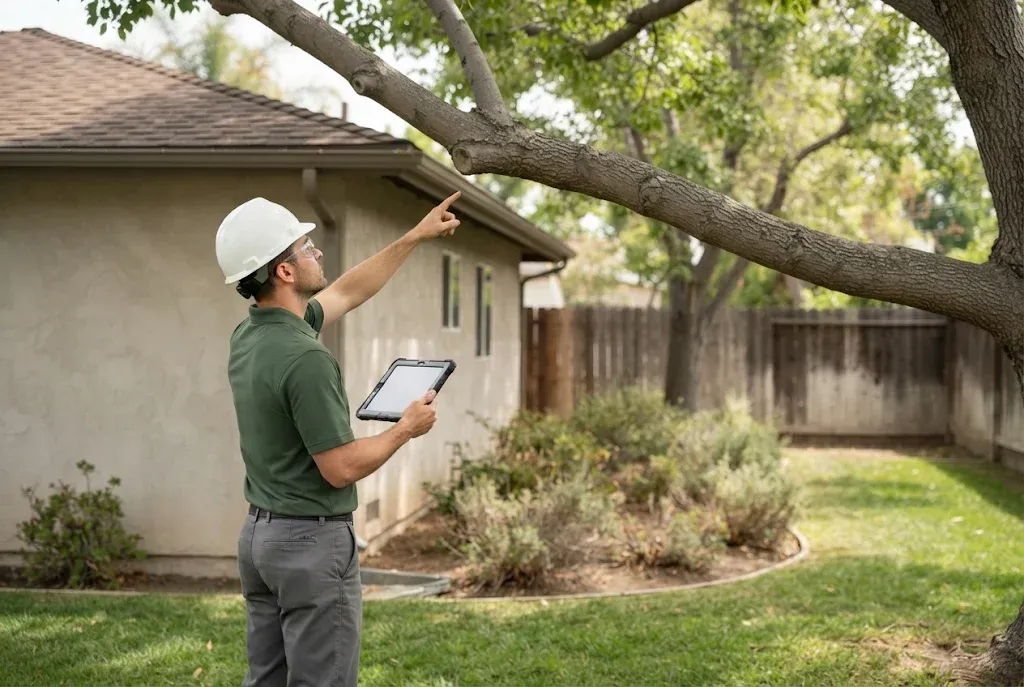
Should the Tree Be Pruned or Removed?
Where a tree is structurally sound and suited to its location, pruning is usually the first option to examine, because a retained tree keeps providing shade, screening, and character that take many years to replace. Removal becomes the reasonable choice when assessment shows the tree is dead, in irreversible decline, structurally compromised in a way pruning cannot correct, or in a conflict with a structure or project that no amount of cutting will resolve.
Between those two ends sits a wide middle ground. A tree that has grown too large for its space may be a candidate for crown reduction, which shortens selected limbs back to suitable side branches. That is very different from topping, where the upper canopy is cut straight across without regard to branch structure. University of California Agriculture and Natural Resources explains why topping trees is harmful, and we do not recommend it as a way of keeping a tree small.
How much to cut, and when, has no universal answer. Both depend on the species, the tree’s condition, and the purpose of the work, so be wary of any fixed rule applied to every tree. Our guide on when to schedule tree trimming covers the timing question for work that is not urgent. If an assessment does point toward removal, ask what was found and whether a pruning alternative was considered. A clear explanation is a fair thing to expect.
What Information Helps With a Tree Cutting Estimate?
An accurate tree cutting estimate depends on how well the job is described before anyone visits. You do not need technical vocabulary. Plain details are enough, and the list below covers what to include in a tree cutting estimate request.
- Property location and whether it is a single-family home, a rental, a multifamily building, an HOA common area, or commercial grounds.
- Number of trees involved and, if you know it, the type of each.
- Approximate size. A comparison works well: taller than the two-story house, about level with the eaves, trunk roughly as wide as a dinner plate.
- Photographs taken from a safe location. One wide shot showing the whole tree and its surroundings, and one or two of the area of concern, taken from the ground. Please do not climb, lean out of windows, or stand beneath a damaged limb to get a picture.
- Access limitations such as gate width, slopes, stairs, locked areas, or parking restrictions.
- Nearby structures and utilities, including roofs, fences, sheds, pools, and overhead lines.
- The outcome you want, stated as a result: clearance from the roof, a limb removed, the tree taken down.
Property managers arranging work across several buildings can speed things up with a simple site map or a numbered list of trees, so the estimate and the eventual work order refer to the same ones. Photos and descriptions help a provider prepare, though an on-site look is still commonly needed before a firm figure is given for anything beyond minor work.
Which Tree Cutting Cost Factors Shape the Estimate?
We do not publish prices for tree cutting, because two trees of the same height can be very different jobs. What we can do is explain the tree cutting cost factors a provider weighs, so the number you receive makes sense.
- Scope. A few limbs, a full canopy reduction, and a removal are priced as different jobs.
- Tree dimensions and condition. Height, spread, and trunk size drive time and equipment. Dead or decayed wood can behave unpredictably and may call for a more cautious method.
- Site access. A tree beside an open driveway is simpler to reach than one behind a narrow side gate or on a slope.
- Proximity to obstacles. Limbs over a roof, glass, a pool, or parked vehicles generally have to be lowered in controlled sections, which takes longer than letting them fall.
- Work complexity. Rigging, specialized equipment, traffic or pedestrian control, and utility coordination all add planning.
- Debris handling and cleanup. Chipping brush, cutting wood to length, hauling material away, and the level of final cleanup are real portions of the job.
Ask for a written scope
Many disagreements about tree work trace back to assumptions. Branch cutting, complete tree removal, stump work, wood handling, and haul-away are separate scope items, and none of them should be assumed to be included, or even offered, until the provider confirms it. A written scope that names the trees, describes the work on each, and states what is included and excluded protects both sides. If the stump is staying, or the wood is being left on site, the document should say so.
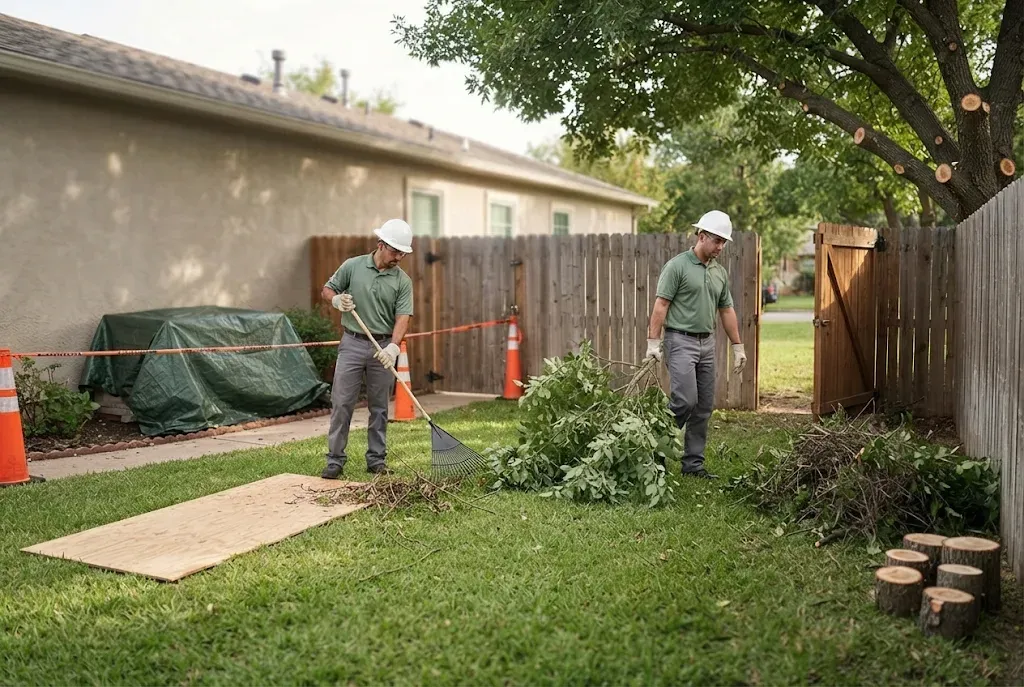
Talk Through Your Tree Cutting Plans With Our Team
You know the tree, the access, and the outcome you want. Call Landscaper-Near-Me.com at (888) 601-1117 or email info@landscaper-near-me.com, and we will help you move from those details to a clear scope and estimate.
How Do Access and Shared Spaces Affect Tree Work?
The practical side of a tree cutting visit is mostly about space: where the crew and equipment go, where cut material lands, and who else is nearby.
Residential properties
For residential tree cutting, the usual questions are gate and side-yard access, where a truck or chipper can stand, and what sits under the tree. Moving vehicles, patio furniture, potted plants, and play equipment out of the work zone ahead of time makes a real difference. Let the provider know about irrigation heads, landscape lighting, and delicate plantings below the canopy so they can be protected or worked around. Keep children and pets indoors while work is under way.
Rental, multifamily, and HOA settings
Shared spaces add coordination. Residents need notice about the date, any parking stalls that must be cleared, and the walkways or common areas that will be closed. Someone with authority to approve the scope should be reachable on the day. Where a tree stands near a property line or affects more than one unit, confirm who is responsible for it before work is scheduled.
Commercial grounds
Commercial property tree cutting is often scheduled around business hours, deliveries, and customer traffic. Entrances, loading areas, and signage may limit where equipment can set up, and a section of the lot may need to be coned off. Agreeing on timing and a site contact in advance keeps the disruption short.
Whatever the property type, one principle holds: people stay out of the work area until the crew says it is clear. We can also talk through how to prepare your property for scheduled tree work when you contact us.
What Should Be Settled Before Tree Cutting Is Authorized?
Two subjects deserve attention before anyone signs off: who should be doing the cutting, and whether the work is allowed as planned.
Leave elevated and substantial cutting to professionals
Tree work above ground level, work on large limbs, and anything involving a damaged or leaning tree calls for trained people with proper equipment. Cut wood is heavy and does not always fall where expected. We do not provide do-it-yourself chainsaw or climbing guidance, and we encourage owners and maintenance staff not to improvise with ladders. A professional assessment is the appropriate starting point for anything beyond light pruning that can be reached from the ground.
Branches near power lines
Limbs touching or growing close to overhead electrical lines are a separate category. Stay well clear, do not attempt to cut them, and contact the utility that owns the line. Work near energized lines requires utility coordination and specially qualified crews, and a general tree cutting provider may not be the right party to perform it.
Local requirements and permissions
Some jurisdictions protect certain trees by species, size, or location, and trees growing in the public right-of-way are often managed by the city or county. Rules differ from place to place, so we suggest checking the applicable local tree-protection requirements, and any permit they call for, before work is authorized. In an HOA or leased property, the governing documents or the lease may also require approval. Sorting this out first is far easier than answering for it afterward.
Finding a Professional Tree Cutting Service for Your Property
If you have been searching for a tree cutting service near me, you have probably noticed that listings alone say little about whether a provider suits your particular tree. The preparation described above does most of the sorting for you. Once you know whether you need a few branches cut, a canopy brought back from a structure, or a tree taken down, you can ask sharper questions and compare local tree cutting services on the same scope.
That is where we can help. Landscaper-Near-Me.com connects homeowners and property managers with relevant services and providers for the work their trees need. Tell us what you are seeing, share your photos, and describe the result you want. We will help identify the appropriate service, and we will confirm specialized items such as stump work or utility-related clearance before treating them as available. If your needs turn out to be broader than cutting, our overview of other tree care services is a good next read.
A professional tree cutting service begins with a conversation about your goals. Call (888) 601-1117, email info@landscaper-near-me.com, or use the Request Call Back button to ask for a free estimate, and we will take it from there.
FAQ's - Frequently Asked Questions
Not necessarily. People use “tree cutting” for anything from taking off one limb to taking down a whole tree, so removal is only one kind of tree cutting. When you contact us, describe the result you want and we will help point you to the service that fits.
Yes. Small, specific jobs are common. Whether a visit for a single limb is practical depends on the provider and on the limb’s size, its height, and what sits beneath it. A couple of photos taken from the ground usually settle that quickly.
Not always. The provider needs access to the tree and someone who can answer questions and approve the scope. On managed properties that is usually a designated site contact. Confirm the arrangement with the provider when the visit is scheduled.
Send one wide photo that shows the whole tree with the buildings, fences, or lines around it, plus one or two closer views of the branches you are concerned about. Take them from the ground at a safe distance. A photo of the gate or path the crew would use is helpful too.
Do not assume so. Some estimates include chipping and hauling, others leave brush or wood on site, and the level of final cleanup varies. Ask for the estimate to state exactly what happens to branches, logs, and sawdust.
Stump work is normally a separate scope item with its own equipment, and not every provider offers it. If you want the stump ground or removed, say so when you request the estimate and have it written into the scope.
Limited access rarely rules out the work, but it changes the method. Narrow gates, slopes, and long carries can mean smaller equipment and more hand work, which affects time and cost. Share gate widths and any obstacles up front so the plan accounts for them.
Trees keep growing, so clearance is not permanent. How quickly growth returns depends on the species, the tree’s vigor, and the type of cut. Cuts made back to a suitable side branch tend to direct new growth away from the structure. There is no fixed interval that applies to every tree.