
Commercial Tree Care Services
for Managed Properties
Trees on a commercial property do more work than most people notice. They shade parking stalls, soften long building walls, frame entrances, and give tenants and residents a reason to spend time outside. They also grow toward roofs, signs, and light poles, drop branches over walkways, and change slowly enough that a problem is easy to miss until a tenant or a board member points it out. Commercial Tree Care Services keep that growth managed so the trees keep supporting the property instead of competing with it.
Landscaper-Near-Me.com provides commercial tree maintenance for office buildings and business parks, retail properties and shopping centers, industrial and warehouse sites, apartment complexes, HOA common areas, and mixed-use developments throughout our service territory in Southeast Los Angeles County and Orange County. We prepare this work for the people who answer for those properties: owners, property and facility managers, commercial real estate management firms, and community association managers who need tree work that is clearly defined, fairly estimated, and carried out on a site that stays occupied while we work.
The sections below explain what the service covers, how ongoing maintenance differs from a single pruning visit, what we review before recommending work, how pruning objectives and timing are set, how we coordinate around tenants and daily operations, how to rank tree work inside a budget, and what information helps us prepare an accurate estimate.
What Do Commercial Tree Care Services Cover on a Managed Property?
Commercial tree care is the planned upkeep of the trees that an owner or association is responsible for. In practice that means pruning out dead or damaged wood, maintaining clearance around buildings and circulation routes, keeping structure and appearance suitable for the setting, and recording conditions that deserve a closer look. Commercial tree services are organized around the property rather than a single tree, because a business park with forty trees lining its drive aisles needs a different plan than a retail pad with six trees in its parking islands.
On most sites the work falls into three practical categories:
- Maintenance pruning that keeps healthy trees in good form and out of conflict with structures, signage, lighting, and traffic.
- Response to observed concerns, such as a broken limb, a hanging branch, or a tree that looks noticeably different than it did a few months ago.
- Planning, meaning a shared understanding of which trees need attention now, which can wait, and how the upkeep will be spread over time.
Where Tree Care Fits Within Property Maintenance
Tree work is one part of the grounds, not a separate world. On properties where we already handle recurring grounds maintenance through our Commercial Landscape Services, tree care is scheduled alongside that program so crews, access, and cleanup are coordinated. Where another vendor handles routine grounds work, business property tree care can be scoped as a stand-alone service with its own visit dates and responsibilities.
Palms deserve a separate note because they are common on Southern California commercial sites and are maintained differently from broadleaf shade trees. Frond and seed-stalk removal follows its own logic and timing, which we describe on our palm tree trimming page. When a property has both palms and shade trees, we include both in a single scope so the manager is not reconciling two proposals for one site.
Is a One-Time Pruning Visit Enough, or Does the Property Need Ongoing Tree Maintenance?
A one-time pruning visit solves a defined problem on a defined date. Ongoing maintenance treats the trees as a recurring responsibility, with work planned around how each group of trees grows and how the site is used. Both have a place, and the right choice depends on the condition of the trees and how the property is managed.
When a Single Visit Makes Sense
A single visit is often the right fit when the trees have been reasonably maintained and one issue has surfaced. Branches may have grown into a monument sign, a canopy may be brushing second-floor windows, or a row of parking-lot trees may need to be raised before a resurfacing and restriping project. A property preparing for a sale, a refinance, or a new anchor tenant may also want one round of professional tree trimming to bring every tree on the site to a consistent standard.
When Scheduled Commercial Tree Maintenance Fits Better
Scheduled commercial tree maintenance tends to suit properties with many trees, mixed species, heavy pedestrian or vehicle traffic, or ownership that prefers predictable annual costs. Instead of reacting each time someone reports a branch, the manager knows which areas are planned for attention and roughly when. Growth is addressed while it is still modest, which generally keeps individual cuts smaller and visits shorter.
A maintenance plan does not mean every tree is pruned on every visit. Some trees need attention one year and very little the next. The plan makes sure each tree is considered at sensible intervals, that concerns are written down, and that commercial property tree upkeep happens on purpose rather than by accident.
What Do We Review During an Initial Commercial Tree Care Assessment?
Before recommending any work, we look at the trees in the context of the property around them. The first visit is a site review rather than a diagnosis. Its purpose is to understand what is there, what the property needs from it, and what will affect how the work is carried out.
- Species and approximate size. Trees respond differently to pruning, and size affects equipment, crew needs, and time on site.
- Visible condition. We note dead or broken branches, thin areas of canopy, and anything that looks out of character compared with similar trees nearby.
- Previous pruning. Old cuts tell a story. A tree that was topped or cut back hard in earlier years often needs several careful visits rather than one aggressive correction.
- Surrounding buildings. Roofs, gutters, windows, balconies, and walls close to a canopy shape the clearance goals for that tree.
- Pedestrian routes. Entrances, sidewalks, patios, pool decks, and courtyards where people walk or gather beneath the canopy.
- Parking areas and drive aisles. Island plantings and trees along aisles affect both clearance needs and how work zones are laid out.
- Access constraints. Gates, tight drive aisles, slopes, fences, and planting beds that limit where equipment can safely go.
- Site priorities. What matters most to the owner or board, whether that is sign visibility, a cleaner entrance, resident complaints, budget timing, or an upcoming inspection or event.
Some observations call for more than a maintenance crew can responsibly determine from a site walk. When a tree shows signs that its stability or health needs a closer evaluation, we say so plainly and recommend that the property arrange an assessment by an appropriately qualified tree specialist before decisions about major work are made. A visual review from our crew is not a formal tree risk assessment, and we do not present it as one.

Free Estimates for Commercial Tree Care Services
Send us the property address, a rough tree count or a few photos, and the concerns on your list. We will review the trees on site and provide a free estimate with a clearly defined scope. Call (888) 601-1117 or email info@landscaper-near-me.com.
What Should Commercial Tree Pruning Accomplish?
Every cut should have a reason behind it. Good commercial tree pruning starts with a short list of objectives for each tree or group of trees, and the crew works to those objectives rather than to a habit of removing a set amount of canopy.
Removing Dead, Damaged, and Broken Branches
Dead and damaged wood is the most common reason for pruning on commercial sites, and usually the easiest item to justify to an owner or board. Dead limbs can break and fall, and a broken branch that remains lodged in the canopy may sit directly over a walkway or a row of parked cars. Our guide to removing dead branches explains how deadwood is identified and why it is often addressed ahead of other pruning goals.
Managing Clearance Around Buildings, Signs, Lighting, and Traffic
Clearance work is where most commercial tree trimming time is spent. It keeps branches from rubbing on roofs and walls, hiding building and monument signage, shading out parking-lot and walkway lighting, or hanging low over sidewalks, drive aisles, and loading areas. The appropriate clearance depends on the specific location: which vehicles use a route, how close the tree stands to a structure, any local requirements that may apply, and how the tree is likely to respond to the cuts needed. We set those targets with the property manager area by area instead of applying one measurement to every tree on the property.
Maintaining Suitable Structure and Appearance
Structural and appearance pruning keeps a tree well formed for where it is growing. That can mean removing crossing or rubbing branches, shortening a limb that has grown out of balance with the rest of the canopy, or keeping a row of trees along an entry drive reasonably consistent. Crown thinning and crown reduction are tools for particular situations, not standard treatments for every tree. Many healthy trees need only modest, selective pruning, and removing more foliage than the situation calls for can leave a tree weaker rather than stronger. The University of California Agriculture and Natural Resources explanation of how pruning affects tree physiology is a useful reference for owners weighing how much pruning a tree actually needs.
Which Tree Conditions Should Property Managers Report Right Away?
Property managers, maintenance staff, and residents are on site far more often than any tree crew, so they are usually the first to notice when something changes. A few observations are worth reporting promptly so the tree can be looked at by someone qualified to evaluate it:
- A broken branch hanging in the canopy or caught on other limbs
- Visible damage such as split limbs, torn bark, or wounds left by vehicles or equipment
- Canopy decline that seems unusual, such as thinning, early leaf drop, or dieback that differs from similar trees nearby
- A lean that has only recently been noticed, especially if the soil at the base appears raised or cracked
None of these signs, on its own, tells you what is wrong with a tree or how serious it is. A leaning tree may have grown that way for decades, and canopy thinning can have many causes. We do not diagnose trees from a description or a photograph. What we can do is look at the tree, explain what we see, and recommend either maintenance work or a specialist evaluation, depending on what we find. Until the tree has been reviewed, it is sensible for the property to keep people and vehicles out from under any hanging or broken branch.
Irrigation and Root-Zone Conditions
When a tree shows stress, the conditions around its roots are among the first things worth reviewing. Commercial trees often grow in narrow parking islands, compacted soil, or beds whose irrigation was designed for turf or shrubs rather than trees. A broken head, a controller schedule changed during a turf conversion, or new paving over part of a root zone can all change the water and soil conditions a tree depends on.
We note these factors when we see them, but we do not prescribe watering amounts, root cutting, soil treatments, or other corrective measures without a proper assessment of the specific tree and site. Where irrigation coverage or scheduling appears to be part of the picture, our commercial irrigation services can review the system so the trees are considered alongside the rest of the landscape it serves.
How Often Should Trees on a Commercial Property Be Pruned?
No single schedule suits every commercial property. How often trees need pruning depends on the species, the tree’s condition and age, how quickly it grows in that particular spot, how the surrounding area is used, and what the pruning is meant to achieve. A fast-growing tree beside a building entry may need clearance attention far more often than a slow-growing tree in an open lawn on the same property.
Setting Intervals by Tree Group
Rather than assigning one date to an entire site, we usually group trees by location and purpose: entry and frontage trees, parking-lot trees, trees close to buildings, and trees in open common areas. Each group gets an interval that reflects its growth rate and the consequences of letting it go too long. That way a manager can see why one area is scheduled this year while another is planned for the next. A simple list of trees by area makes this much easier, and settling how to organize a commercial property tree inventory once tends to simplify every proposal and budget conversation that follows.
Timing Within the Year
Seasonal timing matters as well. Some species respond best to pruning at particular points in the year, some work, such as clearing a broken limb, should not wait for a preferred season, and pruning a tree that is already under stress can set it back further. Our article on when to schedule tree pruning explains how seasonal timing is weighed for common landscape trees. On commercial sites, operational timing belongs in the same conversation: a retail center may want to avoid holiday shopping weeks, and an apartment community may prefer work finished before a busy leasing period.
Plan Tree Pruning by Area, Not by Emergency
Grouping trees by entry, parking, building, and common areas lets each area be pruned on an interval that suits its growth and use. We will help you set that schedule, record conditions worth watching, and fit visits around tenants, parking, and deliveries.
How Is Commercial Tree Work Coordinated Around an Occupied Property?
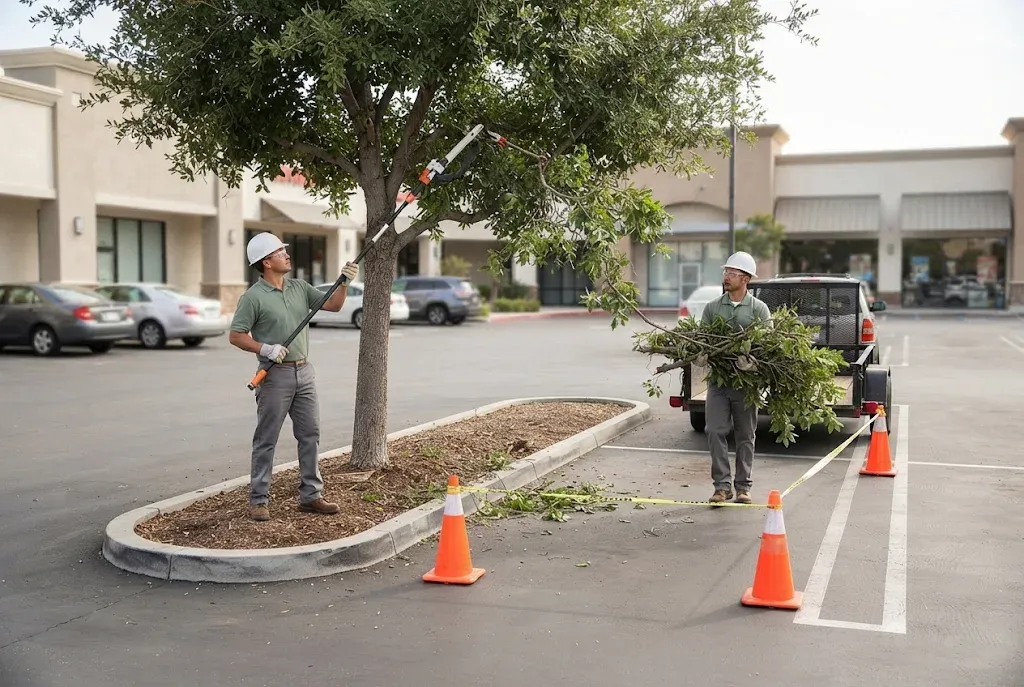
Most commercial properties stay open while tree work is underway. Tenants still arrive at their suites, shoppers still park, residents still walk their dogs and leave for work, and deliveries still need to reach loading areas. Good tree care for commercial properties treats those activities as part of the scope, and we work through the details with the property manager before a visit is scheduled.
- Tenant and resident notices. We provide work dates, approximate hours, and affected areas so the property can notify tenants, residents, or owners through its usual channels.
- Work-area access. Gate codes, keys, on-site contacts, and any areas that are off limits are confirmed in advance.
- Parking arrangements. Stalls beneath trees scheduled for work may need to be cleared, and the property decides how and when vehicles are moved.
- Pedestrian separation. Work zones are marked so people are directed around the area beneath active pruning, and entrances that must stay open are planned around.
- Delivery schedules. Loading docks, trash enclosures, and receiving areas are worked around known delivery windows wherever possible.
- Cleanup responsibilities. The scope states what will be hauled away, which surfaces will be cleaned, and how the work area will be left, so there is no question afterward about who handles debris.
Office Buildings and Business Parks
At office properties, main entrances, courtyards, and the parking rows closest to the doors carry the most foot traffic during business hours, so those areas are often scheduled for quieter times when the property allows it. Tree visits at these sites are commonly coordinated with recurring office building landscaping so the grounds crew and the tree crew are not working in the same area on the same day.
Retail Centers and Shopping Centers
Retail sites depend on visible signage and available parking. We plan work to keep storefronts reachable and to limit how many stalls are closed at once. Parking-island trees are often handled in sections, finishing one part of the lot before starting the next, an approach that fits well with ongoing retail property landscaping schedules.
Apartment Communities
Residents live beneath these trees, so notice and parking coordination matter even more. Trees near balconies, windows, pool areas, and carports are typical priorities, and we coordinate with on-site staff on vehicle moves and access to interior courtyards. Where a community also uses our apartment complex landscaping, tree visits can be aligned with the regular grounds schedule.
HOA Common Areas
Association trees are often reviewed by a board or landscape committee, and the work may need to fit a reserve plan or a budget approved months earlier. Scopes broken out by area make it easier for a community manager to present options at a board meeting. Common-area tree care can also be coordinated with ongoing HOA landscape maintenance so a single plan covers the whole community.
Industrial Sites and Mixed-Use Developments
Industrial and warehouse properties tend to prioritize truck routes, dock approaches, and security lighting. Mixed-use developments combine residential, retail, and office priorities on one site, sometimes within the same block. In both cases we map which areas carry vehicle traffic, which carry foot traffic, and when each is busiest before proposing work dates.
How Can Property Managers Prioritize Tree Work Within a Maintenance Budget?
A tree care budget goes further when work is sorted by urgency and value instead of being handled all at once or only after something breaks. Tree maintenance for property managers works best when recommendations arrive already organized, so we generally group them into three tiers.
Immediate Concerns
These items affect people, vehicles, or buildings now: broken or hanging branches over walkways and parking, limbs in contact with a roof, or growth blocking lighting or required signage. They are usually handled first, regardless of where the property sits in its budget year.
Planned Pruning
Planned work covers clearance and structural pruning that is needed but not urgent. It can be scheduled by area or tree group across the year, which spreads cost and limits disruption. This is where most of a property’s commercial tree pruning budget is typically spent.
Longer-Term Upkeep
Longer-term items include trees that will need attention as they mature, young trees that would benefit from early structural pruning, and planting spaces where the species or the available room is likely to cause repeated conflicts. Recording these items lets an owner plan for them in future budgets instead of discovering them later. For managers working out how to budget for commercial tree maintenance over several years, this tiered list often becomes the backbone of the annual plan.
When Removal Is a Separate Decision
Pruning and ongoing care are meant to keep trees healthy and useful where they stand. Occasionally a tree has declined, outgrown its space, or raised concerns that pruning cannot reasonably resolve. Removal is a different decision with different considerations, including permit requirements that some cities apply to certain trees, so we discuss it separately from routine maintenance. Our tree removal page covers that service in detail.
Give Your Property's Trees a Clear,
Budget-Ready Plan
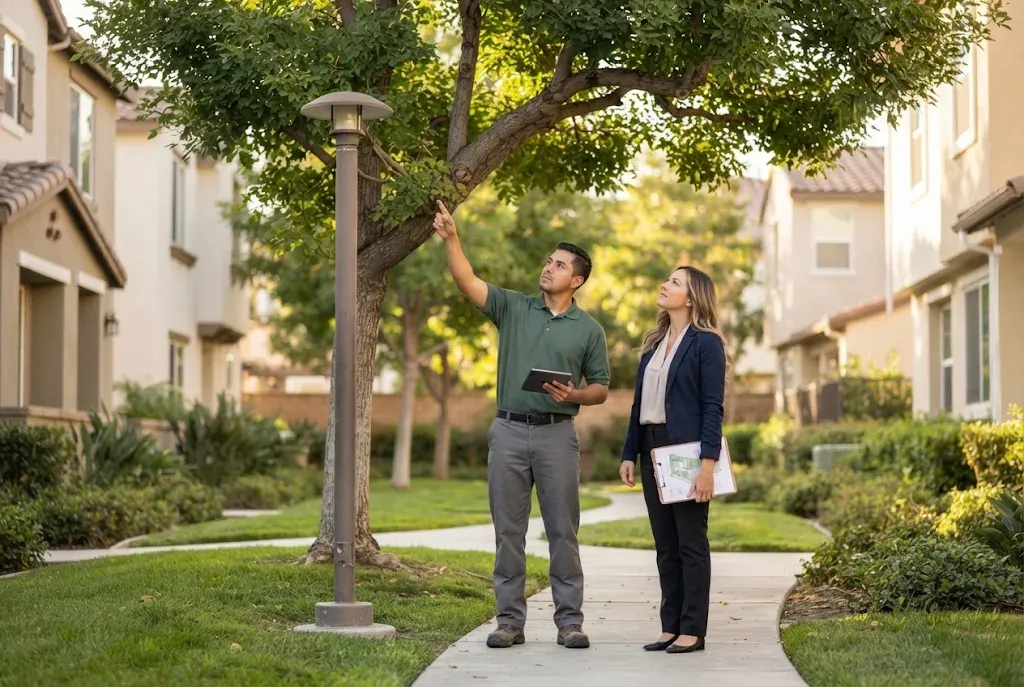
Whether you need one hanging branch handled or a multi-year approach for an entire site, we will help you separate immediate concerns from planned work and longer-term upkeep. Call (888) 601-1117, email info@landscaper-near-me.com, or request a call back to talk it through.
What Information Helps Us Prepare Commercial Tree Care Estimates?
The more we know about a property before the site visit, the more useful the first estimate tends to be. Helpful details include:
- Property location and the name of the on-site or managing contact
- Tree count or photographs, when available, even rough numbers by area
- Observed concerns, such as particular branches, trees, or complaints that prompted the request
- Requested work, whether that is clearance in one area, a full-site pruning round, or a recurring maintenance plan
- Access conditions, including gates, parking restrictions, and hours when work is or is not possible
- Preferred scheduling, including dates to avoid and any deadline the property is working toward
What Affects the Cost of Commercial Tree Care
Every estimate is based on the specific site, so we do not publish standard prices. The main variables are tree size and condition, the number of trees, how easily crews and equipment can reach them, the scope of pruning requested, how close the trees are to buildings and other structures, how debris will be handled and hauled away, and scheduling constraints such as work limited to certain hours or days. Two properties with the same number of trees can price very differently once those factors are accounted for.
A clear scope is the best protection against surprises for both sides. Understanding what to include in a commercial tree care scope of work, such as tree locations, pruning objectives, clearance goals, cleanup expectations, and visit dates, makes it easier to compare proposals and to confirm afterward that the work matches what was approved.
Request Your Commercial Tree Care Estimate
If you manage an office building, retail center, industrial site, apartment community, HOA, or mixed-use property in Southeast Los Angeles County or Orange County, we would be glad to review its trees with you. Commercial Tree Care Services from Landscaper-Near-Me.com begin with a free estimate built around your property’s trees, its daily operations, and its budget. Call (888) 601-1117, email info@landscaper-near-me.com, or request a call back, and we will arrange a time to look at the site and talk through the work that makes sense now and over the year ahead.
FAQ's - Frequently Asked Questions
Often, yes. If we already maintain your grounds, tree work can be scoped as an addition to that program and scheduled alongside regular visits. If another company handles routine maintenance, we can prepare a separate tree care scope with its own dates, work areas, and cleanup terms so responsibilities stay clear between vendors.
Photos, a site map, or a rough tree count help us understand the property before we arrive, but we prefer to review the trees on site before finalizing an estimate. Size, condition, access, and nearby structures are difficult to judge accurately from pictures alone, and those factors shape both the scope and the cost.
No. Estimates are free. We review the site, discuss your priorities, and provide an estimate that describes the work proposed for each area so you can review it with ownership or your board before anything is scheduled.
Cleanup is defined in the scope before work begins. That typically covers what will be removed from the site, which walkways, parking areas, and beds will be cleared, and the condition the work area will be left in. Putting it in writing avoids confusion between our crew, the property, and any other vendors on site.
That depends on the property’s lease terms, association rules, and normal practice, so the property manager is the best judge. We provide confirmed dates, approximate hours, and the areas involved, including any parking stalls that need to be cleared, early enough for you to send notices through your usual channels.
Yes, for properties within our service territory in Southeast Los Angeles County and Orange County. We can prepare scopes for each site separately or organize them so a management company can compare work and timing across its portfolio. Each property is still reviewed on its own, since trees and site conditions vary from one location to the next.
If we see something that calls for a closer evaluation, such as a significant lean, major structural damage, or decline we cannot explain from a site review, we tell you directly and recommend that a qualified tree specialist assess it before major work is planned. Where removal becomes the likely outcome, we discuss it as a separate decision from ongoing maintenance.
Yes. Phasing is common on commercial sites. Work can be divided by building, parking section, or common area and spread across several visits, which keeps more of the property open at any given time and can also help spread costs across a budget period.