
Landscape Bed Design and Installation for Homes and Shared Entrances
Most planting beds do not fail all at once. A shrub planted too close to the walk gets sheared back every spring until it is mostly bare stems. A groundcover that was supposed to fill in never quite does, and weeds take the gaps. A border that looked tidy the first year slowly loses its edge to the lawn. Landscape Bed Design and Installation is about preventing that slow drift by planning each bed around the conditions it will actually face and then building it so the plan holds up as the plants grow.
We design and install mixed ornamental planting beds for homeowners and residential property owners who want better curb appeal, a replacement for beds that have become overgrown, or planting areas that are simply easier to live with. We also work with property managers and HOA representatives on coordinated beds around entrances, walkways, and shared landscape areas, where the same planning questions apply on a larger stage.
What Is a Landscape Bed, and How Is This Service Different From Whole-Yard Design?
A landscape bed is a defined, planned planting area set apart from lawn, paving, or open ground. In most yards it combines several kinds of plants: structural shrubs that hold the shape of the bed year-round, perennials and ornamental grasses that add texture and movement, groundcovers that cover the soil between them, and a few flowering accents where color is wanted. The bed has a deliberate outline, a finished surface such as mulch, and an edge that tells you where it ends.
We treat landscape bed design and installation as a focused project: one bed or a set of related beds, planned and built together. Planting bed design and installation at this scale lets every decision, from the outline to the last groundcover, be made with the specific bed in view. That focus is what separates it from two related services we offer.
- When the project involves rethinking an entire property, including lawn areas, patios, circulation, and how every part of the yard connects, that broader planning belongs to our Landscape Design and Installation service.
- When the goal is concentrated seasonal color and flowers are the main event rather than one ingredient, our Flower Bed Installation page is the better guide.
Mixed planting beds sit between those two. Flowers may play a part, but the bed is built on a framework of shrubs, grasses, and groundcovers chosen to look good across the year, not just during bloom.
Where Do Planting Beds Make the Biggest Difference Around a Property?
Beds do their most important work where people look first and walk most often. The location also changes what the bed needs to do, so we treat each setting a little differently.
Front Yard Landscape Beds and Borders
Front yard landscape beds frame the house from the street and guide visitors to the door. A border along the front walk, an island bed that breaks up a large lawn, or a planting at the corner of the driveway can change how the whole property reads. These beds benefit from a clear structure and a restrained plant palette, because they are seen from a distance as often as up close.
Foundation-Adjacent Beds
Good foundation planting design softens the line where the house meets the ground without crowding walls, windows, hose bibs, or utility equipment. The most common foundation problem is plants that were sized for how they looked in the nursery container rather than how wide they would grow. We plan these beds with room between mature plants and the wall, and with access left for exterior maintenance.
Backyard Planting Beds and Perimeter Borders
Backyard planting beds often run along fences and property lines, screen neighboring views, or define a seating area. They tend to be deeper than front beds and can hold taller layers. Because they are viewed from inside the house and from patios, sightlines from those spots matter as much as the view from the yard itself.
Walkway Planting Strips
Narrow strips beside walks and side yards are among the hardest beds to get right. Plants need to stay low or compact, tolerate foot traffic brushing past, and avoid dropping debris onto the path. Here the plant list is usually short and the spacing generous.
Entrance Beds for Multifamily, Commercial, and HOA Properties
For property managers and HOA representatives, entrance beds and common-area plantings carry an extra requirement: consistency. Beds at several entrances or along a shared walkway usually need to read as one coordinated design, stay clear of signage and pedestrian routes, and be practical for whoever maintains them afterward.
What Do We Assess Before Landscape Bed Design and Installation Begins?
We look at the site first and choose plants second. A plant list chosen before anyone has checked where the afternoon sun lands or how water drains after irrigation runs is a guess, and guesses are expensive to correct once plants are in the ground. Our site assessment typically covers:
- Sun exposure. How many hours of direct sun each part of the bed receives, and whether that sun comes in the cooler morning or the hotter afternoon. Walls, fences, eaves, and nearby trees can create very different conditions a few feet apart.
- Soil conditions. Texture, compaction, and how the soil behaves when it is wet and when it is dry. Soil near new construction, for example, may be heavily compacted or mixed with fill.
- Drainage. Where water goes after irrigation or rain, whether any area holds water, and whether downspouts or hardscape direct runoff into the bed.
- Slopes. Grade changes affect how water moves, how mulch stays in place, and which plants make sense on the slope.
- Existing roots and features. Roots from established trees and shrubs, buried utilities, irrigation lines, and plants worth keeping all shape where we can dig and what can be planted.
- Available irrigation. What kind of watering already reaches the area, how it is zoned, and whether it suits a planting bed or was designed for lawn.
- Maintenance preferences. How much pruning, cleanup, and hands-on care you or your maintenance provider actually want to do. This single question narrows the plant list more than almost anything else.
Those findings become the brief for the landscape bed design and installation plan. They also help set realistic expectations early, before decisions about plants and borders are locked in.

Plan Your New Planting Beds With a Free Estimate
Whether you are starting with bare soil beside a new walkway or a front border that no longer works, we will look at the sun, soil, drainage, and irrigation with you and outline a bed plan that fits the space. Call (888) 601-1117 to request a free estimate for your landscape bed installation.
How Do Bed Shape, Width, and Layering Affect the Finished Look?
The outline and proportions of a bed decide how it looks long before the plants do. Good landscape planting design starts with the shape on the ground, then fills it in a way that will still make sense when every plant has reached its mature size.
Curves, Lines, and Sightlines
Broad, gentle curves tend to look natural and are easy to mow along. Tight wiggles look busy and are hard to maintain. Straight lines suit formal architecture and narrow strips. Whatever the shape, we check it from the places people actually see it: the street, the front door, a kitchen window, or a patio chair. A bed that frames the view from inside the house is worth more than one that only looks good in a photograph from the curb.
Width and Mature Plant Size
Many beds are simply too narrow for what is planted in them. A shrub that reaches five feet across needs a bed that can hold that spread without pushing over the lawn edge or into a walkway. Planning around mature size means a new bed looks a little open at first. That gap is intentional, and it is what keeps the bed from needing constant shearing later.
Layered Heights and Repetition
Most mixed beds read best with taller plants toward the back or center, mid-height plants in the middle, and low groundcovers at the front edge. Repeating a few plants at intervals ties a long bed together, while planting one of everything tends to look scattered. On larger beds, we often use a small number of plant types in generous drifts rather than many varieties in small numbers.
Room for Maintenance and Clear Routes
A bed also has to be workable. We leave space to reach plants for pruning, keep plants back from paths so people are not brushing through them, and avoid placing shrubs where they will block a gate, a meter, or a clear walking route. For shared entrances, clear pedestrian routes and sightlines near driveways are a design priority, not an afterthought.
Separation From Buildings and Existing Features
Plants set tight against a wall trap moisture, block access, and can scrape siding or stucco as they grow. We also keep new plantings at a sensible distance from established trees, utility boxes, and irrigation equipment so each feature can be reached and none of them competes with the others.
How Do We Select Plants for Mixed Planting Beds?
Plant selection follows the site assessment. We start with what will grow well in each part of the bed, then narrow the list by appearance and upkeep. The factors we weigh include:
- Site suitability. Tolerance for the sun or shade, soil, drainage, and heat that the specific location provides.
- Mature spread and height. Whether the plant will fit its spot for the long term without repeated cutting back.
- Seasonal interest. Foliage color, texture, bloom timing, and winter structure, so the bed has something to offer in more than one season.
- Compatible water needs. Plants that share a bed and an irrigation zone should have similar watering needs. Mixing a thirsty perennial with a dry-adapted shrub on the same line means one of them is watered incorrectly.
- Desired upkeep. How much deadheading, pruning, and seasonal cleanup each plant is likely to need.
Choosing plants for sunny and shaded landscape beds is often the deciding question on a property. The same bed can run from full afternoon sun at one end to deep shade beneath a tree at the other, and the plant list has to change along with the light.
Low-Maintenance and Water-Wise Goals
Many clients ask for low-maintenance landscape beds, and many want water-wise planting bed design. Both are reasonable goals, and both depend on the site. A well-matched plant palette, sensible spacing, mulch, and efficient irrigation can reduce how much pruning, weeding, and watering a bed needs. They do not make a bed maintenance-free or irrigation-free. New plantings need regular watering while they establish, and even well-adapted plants benefit from periodic care. We would rather set honest expectations than promise a bed that takes care of itself.
Can Existing Beds Be Redesigned Instead of Replaced?
Yes, and in many yards that is the better starting point. Landscape bed renovation works with what is already there, keeping healthy plants that still suit their space and changing what does not. Existing beds usually fall into one of three patterns.
Sparse Beds
Beds with large gaps between plants, often after losses over the years, tend to fill with weeds. Renovation may mean adding plants that suit the current conditions, which can be quite different from when the bed was first planted if a tree has grown or a fence has gone up nearby.
Crowded Beds
Crowded beds have the opposite problem: too many plants, or plants that have outgrown their space. Some can be transplanted or thinned. Others are better removed so the strongest plants have room to reach their natural form.
Overgrown Beds
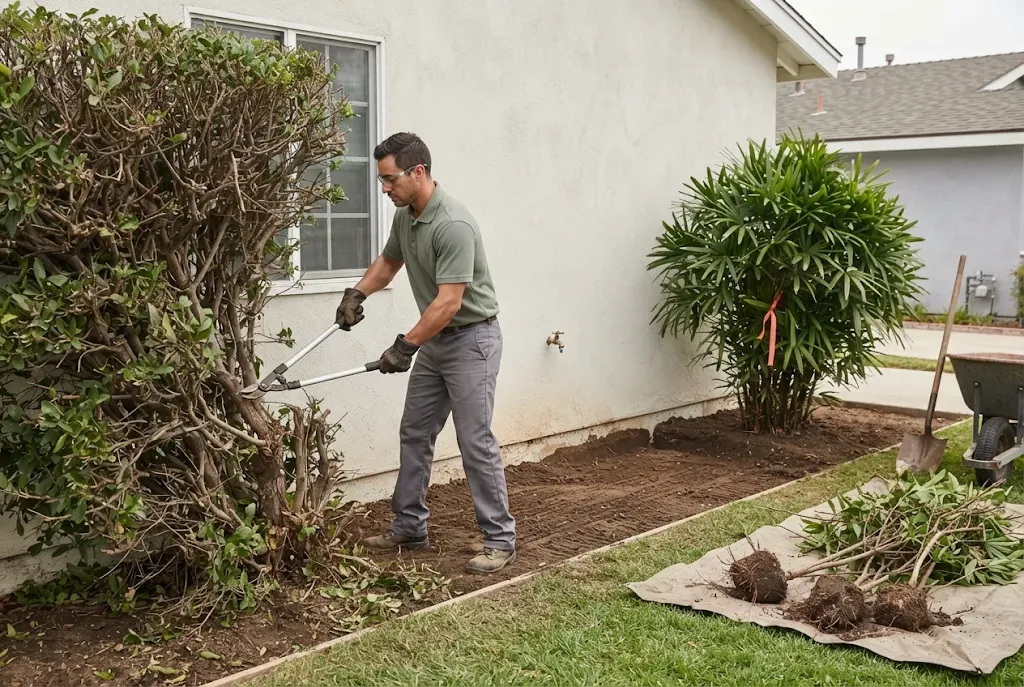
Renovating overgrown landscape beds often starts with deciding what to keep. Shrubs that have swallowed a walkway or covered a window can sometimes be reduced, but plants that have been sheared into woody shells may not recover a good shape. In those cases, replacement with a better-sized plant is usually more practical than years of corrective pruning.
Renovation can also include reshaping the bed itself: widening a cramped border, pulling a bed back from a wall, smoothing awkward curves, or redrawing a front edge so it is easier to mow along. The result often looks like a new bed while keeping the established plants that give it maturity.
Rework Overgrown or Sparse Beds
Instead of Starting Over
An existing bed often has plants worth keeping. We can review which shrubs and groundcovers still suit their space, which have outgrown it, and how the bed outline could change to make the planting easier to care for. Request a callback to talk through a landscape bed renovation.
Preparing the Ground and Coordinating Irrigation
Preparation is where a bed design becomes a working planting area, and it is also where conditions vary most from one property to the next. We decide what the soil and the irrigation need based on what we find, not on a standard recipe.
Removing Unwanted Vegetation
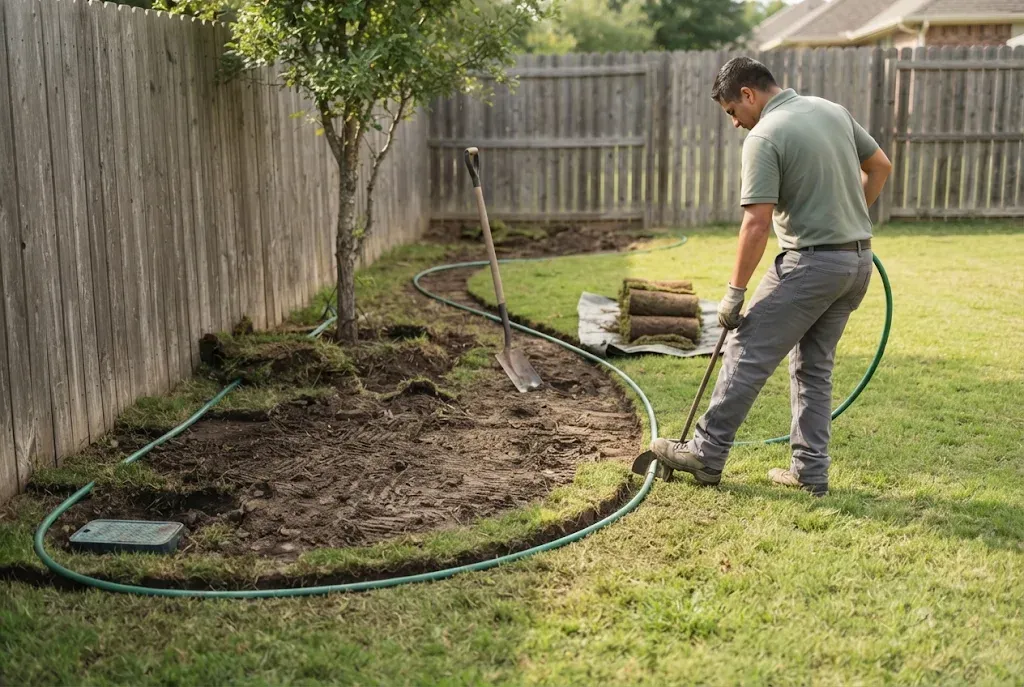
Turf, weeds, and unwanted plants are cleared from the new bed area before planting. Persistent grasses and perennial weeds can regrow from roots or runners left in the soil, so clearing them thoroughly at the start makes later weed management far easier.
Soil Preparation and Amendment Decisions
Some soils need little more than loosening and shaping. Compacted soil may need to be broken up so roots and water can move through it. Where organic amendment makes sense, it is chosen for the conditions and the plants going in. We do not assume that every bed needs its soil replaced, a specific amendment, or a fertilizer program. Often the better approach is choosing plants suited to the existing soil rather than trying to change the soil to suit plants that would struggle there.
Drainage Concerns
If water ponds in an area or runs toward the house, that has to be addressed in the bed layout and grading before planting. That can mean adjusting the bed grade so it slopes away from the foundation, keeping soil and mulch below the level of siding or weep screeds, or choosing plants that tolerate the wetter or drier spots on the site.
Irrigation Coverage and Drip
New beds frequently sit in areas originally watered for lawn. Spray heads that suited turf may overspray new plants, wet walls and walkways, or miss parts of the new layout. Before planting, we check whether the existing coverage suits the proposed design and what changes it may need. Through our Irrigation Services, we can adjust heads, cap lines that no longer serve the area, or rework zones so plants with similar needs are watered together.
For many mixed beds, drip irrigation delivers water at the root zone with less overspray and runoff, though whether it is the right fit depends on the bed, the plant spacing, and the existing system. Where conversion to drip makes sense, our Drip Irrigation Installation Services cover the layout and installation.
Establishment Watering and Later Adjustments
New plants depend on more frequent watering until their roots grow out into the surrounding soil. How much and how often depends on the plants, the soil, the weather, and what the soil actually looks and feels like after watering. As plants establish, the schedule is typically reduced. We explain what to watch for so watering can be adjusted to observed moisture conditions rather than a fixed calendar.
Edging, Borders, Mulch, and Transitions That Hold a Bed Together
The details at the surface and at the edges are what make a bed look finished. They also decide how much effort the bed takes to keep tidy.
Landscape Border Design and Edging Options
A defined edge keeps lawn from creeping into the bed and mulch from spilling onto the lawn or paving. Landscape border design depends on the style of the house and the way the bed meets its surroundings. Common options include:
- Metal edging for a thin, clean line that follows curves and stays nearly invisible.
- Brick borders set at or near lawn level, which can double as a mowing strip.
- Natural stone for an informal edge that suits rustic or drought-tolerant plantings.
- Cut edges and other appropriate materials where a simple spade-cut line or another material fits the design better.
Brick and stone borders are supporting features of the bed, and most landscape beds are not raised. A low decorative border is different from a retaining structure. Where a design calls for a substantial raised masonry bed or a retaining wall that holds back soil, that work requires separate project assessment, and it is planned through our Hardscape Design and Installation service rather than treated as simple edging.
Mulch Selection and Placement
Mulch covers the soil between plants, helps limit weeds, slows moisture loss, and gives the bed a uniform finish. The right choice depends on the plants, the style of the bed, the irrigation method, and how the bed sits relative to the house. Shredded bark, wood chips, and similar organic mulches break down over time, so they need periodic replenishment. Gravel and decorative rock do not decompose but can be harder to keep free of debris and weeds. Neither choice, nor landscape fabric, suits every bed. Placement matters as much as material: mulch should be kept back from plant stems and crowns. The UC Statewide IPM Program’s guide to landscape mulches explains how organic, inorganic, and synthetic mulches differ and how to apply them around landscape plants.
Where Bed Edges Meet Lawns, Walkways, Patios, and Driveways
Each transition needs a little planning. Against lawn, the edge should be easy to mow and trim. Along walkways and driveways, soil and mulch should sit below the paving so they do not wash onto it, and plants should stay back far enough that they do not overhang the path or block sightlines. Next to patios, beds can soften hard edges without crowding seating space. Our focus here is the bed itself; surrounding paving or wider yard changes are scoped as separate items when they are needed.
What Affects the Cost of Landscape Bed Design and Installation, and What Happens Afterward?
Every bed project is priced from its own scope. Requests for planting bed installation estimates are easiest to answer once we have seen the site, because the factors that shape the cost are physical and specific.
Scope and Estimate Factors
- Bed dimensions. The total area and the length of edge to be defined.
- Existing vegetation. How much turf, overgrowth, or old planting needs to be removed.
- Access. Whether materials and equipment can reach the bed easily, or whether everything must be carried through a side yard or gate.
- Preparation needs. Soil loosening, amendment, grading, or drainage corrections.
- Plant sizes and quantities. Larger container sizes cost more but give a fuller look sooner; smaller plants cost less and take longer to fill in.
- Edging and border materials. Metal, brick, stone, or other materials, and the length of edge involved.
- Irrigation changes. Anything from minor head adjustments to new zones or drip conversion.
- Disposal requirements. The volume of removed plants, sod, soil, or debris that must be hauled away.
Because these factors differ so much from one property to the next, we do not quote standard prices or completion times without seeing the site. Your estimate describes the specific work we propose for your beds.
Practical Aftercare
The first months after shrub bed installation matter most. New plants should be checked for wilting, yellowing, or soggy soil, and watering adjusted as the weather changes and roots establish. Weeds are easiest to control while they are small and before they set seed. Mulch should be checked for thin spots and for any that has drifted against stems. Over time, plants will grow into the spacing they were given, and that growth is part of the design rather than a reason for early shearing. The right maintenance schedule depends on your plants, your irrigation, and how the bed is used, so we discuss what to expect for your property instead of handing every client the same calendar.
Starting Your Landscape Bed Project
A well-planned bed should look intentional from the first day and better each year as it fills in. If you are planning new beds, rethinking a foundation planting, or ready to replace a border that never quite worked, we would like to see the space and talk through what it needs. Call (888) 601-1117, email info@landscaper-near-me.com, or request a callback, and we will arrange a time to review the site and prepare a free estimate for your landscape bed design and installation project.
Bring Us Your Bed Ideas and We Will Work Out the Details
You may already know which bed bothers you most, or you may only know the yard needs more structure. Either way, we can walk the area with you, discuss plants, borders, mulch, and irrigation, and turn the ideas into a clear scope. Call (888) 601-1117, email info@landscaper-near-me.com, or request a callback.
Planting beds rarely stand entirely on their own. They share irrigation lines with lawn areas, border walkways and patios, and depend on regular care once they are established. Homeowners and property managers who want to see how bed work fits with mowing, pruning, seasonal cleanup, and the rest of the property can review our full range of Landscape Services. Garden bed landscaping services often work best when they are planned alongside that ongoing care.
FAQ's - Frequently Asked Questions
Landscape bed installation typically includes clearing unwanted vegetation, preparing the soil as the site requires, shaping the bed outline, planting, installing edging or a border, applying mulch, and making any irrigation adjustments in the agreed scope. The exact items are listed in your estimate so you can see what the project covers before work begins.
Yes. We review which plants are healthy and still suit their space and plan around them where it makes sense. Plants that have outgrown their location or declined may be removed or replaced, and the bed outline itself can often be widened or reshaped at the same time.
We base plant choices on each area’s sun exposure, soil, drainage, and irrigation, then narrow the list by mature size, seasonal interest, water needs, and the level of upkeep you prefer. Plants that share a bed and an irrigation zone are chosen to have compatible watering needs.
Yes. Brick and natural stone are both common border materials, along with metal edging and other options. A low decorative border is planned as part of the bed. A raised masonry bed or a wall that retains soil is a different type of structure and is assessed as a separate project.
Not always, but it often does. Sprinklers designed for lawn may overspray or miss a new planting layout. We check the existing coverage against the bed design and recommend adjustments, zone changes, or drip conversion only where the planting needs them.
The main factors are the size of the bed, how much existing vegetation must be removed, site access, soil and drainage preparation, plant sizes and quantities, edging materials, irrigation changes, and disposal. We provide a free estimate after reviewing the site rather than quoting a standard price.
No. Most landscape beds are planted at or near existing grade and finished with mulch and a simple edge. Raised beds are an option for specific situations, such as a sloped site or a particular design style, but they are not required for a successful mixed planting bed.
Yes. We work with property managers and HOA representatives on entrance beds, walkway plantings, and shared landscape areas. For these projects, we plan for consistent design across multiple beds, clear pedestrian routes and sightlines, and practical long-term maintenance. If you have been searching for landscape bed design near me for a shared property, call (888) 601-1117 to discuss the site.