
How Long Does it Take Sod to Root? A Realistic Timeline and How to Tell
If you have just laid a new lawn, the question that matters most is how long does it take sod to root. For most lawns the answer is about 10 to 14 days before the sod starts anchoring into the soil beneath it, provided conditions are favorable. That is the moment the pieces stop behaving like loose rolls of turf and begin behaving like a lawn. It is not the moment the lawn is finished, and it is certainly not a date you can circle on a calendar and trust.
This guide covers what is happening below the surface during those first weeks, how to check sod root growth without wrecking it, what slows rooting down, and when a stubborn patch deserves a professional look. We also answer two questions that come up constantly when people plan a new lawn: can you just sod over dirt, and what is the best month to put sod down. It is written for homeowners, DIY installers, and property managers looking after a freshly sodded HOA or multifamily lawn, with Southern California examples where they help.
How Long Does It Take Sod to Root Under Normal Conditions?
Sod commonly begins to anchor in roughly 10 to 14 days when the soil is prepared, the pieces are fresh, and moisture is managed well. The UC Guide to Healthy Lawns advice on installing sod puts the same window on it, recommending that new sod be kept moist until it is well rooted, which it describes as about 10 to 14 days.
Treat that range as a typical window rather than a promise. A lawn laid in mild weather over loose, even soil may anchor at the front end of it. Sod laid over tight clay, in a shaded corner, or during a cold snap can lag behind, and a few stubborn sections may need noticeably longer. We would never tell a property owner that a lawn will be fully established by a particular day, because the sod, the soil, and the weather all have a vote.
Attachment is not the same as establishment
The first milestone is attachment: fine new roots push out of the sod and reach into the soil beneath it. The second is establishment, which is the slower development of a deeper, more resilient root system that can carry the grass through heat, foot traffic, and the occasional missed irrigation cycle. A lawn can be firmly attached at two weeks and still be a long way from tough. Plan on the lawn staying a little delicate for several weeks beyond that first anchoring, and let the grass, not the calendar, tell you when it has earned normal use.
What Does Sod Rooting Look Like From Week to Week?
Most of the progress happens where you cannot see it, but the surface still gives you clues. The stages below are a general pattern, not a schedule, and individual lawns will move through them at different speeds.
The first several days
Right after installation the sod is simply resting on the soil. It can be lifted easily, the seams are obvious, and the grass blades are the only thing keeping the lawn looking alive. Roots on the underside are cut at harvest, so the sod depends on the moisture sitting in the thin layer between the turf and the prepared ground. This is the stage where dry edges and unfilled gaps do the most damage.
Around the 10 to 14 day mark
New white roots start to reach down into the soil. When you slip your fingers under a corner or edge, you should feel gentle resistance rather than a clean, effortless lift. The grass often looks a shade greener, and seams begin to knit together. This is the stage people usually have in mind when they ask about sod rooting time or how long does new sod take to establish, and it is when light, careful checks become useful.
The weeks that follow
After the first anchoring, the roots keep thickening and reaching deeper. The lawn feels firmer underfoot, resists rolling or shifting, and recovers better from stress. Rooting depth is gradual, which is why we caution against treating the two-week mark as a finish line. Sod root development continues well past the point where the lawn first holds fast.
How Do You Check Sod Root Growth Without Damaging It?
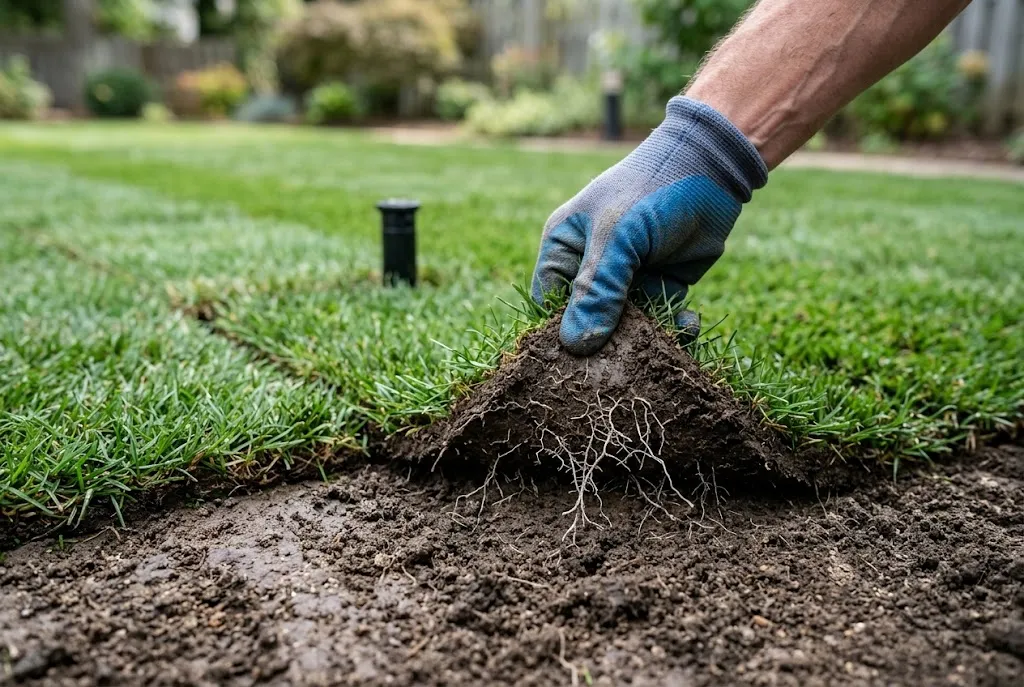
The clearest signs sod has rooted show up in the new sod tug test, and it is the most reliable method we know for a homeowner. Choose a spot near an edge, take hold of a corner of the sod, and lift slightly. If the piece comes up freely like a rug, roots have not yet taken hold. If you feel resistance, or the piece only lifts partway before it holds, roots are entering the soil. Sod that tears before it releases is anchored well.
A few habits keep the check from becoming a problem of its own:
- Test more than one area. A single anchored spot tells you little, while consistent resistance across several areas, including seams, shaded sections, and the edges nearest paving, is a far better sign.
- Lift only a small corner, and lower it straight back down. Peeling back large sections breaks the fine roots you are trying to confirm.
- Look for roots entering the soil rather than hanging in the air. Short, pale roots threading into the ground beneath a lifted corner are exactly what you want to see.
- Do not repeat the test every day. Once or twice, a few days apart, is plenty, and a lawn that is clearly gripping needs no further lifting.
If a corner lifts with no resistance after the first two weeks, do not assume the sod has failed. Check whether that spot is drying out, sitting on a low pocket where water collects, or resting on compacted soil. We cover those problems in more detail further down.
Planning a New Lawn? Request a Free Sod Estimate
Whether you are laying sod over bare soil or replacing a worn lawn, we can talk through the area, the soil, and what the ground needs before the first roll goes down. Call (888) 601-1117 or ask for a call back.
Which Factors Affecting Sod Rooting Matter Most?
Rooting is a conversation between the grass and the ground, and several factors decide how quickly it goes. Understanding them helps you separate a normal pace from a problem.
Turf species and growth period
Sod that is actively growing roots faster than sod that is dormant or stressed. Warm-season grasses push roots best when soil and air are warm, while cool-season grasses prefer milder temperatures. Laying a grass during the stretch it dislikes slows the process, even if everything else is done correctly. Keep grass selection in perspective, though, and see our article on grass types suited to Southern California when you are choosing what to install.
Soil temperature, weather, and sunlight
Cold soil slows root activity, and so can extreme heat that dries the sod faster than it can be rewetted. Sun exposure matters too. A fully sunny slope dries quickly and needs close attention, while a shaded strip beside a fence may stay damp but grow roots slowly because the grass receives less light. Wind can pull moisture from edges within hours on a hot, dry day.
Soil condition, drainage, and contact
Roots need to reach loose, moist soil in firm contact with the sod. Compacted ground makes it hard for roots to penetrate, poorly drained areas can stay waterlogged, and air gaps under the sod leave roots nothing to grab. Soil preparation for sod rooting matters more than most people expect. If you are wondering how to prepare compacted soil before laying sod, the short version is that the soil should be loosened and leveled so the turf can sit tight against it. We go into that further in the section on laying sod over dirt.
Sod freshness and installation speed
Sod is a living product and begins to decline once it has been cut. Fresh sod laid promptly onto moist prepared soil roots more readily than pieces that sat stacked in the sun or waited days to go down. Seams that are laid tight, without stretching the pieces or leaving gaps, also dry out less and knit sooner.
What Is the Right Approach to Watering New Sod for Root Growth?
For rooting, the goal is to keep both the sod and the soil directly beneath it adequately moist without leaving the area saturated for long stretches. Sod that dries out stops pulling roots downward, and soil that stays soggy can invite trouble of a different kind. The balance matters more than any single number on a timer.
We avoid giving a universal minutes-per-day schedule because the right amount depends on soil type, slope, sun, wind, and the output of your sprinklers. Instead, check the lawn. Pull back a corner and feel the soil underneath. It should be damp, not dusty and not muddy. Walk the edges, since they dry first, and look for any area where the sprinklers do not quite reach. Uneven coverage is one of the most common reasons part of a lawn roots well while another part struggles, and it is why many property owners ask for an irrigation check alongside a new lawn. Our irrigation services for consistent lawn coverage can help confirm that every part of the sod is being reached.
Adjusting as roots develop
As roots take hold, the lawn needs water less often but more deeply, which encourages those roots to keep reaching down. Rather than switching schedules on a particular day, make the change gradually as the tug test shows the sod is gripping. This article keeps its focus on watering as it affects rooting. For the full routine of watering, mowing, and ongoing care, our guide on how to take care of sod after you lay it covers the details.
When Can You Walk on New Sod, and When to Mow Sod After Rooting?
Keep traffic light until the sod has anchored. Walking across it before roots form can shift the pieces, open seams, and leave dents that trap water. A quick walk to check the sprinklers or perform a gentle tug test is fine. Regular use is a different matter.
Children, pets, and repeated use
Play, games, and daily dog traffic put repeated pressure on the same ground, which is harder on new turf than a brief inspection. Wait until the lawn feels firm, the pieces resist shifting, and multiple tug tests show consistent attachment. Even then, ease into normal use rather than hosting a backyard party the same afternoon. Dogs that run the same path every day will wear it out quickly, so a temporary barrier can protect the newest sections.
First mowing
Base the first mow on what the lawn is doing, not on a fixed number of days. Mow when the grass has grown enough to need it, the sod holds fast under your feet, and the surface is dry enough that the mower will not tear the turf or leave ruts. Use a sharp blade and follow the mowing height that suits the species you installed, taking off only a modest portion of the blade length at a time. Avoid sharp turns that twist the sod. If the mower tugs the grass out of the ground or leaves tracks, the lawn is not ready.
Sod Slow to Root? Let Us Check the Soil and Sprinklers
Dry edges, uneven sprinkler coverage, compacted soil, and loose seams all slow rooting. Tell us what you are seeing and we will help sort out what to look at first.
Can I Just Sod Over Dirt?
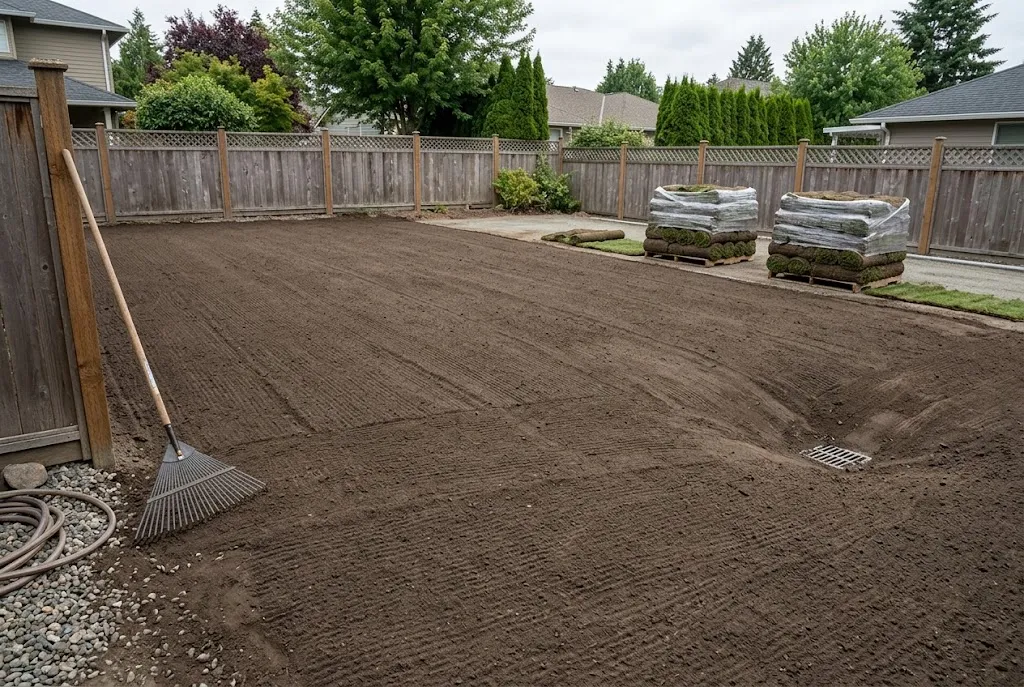
Yes, you can sod over bare soil, but only if that soil has been prepared. The phrase “just sod over dirt” usually describes a very different situation: untreated ground that is hard, weedy, littered with debris, or sloped the wrong way. Roots struggle to establish in those conditions, and a new lawn laid over them tends to root slowly and unevenly.
What prepared soil looks like
Good preparation is mostly about removing obstacles to roots and water:
- Clear what is already there. Weeds, old turf, rocks, roots, and construction debris should go. Sod laid directly over old grass or weeds creates a barrier that keeps the new roots from reaching the soil.
- Assess the soil. Look at how hard it is, how it drains after watering, and whether it crusts over or stays soggy. A simple soil test can show whether anything unusual is going on, but not every site needs the same fixes.
- Loosen it appropriately. Compacted ground generally benefits from loosening before sod goes down so roots can move through it. How deep and how much depends on the site.
- Grade for drainage. The surface should be even, without low spots that collect water or high spots that leave air under the sod, and it should slope away from structures.
- Ensure firm contact. Level, lightly firm soil that is damp before installation gives the sod a surface to attach to. The UC guidance cited earlier also recommends rolling the sod immediately after laying it to help with soil contact.
Notice what is not on that list. We are not saying every lawn needs imported topsoil, a long list of amendments, or the same treatment as the neighbor’s yard. Some sites need little beyond cleanup and grading. Others, such as hard-packed soil around new construction, need real work first. That is why the answer to whether you can just sod over dirt is a conditional yes, with the work happening before the sod arrives.
What Is the Best Month to Put Sod Down?
The best month depends on the grass you are installing and the conditions where you live, so there is no single correct month for every lawn. A useful starting point is the growing season of the species. Cool-season sod generally does best when installed in early fall or early spring, when mild temperatures help roots grow. Warm-season sod generally favors mid to late spring, when the soil has warmed and the grass is entering active growth.
Thinking about Southern California
Southern California is not one climate. Coastal areas tend to be milder, with cooler summers that can keep the planting window open longer. Inland areas often get hotter and drier, which makes midsummer installation harder to manage because the sod dries out faster. Because of that, it makes sense to match the installation window to both the grass and the part of the region you are in rather than choosing a month from a generic chart.
Whatever the month, avoid installing during temperature extremes and do not expect rooting to follow the usual pace if you do. Extreme heat can dry sod before it attaches, and cold can leave roots idle. If your timing is flexible, choosing the best season to install sod is one of the simplest ways to make rooting easier. If it is not flexible, careful watering, shade management, and attention to seams matter even more. The species question connects back to the grass you choose, which our guide on grass types suited to Southern California discusses in more detail.
Give Your New Lawn a Confident Start
Talk with us about your new or newly installed sod. Call (888) 601-1117, email info@landscaper-near-me.com, or request a call back and we will discuss your lawn and next steps.
Sod Not Taking Root: What Should You Do, and When Is It Time to Call a Professional?
Before deciding that a lawn has failed, check for the common, fixable causes of delayed rooting. Sod that seems stuck is often dealing with one of a handful of problems, and many of them can be corrected if caught early.
- Dry edges or seams. The perimeter dries first, and a seam with a gap can fry quickly. Brown edges with healthy centers often point here, and watering the edges more carefully may be all that is needed.
- Poor contact. Air pockets, uneven grade, or pieces that were not firmed against the soil keep roots from connecting. A spot that feels spongy or hollow underfoot is a clue.
- Compacted soil. If you can barely push a screwdriver into the ground beneath the sod, roots may be struggling to penetrate.
- Too much water. Constantly saturated soil can slow rooting and cause other problems, particularly in poorly draining spots.
- Shade or dormancy. Low light slows growth, and turf installed outside its comfortable season may simply be sitting still until conditions improve.
Yellowing or browning alone does not prove the sod is dead. Run the tug test in several areas, check moisture under the turf, and look at whether the problem is localized to one irrigation zone or one corner. If a section clearly does not respond after corrections, or the whole lawn seems to be declining despite good watering, it is time for an assessment. We cover troubleshooting new sod that will not root in more depth separately.
Rooting problems usually have a pattern
A strip along a sidewalk points to edge drying. A round patch near a sprinkler head points to coverage or pressure. A whole shaded side points to light. Patterns are what turn guesswork into a diagnosis, so photograph the lawn on a few different days and note when and where the problem appears.
When is it worth calling a professional?
Call when the cause is not obvious, when a large area is affected, or when the property is a shared lawn that residents are waiting to use. Property managers responsible for new HOA or multifamily lawns often need an answer on a timeline, and a quick assessment of the soil, sprinklers, and installation is faster than trial and error. Our sod care services can help with sod establishment, soil preparation, and checking whether irrigation coverage is reaching the whole lawn.
If you are still planning the project, getting preparation and timing right at the start is the best way to keep rooting simple. If your lawn is already down and seems slow, we are happy to talk through what you are seeing. Call Landscaper-Near-Me.com at (888) 601-1117, email info@landscaper-near-me.com, or use the Request Call Back option on this page to ask for a free estimate or an assessment of your new sod.
FAQ's - Frequently Asked Questions
Neither season is automatically better. Sod roots fastest when the grass is actively growing and conditions are mild. Warm-season grasses do best in warm soil, cool-season grasses in milder weather, and extreme heat or cold slows either type.
Some visible seams are normal at first, and they usually close as the grass grows and roots knit the pieces together. Wide or drying gaps need attention because they lose moisture quickly and can be slow to root.
It depends on the soil and the product. If you are unsure, a soil test and the label directions on any starter fertilizer are the safest guides. Fertilizer will not make up for dry sod or poor soil contact.
We recommend removing old turf and weeds first. Sod laid on top of them can leave a layer that blocks new roots from reaching the soil, which can lead to uneven rooting.
Only occasionally. One or two gentle checks in a few different places, spaced a few days apart, is plenty. Repeated lifting can break the new roots you are trying to confirm.
Not necessarily. Dry edges, heat stress, shade, dormancy, and overwatering can all change the color of sod that is still alive. Check moisture under the turf and run a tug test before deciding.
Keep the sod and the soil beneath it moist until it has anchored, then reduce frequency gradually while watering more deeply. Let tug tests and the condition of the lawn guide the change rather than a fixed day count.
Yes, it can. Less light means slower growth, so shaded areas often root more slowly even when they stay damp. Check these areas separately and be careful not to overwater them.