
Should I Install Drip Irrigation System or Sprinkler System?
Choosing by What You Water
“Should I install drip irrigation system or sprinkler system?” is one of the most common questions we hear from property owners planning a new landscape or replacing an irrigation setup that never seemed to water evenly. The short answer is that the right choice depends on what you are watering. A lawn and a bed of shrubs have very different needs, and the method that works beautifully for one can waste water or starve plants in the other.
Sprinklers spread water across an area. Drip irrigation places water at the base of individual plants, a little at a time. That single difference explains most of the reasons a property owner would choose one over the other, and it is also why so many well-designed landscapes end up using both, with each method running on its own irrigation zones.
In this guide, we walk through the drip irrigation vs sprinkler system decision the way we approach it on a real property: area by area. We explain how each system delivers water, where each one tends to perform best, how soil, slopes, sun exposure, and plant types change the equation, and what to look for if you already have an irrigation system in the ground. Whether you manage a single-family yard, an HOA common area, or a commercial site, the goal is the same: water each part of the landscape according to what actually grows there.
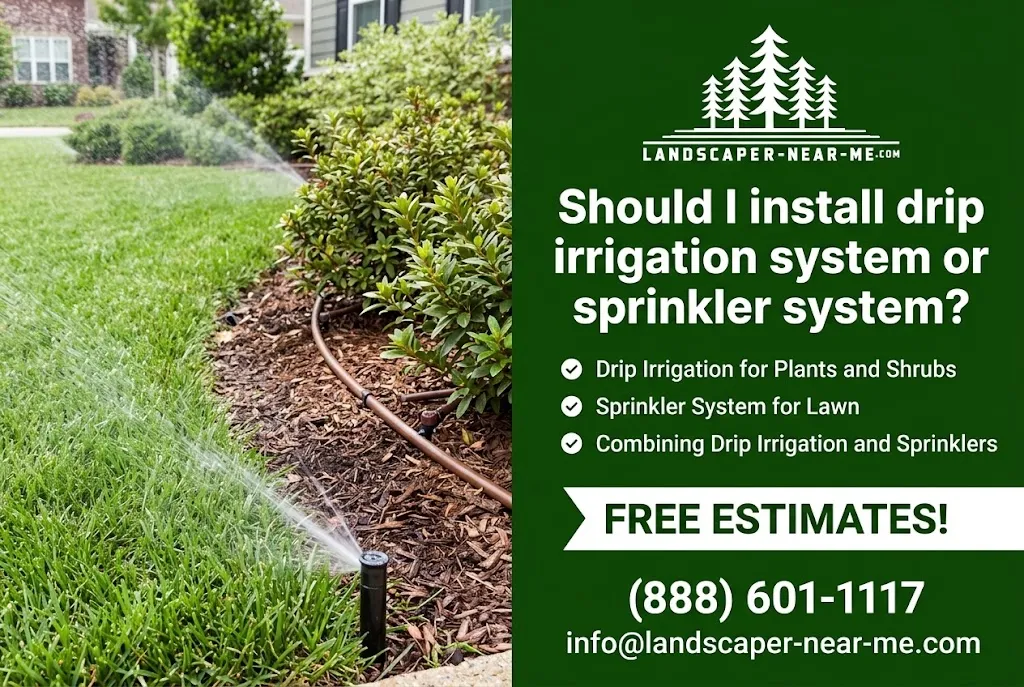
Get a Free Estimate for the Right Irrigation Mix
Not sure whether your lawn, beds, and trees call for drip, sprinklers, or both? We will review your property area by area and provide a free estimate for the approach that fits. Call (888) 601-1117 or email info@landscaper-near-me.com.
How Do Drip Irrigation and Sprinkler Systems Deliver Water Differently?
Drip irrigation delivers small amounts of water slowly and directly to the soil around a plant’s roots, while a sprinkler system throws water through the air to cover an area of ground. In the drip system vs sprinkler system comparison, both are legitimate types of landscape irrigation system, and both can be efficient when they are designed and maintained properly. They simply solve different problems.
Drip Irrigation: Low Flow at the Root Zone
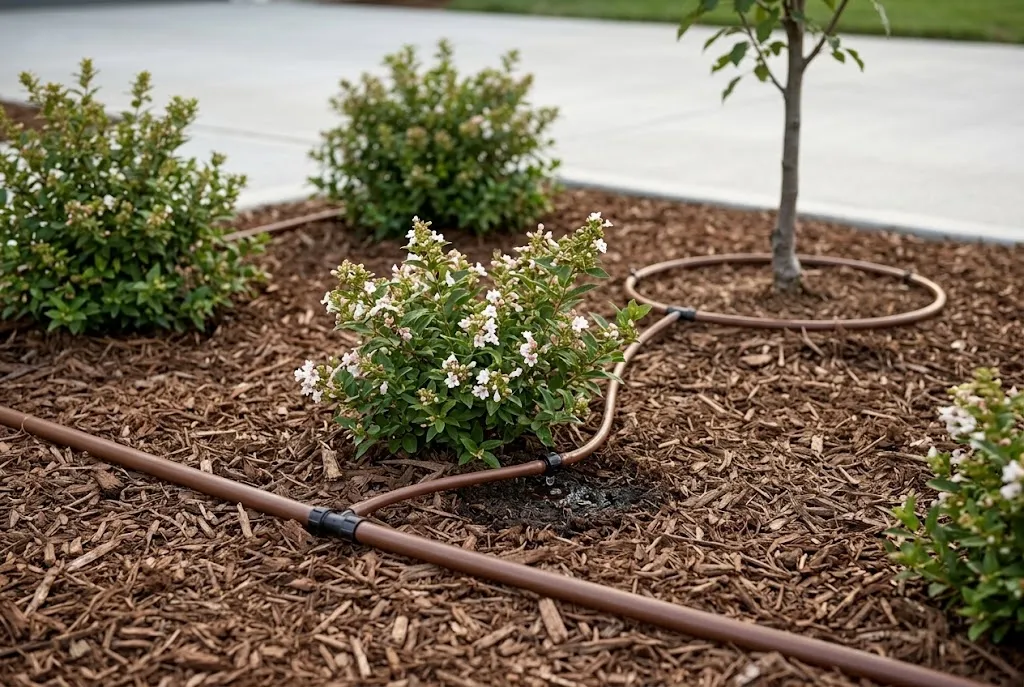
A drip system uses low-pressure tubing with drip emitters placed at or near each plant. Emitters release water at a slow, measured rate, typically expressed in gallons per hour rather than gallons per minute. Some systems use individual emitters on flexible tubing; others use inline dripline with emitters built in at regular spacing, which is useful in densely planted beds. Because the water soaks into the soil instead of being sprayed, very little is lost to wind or to hard surfaces nearby.
Drip systems usually run longer than sprinkler zones to deliver a comparable amount of water, because the flow is so gradual. That slow application gives water time to move down and outward through the soil rather than pooling or running off.
Sprinkler Irrigation: Coverage Across Larger Areas
Sprinkler heads distribute water over a pattern, usually a full circle, half circle, quarter circle, or strip. Fixed spray heads cover shorter distances with a fan of water, while rotors send streams farther and apply water more slowly across larger turf areas. A properly designed sprinkler zone relies on overlapping patterns, often described as head-to-head coverage, so that every part of the lawn receives a similar amount of water.
That overlap is what makes sprinklers effective on turf and what makes them a poor match for scattered plantings. When the target is a continuous carpet of grass, broad coverage is exactly what you want. When the target is a row of shrubs separated by mulch, much of the water lands where nothing needs it.
Drip Irrigation vs Sprinkler System: Which Uses Water More Efficiently?
In planting beds and around trees and shrubs, drip irrigation is generally the more water-efficient irrigation system because it applies water directly where roots can use it. According to the EPA WaterSense guidance on microirrigation, drip and other microirrigation systems can use 20 to 50 percent less water than conventional sprinkler systems, with actual savings depending on the landscape and how the system is set up.
The sprinkler irrigation vs drip irrigation comparison deserves some context, though. Irrigation water efficiency is not only about the type of equipment. It also depends on design, pressure, scheduling, and upkeep. A well-adjusted sprinkler zone watering a lawn can be efficient, and a neglected drip system with broken tubing can waste a surprising amount of water without anyone noticing.
Where Sprinklers Lose Water
- Evaporation: Fine droplets traveling through warm, dry air can evaporate before they reach the ground.
- Wind drift: Breezes push spray off course, leaving dry spots on one side of a zone and wet pavement on the other.
- Overspray: Heads that are poorly aimed or placed too close to edges send water onto sidewalks, driveways, walls, and streets.
- Runoff: When water is applied faster than the soil can absorb it, the excess flows away, especially on slopes and compacted clay.
Where Drip Systems Lose Water
Drip losses are usually less visible. A chewed or cut line, a missing emitter, or a fitting that has pulled apart can leak for weeks under mulch. Clogged emitters create the opposite problem: plants that quietly decline because they are not receiving water at all. Drip is precise, but that precision only holds when the components are intact and working.
Why Do Sprinklers Usually Make More Sense for Lawns?
For most turf areas, a sprinkler system for lawn irrigation remains the practical choice because grass needs uniform moisture across its entire surface, not just at scattered points. Turfgrass is made up of countless individual plants growing shoulder to shoulder, and their roots spread across the whole area. Sprinkler irrigation for turfgrass matches that pattern by wetting the full surface evenly.
Subsurface drip can be installed beneath turf, but it requires careful design, close emitter spacing, and attention to soil type to avoid striped or patchy growth. It can also make routine lawn work such as aeration more complicated. For broad, open lawns, a properly designed spray or rotor zone is usually the simpler and more dependable option.
What Makes a Lawn Sprinkler Zone Work Well
- Head spacing that allows each sprinkler to reach neighboring heads, so coverage overlaps evenly.
- Matched precipitation rates within a zone, so full-circle and part-circle heads apply water at comparable rates.
- Water pressure that suits the heads in use; too much pressure causes misting, and too little leaves gaps.
- Nozzles and arcs adjusted so water stays on the grass rather than the hardscape.
New lawns deserve special attention. Freshly installed sod depends heavily on consistent moisture while its roots knit into the soil below, and uneven sprinkler coverage shows up quickly as brown seams and dry corners. If you are establishing or caring for new turf, our Sod Care page explains how we help new turf get established.
Separate Lawn and Bed Zones for Better Watering
When turf and planting beds share one valve, something gets too much water or too little. We can help lay out sprinkler and drip zones that water each area on its own terms, whether you are planning a new landscape or improving an existing system.
Where Does Drip Irrigation Work Best?
Drip irrigation works best wherever plants are spaced apart, grouped in beds, or have root zones you can water directly: shrubs, trees, perennials, flower beds, groundcovers, and container plantings. In these areas, drip irrigation for landscaping keeps foliage dry, avoids wetting bare mulch between plants, and lets each plant receive an amount of water that suits its size.
Drip Irrigation for Plants and Shrubs
Planting beds are where drip irrigation for plants and shrubs shows its biggest advantage. A spray head in a shrub bed often hits foliage, walls, and bare ground, and taller shrubs can block the spray from reaching plants behind them. Drip emitters sidestep all of that. Larger shrubs can receive more emitters or higher-flow emitters than small perennials in the same bed, which is difficult to accomplish with spray.
Keeping leaves dry also matters for plants that are sensitive to foliar diseases, and it keeps water spots off windows, stucco, and fences that sit behind beds.
Drip Irrigation for Trees
Drip irrigation for trees takes a little more planning than it does for shrubs. A young tree’s roots start near the trunk, but as the tree matures, its active roots spread well beyond the canopy’s edge. A single emitter placed against the trunk may be adequate for a newly planted tree, yet it will not serve that same tree years later. We plan tree drip layouts so emitters can be added or moved outward, sometimes using a ring of dripline, as the tree grows.
Trees planted in lawns present a special case. They often receive water from the turf sprinklers, but frequent, shallow lawn watering does not always meet a tree’s deeper needs. Supplemental drip on its own zone can give the tree longer, less frequent watering without changing the lawn’s schedule.
Narrow Strips and Hard-to-Reach Spaces
Parkway strips, side yards, and planters along walkways are notorious for overspray. Spray heads in narrow spaces almost always hit pavement. Drip, or a low-volume alternative designed for narrow areas, keeps water on the planting instead of on the sidewalk.
Which Irrigation System Is Better for Your Property’s Conditions?
Neither method is universally superior, so the question of which irrigation system is better has to be answered for each part of the property. The best irrigation system for landscaping is the one that fits the plants, soil, terrain, and use of each specific area. Here are the factors we weigh when we evaluate a site.
What You Are Watering
This is the starting point, and it is why watering lawn vs landscape beds should be treated as two separate jobs. Continuous turf points toward sprinklers. Spaced shrubs, trees, and beds point toward drip. Mixed areas, such as a lawn bordered by planting beds, usually point toward separate zones for each.
Soil Type
Soil controls how water moves once it reaches the ground. Sandy soils absorb water quickly but let it drain downward with limited sideways spread, so drip emitters may need to be spaced more closely. Clay soils absorb water slowly and spread it farther sideways, which suits the gradual application of drip but makes sprinkler runoff more likely if run times are too long.
Slopes
Sloped landscapes make runoff a real concern for spray irrigation. Water that cannot soak in fast enough simply heads downhill. Drip applies water more slowly, which helps on slopes, though design still matters, since low points on a drip line can drain after each cycle. Sprinkler zones on slopes often benefit from shorter, repeated cycles that give water time to soak in.
Sun, Shade, and Exposure
A south-facing bed in full afternoon sun dries out much faster than a shaded bed along the north side of a building, even if both contain the same plants. Areas with very different exposure should not necessarily share a zone or a schedule.
Use and Appearance
How the space is used matters too. Play areas and sports turf need durable grass and even sprinkler coverage. Formal entry beds at a commercial property may benefit from drip that keeps walkways dry for visitors. On HOA and multifamily properties, keeping water off sidewalks and parking areas is often a practical priority as well as an efficiency one. When irrigation decisions are part of a larger redesign, our Landscape Services can help align plant selection, bed layout, and irrigation planning from the start.
Can You Combine Drip Irrigation and Sprinklers in One Landscape?
Yes, and on many properties, combining drip irrigation and sprinklers is the most sensible answer to the drip irrigation or sprinkler system question. The key is that each method runs on its own separate irrigation zones, controlled by the same irrigation controller but scheduled independently.
Why Drip and Sprinklers Should Not Share a Zone
Sprinkler heads and drip emitters apply water at very different rates. A spray zone might deliver the lawn’s water in minutes, while drip emitters may need much longer to provide appropriate water to the beds. If both run on the same valve, one area will always be overwatered or underwatered. Drip components also typically operate at lower pressure than sprinkler heads, so drip zones generally need their own pressure regulation and filtration.
Grouping Plants With Similar Water Needs
Good zoning goes beyond separating lawn from beds. Plants with similar water needs and similar sun exposure should be grouped together whenever possible, a practice often called hydrozoning. A bed of drought-tolerant shrubs should not share a drip zone with thirstier annual flowers, and a shaded lawn section may need a different run time than a lawn in full sun.
Scheduling by Condition, Not Habit
One of the most common problems we see is a single watering schedule applied to every zone on a property. Turf, shrubs, and trees each respond differently, and their needs shift with season, weather, soil, and plant maturity. We do not recommend a fixed schedule for every landscape, because what works for one property can be wrong for the one next door. Each zone should be scheduled according to what is planted there and how that area responds.
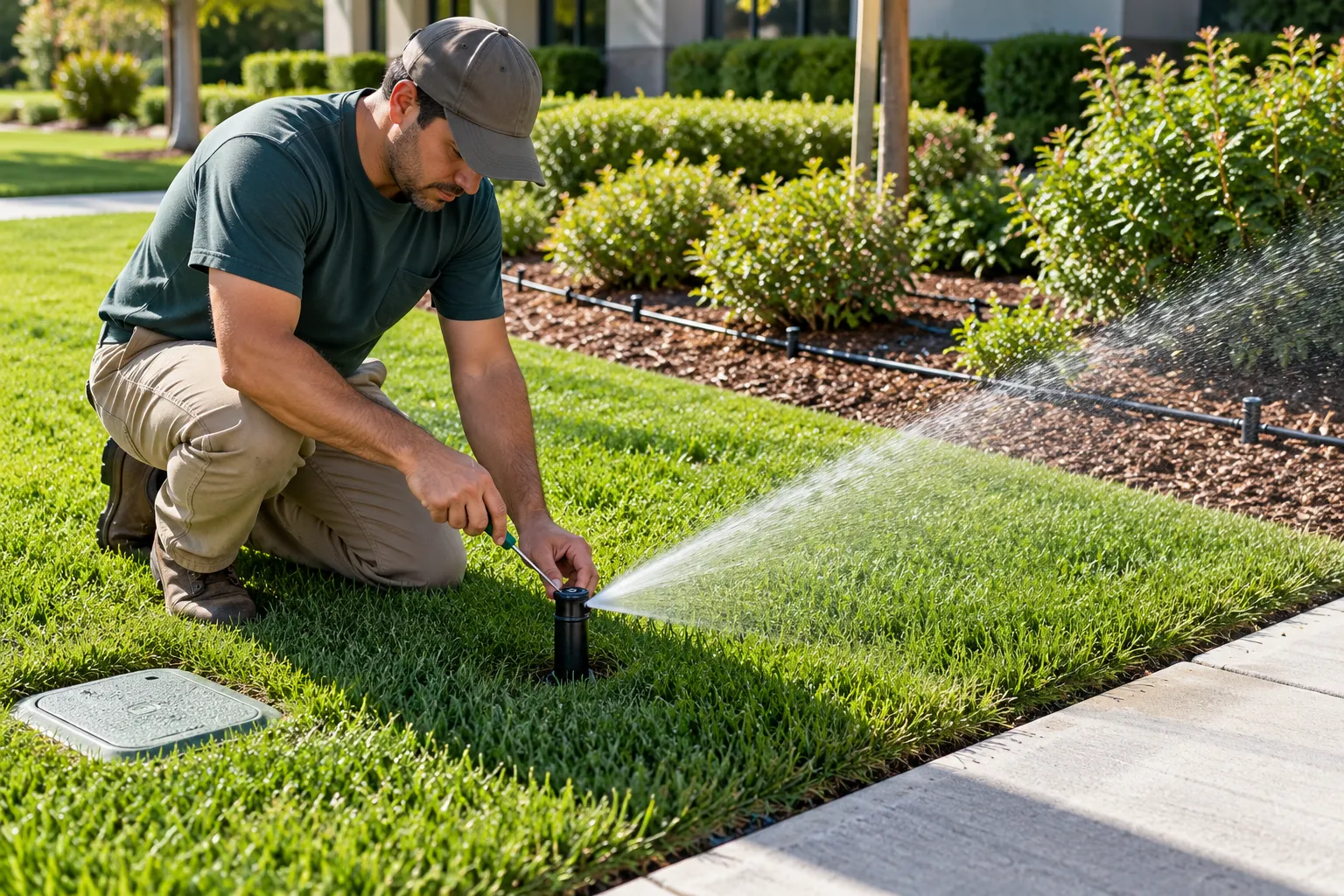
Choose Drip or Sprinklers With Confidence
Talk with Landscaper-Near-Me.com about what you are watering and how your current system performs. Call (888) 601-1117, email info@landscaper-near-me.com, or request a callback, and we will help you decide what makes sense for your property.
Should I Install Drip Irrigation System or Sprinkler System on an Existing Landscape?
If you already have a residential irrigation system or a commercial system in place, the answer usually starts with evaluating what is there rather than replacing everything. Many older systems were installed with spray heads everywhere, including in planting beds where drip would now be the better fit. Other systems have drip zones that were added piece by piece over the years without a clear plan.
Evaluating an Existing System
We look at how each zone is laid out, what it waters, and how well it performs. Useful questions include:
- Are spray heads watering beds, shrubs, or narrow strips where much of the water lands on mulch, walls, or pavement?
- Does the lawn show dry spots or soggy areas that point to coverage or pressure problems?
- Are turf and planting beds sharing the same valve?
- Has the landscape changed since the system was installed, such as removed lawn, new beds, or trees that have grown and now block spray patterns?
Retrofitting Appropriate Zones
When a bed zone is a poor match for spray, converting that zone to drip can be a practical upgrade, provided the conversion includes the right pressure regulation, filtration, and emitter layout. Not every sprinkler zone is a good candidate. Lawn zones generally should remain sprinkler zones, and a mixed zone may need to be separated before any conversion makes sense.
Planning a New Landscape
New installations offer the cleanest opportunity to get this right. When the planting plan is known before irrigation system installation begins, zones can be laid out around turf areas, bed types, trees, and exposure from day one. That planning tends to cost far less than redesigning a system after the landscape is already in place.
What Efficiency Problems Affect Drip and Sprinkler Systems?
Both methods can waste water when components fail or when the system no longer matches the landscape. Recognizing the common problems helps property owners judge whether an existing system is performing the way it should.
Common Sprinkler Problems
- Overspray onto sidewalks, driveways, and streets from misaligned heads or incorrect arcs.
- Misting caused by excessive water pressure, which produces fine droplets that drift and evaporate.
- Uneven coverage from tilted, sunken, clogged, or mismatched sprinkler heads.
- Blocked spray where grass, shrubs, or ground cover have grown in front of heads.
- Runoff when run times exceed what the soil can absorb in a single cycle.
Common Drip Problems
- Clogged emitters, often from sediment or mineral buildup when filtration is inadequate or neglected.
- Damaged tubing from digging, pruning tools, or animals, which can leak unseen beneath mulch.
- Displaced emitters that no longer sit near the root zone, especially around plants that have grown.
- Pressure issues when a regulator is missing or has failed.
Watering Areas That Need Different Amounts
Some of the largest inefficiencies come from design rather than broken parts: a lawn and shrub bed sharing one valve, sunny and shady areas on the same schedule, or established plants still receiving the water they needed when first planted. Routine inspection of heads, emitters, and controller settings helps catch these issues before they show up as stressed plants or a higher water bill.
Making the Right Irrigation Choice for Your Lawn and Landscape
So, should you install a drip irrigation system or sprinkler system? For most properties, the most accurate answer is that the choice belongs to each area, not the property as a whole. Sprinklers are generally the right tool for uniform turfgrass. Drip is generally the right tool for trees, shrubs, flowers, and planting beds. When a landscape contains both, as most do, an irrigation system for lawn and garden that keeps these areas on separate zones gives each one what it needs.
The details still matter. Soil, slopes, sun exposure, plant maturity, water pressure, and how carefully the system is maintained all influence how well either method performs. A thoughtfully designed system that matches the property will almost always outperform an expensive system that was laid out without regard to what grows where.
If you are planning a new landscape, rethinking an older system, or trying to decide how best to water the lawn versus the landscape beds, our team can help. Through our Irrigation Services, we evaluate your property area by area and recommend where sprinklers, drip, or a combination make the most sense. Call Landscaper-Near-Me.com at (888) 601-1117, email info@landscaper-near-me.com, or request a free estimate or callback, and we will help you plan an irrigation approach that fits your landscape.
FAQ's - Frequently Asked Questions
In planting beds, drip usually uses less water because it applies water directly to root zones with less evaporation and overspray. Operating savings depend on how the system is designed, scheduled, and maintained. For turf areas, a well-adjusted sprinkler zone is often the more practical option.
Subsurface drip can be used under turf, but it needs close emitter spacing, careful design for your soil, and attention during lawn maintenance. For most open lawns, we recommend properly designed sprinklers because they provide more uniform coverage with fewer complications.
Drip zones generally run longer than sprinkler zones because emitters release water slowly, measured in gallons per hour. The right run time depends on the plants, soil, emitter flow, season, and exposure, so there is no single schedule that fits every landscape.
Yes. Trees in lawns often benefit from supplemental drip on a separate zone, which allows deeper, less frequent watering than turf sprinklers typically provide. Emitters should be expanded outward as the tree grows so they continue to reach active roots.
Emitters can clog from sediment or mineral buildup, especially when filtration is missing or not maintained. A filter at the start of each drip zone and periodic inspection help keep emitters flowing properly.
Often, yes. A bed zone that currently uses spray heads may be converted to drip if it is on its own valve and receives appropriate pressure regulation and filtration. Drip should not be mixed onto the same valve as lawn sprinklers.
Drip applies water slowly and is less likely to run off, which is helpful on slopes. Sprinkler zones on slopes can work when they use suitable heads and shorter repeated cycles that allow water to soak in. The best option depends on what is planted on the slope.
Yes. Our services include sprinkler installation, drip irrigation systems, irrigation design, and irrigation repair, so we can plan and install a system that uses sprinklers for turf and drip for beds, shrubs, and trees. Call (888) 601-1117 to request a free estimate.