
What Type of Grass Grows Best in Southern California?
What type of grass grows best in Southern California depends less on a single “best” variety and more on what your own property offers: coastal fog or inland heat, full sun or afternoon shade, sandy soil or heavy clay, and how much time you want to spend on upkeep. Southern California’s climate supports a wider range of turfgrass than almost anywhere else in the country, which is good news for homeowners but also means the grass that looks great three streets over can struggle in your own yard.
This guide walks through the Southern California grass types most commonly installed as sod across coastal and inland areas, how climate, sun, shade, water use, and salinity narrow down the right choice, and what it takes to prepare a site and establish new sod once you’ve decided. If you manage a residential lawn, an HOA common area, or a commercial property, the same fundamentals apply — matching sod type to the way the site actually behaves.

Get a Free Sod Selection Estimate for Your Property
Not sure which grass is right for your yard? We’ll evaluate your sun, shade, soil, and water setup and help you choose sod that will actually thrive.
What Type of Grass Grows Best in Southern California?
There is no single grass variety that performs best on every Southern California property, and any answer that ignores your site’s specific conditions is incomplete. The right sod for a given yard comes down to a handful of factors working together:
- Coastal or inland location. Cooler, humid coastal air favors different grasses than hot, dry interior valleys.
- Sun versus shade. Most lawn grasses were bred for full sun, and shade tolerance varies significantly between species.
- Water availability and irrigation setup. Some sod types need considerably less summer water than others once established.
- Soil conditions. Drainage, compaction, and salinity all affect how well a given grass will actually root and spread.
- Intended use. A play area for kids and pets has different wear demands than an ornamental front lawn that is mostly looked at rather than walked on.
- Maintenance expectations. Mowing frequency, fertilization needs, and tolerance for winter dormancy differ across grass types.
Property owners who choose sod based on appearance alone, or by copying a neighbor’s lawn, often end up fighting the grass rather than maintaining it. There is no shortcut to finding the best sod for Southern California conditions on a given lot — matching the sod to the property first is what makes the rest of lawn care straightforward.
How Coastal and Inland Conditions Change Your Grass Choice
Southern California’s climate is not uniform, and the difference between a coastal lot and an inland one is often the single biggest factor in sod selection. Coastal areas benefit from marine-layer cloud cover, milder summer temperatures, and higher humidity, which tends to favor cool-season grasses such as tall fescue and reduces heat stress on grasses that would otherwise struggle. Inland and interior areas see higher daytime heat, larger swings between day and night temperatures, and faster evaporation from soil and turf, conditions that generally favor warm-season grasses like Bermuda, zoysia, and buffalograss.
According to the University of California’s turfgrass management resources, cool-season species are typically more competitive in coastal and northern regions of the state, while warm-season species perform better in interior valleys and desert-influenced areas. That general framework holds true across our service territory, though microclimates, tree cover, and reflected heat from pavement or walls can shift the practical answer for an individual yard.
A property just a few miles inland from the coast can require a noticeably different grass than one directly along it, which is why we look at each site rather than applying one regional rule of thumb. In practical terms, coastal Southern California lawn grass tends to skew toward tall fescue and other cool-season options, while inland Southern California lawn grass more often means Bermuda, zoysia, or another warm-season variety suited to sustained heat.
Types of Sod for Southern California Lawns
The sod types below cover the options most commonly installed across our service area. None of them is universally “better” — each fits a different combination of climate, sun exposure, and maintenance preference.
Bermuda Grass Sod for Southern California Lawns
Hybrid Bermuda sod and common Bermuda grass are warm-season options known for dense, wear-tolerant turf that handles full sun and heat well with comparatively low summer water needs once established. Hybrid Bermuda varieties offer a finer texture and are often chosen for higher-visibility lawns, while common Bermuda is a more economical, slightly coarser option. The trade-off is winter dormancy: Bermuda turns tan or straw-colored in cooler months and greens back up in spring.
Tall Fescue Sod for Coastal and Partially Shaded Yards
Tall fescue is a cool-season grass and, for many Southern California homeowners, the most familiar lawn type. It stays green through the mild local winters, tolerates partial shade better than most warm-season grasses, and has a coarser, clumping growth habit that holds up reasonably well to foot traffic. It generally needs more consistent irrigation through the dry summer months than Bermuda or zoysia.
St. Augustine Grass for Warm Shaded Areas
St. Augustine sod is a warm-season, broad-bladed grass that tolerates partial shade better than Bermuda, zoysia, or kikuyugrass, making it a common choice for coastal Southern California yards with filtered light from trees or structures. It has lower wear tolerance than Bermuda and is generally better suited to ornamental lawns than heavy-use play areas.
Zoysia Sod for Drought-Conscious Lawns
Zoysia grass forms a dense, fine-to-medium-textured turf with good drought tolerance and solid wear recovery once established, though it establishes and spreads more slowly than Bermuda. It performs well in full sun to light shade and is a common choice for homeowners who want a lower-water lawn without sacrificing density.
Kikuyugrass Lawn Considerations
Kikuyugrass sod is a vigorous, drought-tolerant warm-season grass found in parts of coastal Southern California. It spreads aggressively by both above-ground stolons and below-ground rhizomes, which gives it strong wear recovery but also means it can invade adjacent planting beds without consistent edging. It is a reasonable option where its vigor is an advantage, but it is a higher-maintenance grass to contain than most other sod types on this list.
Seashore Paspalum Sod for Saline Conditions
Seashore paspalum is a warm-season grass valued for its notably strong salt tolerance, making it a practical option for coastal properties irrigating with recycled water or dealing with salt-affected soil. It produces a dense, attractive turf in full sun and is increasingly used on both residential and commercial Southern California properties near the coast.
A few additional options round out the regional picture. Buffalograss is a low-water, warm-season grass occasionally used where a more casual, meadow-like lawn is acceptable. Kentucky bluegrass and perennial ryegrass blends, along with fine fescues, are cool-season options sometimes used in cooler microclimates or shaded lawns where a finer texture is preferred over tall fescue’s coarser blade. Bentgrass is a fine, high-maintenance turf primarily associated with putting greens rather than typical home lawns, and it is rarely a practical choice for residential or commercial landscapes in this region.
Planning a New Lawn? Let's Check Your Site First
From soil prep to irrigation coverage, a quick site visit can catch the issues that cause new sod to struggle in its first season.
Warm-Season vs. Cool-Season Grass: What’s the Difference for a Southern California Lawn?
Every sod type covered above falls into one of two broad categories, and understanding the difference makes the rest of the decision easier. Warm-season grass sod — Bermuda, St. Augustine, zoysia, kikuyugrass, seashore paspalum, and buffalograss — grows most actively during the warmer months, tolerates heat well, and generally needs less water during summer than cool-season grass sod. Their trade-off is winter dormancy: most will fade to tan or brown once temperatures drop, even though Southern California’s mild winters keep that dormant period shorter and less severe than in colder climates.
Cool-season grass sod — tall fescue, Kentucky bluegrass and perennial ryegrass blends, and fine fescues — grows most actively in spring and fall, stay green through winter, and generally need more consistent irrigation to get through summer heat without stress. They also spread by tillering rather than by stolons or rhizomes, which means bare or thinning patches typically need overseeding to fill back in rather than filling in on their own the way Bermuda or zoysia will.
If year-round green color matters more than minimizing summer water use, a cool-season lawn is usually the more practical fit. If lower water use and heat tolerance matter more than winter color, a warm-season lawn is worth serious consideration.
Matching Grass to Sun, Shade, and Mixed-Light Yards
Sod selection for sun and shade is one of the most common reasons a newly installed lawn underperforms. Most turfgrasses were developed for full-sun performance, and shade tolerance drops off quickly as canopy cover increases.
For full-sun areas, Bermuda, zoysia, and seashore paspalum are generally the strongest performers, producing dense, even turf with good wear tolerance. For areas with partial or filtered shade, shade-tolerant sod for Southern California yards generally means tall fescue or St. Augustine grass, both of which tolerate reduced light better than the other warm-season options, though even these will thin out under heavy, all-day shade. Kikuyugrass falls in the middle, tolerating light shade but performing best with substantial direct sun.
Yards with both sun-drenched and shaded zones present a real challenge: a single grass type rarely performs equally well across the whole property. In these cases, property owners generally have two workable approaches — accept that the shaded section will be thinner and adjust mowing height and traffic accordingly, or treat the deeply shaded area as a separate zone with groundcover or hardscape rather than trying to force turf to grow where it structurally cannot get enough light. Knowing how to choose sod for sun versus shade before installation avoids the far more expensive path of replacing a struggling lawn a year later.
Drought Tolerance, Water Use, and Salinity Considerations
Drought-tolerant grass for Southern California properties has become a bigger priority as water costs and conservation expectations continue to rise. Among the sod types covered here, hybrid Bermuda, zoysia, and buffalograss generally require the least water once fully established, and seashore paspalum performs well under reduced irrigation while also tolerating salinity that would stress other grasses. Tall fescue and Kentucky bluegrass blends, by contrast, typically need more consistent summer watering to avoid heat stress and thinning.
Salinity is worth a specific mention for coastal and inland properties irrigating with recycled water, well water, or water affected by soil salts. Seashore paspalum stands out for its salt tolerance, and Bermuda grass tolerates moderate salinity better than most cool-season grasses, while tall fescue and fine fescues are generally more sensitive.
Whatever sod type you choose, the irrigation system watering it matters as much as the grass itself. Lawn irrigation needs shift significantly between warm-season and cool-season turf, and a new lawn on an outdated or poorly designed system will struggle regardless of how drought-tolerant the variety is supposed to be, which is why we typically evaluate Irrigation Services alongside any sod selection or installation project.
Ready to Install a Lawn That Fits Your Southern California Property?
Call Landscaper-Near-Me.com to talk through your sod options, or request a callback and we’ll reach out to you.
Wear Recovery, Texture, and Everyday Use
How a lawn is actually used should carry real weight in sod selection, not just how it looks the day it’s installed. Grass texture ranges from the fine blades of fine fescues and Kentucky bluegrass blends to the coarser leaves of tall fescue, kikuyugrass, and St. Augustine grass, with hybrid Bermuda and zoysia falling in between. Finer-textured grasses tend to read as more manicured, while coarser grasses often tolerate more abuse.
Wear recovery is where warm-season grasses that spread by stolons and rhizomes — Bermuda, zoysia, kikuyugrass, and seashore paspalum — generally outperform cool-season, bunch-type grasses like tall fescue. A worn path or a patch flattened by a trampoline will typically fill back in on its own with a spreading warm-season grass, while a tall fescue lawn usually needs overseeding to repair the same kind of damage.
This matters differently depending on the property. A backyard used daily by kids and pets has different priorities than an HOA common area seen mostly from a distance, and both differ from a commercial frontage maintained primarily for appearance. Our Landscape Services cover this kind of property-specific planning beyond sod selection alone, including how turf areas fit into the broader design and maintenance plan.
Site Preparation and Sod Installation Basics
Even the right grass for a property will underperform if the site underneath it isn’t properly prepared. A realistic site assessment looks at existing turf or weed cover that needs removal, drainage and grading, soil compaction, and the condition of the irrigation system before any sod is ordered.
How to Prepare Soil Before Sod Installation
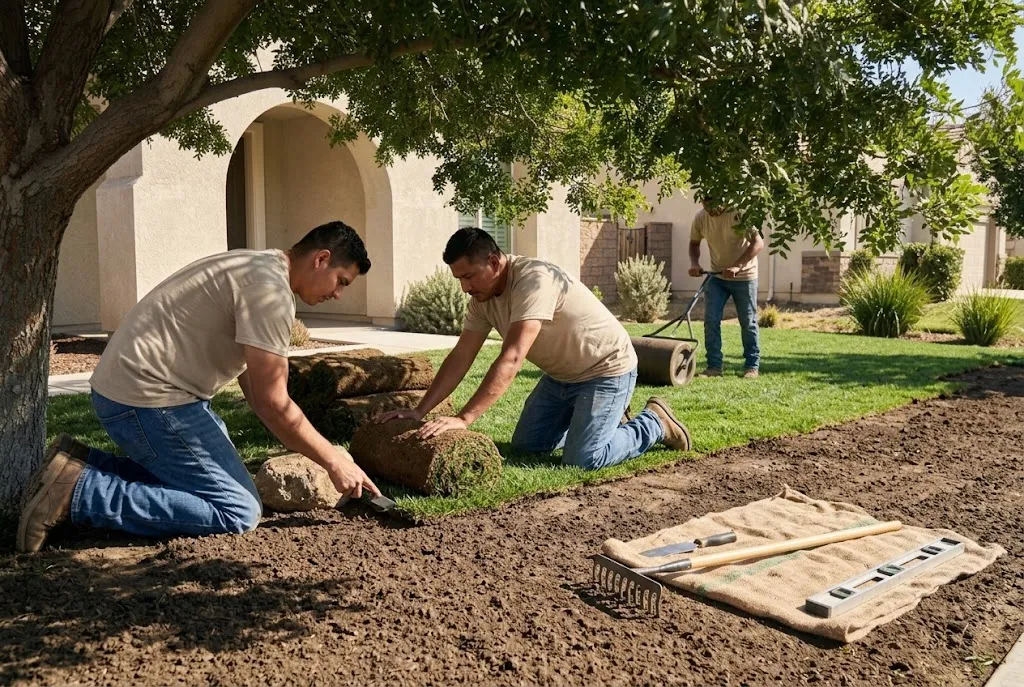
Preparation typically involves removing old turf and debris, tilling or amending compacted or poor soil, correcting grading so water drains away from structures rather than pooling, and running the irrigation system through a full test cycle to confirm even coverage before sod arrives. Skipping this step is one of the most common reasons new sod struggles in its first season, regardless of which grass type was chosen.
Watering New Sod During Establishment
Freshly installed sod needs frequent, shallow watering — often multiple short cycles a day for the first week or two — to keep the root zone consistently moist while roots knit into the soil below. Watering then tapers gradually over several weeks as the lawn transitions to a normal, deeper and less frequent irrigation schedule appropriate to the grass type installed. Spring and fall are generally the more forgiving windows for installation in Southern California, since summer heat increases water demand during the most vulnerable early establishment period.
Once established, ongoing mowing height and frequency should match the grass type, and it’s worth periodically checking for dry spots, runoff onto hardscape, or areas that stay soggy longer than the rest of the lawn — all signs that irrigation coverage or drainage should be reevaluated before they cause turf to decline. Our Sod Care resource covers what a new lawn needs during this establishment period in more detail.
Getting Professional Guidance for Sod Selection and Installation in Southern California
No single grass is the right answer for every Southern California property, and the details covered here — coastal versus inland climate, sun and shade exposure, drought tolerance, salinity, wear demands, and proper site preparation — are what separate a lawn that thrives from one that fights its own conditions for years. Working through those factors before ordering sod is almost always less expensive than replacing a struggling lawn after the fact.
We help homeowners, HOA boards, and property managers evaluate these factors for residential lawns and HOA common areas throughout our service territory, and we provide the same evaluation for selected commercial properties through our Commercial Landscape Services and Commercial Lawn Care Services.
That includes properties managed under our Commercial Landscaping Los Angeles and Commercial Landscaping Newport Beach programs, where sod selection often has to account for HOA guidelines, tenant expectations, or multiple microclimates across a single site. If you’d like help narrowing down the right grass for your specific property, our team is glad to walk through the options with you.
FAQ's - Frequently Asked Questions
Among common sod options, hybrid Bermuda, zoysia, and buffalograss generally need the least summer water once established, and seashore paspalum performs well in low-water conditions along the coast. The right choice still depends on how much sun the area receives and how you plan to use the lawn.
Bermuda is a warm-season grass that tolerates heat, sun, and heavy use with lower summer water needs, but it goes dormant and turns tan in cooler months. Tall fescue is a cool-season grass that stays green through winter and tolerates some shade, but it typically needs more consistent irrigation through the dry season. Full-sun inland properties often do well with Bermuda, while yards that want year-round green or have some shade tend to lean toward tall fescue.
Yes. St. Augustine grass is a warm-season option that tolerates partial shade better than most warm-season grasses and is often used in coastal Southern California yards with filtered sun. It has a coarser leaf texture and lower wear tolerance than Bermuda, so it suits ornamental lawns better than heavy-use play areas.
No common lawn grass performs well in deep, all-day shade, but St. Augustine and tall fescue tolerate partial or filtered shade better than Bermuda, zoysia, or kikuyugrass. If an area gets only a few hours of direct sun, thinning turf is common regardless of grass type, and a groundcover alternative may be worth considering for that specific spot.
Most sod develops enough root contact with the soil to handle light foot traffic and reduced watering within two to three weeks under normal conditions, though full establishment can take four to six weeks depending on the season, grass type, and how consistently it’s watered during that period.
Not always, but it’s worth checking. New sod needs frequent, even watering during establishment, so any dry spots, clogged heads, or uneven coverage in the existing system should be corrected before installation rather than after, when problems are harder to spot under an intact lawn.
Kikuyugrass is a vigorous, drought-tolerant warm-season grass found in parts of coastal Southern California, but it spreads aggressively by both stolons and rhizomes and can invade adjacent planting beds without consistent edging. It’s a reasonable option where its vigor is wanted, but it requires more active containment than most other sod types.
Seashore paspalum has notably strong salt tolerance among common sod types and is often selected for coastal properties that irrigate with recycled or slightly saline water. Bermuda grass also tolerates moderate salinity better than cool-season grasses like tall fescue.