
Sod Installation Costa Mesa CA:
Lawn Replacement and New Sod for Homeowners
Most calls about Sod Installation Costa Mesa CA start with one of two yards. In the first, an existing lawn has thinned out, browned along the same edges every summer, or been worn down to dirt by kids and dogs. In the second, the old grass is already gone, maybe after a remodel or a cleanup, and the homeowner is looking at bare soil and wants natural grass back. Both lead to new sod, but they do not always lead to the same amount of work.
Our sod installation services cover residential front lawns and backyards: removing old turf where it is still there, preparing the soil, fitting new sod around walks, beds, and sprinkler heads, and watering it in so it can root. Before any of that, we look at why the old lawn struggled. A lawn that simply wore out is usually a straightforward replacement. A lawn with recurring dry strips, puddles that sit after watering, or ground hard enough to bounce a shovel needs those conditions sorted out first, or the new sod is likely to struggle in the same places.
The sections below explain what to ask sod installers in Costa Mesa to check, how common yard layouts change the job, how we match grass to sun, traffic, and irrigation, what establishment care involves, and what goes into a free estimate for lawn replacement in Costa Mesa.

Free Estimates for Sod Installation in Costa Mesa
Replacing a worn lawn or covering a cleared yard? We will measure the area, check the soil and sprinkler coverage, and give you a free estimate that lists removal, preparation, and installation. Call (888) 601-1117 or email info@landscaper-near-me.com.
What Should You Ask Sod Installers in Costa Mesa to Check Before They Quote?
Ask them to look at the conditions under the grass, not just the size of the lawn. On any Sod Installation Costa Mesa CA project, a quote built only on square footage assumes the yard is ready for sod. A quote built after a walk-through can tell you whether it actually is.
When we visit a Costa Mesa property, these are the questions we try to answer before putting numbers on paper:
- What is growing there now? Thin turf, weeds, or a spreading grass such as common Bermudagrass changes how the old lawn has to be removed.
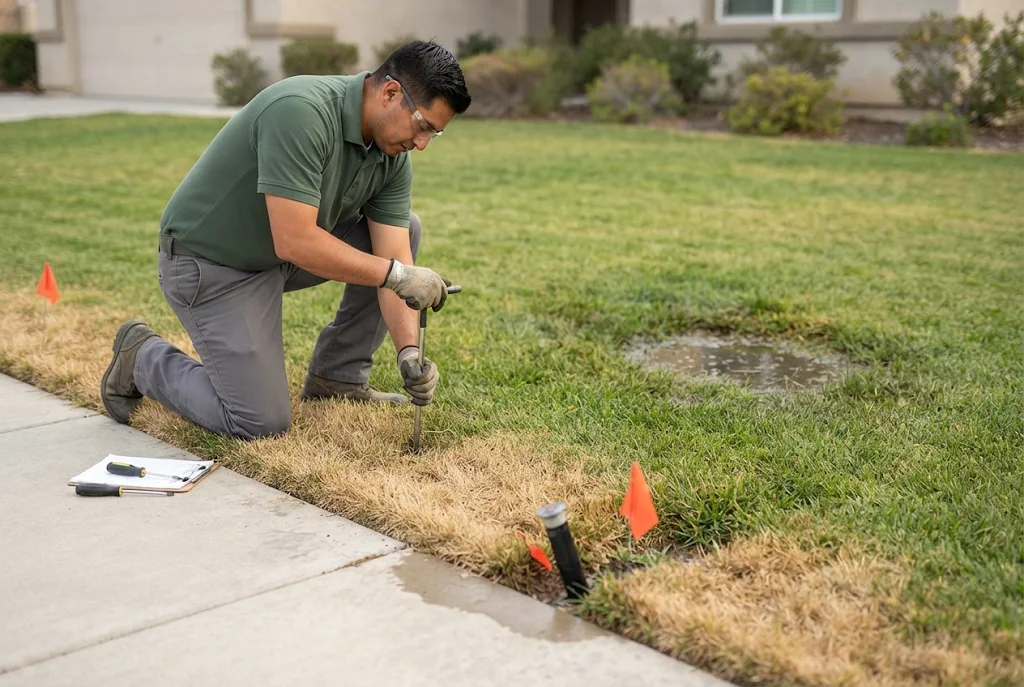
- Where does the lawn fail first? Brown edges, a bald path to the gate, or a soft spot near a downspout each point to a different cause.
- How does the sprinkler system actually perform? We like to see each zone run, because coverage on paper and coverage on the ground are often different.
- How firm is the soil? A probe or a screwdriver that will not push in a few inches tells us compaction is part of the story.
- Where does water go? Low spots, slopes toward the house, and areas that stay wet after watering all affect grading.
- How will the lawn be used and how much sun does it get? Those two answers guide the sod choice more than anything else.
Replacing an Existing Lawn
If grass is still in place, the conversation centers on what went wrong. Old turf is cut out and hauled away, and the soil underneath tells us a lot. Roots that stayed shallow, a hard layer a couple of inches down, or a thick mat of runners all shape the preparation plan.
Starting on Bare Soil
A yard that is already cleared can look like the easy case, and sometimes it is. Bare ground still needs to be checked for construction debris, rock, buried edging, and compaction from equipment or foot traffic. It also needs a sprinkler system that reaches every part of the future lawn, which is easy to overlook when there is no grass to show where coverage falls short.
Straightforward Lawn Replacement or a Yard That Needs Assessment First?
A straightforward replacement is a lawn that wore out evenly, drains normally, and gets reasonable sprinkler coverage. For that yard, new sod mostly means removal, preparation, and installation. A yard with a repeating problem needs that problem understood before the new lawn goes in, because sod covers the surface but does not change what is happening below it.
Homeowners weighing a full replacement against spot repairs often ask when to patch a damaged lawn or replace it with new sod. Small, isolated damage can sometimes be patched. When the damage follows a pattern across the lawn, the pattern usually deserves attention first.
Recurring Dry Strips
Brown bands along a sidewalk, a fence, or the far edge of a zone are a common sign that the spray is not reaching evenly. Causes include tilted or sunken heads, clogged or mismatched nozzles, heads blocked by grass or shrubs, and spacing that leaves gaps. If the system needs work, our sprinkler repair services can be scheduled ahead of the sod so the new lawn starts with better coverage.
Pooled Water
Water that sits on the surface after a cycle can come from a low spot in the grade, compacted soil that will not absorb it, overlapping spray, runoff from a hard surface, or a leaking line or valve. New sod laid into a persistent wet area may stay soggy and weak there, so we look for the source and correct the grade or the irrigation before installation.
Compacted Soil
Heavy foot traffic, parked equipment, and years of mowing over the same paths can pack soil tight. Roots have a hard time pushing into it, and water tends to run off instead of soaking in. Loosening the soil, and adding organic amendment when the soil calls for it, gives new roots room to grow down.
Uneven Sprinkler Coverage
Coverage problems are not always obvious as dry strips. A lawn can look acceptable while one corner gets twice the water of another. Running each zone and watching where the water lands helps us decide whether heads need adjusting, replacing, or relocating before the sod is laid.
How Three Common Costa Mesa Yard Layouts Change the Job
Costa Mesa has plenty of single-family streets where lawns sit between concrete on several sides, along with backyards that see daily use and narrow side yards hemmed in by fences and walls. Each layout shifts what the installation has to account for.
A Front Lawn Bordered by a Sidewalk and Driveway
Front yard sod replacement on a lawn framed by concrete is mostly about edges and levels. Grass next to hot pavement tends to dry first, and spray that overshoots the walk is wasted while the strip beside it stays thirsty. We set the finished soil grade low enough that the new sod sits close to flush with the sidewalk and driveway rather than mounding above them, and we check that heads along those borders throw water onto the lawn instead of the concrete. A clean, level edge is also what makes the lawn look finished from the street.
A Family Backyard Worn by Pets or Foot Traffic
Backyards used by children and dogs often fail in predictable places: a path to the gate, a running lane along the fence, and the area just off the patio. Replacing the grass without addressing those routes can bring the same bare spots back. For these lawns, we talk about sod varieties that handle wear and recover well, loosening compacted soil along the worn paths, and simple changes such as stepping stones or a planting strip where traffic is unavoidable.
A Side Yard Shaded by a Fence or Building
Narrow side yards can stay in shade much of the day, and a grass that thrives in the open front yard may thin out there. Some side yards also have limited sprinkler coverage, poor air movement, and soil that stays damp. In some cases, a shade-tolerant sod is a reasonable fit. In others, the honest recommendation is to keep the lawn to the sunnier areas and use another surface in the deepest shade.
Dry Strips or Standing Water? Have Them Checked Before New Sod Goes Down
The problems that wore out the old lawn can return under new sod. We will run your sprinkler zones, look at drainage and soil firmness, and explain what should be corrected first so the new lawn starts on even ground. Reach us at (888) 601-1117.
Which Natural-Grass Sod Fits Your Sun, Traffic, and Irrigation?
The right sod is the one that matches how much sun the lawn gets, how hard it will be used, and how it will be watered. For a new natural-grass lawn installation, we look at those three factors together rather than choosing a variety first and fitting the yard to it.
- Sun exposure: Bermudagrass and its hybrids generally want full sun and tend to thin in shade. St. Augustinegrass and some zoysiagrasses usually handle partial shade better. Tall fescue is often chosen where a cool-season lawn is preferred and some shade is present.
- Expected traffic: Lawns used for play or by dogs benefit from grasses that spread and recover after wear, while a front lawn that is mostly viewed from the street has more flexibility.
- Available irrigation: Warm-season grasses generally use less water than cool-season grasses during the summer, which matters in Southern California. A grass that needs more water than the system can deliver evenly will show it quickly.
- Seasonal color: Many warm-season grasses slow down and lose some color in cooler months, while tall fescue tends to stay greener through winter but needs more water in summer heat.
For a closer comparison of the common options, our guide on choosing a grass type for a Southern California lawn covers how each one performs and where it fits. During the site visit, we will tell you which varieties suit each part of your yard. A property with a sunny front lawn and a shaded backyard may be better served by a variety that handles both conditions reasonably well than by one that excels in only one of them.
What Residential Sod Installation Involves From Removal to Watering-In
Residential sod installation runs in a set order, and each step supports the next. Cutting corners early usually shows up later as uneven ground, gaps at the seams, or sod that is slow to root.
Removing the Old Turf
Where a lawn is still in place, we cut out the existing grass and its root layer and remove it along with weeds and debris. Laying new sod over old grass leaves the new roots sitting on a layer they cannot easily grow through. If an aggressive grass has spread through the lawn, extra steps may be needed so it does not grow back up through the new sod. Old turf is heavy, and hauling it away is a real line item.
Preparing the Soil
Next, the soil is loosened to relieve compaction and, when the soil needs it, amended with organic material. The surface is then graded so water moves away from the house and does not collect in low areas. Finally, it is raked smooth and firmed so it does not settle unevenly once the sod is down. This is also when sprinkler repairs and adjustments are completed, while the heads are easy to reach.
Fitting Sod Around Borders and Sprinkler Heads
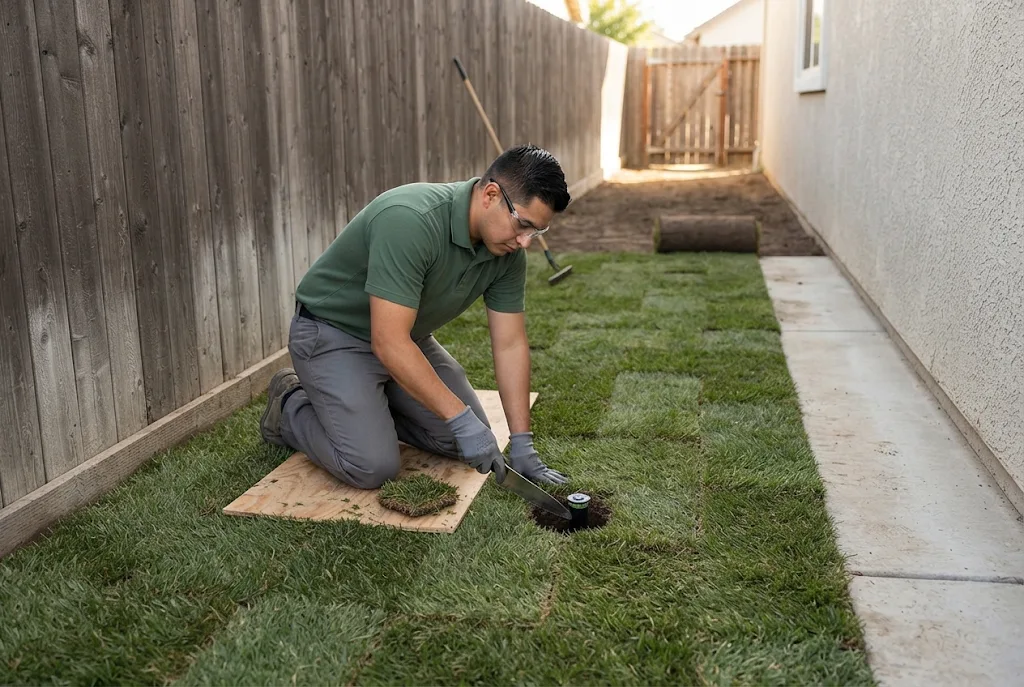
Sod is laid in a staggered, brick-like pattern with the edges pushed snugly together so seams do not open as the pieces settle. Along sidewalks, the driveway, and planting beds, pieces are trimmed to fit cleanly. Around each sprinkler head, we cut an opening so the head can pop up freely and spray without being blocked, and we check that heads sit at the right height for the finished lawn. We avoid leaving small slivers at outside edges, since narrow pieces dry out faster than full ones.
Watering It In
New sod needs water soon after it is laid, especially on warm or breezy days. We soak the installed sections so moisture reaches the soil beneath the sod, then walk the lawn to check for dry edges or seams before we leave. You will receive a starting watering plan along with what to watch for during the first weeks.
When Is the Best Time for Sod Installation in Costa Mesa?
The best timing depends mostly on the grass. Warm-season sods such as Bermudagrass, St. Augustinegrass, and zoysiagrass usually root fastest from late spring through summer while they are actively growing. Cool-season tall fescue generally establishes best in the milder temperatures of fall and spring.
Costa Mesa’s location near the coast often means milder temperatures than inland parts of Orange County, which can widen the comfortable installation window. Even so, a stretch of hot, dry weather can raise watering needs for new sod, and cool winter weather can slow rooting for warm-season varieties. Warm-season sod laid in cooler months may also stay partly dormant and lighter in color until temperatures rise.
We plan installation dates around the grass selected, the work that has to come first, and any watering restrictions in effect at the time. If irrigation repairs or grading are part of the job, that work is scheduled ahead of the sod delivery, so the sod is not left sitting on a pallet while preparation catches up.
Plan Your Costa Mesa Lawn Replacement With Our Team
Send us rough lawn dimensions, a few photos, and notes on any spots that stay dry or wet. We will talk through grass options for your sun and traffic and schedule a visit. Call (888) 601-1117, email info@landscaper-near-me.com, or request a call back.
How Should New Sod Be Cared For While It Roots?
New sod needs steady moisture, light use, and a little patience. Most of the outcome in the first weeks depends on watering, and on keeping people and pets off the lawn until the roots take hold.
Adjusting Watering to Your Site and Your Water Provider’s Rules
At first, the goal is to keep the sod and the soil directly beneath it moist so new roots can grow into it. As rooting progresses, watering usually shifts toward longer, less frequent cycles that encourage deeper roots. The right schedule depends on the weather, the sun on each part of the lawn, the soil, and how each zone performs, so a shaded side yard may need far less water than a front lawn beside a hot driveway.
Watering also has to follow your water provider’s current rules. Mesa Water District serves most of Costa Mesa, and its published requirements include limits on irrigation runoff and on watering during and shortly after rain. You can review Mesa Water District’s water conservation requirements, and if a different provider serves your address, check that provider’s current rules as well. Shorter, repeated cycles can help reduce runoff on compacted soil or slopes.
Limiting Foot Traffic
New sod shifts easily, and footprints on wet soil can leave dips and press the roots away from the ground. Keeping kids, pets, and foot traffic off the new lawn for the first few weeks gives it the best start. For backyards where dogs need access, a temporary barrier around part of the lawn can help.
Checking Readiness Before the First Mow
Before the first mow, gently tug on a corner of a sod piece. If it resists and stays put, the roots are taking hold. If it lifts freely, give it more time. Mowing too soon can tear loose sod, and mowing too short can stress it, so the first cut should be light, with a sharp blade, on soil that is not soggy. Our guide on how to care for newly laid sod covers watering, mowing, and traffic in more detail.
What Affects a Sod Installation Estimate in Costa Mesa?
A sod installation estimate in Costa Mesa depends on the yard more than on any per-square-foot figure, and that is why we do not publish set prices for Sod Installation Costa Mesa CA work. Two lawns of the same size can call for very different amounts of work, which is why we prepare estimates after seeing the property. The main factors are:
- Measured lawn area: including the shape of each section and the length of edges that require trimming.
- Removal and disposal: whether old turf, weeds, or debris have to be cut out and hauled away, and how much material is involved.
- Soil preparation: loosening compacted soil, amendment where needed, and any grading to correct low spots or drainage.
- Access: whether a gate, side yard, or steps mean sod and soil have to be moved by hand, and where materials can be staged.
- Irrigation work: head adjustments, nozzle changes, repairs, or other changes needed to give the lawn more even coverage.
- Sod selection: varieties differ in cost and availability.
A clear estimate should also say what it does not include, so you know before installation day who handles the watering plan, any later irrigation changes, and ongoing lawn care.
How to Request a Free Estimate for Lawn Replacement in Costa Mesa
The quickest way to get an accurate estimate is to give us a clear picture of the yard before we visit. When you contact us about lawn replacement in Costa Mesa, it helps to share:
- Approximate lawn dimensions for each area, even rough length and width measurements.
- A few photos taken from different angles, including the edges along sidewalks, the driveway, and fences.
- Details about persistent dry or wet spots: where they appear, when they show up, and whether they have changed over time.
- How the yard is used, including pets, play areas, and the routes people walk most.
- What you know about the sprinkler system, such as known leaks, broken heads, or zones that seem to run too long or too short.
From there, we schedule a visit to measure the lawn, check the soil and sprinkler coverage, and talk through grass options for each part of the yard. If the yard is a straightforward replacement, the estimate will say so. If dry strips, pooling, or compaction need attention first, the estimate will explain what we found and what we recommend doing before the new sod goes down.
Whether you are replacing a tired front lawn, rebuilding a backyard that the family has worn thin, or starting fresh on bare soil, the goal is the same: a natural-grass lawn laid on ground that is ready for it. Call Landscaper-Near-Me.com at (888) 601-1117, email info@landscaper-near-me.com, or request a callback, and we will set up a time to look at the yard and prepare a free estimate for your Costa Mesa sod installation.
FAQ's - Frequently Asked Questions
We do not recommend it. Sod laid over old grass sits on a layer that keeps new roots from reaching the soil, and the old turf breaks down unevenly underneath it. We remove the existing lawn and prepare the soil first so the new sod has direct contact with loose, moist ground.
Yes. Many homeowners start with the front yard and handle the backyard as a separate project. If both areas share sprinkler zones or the same problem, such as poor coverage, we will point that out so the first project does not create extra work for the second.
Before. Heads, nozzles, and lines are much easier to reach and adjust on bare, prepared soil, and correcting coverage first means the new sod gets even water from day one. Repairs made after installation often mean cutting into the new lawn.
Seams can be noticeable for the first few weeks, especially if the edges dry out. With tight installation and steady watering, they usually fade as the grass roots and grows together. Seams that shrink or turn tan are a sign that area needs more water.
It is best to keep pets off the new lawn for the first few weeks. Paws and running can shift sod pieces and press roots away from the soil. A temporary barrier around part of the yard can give your dog space while the rest of the lawn establishes.
Sod gives you a covered lawn the day it is installed and is less exposed to erosion, weeds, and foot traffic during establishment. Seed usually costs less up front but takes longer to fill in and needs careful watering over a longer period. Some popular grasses, including St. Augustinegrass and many hybrid Bermudagrasses, are usually installed as sod or plugs rather than seed.
Not always. We need gate access, a clear path for materials, and access to the sprinkler controller, and pets should be kept inside or away from the work area. We usually recommend being present at the estimate visit, so we can walk the yard together and confirm the scope.
Yes. Our service territory includes Costa Mesa along with nearby Newport Beach, Irvine, Santa Ana, Garden Grove, Orange, and other communities across Orange County and Southeast Los Angeles County. Call (888) 601-1117 to confirm service for your address.