
What is Commercial Landscaping? A Guide for Property Owners and Managers
What is commercial landscaping? Put simply, it is the planning, design, installation, improvement, and ongoing care of the outdoor areas that surround businesses and other non-residential properties: office buildings, retail centers, industrial sites, apartment communities, HOA common areas, schools, hotels, and mixed-use developments. The work reaches well beyond mowing. It covers how planting beds are laid out, how irrigation reaches each zone, how walkways carry people from parking to entrances, and how the whole site stays presentable from one month to the next.
For owners and property managers, a clear picture of what commercial landscaping includes makes it easier to budget, set expectations with a provider, and decide which services a site actually needs. A newly acquired retail center might call for a full renovation, while an established office campus may only need steady upkeep and a few targeted improvements.
Below, we explain what commercial landscaping means, how it differs from basic lawn care and from residential work, which kinds of properties rely on it, and what its main components look like in practice. We also walk through how to evaluate an existing landscape and plan new work. If you would like to see how we support commercial sites from design through recurring maintenance, our Commercial Landscape Services page is a good place to start.

Plan Your Commercial Landscaping Project With a Free Estimate
Whether you manage an office building, retail center, industrial site, or community common area, we can review the property with you, talk through design, installation, and maintenance needs, and prepare a free estimate built around your goals. Call (888) 601-1117 or email info@landscaper-near-me.com.
What Does Commercial Landscaping Mean?
When people ask what does commercial landscaping mean, they are usually trying to figure out where the service begins and ends. The short answer: commercial landscaping refers to the full range of landscape work performed on property used for business, rental, institutional, or community purposes. That includes creating outdoor spaces, changing them, and keeping them in good condition over time.
The commercial landscaping meaning is broader than many people expect because it bundles several disciplines under one heading. A single property might need a designer to rethink an entry, a crew to install new plants and irrigation, and a maintenance team to care for those improvements every week afterward. Each of those activities falls under commercial landscaping.
Three Phases That Work Together
It helps to think of commercial landscaping as three connected phases rather than a single service:
- Commercial landscape design decides what goes where: planting areas, turf, trees, paths, gathering spaces, and irrigation zones, all shaped by how the property is used.
- Commercial landscape installation puts that plan in the ground, from grading and soil preparation to planting, sod, irrigation, and hardscape features.
- Commercial landscape maintenance keeps the finished landscape healthy, tidy, and functional through recurring care.
These phases rarely happen in a neat line. Most properties already have a landscape in place, so the work often starts with maintenance and grows into targeted commercial landscape improvements as needs become clear. A design decision made today, such as choosing plants that suit a narrow parking-lot island, directly affects how much maintenance that area will require for years.
How Is Commercial Landscaping Different From Commercial Lawn Care?
Commercial lawn care is one part of commercial landscaping, not a substitute for it. Lawn care focuses on turf: mowing, edging, fertilization, weed management, and keeping grass areas healthy and uniform. It is important work, especially on properties with large lawns or sports fields, but it covers only one layer of the outdoor environment.
Commercial landscaping takes in everything else that shapes how a property looks and functions outdoors. Shrubs need pruning so they do not block signage or sightlines. Trees need attention for clearance and structure. Irrigation systems need adjustment as plants mature and seasons change. Planting beds need mulch, weeding, and periodic replanting. Walkways and edging need to stay safe and defined.
A practical way to see the difference: a lawn care visit asks, “Is the grass in good shape?” A landscaping approach asks, “Is the whole site doing what the property needs it to do?” If turf is your main concern, our Commercial Lawn Care Services page explains that work in more detail. For many properties, though, lawn care works best as one component inside a broader landscape plan.
When Lawn Care Alone Falls Short
Properties that rely on lawn care alone often end up with healthy turf surrounded by overgrown shrubs, thinning beds, and irrigation problems that nobody is assigned to catch. Those gaps tend to surface later as bigger, more expensive corrections. Looking at the landscape as one connected system helps prevent that kind of drift.
Which Properties Use Commercial Landscaping Services?
Commercial landscaping services apply to almost any property that is not a private single-family home. The details change with each property type, because the landscape has to serve different people and different daily routines.
Office and Professional Properties
Commercial landscaping for office properties usually centers on first impressions and comfortable outdoor space. Entry plantings, courtyards, and shaded seating areas all reflect on the tenants and businesses inside. Clean edges, healthy plants, and clear walkways matter to employees and visiting clients alike.
Retail Centers
Commercial landscaping for retail properties has to support visibility and traffic flow. Plantings should frame storefronts without hiding signage, and parking-lot islands need material that tolerates heat, foot traffic, and car doors. Landscaping for commercial properties like these is often judged in a few seconds by shoppers pulling into the lot.
Industrial Properties
Commercial landscaping for industrial properties tends to emphasize durability, clear access for trucks and equipment, and simple upkeep. Street frontage and office entries may still receive more decorative treatment, while loading areas and perimeters call for practical, low-maintenance solutions.
Multifamily Properties and HOA Common Areas
Commercial landscaping for multifamily properties affects residents every day. Courtyards, pool surrounds, pathways between buildings, and play areas all need to feel cared for. HOA and community association common areas share many of the same concerns, with the added need to maintain entries, medians, and shared spaces consistently across a community.
Institutional, Hospitality, and Mixed-Use Properties
Schools, medical offices, houses of worship, hotels, and mixed-use developments each bring their own mix of priorities. A hotel may emphasize a polished arrival experience, while a mixed-use property has to balance retail frontage, residential spaces, and shared plazas within a single site.
One Coordinated Landscape Plan for Every Outdoor Area on Your Property
Turf, planting beds, irrigation, trees, and walkways perform best when they are managed as one system. Tell us how your property is used, where traffic concentrates, and which areas are hardest to keep up, and we will help you sort out which commercial landscaping services make sense now and which improvements can be planned for later.
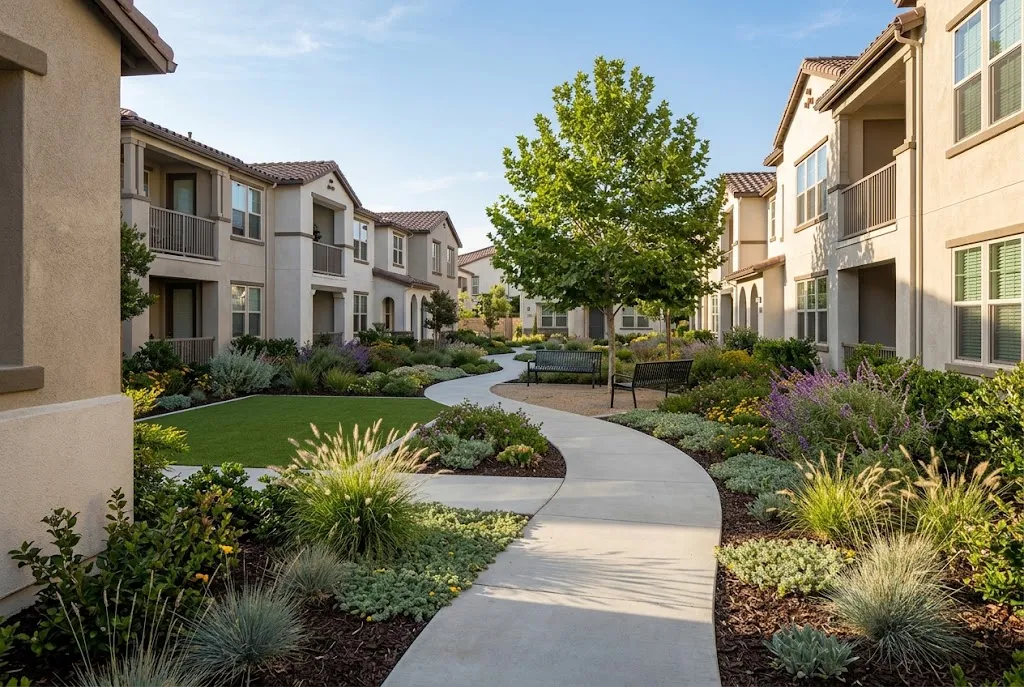
What Does a Commercial Landscape Include?
Every property is different, but most commercial landscapes are built from the same set of components. Knowing what they are helps owners and managers read proposals, compare scopes, and spot areas that may be underserved.
Site and Property Assessment
Good commercial property landscaping starts with understanding the site: soil conditions, sun and shade patterns, drainage, existing plant health, irrigation coverage, and how people and vehicles actually move through the property. An assessment turns general impressions into a concrete list of what is working and what is not.
Landscape Planning and Design
Design translates property goals into a layout. On a commercial site, that means considering sightlines for signage, clearance near driveways, shade for seating areas, and plant choices that suit each exposure. The best plan for one property can be the wrong plan for the building next door, which is why we avoid one-size-fits-all plant lists.
Planting, Turf, and Sod
Planting work covers trees, shrubs, groundcovers, and seasonal color. Turf areas may be maintained, renovated, or replaced with new sod where lawn still serves a purpose, such as a gathering space. In other areas, a property may be better served by reducing turf in favor of planting beds or drought-tolerant landscaping.
Irrigation
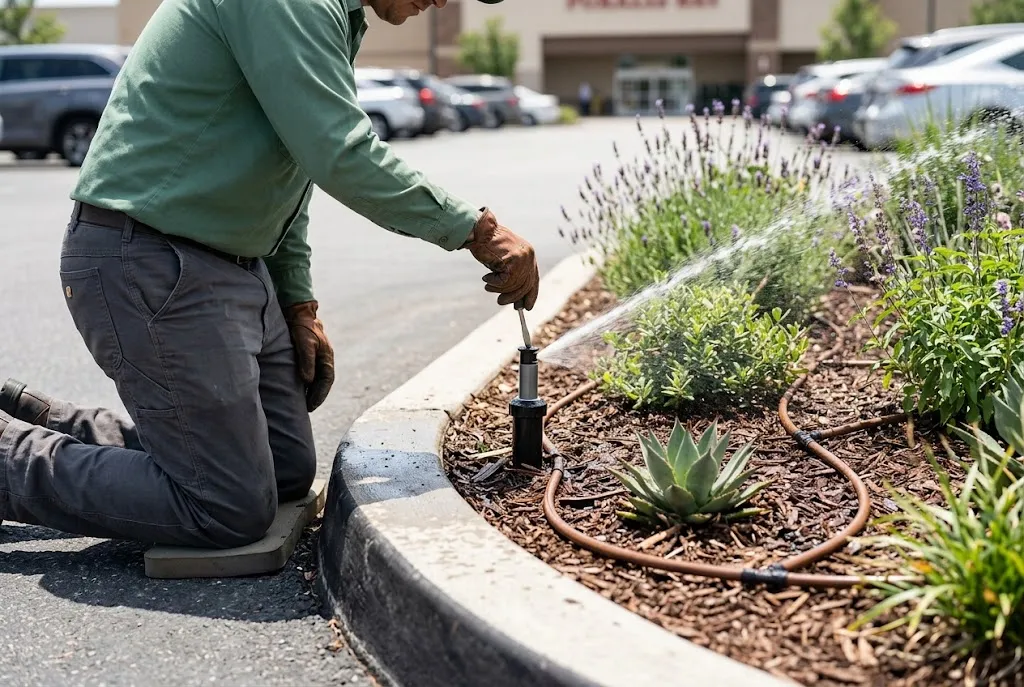
Irrigation installation, monitoring, and repair keep plant material alive between visits. Commercial irrigation services typically cover controller programming, zone adjustments, repairing broken heads and lines, and converting suitable areas to drip. Our Irrigation Services page describes this part of the work in more depth.
Commercial Hardscape
Commercial hardscape includes walkways, patios, pavers, edging, seating walls, and retaining walls where the site calls for them. These features guide foot traffic, define planting areas, and create usable outdoor space. For projects involving new paving or walls, see our Hardscape Services overview.
Cleanup and Seasonal Care
Leaf and debris removal, mulch refreshes, seasonal pruning, and bed renovation keep the landscape from slowly declining. These tasks are often folded into a recurring maintenance scope, with larger seasonal projects scheduled separately.
How Is Commercial Landscaping Different From Residential Landscaping?
Size is the obvious difference, but it is not the most important one. A small retail pad can involve more coordination than a large private estate. The real distinctions come from how the property is used and who depends on it.
- Property use: A home landscape serves one household. A commercial landscape serves tenants, customers, employees, residents, and visitors, each with different expectations.
- Traffic: Commercial sites see heavy, repeated foot and vehicle traffic. Plantings along walkways and parking areas have to hold up to that wear.
- Maintenance expectations: A commercial property is expected to look consistent every day, not just after a service visit.
- Scheduling and access: Work has to fit around business hours, deliveries, parking demand, and resident routines, which often shapes when crews can use equipment.
- Recurring service needs: Most commercial landscapes rely on an ongoing maintenance relationship rather than occasional one-time projects.
- Range of outdoor areas: Entries, medians, slopes, courtyards, parking islands, and perimeter strips may all need coordinated care under one scope.
Communication also works differently. On a commercial property, landscape decisions may involve an owner, a property manager, a facility team, and an HOA board. Clear scopes, clear points of contact, and documented changes help keep everyone aligned.
What Should a Commercial Landscape Accomplish for Your Property?
A commercial landscape earns its keep when it supports the property’s daily function as well as its appearance. When we evaluate a site, these are the priorities we keep in view.
Professional Appearance and Curb Appeal
The landscape is often the first thing a visitor sees. Healthy plants, defined edges, and clean beds signal that the property is well managed, which matters to prospective tenants, customers, and residents.
Safe, Functional Access
Pedestrians need clear paths, and drivers need clear sightlines at driveways and intersections. Overgrown shrubs, raised pavers, and plants spilling into walkways create both appearance problems and practical ones.
Durability in High-Traffic Areas
Some areas take a beating: corners where people cut across turf, beds next to bus stops, and islands beside busy parking rows. Choosing tougher plant material, adjusting layouts, or adding hardscape in these spots usually works better than replanting the same failing area again and again.
Plant Health and Irrigation Performance
Plants that receive too much or too little water struggle, and irrigation problems are easy to miss on a large site. The U.S. Environmental Protection Agency notes that landscape irrigation is the primary source of outdoor water use for most commercial and institutional buildings, and its WaterSense at Work best management practices for commercial facilities are a useful reference for property teams looking at outdoor water efficiency. Regular checks, seasonal controller adjustments, and prompt repairs help keep plant health and water use in balance.
Consistent Upkeep
Finally, the landscape needs to stay in good shape between major projects. That depends on a maintenance scope that matches the property’s actual needs, not a generic checklist.
Get Clear Answers About Your Commercial Landscape
Have questions about maintenance scope, planned improvements, or where to begin on a property that needs attention? Call us at (888) 601-1117, email info@landscaper-near-me.com, or request a callback and we will reach out to talk through your site.
How Do Commercial Landscape Maintenance, Design, and Installation Fit Together?
Because commercial landscaping covers so many services, it is easy to treat each one as a separate purchase. In practice, they depend on each other. A design that ignores maintenance creates ongoing labor problems. An installation without a follow-up care plan can decline within a season or two. Maintenance without periodic improvements slowly locks in an outdated landscape.
Commercial property landscape maintenance is the backbone of the relationship for most sites. It usually covers recurring tasks such as mowing, edging, pruning, weed control, litter and debris pickup, irrigation checks, and bed care. Commercial grounds maintenance may also extend to areas beyond planting, such as keeping hardscape surfaces clear of debris.
Design and installation come into play when the existing landscape no longer fits the property: a tenant change, an entry redesign, a turf-reduction project, or a renovation after years of patchwork repairs. Specialized services, including commercial irrigation services, tree work, and hardscape construction, support both sides of that equation.
The goal is not to let any single specialty define the whole program. Irrigation, tree care, and hardscaping are each important, but they serve the larger landscape. Our general Landscape Services page shows how these pieces connect across both residential and commercial work.
How Can You Tell a Commercial Landscape Needs Attention?
Many landscapes decline gradually, so problems can become normal before anyone notices them. Walking the property with fresh eyes, ideally at different times of day, is one of the most useful things a manager can do. These are some common signs that maintenance or commercial landscape improvements may be needed:
- Brown, soggy, or uneven patches in turf that point to irrigation coverage or drainage issues.
- Water running onto sidewalks or parking areas, or broken sprinkler heads that go unrepaired.
- Shrubs blocking windows, signage, lighting, or driver sightlines.
- Trees with low limbs over walkways, dead branches, or growth crowding buildings.
- Bare soil, thinning groundcover, or beds taken over by weeds.
- Worn paths where people repeatedly cut across landscaped areas.
- Loose pavers, cracked edging, or retaining walls that look out of alignment.
- Tenant, resident, or customer comments about the condition of outdoor areas.
Matching the Response to the Problem
Not every sign calls for a major project. Overgrown trees may simply need pruning, and our Tree Trimming Services page explains how that work is typically approached. Tired lawn areas may respond to renovation or better ongoing turf care, which our Sod Care page covers. Repeated failures in the same spot, however, usually point to a design issue that maintenance alone will not solve.
Planning Commercial Landscaping for Your Property: Where to Start
Whether you are taking over a new property, planning a renovation, or reviewing an existing maintenance scope, a few practical steps make commercial landscaping decisions easier.
Define What the Property Needs
Start with goals rather than services. Is the priority curb appeal for leasing, lower water use, fewer complaints, safer walkways, or a refreshed entry? Clear goals make it much easier to judge which business landscaping services are worth the investment.
Document Current Conditions
Note problem areas, irrigation issues, aging plant material, and any hardscape concerns. Photos taken over a few weeks can reveal patterns that a single walk-through misses.
Coordinate Multiple Features
If several improvements are needed, sequence them sensibly. Irrigation changes generally belong before new planting, and grading or hardscape work usually comes before sod or beds. Coordinating these steps under one plan helps avoid tearing up finished work to fix something underneath it.
Choose Services Based on Conditions, Not a Template
Commercial landscaping for businesses should reflect the property in front of you. Two office buildings on the same street can have very different soils, exposures, and traffic patterns. Be cautious of any scope that looks identical from one property to the next without explanation.
Plan for Ongoing Care
New landscape work needs a maintenance plan that fits it. Ask how new plants will be watered while they establish, how pruning will be handled as they mature, and how the scope will adjust over time.
At Landscaper-Near-Me.com, we help property owners, managers, and community associations throughout Southeast Los Angeles County and Orange County answer these questions and build landscapes that fit how their properties are actually used. Now that you have a clear answer to the question of what is commercial landscaping and what it can include, the next step is to look at your own site. Call us at (888) 601-1117, email info@landscaper-near-me.com, or request a callback, and we will talk through your property and prepare a free estimate.
FAQ's - Frequently Asked Questions
No. Commercial landscaping applies to properties of many sizes, from a single-tenant office or small retail pad to large multi-building campuses. What makes it commercial is how the property is used and who relies on it, not the acreage. Smaller sites often need the same consistency and professional appearance as larger ones, just on a different scale.
In many cases, yes. Service timing is something we discuss with each property, since access, parking demand, noise sensitivity, and daily routines vary widely. The goal is to find a schedule that keeps the landscape maintained while limiting disruption to tenants, customers, or residents.
Scopes vary by property, but recurring maintenance commonly includes turf care, edging, pruning, weed control, debris cleanup, bed care, and irrigation checks. Larger items such as renovations, new planting, or hardscape repairs are often handled as separate projects. We recommend putting the scope in writing so everyone knows what is included.
Start with an assessment of the whole site rather than jumping to replanting. Irrigation problems, drainage issues, and poorly suited plant choices often explain why areas are failing. Once those causes are identified, cleanup and repairs can be prioritized, followed by improvements that can be phased in as budgets allow.
It can. Adjusting irrigation schedules, repairing leaks and broken heads, converting suitable areas to drip irrigation, and reducing turf where it no longer serves a purpose can all help. The right approach depends on the property’s plants, soil, exposure, and irrigation equipment, so results will differ from site to site.
Yes. We work with HOA boards and community managers on common areas such as entries, medians, slopes, pathways, and shared amenity spaces. Clear communication about scope, priorities, and any proposed improvements helps boards make informed decisions for their communities.
An estimate reflects the property’s size and layout, the condition of existing plants, turf, and irrigation, the range of services requested, how often work is needed, and any access considerations. That is why we prefer to review the property before providing a free estimate rather than quoting a generic rate.
Often, yes. Many properties spread improvements across several budget periods, starting with the most visible or most urgent areas. A phased plan works best when it is sequenced so that early work, such as irrigation upgrades, supports later planting or hardscape projects instead of needing to be redone.