
Sprinkler Repair Panorama City
for Broken Heads, Leaks, and Problem Zones
A sprinkler head snapped off at the edge of the driveway. A brown stripe across a lawn that was green last month. A zone that sits silent when the controller says it should be running, or one that keeps spraying long after the schedule has ended. Homeowners who look up Sprinkler Repair Panorama City usually start with a symptom like one of these, not with a part number, and that is exactly where a useful repair visit should start too.
We repair existing landscape sprinkler systems for homeowners and residential rental property managers in Panorama City, the Los Angeles neighborhood in the San Fernando Valley. This page is about restoring the system you already have: finding out why a zone is misbehaving, fixing the part that failed, and confirming that the zone covers its planting area and shuts off when it should. You can request a free repair estimate before any work is scheduled, so you know what we found and what we recommend first.
The sections below cover the symptoms we are asked about most, what each one tends to point to, how we test and repair a problem zone, how Panorama City lot layouts affect the work, and what goes into a repair estimate. For a broader overview of the work our crews handle, see our sprinkler repair services page.

Describe the Symptom, Get a Free Sprinkler Repair Estimate
A broken head by the driveway, a zone that will not start, or water running after the timer is off: tell us what you are seeing at your Panorama City property, and we will set up a free repair estimate. Call (888) 601-1117 or email info@landscaper-near-me.com.
What Is Your Sprinkler System Doing Wrong?
The quickest way to describe a sprinkler problem is by what you can see from the yard. Each symptom below narrows the list of likely causes. Several can share the same root problem, though, and a few look alike until the zone is running in front of us.
A Broken, Tilted, or Sunken Head
Heads along driveways, walkways, and lawn edges take the most abuse. Tires clip them, mowers catch them, and foot traffic slowly pushes them out of plumb. A cracked or snapped head often shoots a column of water instead of a spray pattern, and the rest of the zone loses pressure as a result. A tilted or sunken head may still spray, just in the wrong direction or into the grass blades around it.
Broken sprinkler head replacement is one of the most common repairs on any lawn, and it involves more than swapping the body. The replacement needs the right pop-up height, a nozzle that matches the rest of the zone, and an arc and radius adjusted to the area it serves.
Water Landing on the Driveway or Sidewalk
Overspray usually comes from a head that has rotated, a nozzle with the wrong arc or radius, or a head set too close to the paved edge. Sometimes it starts after an earlier repair, when a replacement nozzle throws farther than the original did. Besides wasting water, spray on pavement often means the planting area next to it is getting less than it should.
Dry Patches and Weak Spray
Brown spots in an otherwise green lawn often line up with gaps in coverage. Grass or shrubs may be blocking a head, a nozzle may be clogged, or spray may be falling short because pressure in the zone has dropped. Low pressure in one sprinkler zone, where the heads barely clear the turf while the other zones look normal, deserves attention, because the cause is often hidden underground or inside the valve.
Pooling Water and Soggy Ground
Standing water right around a head can come from a leaking seal or a fitting just below it. A soft or muddy area that stays wet between watering days, especially one away from any head, can indicate a leak in buried pipe. A low spot that collects runoff from the rest of the lawn can look much the same, which is one reason we check before anyone starts digging.
A Sprinkler Zone Not Turning On
When a sprinkler zone not turning on is the only problem, the fault is usually specific to that zone: its valve, its solenoid, its wire, or its programming. When several zones stop at once, the controller, the shared common wire, or the water supply to the system becomes the more likely suspect.
Sprinklers Running After the Timer Shuts Off
Sprinklers running after the timer shuts off typically point to a valve that is not closing completely. Debris caught under the diaphragm, a worn diaphragm or valve seat, or a manual bleed screw that was left open can all keep water moving. Less often, the controller itself is still sending power to the valve.
A short dribble from the lowest head in a zone after the cycle ends can be something different. Water left in the pipes drains downhill and escapes through that head, a condition called low-head drainage. It is handled differently from a valve that will not seal, so it helps to note whether the flow stops on its own within a few minutes.
How Do the Symptoms Help Narrow Down the Cause?
Symptoms are most useful when we know where they show up and when. A problem limited to one zone points toward that zone’s own parts, while a problem across several zones points toward something they share. That distinction saves time and keeps us from replacing parts that were never the issue.
Problems Limited to One Zone
Weak spray in a single zone can come from a leak on that zone’s lateral line, a broken head releasing most of the flow, a partly closed flow control on the valve, or debris restricting the valve. Each has a different repair, so the zone is run and observed before anything is replaced.
Questions about why one sprinkler zone will not turn on follow the same logic. We check whether the controller is sending a signal to that station, whether the signal reaches the valve through the field wiring, and whether the valve responds when it receives power.
Problems Across Several Zones
If every zone has weak pressure, the place to look is what the zones share: the irrigation shutoff valve, the backflow preventer, a pressure regulator if the system has one, or the water supply to the property. If several zones fail to start, the controller, its power, its programming, or the common wire shared by all the valves comes first.
Wet Spots and Dry Patches Deserve a Look Before a Diagnosis
A wet spot is not always a broken pipe, and a dry patch is not always a broken head. Shade, compacted soil, slope, a clogged nozzle, and a schedule that no longer fits the season can each produce the same appearance. For that reason, we inspect the area while the zone runs and review the controller settings before attributing the problem to a single cause.
If you are wondering how to tell if an underground sprinkler line is leaking, a few observations help. Note whether the wet area stays wet on days the system does not run, whether the soil there has settled or feels spongy, and whether the water meter keeps moving when every fixture and the irrigation system are off. A moving meter suggests a leak somewhere on the property, though not necessarily in the sprinkler system.
How Does a Sprinkler Repair Visit Work?
A repair visit follows a clear sequence: confirm the symptom, isolate the fault, make the repair, and prove that the zone works afterward. The order matters. Skipping the testing at either end is how a repair ends up treating a symptom instead of its cause.
- Review what you have noticed. Which zones are affected, what time of day the problem appears, how long it has been happening, and whether there has been any recent work in the yard.
- Check the controller. We look at programs, start times, run times, and whether the affected station is receiving a signal.
- Run the affected zone. We watch each head for pop-up, pattern, arc, radius, and pressure, and walk the area for wet ground or water bubbling up through the soil.
- Isolate the fault. Depending on the symptom, that may mean opening the valve box, testing the solenoid and wiring, or carefully excavating at a suspected leak.
- Make the repair. We replace or reset the failed component with parts that suit the existing system.
- Verify coverage and shutoff. We run the zone again to confirm that spray reaches the intended area, stays off the pavement as far as the layout allows, and stops completely when the zone closes.
That final check often catches problems the original symptom was hiding. Once full pressure returns to a zone that had a broken head, a second head may turn out to be stuck, or a nozzle may now throw onto the sidewalk. Finding that while we are still on site is far better than discovering it on the next watering day.
Overspray on the Driveway and Dry Spots in the Lawn?
Both problems often trace back to the same misaligned, sunken, or mismatched heads. We will run the zone, find what is sending water onto the pavement and away from the turf, and explain the repair before any work begins. Call (888) 601-1117 or email info@landscaper-near-me.com.
Which Repairs Do Existing Sprinkler Systems Need Most Often?
Most residential sprinkler system repair falls into four groups: the heads and nozzles you can see, the pipes and fittings you cannot, the zone valves that open and close each area, and the controller and low-voltage wiring that tell those valves what to do.
Heads and Nozzles
We replace cracked bodies, stuck pop-ups, and worn wiper seals, raise or lower heads that no longer sit at the right height, and swap out mismatched nozzles. Matching matters here. Spray heads and rotors apply water at very different rates, and mixing them in one zone, or mixing nozzles with different flow rates, can leave some areas soaked and others dry no matter how the timer is set.
Leaking Fittings and Buried Lateral Lines
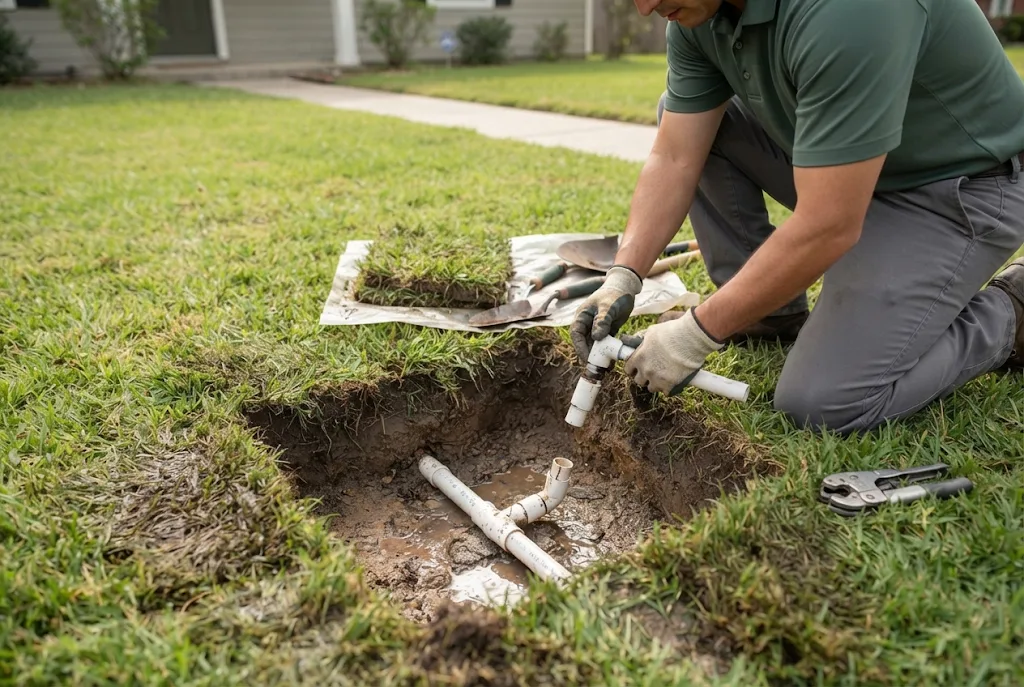
Lateral lines carry water from a zone valve to its heads and are pressurized only while that zone runs. Underground sprinkler line leak repair usually means pinpointing the wet area, excavating carefully by hand to expose the pipe, removing the damaged section or failed fitting, and joining in a repair that suits the pipe material. Roots, shifting soil, and digging for fence posts or new plants are frequent causes.
A leak on the mainline, which feeds the valves and typically stays under pressure, is a more urgent repair. Water can escape from it whether or not the system is running.
Zone Valves
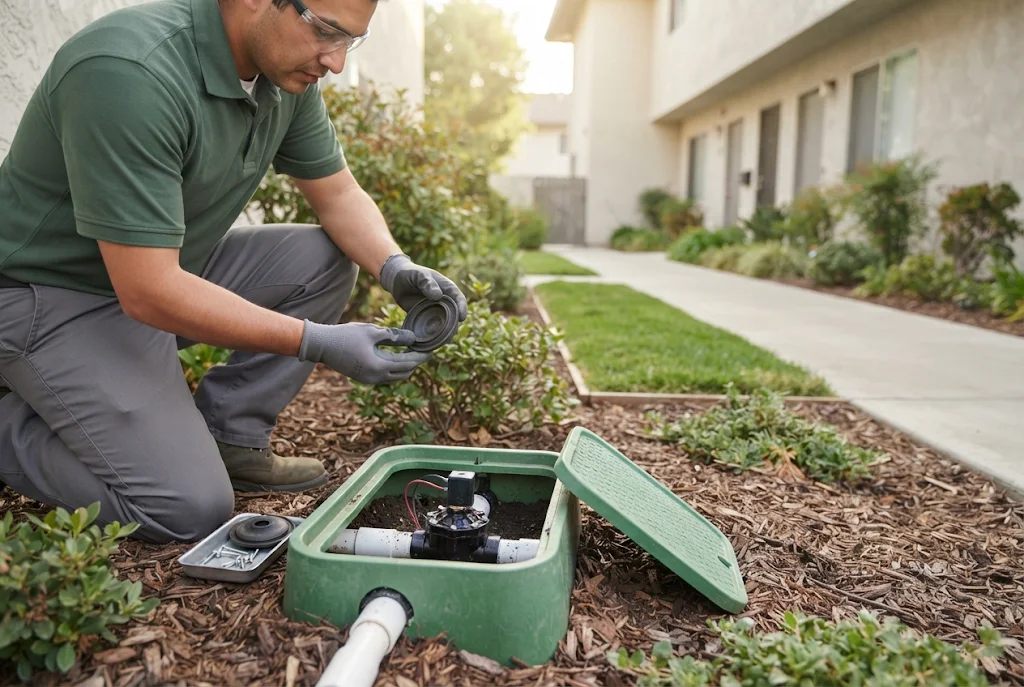
Sprinkler valve repair covers valves that will not open, will not close, open slowly, or leak around the bonnet. Often the fix is clearing debris from the diaphragm or replacing the diaphragm or the solenoid. A valve with a cracked body, or one that keeps failing after service, may be better replaced. Valve boxes hidden under mulch, turf, or soil add time to the visit, so knowing where yours are is a real help.
Controllers and Low-Voltage Wiring
Sprinkler timer troubleshooting starts with the simple items: power, the date and time, overlapping programs, a seasonal adjustment setting left at an unusual percentage, and station assignments. From there, we test the wiring between the controller and the valves. A cut or corroded wire, often from digging or a failed splice, can disable a single zone or several at once. Some controllers can be corrected by reprogramming; others are worth replacing, particularly when replacement parts are no longer available.
How Panorama City Lot Layouts Shape a Sprinkler Repair
Panorama City was developed in the late 1940s as the San Fernando Valley’s first planned community, and its streets now mix single-family homes with apartment buildings. The landscapes we are asked to repair there tend to fall into a few patterns, and each one changes how a zone should be repaired and adjusted. For lawn sprinkler repair in Panorama City, CA, that usually means paying as much attention to the paved edges around a lawn as to the grass itself.
Narrow Lawn Strips Along Sidewalks
A strip of turf between a sidewalk and the curb, or between a walkway and a wall, leaves very little room for spray. A nozzle that throws farther than the strip is wide will put water on the concrete every cycle. Repairs in these areas focus on head placement, nozzle selection, and arc adjustment so that the spray stays inside the planted area. Where a strip is simply too narrow for overhead spray to work cleanly, we may suggest discussing a different watering method for that area rather than repeating the same repair.
Front Yards Bordered by Driveways
Heads along a driveway are the ones most likely to be run over, and the lawn beside a driveway is often where dry stripes appear first, because part-circle heads at the edge leave little room for overlap. Restoring that edge usually means replacing damaged heads, resetting them at the correct height and distance from the paving, and confirming that spray reaches the lawn edge without crossing onto the driveway.
Shared Planting Areas at Small Apartment Properties
At a small multifamily property, one zone may water a front lawn, a parkway strip, and planting beds that several households walk past every day. Heads get kicked, valve boxes disappear under mulch, and nobody is quite sure which station controls which area. As we test the affected zones, we note which areas each one serves, so the property manager has a clearer picture after the repair than before it.
Restoring Coverage While Reducing Runoff
Panorama City is part of the City of Los Angeles, where LADWP’s water conservation rules prohibit runoff onto streets, driveways, and gutters, prohibit watering sidewalks and other hard surfaces, and call for leaks to be repaired in a timely manner. Restoring good spray coverage helps on both fronts. When water lands on the lawn and planting beds rather than the pavement, dry areas receive the water they were missing, and less of it ends up in the gutter. Watering days and hours can change, so we recommend reviewing LADWP’s current water conservation ordinance and watering rules whenever you reset the controller after a repair.
What Should Rental Property Managers Know Before Scheduling a Repair?
For a rental property manager, a sprinkler problem usually arrives secondhand. A tenant mentions a wet walkway, a neighbor points out water in the gutter, or the lawn browns between visits. A little preparation turns those reports into a focused repair.
- Confirm access. Tell us where the controller is, whether it sits in a garage, laundry room, or locked enclosure, and who can open it on the day of the visit.
- Collect tenant observations. When the problem appears, how long it lasts, and where the water goes are usually more useful than a general description.
- Note any recent work. New fencing, utility or cable trenching, tree planting, and patio projects are common causes of cut wires and broken lateral lines.
- Ask for a zone record. After testing, we can list which station serves which area, which makes the next problem quicker to sort out.
Shared systems also raise a practical scheduling question. If a zone has to stay off until a part arrives or a leak is excavated, we explain which areas will go without water in the meantime and roughly how long the repair should take, so you can let residents know what to expect.
Know What Failed Before Your Sprinkler Repair Begins
We run the problem zone, show you the cause, and explain the repair and the estimate before any work starts. Once the repair is made, we test the zone again for coverage and shutoff. Call (888) 601-1117, email info@landscaper-near-me.com, or request a call back.
Sprinkler Repair Panorama City: What Shapes the Estimate?
A sprinkler repair estimate depends less on the size of the yard than on how many zones are involved, how easy the failed component is to reach, and how certain the cause is once we arrive.
- Number of affected zones. One broken head is a contained repair. Weak pressure across several zones, or a controller problem affecting many stations, takes more testing.
- Component access. A head in open lawn is quick to reach. A valve buried under a planter, a line running beneath a walkway, or a controller in a locked room adds time.
- Suspected buried leaks. When water is surfacing but its source is unclear, further diagnosis may be needed before the exact repair can be priced. If that is the case, we tell you before going further.
- Matching parts. The heads, nozzles, and valves already on the system affect the cost, especially when the original equipment is older or discontinued.
What to Share When You Request an Estimate
The more you can tell us at the start, the more focused the visit will be. Helpful details include:
- Which zones are affected, by station number if you know it
- When the symptom occurs: during a cycle, after it ends, or on days the system should be off
- Photos of broken heads, wet areas, overspray, or the controller screen
- The controller brand and model, if it is printed on the unit
- Any recent digging, planting, or construction near the lawn or beds
When Is a Repair Enough, and When Is Replacement Worth Considering?
A targeted repair is usually the right answer when the fault is isolated: a broken head, a single failed valve, one cut wire, or a leak at one fitting. Once that part is fixed, the zone goes back to working the way it was designed to.
The picture changes when the same problems keep returning. Repeated leaks along one run of pipe, valves that fail one after another, or coverage gaps that remain after heads and nozzles have been corrected can mean the system’s layout, rather than any single component, is the real limitation. A lawn strip that was never fitted with suitable heads, zones that mix spray heads with rotors, and areas added onto an existing zone over the years all fall into that category.
In those situations, we explain what we found and whether it makes sense to evaluate rezoning, layout changes, or partial replacement. If the condition or layout of your existing system makes a new design worth considering, our sprinkler system installation page describes what that work involves, and our landscape irrigation services cover drip and other watering methods for beds and narrow areas where spray is a poor fit. Replacement is not the starting assumption, though. A careful repair often restores the system you already have.
How to Request Sprinkler Repair for Your Panorama City Property
If a zone is wasting water or leaving part of your landscape dry, the next step is simply to tell us what you are seeing. A few precautions can limit the damage while you wait for the visit:
- If a single head is broken, turn that station off at the controller until it is replaced, and keep an eye on the plants it waters.
- If a zone will not shut off, turning it off at the controller may not stop the water when the valve itself is stuck open. Closing the irrigation system’s shutoff valve, if your property has one and you know where it is, can hold things until the repair.
- If water is surfacing from the ground, take a photo and note when it appears, since that timing helps us locate the source.
Call (888) 601-1117, email info@landscaper-near-me.com, or use one of the call back buttons on this page to set up a free repair estimate. Let us know which zones are involved, when the problem shows up, and send any photos you have. We will run the affected zones, explain what failed, and give you a clear estimate for the repair, whether that turns out to be a single head beside the driveway or a valve that has been watering a lawn long after the timer shut off.
FAQ's - Frequently Asked Questions
Yes. We provide free estimates for sprinkler repair in Panorama City. After we look at the affected zones, we explain what we found, what we recommend, and what the repair will cost before any work begins. If a buried leak needs more diagnosis before it can be priced accurately, we tell you that up front.
It is better not to. A broken head can release far more water than a working one, lower the pressure for every other head on that zone, and send water onto the pavement. Turning that station off at the controller until the head is replaced is a simple way to limit waste. If the repair will take more than a few days, hand-water the plants that zone normally serves.
If the trickle comes from the lowest head on the zone and stops after a short time, it is often low-head drainage: water left in the pipe draining downhill. If water keeps flowing, or the heads continue to spray, the valve is probably not closing fully. The two problems call for different fixes, so we confirm which one it is before recommending a repair.
One common check is to stop all indoor and outdoor water use and watch the water meter. If it still moves, close the irrigation system’s shutoff valve, if there is one, and check the meter again. If the movement stops, the leak is more likely on the irrigation side. This check is not conclusive on every property. We can help narrow it down during an estimate, although leaks in a home’s indoor plumbing are outside our landscape irrigation work.
Yes. We work with homeowners and residential rental property managers on lawn and planting-bed sprinkler systems at single-family homes and small multifamily properties. For rentals, it helps to tell us how to reach the controller, who can provide access, and what tenants have reported about when and where the problem appears.
We aim to match the existing head type, pop-up height, and nozzle so the zone continues to apply water evenly. If the original model is no longer available, we choose a compatible replacement and adjust its arc and radius to suit the area. Mixing head types on one zone tends to cause uneven watering, so we avoid it.
Possibly. Run times are sometimes increased to make up for a broken head or a leak, and once the zone works properly, those longer times can lead to overwatering and runoff. We can review the settings for the repaired zone with you. In Panorama City, also make sure the schedule follows LADWP’s current watering days and hours.
That is common, especially after landscaping changes or when a property changes hands. Valve boxes are often buried under soil, turf, or mulch. We look for them by following the layout of the heads and the route of the zone wiring, although finding a hidden valve can add time to the visit. Once a box is located, marking it makes the next repair easier.