
Commercial Irrigation Services
Commercial Irrigation Services help property owners and managers keep landscaped grounds watered appropriately without turning routine maintenance into a succession of leaks, dry areas, overspray complaints, and emergency repairs. Commercial properties often have numerous irrigation zones, mixed planting requirements, high-traffic paved areas, and multiple people responsible for site upkeep. Those conditions call for systematic inspection, practical troubleshooting, and careful scheduling rather than simply adding more watering time whenever plants look stressed.
At Landscaper-Near-Me.com, we help businesses and property managers discuss commercial irrigation maintenance, repair needs, equipment improvements, and landscape watering concerns. From retail centers and office parks to HOA common areas and multifamily properties, the appropriate approach starts with understanding the site and the existing system. Request a free estimate to discuss your commercial property’s irrigation needs.
Plan Commercial Irrigation Service With a Free Estimate
Discuss your property’s watering concerns, maintenance priorities, and planned improvements with our team.
What Do Commercial Irrigation Services Include?
Commercial irrigation work includes system evaluation, routine maintenance, repair, adjustments, planning for new installation, and improvements to existing equipment. An inspection may reveal that a dry area needs a sprinkler adjustment, that a valve is malfunctioning, or that a drip line has been damaged by landscape activity. Different symptoms require different responses. Replacing equipment before diagnosing a pressure or scheduling problem can add expense without resolving the underlying issue.
Commercial properties also have operational considerations beyond plant watering. Irrigation may run near storefront entries, sidewalks, parked vehicles, loading areas, and shared outdoor spaces. A poorly directed sprinkler can create an inconvenience for customers or residents even while the planting bed beside it looks healthy. Service planning should consider these access patterns, the property’s landscaping goals, and the equipment already installed.
The aim is a system that delivers suitable moisture where it is needed, allows managers to identify problems before they spread, and supports consistent landscape appearance. That may involve simple adjustments on one site and a broader evaluation on another. There is no single repair package or installation design appropriate for every commercial property.
Commercial irrigation versus residential watering
A small residential yard may have only a few zones. A commercial landscape can combine turf, trees, shrubs, ornamental beds, and long perimeter strips with different water requirements. Larger systems may use multiple valves and controllers and require maintenance coordination across different portions of the property. The principles of sound irrigation remain similar, but access, scale, and the consequences of equipment problems often differ.
How Are Commercial Irrigation Systems Inspected?
A useful commercial irrigation inspection starts with the property’s reported concerns and continues through the relevant zones and visible components. Technicians may check whether sprinkler heads rise and retract, whether spray patterns reach planted areas, and whether sidewalks or asphalt receive unintended watering. They can review controller settings and observe whether valves and drip lines appear to operate as intended. Visible pooling, constantly wet soil, and unusually dry patches help direct attention, but do not by themselves establish the cause.
Water pressure and distribution deserve particular attention. Poor coverage might result from blocked or misaligned heads, an obstruction, a damaged line, equipment selection, or pressure conditions. Running each relevant zone during evaluation helps separate controller and valve problems from coverage issues. On properties with many zones, documenting the findings can help managers prioritize work and communicate with maintenance personnel.
A commercial irrigation system audit may go further by considering irrigation timing, operating conditions, and opportunities to improve water management. An evaluation should be tailored to the property’s size and infrastructure. A brief inspection of a small retail landscape and a detailed review of several irrigated common areas are not interchangeable services.
What should a property manager provide before an inspection?
Useful background includes recent repair history, known leaks, persistent dry areas, controller access, site schedules, and any concerns reported by tenants or landscape crews. If irrigation must be tested during occupied business hours, coordinating access can reduce disruption. Records do not replace a physical assessment, but they can make the visit more focused.
Why Does Routine Commercial Irrigation Maintenance Matter?
Routine maintenance helps identify developing faults before they become larger landscape problems. Commercial sprinkler maintenance can include checking heads for damage or obstruction, correcting spray alignment, inspecting accessible valves, reviewing controller operation, and examining drip irrigation lines. Landscapes change over time. Shrubs grow into spray patterns, equipment is struck during grounds work, and seasonal weather changes plant watering needs.
Commercial irrigation system maintenance should be planned around conditions rather than treated as a universal monthly checklist. A large multifamily property with extensive plantings may need a different inspection rhythm from a small office courtyard. Equipment age, recent failures, terrain, plant types, weather, and management priorities all affect appropriate service frequency. A sensible plan identifies which zones and components merit recurring attention and how concerns should be reported.
Irrigation maintenance also works best when coordinated with Commercial Landscape Services. Mowing, edging, pruning, and planting can expose issues or occasionally damage vulnerable components. Shared communication between irrigation and landscape maintenance teams supports quicker responses to leaks, broken sprinkler heads, and uneven watering before visible landscape quality suffers.
Solve Persistent Irrigation Problems
Leaks, uneven coverage, and controller concerns deserve a site-specific evaluation before choosing repairs.
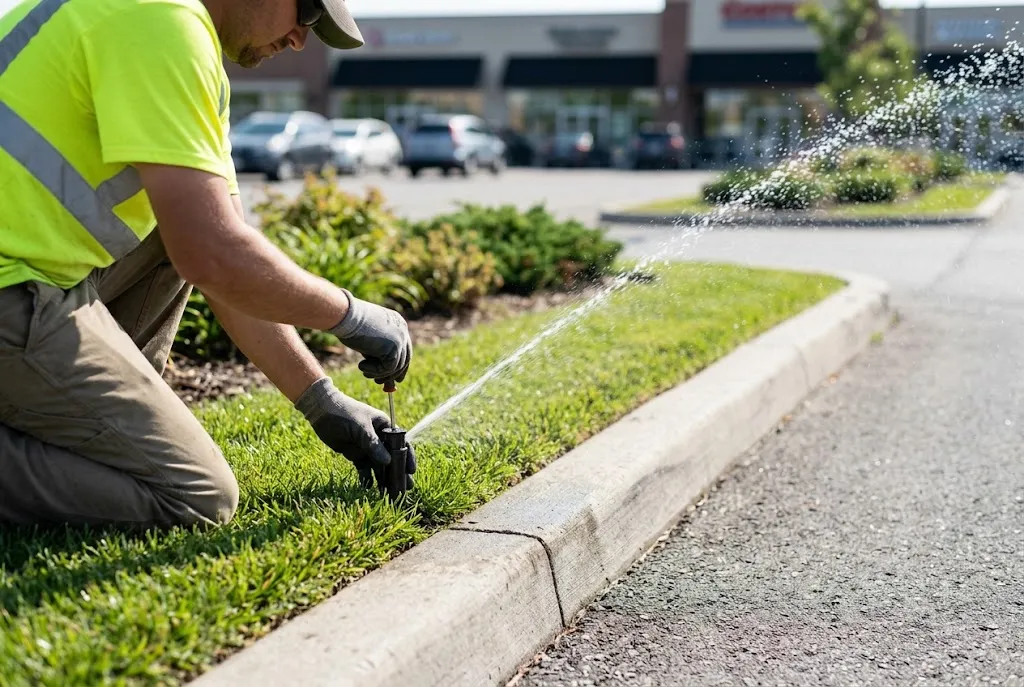
What Common Problems Require Commercial Irrigation Repair?
Commercial irrigation system repair often begins with symptoms that appear simple but may have several causes. A sprinkler zone that never turns on could involve the controller, wiring, a valve, water supply, or damaged components. A continuously running zone may point to valve trouble or a programming issue. Low or inconsistent pressure may limit coverage, while broken heads and leaking lines can create localized puddles and runoff.
Identifying the reason for failure is more useful than assuming the most visible component is responsible. For example, a persistently wet planting strip might have a leaking pipe, a clogged drain, unsuitable scheduling, or a combination of issues. Effective commercial irrigation troubleshooting evaluates the affected area, tests appropriate components, and recommends repairs based on findings.
Common service needs include sprinkler head repair, irrigation valve repair, damaged lateral lines, drip-line replacement, controller corrections, and adjustments to overspray. Repeated failures in the same location deserve a closer look at operating conditions. A targeted repair may be sufficient, and a full system replacement should not be presented as the automatic remedy for a localized problem.
Signs that deserve prompt attention
Water running well outside programmed periods, pooling beside walkways, newly saturated soil, and visible pipe breaks warrant timely assessment. They can waste water or create access concerns. If a major leak is active, the appropriate irrigation zone or water supply may need to be shut off safely until the problem is evaluated. Property managers should follow site procedures and avoid working on unfamiliar electrical or pressurized components.
When Should a Commercial Irrigation System Be Installed or Upgraded?
Commercial irrigation installation becomes relevant when a property is newly landscaped, when planting areas are renovated, or when the existing equipment cannot adequately serve a changed site. Expansions, altered hardscape, new ornamental beds, and transitions to different planting arrangements can all change watering requirements. A well-planned installation considers landscape layout, soil characteristics, pressure, available infrastructure, and the amount of water suitable for each planted zone.
An existing system may benefit from selective improvements rather than complete replacement. Commercial irrigation system upgrades can address recurring coverage deficiencies, inefficient components, outdated controllers, damaged infrastructure, or zoning that no longer reflects the landscape. The correct scope depends on what remains serviceable and where failures occur. On a multi-building property, evaluating zones separately can help distinguish isolated repairs from broader improvement needs.
Before installation or major changes, managers should establish priorities for access, landscape performance, future maintenance, and water use. Any applicable permits, installation requirements, or water-supplier rules should be verified for the location and proposed work. Recommendations should follow site evaluation instead of assuming a particular technology will suit every property.
Commercial Sprinklers, Drip Irrigation, and Water Distribution
Commercial sprinkler systems are commonly used where broad turf or planting coverage is needed, while drip irrigation can deliver water near the root zones of suitable shrubs and ornamental beds. Neither method is universally best. Sprinkler coverage depends on head selection, spacing, pressure, alignment, and changing landscape conditions. Drip performance depends on line condition, emitters, filtering where applicable, and maintaining appropriate delivery to planted areas.
A commercial property may use both methods. Retail-center lawns might receive sprinkler coverage, while narrow planting beds along a facade use drip irrigation. Trees and established shrubs may need different scheduling from seasonal color areas. Comparing the methods in context helps managers understand why changes to one zone should not automatically be applied to another. Our guide to Drip Irrigation vs. Sprinkler System provides additional background on those differences.
Overspray onto parking stalls, walkways, storefront windows, and roadways should be evaluated as a distribution issue, not simply accepted as normal watering. Coverage adjustments and component repairs may help direct water into planted areas. At the same time, an apparent dry patch can result from soil or plant conditions rather than insufficient run time, so diagnosis matters.
Why mixed landscapes need separate decisions
One controller may operate several zones, but turf, shrubs, and tree plantings can respond differently to watering frequency and duration. Local soils, slope, sun exposure, and plant maturity add further variation. Reviewing those differences can support better scheduling and reduce the temptation to overwater an entire property to correct one struggling section.
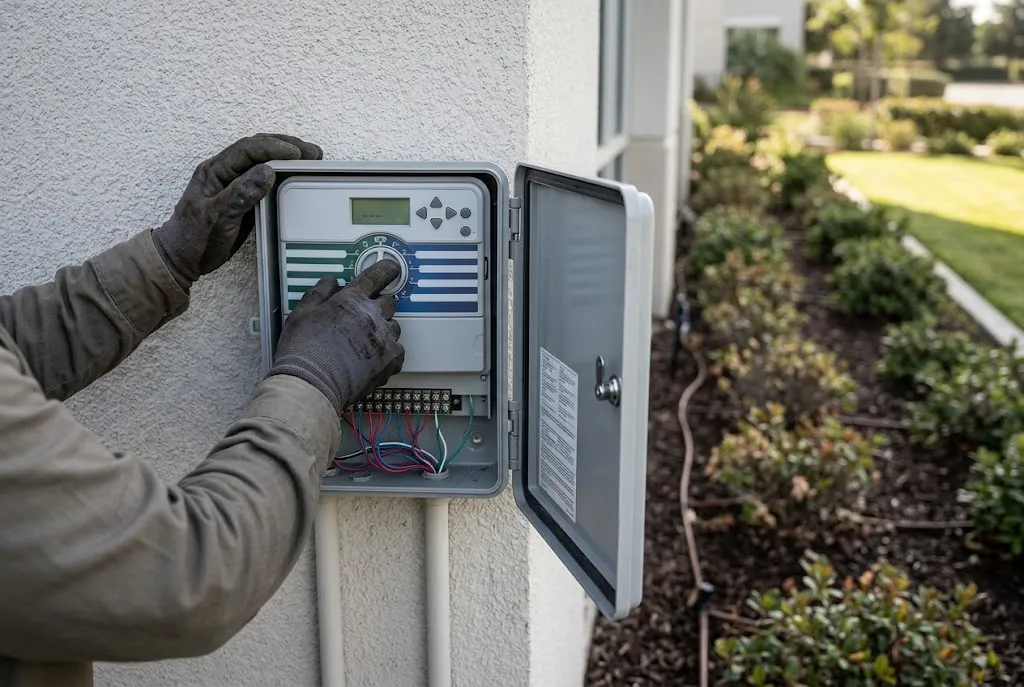
Keep Your Commercial Landscape on Track
Arrange an irrigation assessment and discuss appropriate next steps for your property’s landscape performance.
How Do Smart Irrigation Controllers Support Commercial Properties?
Irrigation controllers determine when programmed zones operate and for how long. On commercial sites with several watering areas, reliable programming is essential for keeping irrigation from running at inconvenient times or continuing through unnecessary cycles. Conventional programmable controllers remain useful when their schedules are set correctly and adjusted as conditions change. Smart irrigation controllers for commercial properties may provide weather-responsive scheduling, remote management, sensor integration, or usage information, depending on the equipment and its configuration.
Commercial irrigation controller programming should begin with zone knowledge rather than a single blanket schedule. Planting type, soil, exposure, and equipment performance influence appropriate run times. Managers may also need to coordinate irrigation around tenant access, deliveries, property events, or landscape maintenance. A controller upgrade can make adjustments more convenient, but it cannot correct a broken pipe, blocked nozzle, or poorly arranged sprinkler pattern.
Seasonal scheduling deserves periodic review in Southern California, where conditions vary between dry summer periods and cooler or wetter months. Local water restrictions can also change by supplier or jurisdiction. The U.S. EPA WaterSense program provides general information about water-efficient outdoor practices; specific site requirements should be confirmed with the applicable local water provider.
Commercial Irrigation Water Conservation and Property Needs
Commercial irrigation water management aims to use water where it benefits the landscape instead of losing it through avoidable leaks, runoff, or unnecessary spray. Correcting damaged sprinkler heads, adjusting overspray, repairing lines, and reviewing zone timing are practical starting points. Water-efficient commercial irrigation systems depend on equipment condition and suitable operation, not on a single device or advertised percentage of savings.
Consider the different pressures on a shopping center and an office park. A retail property may need particular attention to sprinklers near entrances and parking areas. Office campuses may prioritize consistent turf appearance and shared courtyards. Industrial properties often have long landscaped setbacks, while HOA and apartment communities may manage multiple common areas and resident walkways. Each setting presents practical access and coverage questions.
Commercial landscape irrigation also affects plant health. Overwatering can contribute to persistent wet conditions and plant stress, while too little moisture can leave turf uneven and shrubs struggling. Visible symptoms should prompt a review of irrigation and site conditions rather than an automatic increase in run time. Coordinating irrigation with Commercial Lawn Care Services can help managers connect watering issues with turf maintenance observations.
Southern California considerations
Orange County and Los Angeles County properties may face different supplier rules, microclimates, soil conditions, and landscape expectations. Commercial irrigation services in Southern California should account for those differences without assuming one watering schedule or restriction applies everywhere. If a property is facing repeated water-use concerns, a focused evaluation can help determine which repairs or operating changes are worth considering.
How Should Property Managers Plan Commercial Irrigation Services?
A productive plan starts with a clear inventory of concerns: where leaks have appeared, which zones operate irregularly, where plants show stress, and whether a recent renovation changed the landscape. Gather controller access information and any maintenance records that are available. Then prioritize work affecting water loss, public access, or widespread landscape performance before evaluating less urgent improvements.
Property managers should distinguish immediate troubleshooting from long-term investment decisions. One damaged head may need a straightforward repair; recurring failures across multiple zones may justify a more complete commercial irrigation system evaluation. Installation or upgrade decisions should follow review of existing infrastructure, site layout, and future landscape plans. Requesting a professional site assessment can help establish a realistic scope instead of choosing a repair package based solely on visible symptoms.
Irrigation also belongs within broader property maintenance planning. Coordinating Shopping Center Landscape Maintenance, routine inspections, and landscape improvements helps teams identify changes that affect watering. Businesses comparing general landscape options can review our Irrigation Services and Landscape Services information for related context.
If your commercial property has persistent dry patches, equipment failures, excessive runoff, or a planned landscape renovation, contact Landscaper-Near-Me.com to discuss the next step. We can help you explore commercial irrigation maintenance, repair, inspection, and improvement needs and request a free estimate for the appropriate scope. Call (888) 601-1117 or use the website contact form to explain the property and the concerns you have observed.
FAQ's - Frequently Asked Questions
They include inspections, routine maintenance, troubleshooting, repairs, installation planning, and improvements to irrigation equipment used on commercial landscaped properties.
The appropriate frequency depends on system size, equipment condition, property use, weather, and recurring problems. A site-specific maintenance plan is preferable to one universal interval.
Possible causes include damaged or blocked sprinkler heads, pressure issues, poor alignment, leaks, unsuitable scheduling, and differences in soil or planting requirements.
Yes. Depending on its condition, targeted controller, valve, sprinkler, drip-line, or zoning improvements may be appropriate. A site assessment determines whether upgrading or replacing components makes sense.
Maintenance may include inspecting accessible components, testing zones, checking spray patterns, reviewing controller settings, examining drip lines, and identifying leaks or damage.
No. They can support better scheduling when properly configured, but damaged components, leaks, and poor coverage still require inspection and repair.
No. Drip irrigation can suit certain beds and shrubs, while sprinklers often serve turf. Site layout, plants, soil, and equipment conditions determine which approach is appropriate.
Managers can identify leaks, correct overspray, review zone timing, inspect sprinkler alignment, and evaluate whether equipment or distribution changes are needed.
Localized failures may call for targeted repairs. Widespread deterioration or recurring systemic issues may justify a broader evaluation before considering replacement.
Yes. Turf, planting beds, trees, slopes, and exposed areas can have different moisture needs. Zone programming should reflect actual site conditions.