
Shopping Center Landscape Maintenance for Retail Property Managers
Shopping center landscape maintenance is the recurring care of the planted areas that shoppers pass on their way from the car to the front door: storefront beds, entry plantings, parking lot islands, medians, perimeter borders, and any turf or groundcover in between. At a retail property, those areas are part of the customer’s first impression. They also shape whether tenant signs can be seen from the drive aisle and whether walkways feel clear and cared for.
This page is written for shopping center owners, retail property managers, and asset managers comparing recurring maintenance proposals. It covers what routine service usually includes, where retail landscapes need the closest attention, how irrigation and tree work fit in, how visit frequency and service windows get set, and what a written scope should spell out before you sign. For guidance on office parks, industrial sites, and other property types, see our broader commercial landscape services page.
Landscaper-Near-Me.com helps property managers connect with the right landscaping service for their site. The inclusions, schedule, and pricing for any shopping center are confirmed in writing after the property has been reviewed.

Get a Free Estimate for Shopping Center Landscape Maintenance
Tell us about your center’s storefront beds, parking islands, turf, and irrigation, and we will help arrange a property review and a free estimate built around a written maintenance scope.
What Does Shopping Center Landscape Maintenance Cover on a Retail Property?
Shopping center landscape maintenance covers the work that has to be repeated to keep a retail property’s planted areas tidy, healthy, and out of the way of customers. On most neighborhood centers and strip malls that means mowing and edging any turf, pruning shrubs and hedges, keeping groundcover in bounds, controlling weeds in beds and hardscape joints next to plantings, checking mulch, and hauling away the clippings and landscape debris that the work produces.
The details depend on the site. A small strip mall may have a few storefront beds and a handful of parking islands. A larger shopping plaza may add long landscaped medians, slopes along the street frontage, outparcel pads, and seating areas between buildings. Shopping plaza landscape maintenance and strip mall landscaping maintenance use the same tasks, but the scope has to be built around what is actually planted and who uses each area.
Recurring care versus separately approved work
A recurring agreement should make clear what is routine and what is not. Routine visits handle ongoing upkeep. Repairs, plant replacements, irrigation fixes beyond minor adjustments, and renovation projects are usually assessed and approved separately, because their cost depends on what is found on site. Drawing that line in writing helps avoid disputes later about whether replacing a row of dead shrubs, for example, was part of the monthly price.
Cleanup in a landscape maintenance scope covers landscape material only: clippings, pruned branches, leaves in planting areas, and similar debris. Parking lot sweeping, pressure washing, trash collection, and janitorial work are separate property services and should not be assumed to be part of a landscape contract.
Which Landscaped Areas at a Shopping Center Need the Closest Attention?
The areas that need the most attention are the ones customers see and walk through most: entrances, storefront frontage, and the planted islands that line the parking field. Each has its own maintenance pressures.
Storefront planting beds and property entrances
Beds along storefronts and at driveway entrances carry most of the visual weight of the center. Shopping center planting bed maintenance here focuses on keeping edges clean, shrubs shaped below window and sign lines, weeds out, and mulch covering bare soil. Because these beds sit right beside walkways, plants that sprawl onto the sidewalk or drop litter near doors become a maintenance issue quickly. Consistent storefront landscape upkeep matters more here than anywhere else on the property.
Parking lot islands and landscaped medians
Parking lot landscape maintenance deals with some of the harshest growing conditions on a retail site. Islands are often small, surrounded by pavement, exposed to reflected heat, and bumped by car doors, shopping carts, and tires. Shrubs that grow too wide can scrape vehicles, and plants at island ends can block a driver’s view of pedestrians crossing the aisle. Medians along entry drives raise the same sightline concerns and are usually the first planted area a visitor sees.
Perimeter borders, turf, and common pedestrian spaces
Street-frontage borders, back-of-house strips near loading areas, and turf panels around monument signs are easy to overlook because tenants rarely ask about them. They still collect windblown trash, weeds, and overgrowth, and they shape how the property looks from passing traffic. Courtyards, seating areas, and walkways between buildings need plantings kept clear of benches, lighting, and paths so the space stays usable.
How Can Overgrown Plants Affect Tenant Signs, Entrances, and Parking Sightlines?
Overgrown landscaping can hide the things a retail property depends on: tenant signs, entrances, wayfinding, and clear views across the parking lot. A hedge that slowly fills in across a storefront window, a tree canopy that drops in front of a wall sign, or shrubs that rise above a monument sign can each cost a tenant some visibility without anyone noticing until a complaint comes in.
Visibility problems often build slowly. A plant that looked right at installation may outgrow its space years later, and repeated shearing may keep it in check without fixing the underlying mismatch. When that happens, the choice is usually between more selective pruning, a different pruning schedule, or replacing the plant with something better suited to the spot.
We do not recommend applying one fixed clearance height or distance to every sign and entrance. Sign heights, sightlines, local requirements, and plant types vary from one center to the next. A better approach is to walk the property, note where plants are interfering with signs, doors, crosswalks, or driver views, and agree on a pruning or replacement plan for each location. Retail property landscape care works best when those known trouble spots are named in the scope so they are checked on every visit instead of handled only after a tenant calls.
Plan Upkeep Around Your Storefronts and Parking Islands
Plants that cover tenant signs, spill onto walkways, or crowd parking islands need a specific plan, not just another trim. Let us help you list those trouble spots and decide on pruning, replacement, or irrigation work for each.
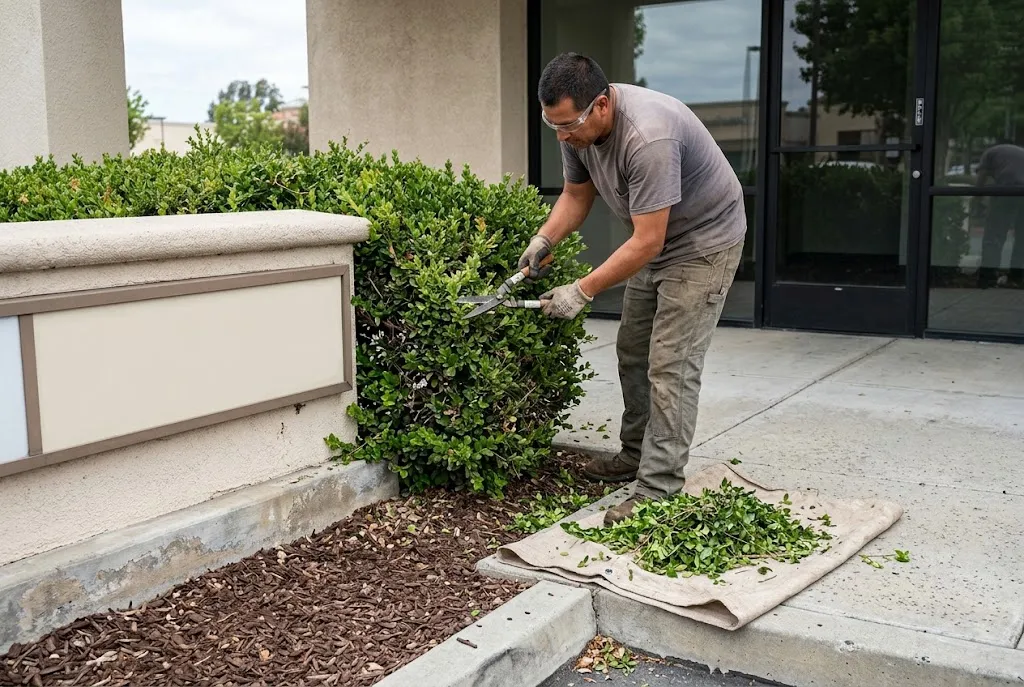
What Routine Tasks Keep Retail Center Planting Beds and Turf Presentable?
A small set of tasks, done consistently, keeps a retail center presentable. The specifics change by season and property, but most retail center landscape maintenance programs are built around the following.
- Mowing and edging where turf exists, with clean lines along curbs, walkways, and bed edges. Some centers have little or no turf; others have panels along the street frontage or around signs. For properties where turf is a larger part of the site, our commercial lawn care services page covers lawn-specific care in more detail.
- Shrub and hedge pruning to keep plants in shape, off walkways, and below signs and windows. Selective pruning usually holds up better than repeated hard shearing on plants that are naturally larger than their space.
- Groundcover management so spreading plants stay out of walkways, curbs, and drain inlets and do not swallow nearby shrubs.
- Weed control in planting beds, parking islands, and the edges where beds meet pavement. The method should suit the location, especially near storefronts and seating where people spend time.
- Planting bed upkeep and mulch checks to catch thin mulch, exposed soil, and drip lines or emitters that have worked to the surface.
- Removal of clippings and landscape debris produced by the work, plus leaves and plant litter collected in planted areas.
Two retail properties with the same task list can still look very different. The difference usually comes from how carefully crews treat high-visibility areas and how quickly they report problems they cannot fix during a routine visit.
What Irrigation Problems Should Shopping Center Managers Watch For?
The irrigation problems that matter most at a shopping center are the ones that waste water, damage plants, or reach customers and their cars. Shopping center irrigation maintenance should include regular attention to signs like these:
- Visible leaks, pooling water, or soggy areas around valves and lines
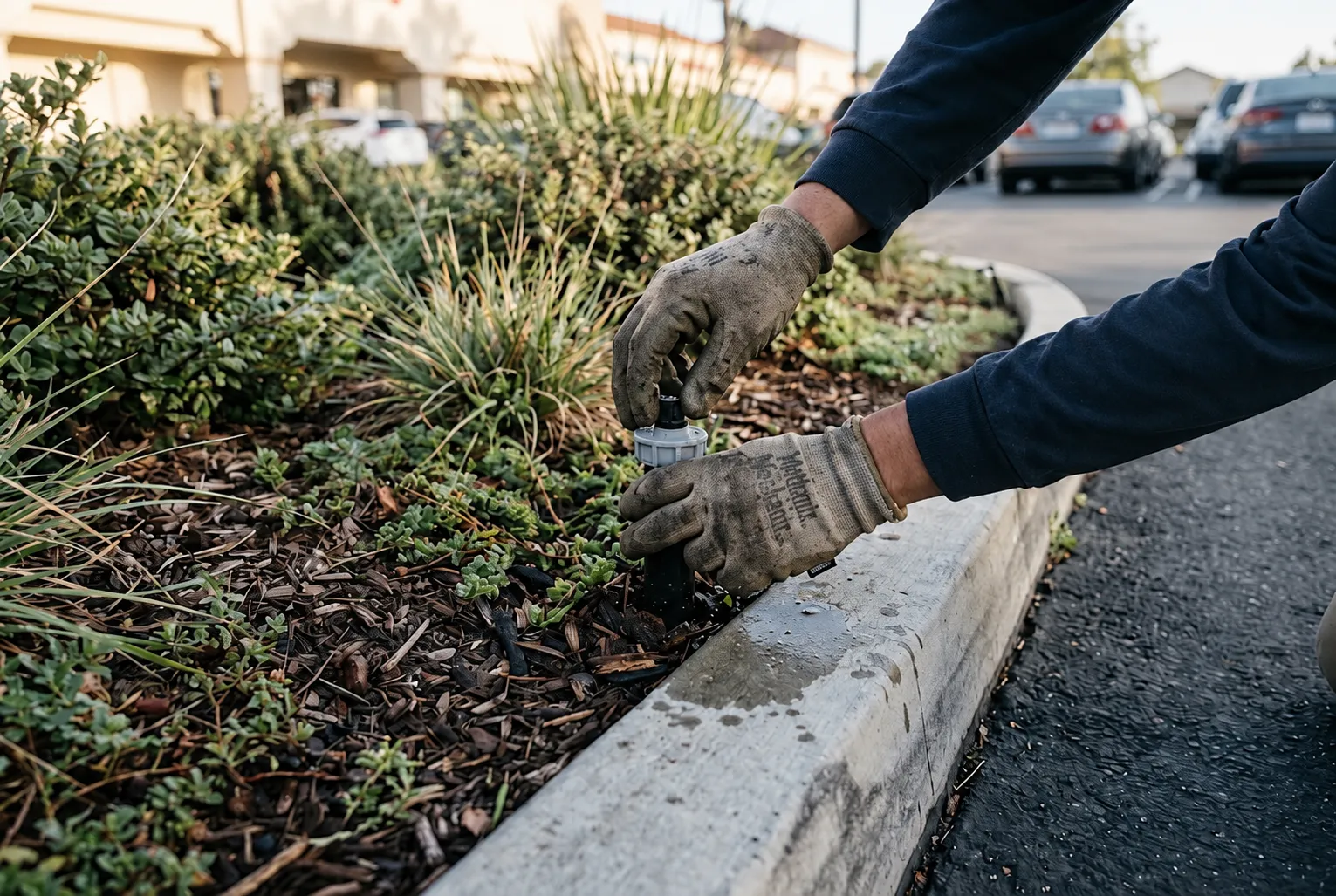
- Broken, tilted, buried, or misdirected sprinkler heads
- Overspray onto sidewalks, storefront glass, and parked vehicles
- Uneven coverage, with dry patches in one part of a bed and runoff in another
- Dry planting beds or stressed plants in islands and medians
Overspray deserves particular attention at retail sites. Water hitting cars in a parking field or pooling on a walkway near store entrances creates complaints and slip concerns, and runoff onto pavement wastes water. Misaligned heads in parking islands are common because they get struck by tires and carts.
Irrigation schedules also need periodic review. Watering needs change with the season, sun exposure, plant type, and soil, and controllers are often left on the same settings long after conditions have changed. Turf use is changing too. California’s rules on watering decorative grass at commercial properties, explained on the State Water Resources Control Board’s nonfunctional turf guidance, specifically name mowed grass in parking lots and grass bordering signs, buildings, and sidewalks. Shopping center owners should check how those rules and their water supplier’s timeline apply to their site before planning future turf care.
Routine maintenance visits can include minor adjustments, but repairs and system changes are typically quoted separately. When a valve, lateral line, or controller needs work, our irrigation services page explains the repair and system options.
When Do Declining Plants, Patchy Turf, or Overgrown Trees Need More Than Routine Care?
When the same problem keeps coming back, routine care is usually not enough, and the area should be assessed rather than simply maintained on the same schedule. Patchy turf, shrubs that keep thinning or browning, bare planting areas, and plants that need constant cutting to stay in bounds are all reasons to look more closely.
Plant and turf condition as a reason to assess
Plant decline can have several causes, including irrigation coverage, soil conditions, heat reflected from pavement, foot traffic, vehicle damage, pests, or simply a plant in the wrong location. Diagnosing the cause without looking at the site is guesswork. A useful maintenance relationship includes reporting these conditions when they appear so the property manager can decide whether to adjust care, repair irrigation, or budget for replacement.
Where tree trimming fits
Trees at a shopping center affect sign visibility, walkway clearance, parking lot lighting, and how much leaf litter ends up in planting beds. Light pruning of small ornamental trees may fall within routine work, but larger trees, height work, and structural pruning are specialized and usually assessed separately. Coordinating that work with the landscape maintenance schedule keeps beds and walkways cleaner afterward. Our tree trimming services page covers that work in more detail.
Supporting improvements that protect ongoing upkeep
Some small improvements make routine maintenance easier and more effective. Replacement planting fills gaps where plants have died or no longer fit. Mulch replenishment covers bare soil and helps beds look finished. Targeted irrigation repairs bring dry or overwatered areas back into balance. These items are usually proposed and approved one at a time. Larger redesigns and renovations are separate projects with their own planning.
Compare Retail Maintenance Proposals With a Clear Written Scope
Know what your recurring service includes, how visits fit around tenants and shoppers, and how extra work gets approved. Call (888) 601-1117, email info@landscaper-near-me.com, or request a callback to talk through your shopping center.
How Is Service Frequency Set for a Shopping Center Throughout the Year?
Service frequency should come from the property’s conditions and the owner’s expectations, not a standard weekly or monthly template. A small center with mostly shrubs and drip-irrigated beds needs a different visit pattern than a large plaza with turf panels, many trees, and heavy foot traffic.
Seasonal change is the biggest variable. Growth speeds up during warmer, longer days, which means more pruning, mowing, and weed pressure. Leaf drop in fall and early winter adds cleanup in beds and around storefronts. Irrigation demand rises and falls through the year, so controller settings and coverage need checking as the weather shifts. Planting beds may need extra attention before busy shopping periods when a center wants to look its best.
A practical approach is to set a base frequency for the whole property, then name the areas that need more frequent checks, such as main entrances and storefront beds, and the tasks that are done seasonally, such as heavier pruning or mulch top-ups. Writing that plan down makes it easier to see whether the schedule still fits the property as conditions change.
How Can Maintenance Work Around Store Hours, Deliveries, and Shoppers?
Landscape work at a shopping center has to fit around the businesses that operate there. Mowers, blowers, and trimmers near entrances can bother customers, and crew vehicles and equipment compete with shoppers and delivery trucks for space.
Before service begins, it helps to agree on workable service windows for different parts of the property. Storefront beds may be easiest to maintain before most stores open, while back-of-house strips and perimeter borders can often be handled later. Loading areas need work scheduled around delivery times, and parking islands near busy tenants may need to be done when the lot is less full. Available service windows vary by provider and property, so they should be confirmed in the agreement rather than assumed.
Parked vehicles call for care during mowing, string trimming, and blowing. Debris should be directed away from cars, storefront glass, and walkways, and areas next to restaurant patios or outdoor seating may need extra care.
How communication should work
Property managers should also discuss how information will be shared. Useful topics include how completed visits are confirmed, how irrigation problems found on site are reported, how declining plants or safety concerns are flagged, and how proposed improvements are submitted for approval. Agreeing on these points at the start keeps small issues from turning into tenant complaints and makes it easier to plan a maintenance budget.
What Should a Shopping Center Landscape Maintenance Estimate and Written Scope Include?
A useful estimate starts with a clear picture of the property, and a useful written scope turns that picture into specific expectations. Shopping center landscape maintenance estimates vary because retail sites vary. The main factors include:
- Total landscaped area and how it is split among beds, islands, medians, slopes, and turf
- Planting density and how much pruning and detail work the plants require
- How much turf the property has, if any
- Irrigation condition and how much monitoring the system needs
- Access limits, such as narrow islands, busy drive aisles, or restricted service hours
- Any backlog of maintenance from previous service
- The visit frequency and level of detail the owner expects
What the written scope should spell out
The scope should list the areas being maintained, describe their current condition, note access limits and service priorities, set the visit frequency, describe what cleanup includes, and explain how extra work is proposed and approved. When comparing proposals from shopping center landscaping services, compare scopes line by line. A lower price can reflect fewer visits or narrower inclusions.
Questions to ask before you approve a proposal
- Which tasks are included on every visit, and which happen seasonally?
- Are irrigation adjustments included, and how are irrigation repairs quoted?
- Is any tree trimming included, or is it quoted separately?
- How are plant replacements and mulch replenishment proposed and approved?
- What service windows are available for storefront and entrance areas?
- How will observed problems and completed work be communicated?
Shopping mall grounds maintenance and smaller center care follow the same logic. The more clearly the scope matches the property, the easier it is to hold the service to it. Geographic context can matter too: properties in Los Angeles County or coastal Orange County can review our pages on commercial landscaping in Los Angeles and commercial landscaping in Newport Beach for location-specific information.
If you are evaluating a shopping center landscape maintenance company or reviewing your current arrangement, start with a property review and a written scope you can compare. Call Landscaper-Near-Me.com at (888) 601-1117, email info@landscaper-near-me.com, or request a callback to discuss your retail property and set up a free estimate.
FAQ's - Frequently Asked Questions
Most retail properties use a recurring agreement with a set visit schedule, but the pricing structure should be confirmed in the written proposal. Ask whether the price is monthly, per visit, or annual, and which tasks it covers.
Routine visits may include checking for problems and making minor adjustments. Repairs to valves, lines, controllers, or larger components are usually quoted separately once the problem has been assessed. Confirm how this works before you sign.
Light pruning of small ornamental trees may be included, depending on the scope. Larger trees, height work, and structural pruning are typically assessed and quoted as separate tree work.
Early service for entrances and storefront beds is often requested, but available service windows depend on the provider and the property. Agree on specific windows for each area and put them in the written scope.
No. Landscape cleanup covers clippings, pruned material, and plant debris from planted areas. Parking lot sweeping, pressure washing, and trash collection are separate property services.
Note the exact location and ask for an assessment. Depending on the plant and the space, the fix may be selective pruning, a changed pruning schedule, or replacing the plant with one that better fits the location.
A site map or aerial view, a list of the areas you want maintained, known irrigation or plant problems, access limits, preferred service windows, and the visit frequency you expect all help produce a more accurate estimate.
Yes, as long as your current agreement allows it. Review your notice terms, document current landscape and irrigation conditions, and have the new scope confirmed in writing so the transition does not leave gaps in service.