
Tree Trimming Long Beach CA:
Branch Clearance for Roofs, Driveways, and Walkways
A branch scraping across the shingles every time the wind picks up. A low limb that forces you to duck on the way to the front door. A tree that has crept so far over the driveway that the car comes out dusted with leaves and sap every morning. These are the problems that bring most homeowners to our Tree Trimming Long Beach CA service, and they are the problems this page is built around.
We focus on residential branch clearance: selectively pruning the limbs that touch or overhang a roof, opening up driveways and walkways, and removing dead branches that no longer belong in the canopy. Many Long Beach homes sit on compact lots with narrow side yards and trees planted close to the house or the paving, so we look at access and cleanup just as carefully as we look at the tree itself.
Below, we explain how we decide which branches to cut, what we check in a tight side yard, what a complete cleanup should include, and which photos help us prepare your free estimate. If you already know what needs attention, you can call us at (888) 601-1117 or request a call back and we will start with your property.

Get a Free Estimate for Roof and Driveway Branch Clearance
Tell us which branches are touching your roof, crowding the driveway, or hanging low over a walkway. We will review the trees and the access route, then give you a free estimate that spells out the pruning and cleanup. Call (888) 601-1117 or request a call back.
What Does Residential Tree Trimming in Long Beach Usually Involve?
Residential tree trimming in Long Beach is usually less about reshaping an entire tree and more about solving a specific clearance problem. The homeowner wants the roof clear, the driveway usable, and the walkway safe to walk under. Our job is to reach those goals with as few cuts as necessary while leaving the tree balanced and healthy.
A typical visit combines three kinds of work:
- Targeted clearance removes or shortens the specific limbs that touch the house, crowd a parked vehicle, or hang into a path.
- Selective pruning thins crowded, crossing, or rubbing branches so the remaining canopy is lighter and lets more light and air through.
- Dead branch removal takes out limbs that have died back, where they can be reached and removed safely as part of the same visit.
Not every tree needs all three. A young shade tree near a walkway might only need two or three low limbs raised. An older tree beside the garage may need clearance from the roof, some thinning, and several dead limbs removed. That is why our estimates describe the actual branches and areas we plan to address rather than a vague “trim tree” line item. For a broader look at the work we do across our service area, see our Tree Trimming Services page.
How Do We Decide Which Branches to Cut Over a Roof?
Trimming branches over a roof starts with separating the limbs that are actually causing a problem from the ones that only look close. Standing at ground level and, where it is safe, viewing the roofline from different angles, we look for branches that physically contact the roof, branches that will reach it with a season or two of growth, and heavier limbs extending over the house.
Branches Touching Shingles, Gutters, or Fascia
Limbs that rub against roofing material can wear the surface over time, and branches resting on gutters tend to fill them with leaves and twigs. These are usually the first priority. We trace each contacting branch back to a sensible cut point, typically a lateral branch or the point where it joins a larger limb, instead of simply chopping it off at the roofline.
Overhanging Limbs and Long-Term Clearance
A branch that hangs over the roof without touching it may still be worth shortening, especially if it is long, heavy at the end, or dropping a steady stream of debris. We consider how the tree grows, how much space it needs to stay balanced, and how much clearance you want. In some cases, a careful approach to crown reduction in tree trimming is a better answer than removing whole limbs, because it reduces the spread of the canopy while keeping its natural form.
Why We Avoid Stripping One Side of the Tree
Removing every branch on the house side can leave a tree lopsided, with too much weight leaning toward the street or the neighbor’s yard. We aim for clearance that solves the roof problem while keeping the canopy as even as the situation allows. If getting the clearance you want would require cutting more than the tree can reasonably tolerate, we tell you that during the estimate rather than after the work is done.
What Does Driveway and Walkway Tree Clearance Involve?
Driveway and walkway tree clearance is about headroom and visibility. Low branches can brush against vehicles, drip sap onto paint, block the view when backing out, and catch people walking to the door. The goal is to raise the lower canopy enough for normal use without overcutting.
When we assess a driveway, we look at where vehicles actually park and travel, the height of the tallest vehicle that uses the space, and whether branches block the line of sight toward the street. On walkways, we check the full route from the sidewalk or driveway to the entry, including gates, side paths, and steps where a low branch is easy to miss.
Most of this work uses thinning cuts, which remove a branch at its point of origin, instead of heading cuts that leave stubs and encourage a dense burst of new shoots. The UC IPM guidance on pruning landscape trees explains this difference well and cautions against topping, the drastic heading of large branches that tends to produce weakly attached regrowth. That principle matters on a driveway: a limb that is cut back to a stub often grows back thicker and lower, and you end up paying to clear the same space again sooner.
Good tree pruning in Long Beach CA also keeps the tree’s overall proportions in mind. Raising the canopy too aggressively on a young tree can leave it top-heavy, so on smaller trees we may recommend clearing in stages over more than one visit.
Tight Side Yard? Let's Plan the Access Before the First Cut
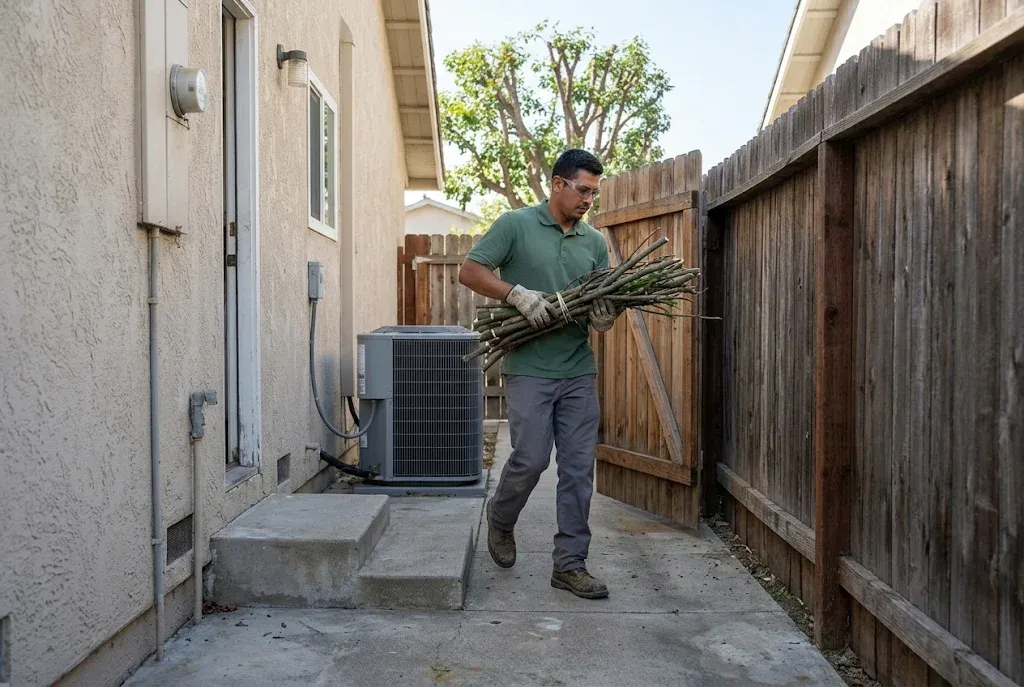
Narrow gates, steps, and fences change how branches come down and how they leave your yard. We plan the access route, the dead branch work, and the haul-away up front, so the estimate reflects the real job. Request a call back to talk through your property.
When Is Dead Branch Pruning Part of the Job?
Dead branch pruning belongs in almost any residential trimming visit where dead limbs are present above a roof, driveway, walkway, patio, or play area. Dead wood becomes brittle, and those branches are the ones most likely to break in wind. Removing them is one of the most practical improvements a trim can make.
During the estimate, we look for limbs with no leaves when the rest of the tree is in leaf, bark that is cracked or peeling away, and branches that snap rather than bend. Some trees also carry thin, shaded-out interior twigs that have died back over time. Taking out this material is a core part of what is often called deadwooding in tree trimming, and it usually leaves the canopy cleaner and lighter.
We also note anything that looks like more than ordinary dead wood. Large dead sections, fungal growth at the base, deep cavities, or a significant lean are signs that the tree may need a closer evaluation by a qualified arborist. In those situations, we point out what we see and explain that trimming alone may not address the underlying issue.
How Does Side-Yard Access Affect a Tree Trimming Estimate in Long Beach?
Access can change the scope of a tree trimming estimate in Long Beach as much as the tree itself. A backyard tree reached through a wide, level gate is a very different job from the same tree behind a narrow side yard with steps, a raised planter, and a utility meter along the route. Before quoting, we walk the path the crew and the cut branches will travel.
What We Check Along the Route
- Gate width: whether ladders, pole pruners, and bundled branches can pass through without damaging the gate or fence.
- Steps and grade changes: slopes, stairs, and uneven ground that make carrying limbs slower and more careful.
- Fences and walls: how close they sit to the tree and whether branches need to be lowered in sections to avoid hitting them.
- Obstacles: AC units, trash bins, hose reels, planters, meters, and stored items in the side yard.
- Staging room: whether there is space to set cut branches down, cut them into manageable pieces, and move them to the front without crossing delicate plantings.
How Access Shapes the Price and the Plan
Tight access usually means more handling. Branches may need to be cut into shorter pieces before they can be carried out, and the crew may need extra time to protect surfaces along the way. Noting these details in advance lets us give you a more accurate estimate and avoid surprises on the day of the work. If a gate can be removed or a section of fence opened, let us know, because it can simplify the job.
What Should the Cleanup Portion of Your Estimate Include?
A tree trimming estimate should say clearly what happens to the branches after they are cut. Cleanup is often where quotes differ the most, and it is worth confirming before you approve the work.
Ask whether the quoted scope includes:
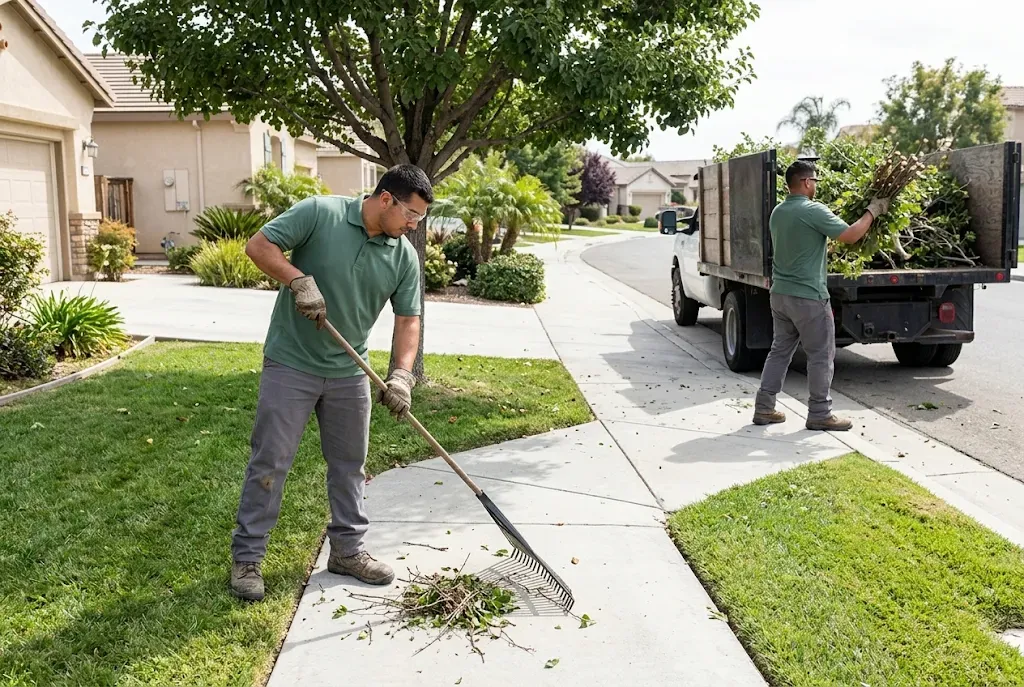
- Collecting all cut limbs and smaller debris, including twigs and leaves that fall into planting beds, gravel, or ground cover.
- Raking or blowing the affected areas, such as the roof edge where reachable, driveway, walkway, patio, and lawn.
- Clearing debris that lands in gutters during the trim, if that is part of the agreed scope.
- Hauling away the trimmings rather than leaving them stacked at the curb or bagged for the green waste bin.
The last item deserves extra attention. Please confirm whether haul-away is included in the quoted scope, because a moderate trim can produce far more material than a residential green waste container holds. Our estimates spell out the cleanup and haul-away we plan to provide, so you can compare it accurately and know what your property should look like when the crew leaves.
Know What Your Tree Trimming Covers Before Work Begins
Every estimate lists the branches we plan to trim, how we will reach them, and what cleanup and haul-away are included. Email your ground-level tree photos to info@landscaper-near-me.com or call (888) 601-1117 to get started.
Which Photos Help Us Prepare a Tree Trimming Estimate in Long Beach?
Good photos make the first conversation more productive. They help us understand the tree, the clearance problem, and the access route before anyone arrives, which saves time for both of us. You do not need professional equipment; a phone camera works well.
These photos are the most useful:
- A full-tree photo taken from far enough back to show the entire tree from the ground to the top of the canopy.
- A wider view of the problem area showing the branches in relation to the roof, driveway, or walkway, so we can see how they overlap.
- Close views of specific concerns, such as a limb on the gutter or a dead branch over the patio.
- Photos of the gate and side-yard access route, taken from the front of the property toward the tree and, if possible, back toward the street.
Please take every photo from ground level. There is no need to climb a ladder or step onto the roof for a better angle. Photos help us prepare, but an onsite assessment may still be needed to confirm branch condition, measure clearances, and check access before we finalize the scope.
Are There Long Beach Rules or Timing Factors to Know Before Trimming?
A few factors outside your yard can affect when and how a tree is trimmed, and it helps to know about them early.
Parkway and Street Trees
Not every tree in front of a home belongs to the homeowner. Trees growing in the parkway strip or elsewhere in the public right-of-way are handled differently, and the City of Long Beach requires a permit from its Public Works Department before trees in the public right-of-way are trimmed. If a tree you want trimmed appears to be a street tree, we will point that out so you can confirm its status and the City’s requirements with Long Beach Public Works before any work is scheduled.
Overhead Power Lines
Branches near overhead electrical lines are a separate matter. Clearance around those lines is generally the responsibility of the electric utility and requires specialized, qualified line-clearance work. If branches are close to or touching power lines, contact the utility and keep everyone, including yourself, away from the area.
Nesting Birds and Seasonal Timing
California law protects active bird nests, so we check for nesting activity before cutting, especially in spring and early summer. If an active nest is in a branch scheduled for removal, the work may need to wait or be adjusted. Species and growth patterns also influence timing; our article on the best time of year to trim trees explains how seasons affect pruning decisions. For urgent clearance problems, such as a branch rubbing the roof, the safest timing is often simply as soon as practical.
How Do You Get a Free Tree Trimming Estimate in Long Beach?
Getting a free tree trimming estimate in Long Beach starts with a short conversation about what you want to accomplish. Tell us which areas need clearance, such as the roof, the driveway, a walkway, or all three, and mention any dead branches you have noticed. If you can, send the photos described above to info@landscaper-near-me.com.
From there, we review the tree and access, schedule an onsite visit if one is needed, and provide an estimate that describes the branches we plan to address, the type of pruning involved, any access considerations, and the cleanup and haul-away included.
How to prepare your yard for a tree trimming appointment
Once the work is scheduled, a few simple steps help the visit go smoothly. Move vehicles out of the driveway if branches above it are being trimmed. Bring pets inside. Clear the side-yard route of bins, hoses, and movable items, and unlock the gate. Patio furniture, potted plants, and decorations under the work area should be moved to a safe spot.
Ready to Clear Your Roof, Driveway, or Walkway?
Overgrown and dead branches rarely fix themselves, and the longer they grow toward the house or into the driveway, the more pruning it takes to bring them back. Our Tree Trimming Long Beach CA service is built for exactly this kind of residential clearance work, with a clear scope, careful cuts, and a cleanup plan you can see in writing before we begin.
Call Landscaper-Near-Me.com at (888) 601-1117, email info@landscaper-near-me.com, or request a call back to schedule your free estimate. We will help you decide which branches need attention now and which can wait.
FAQ's - Frequently Asked Questions
Not always. If the gate is unlocked, pets are inside, and the work area is clear, we can often complete the trim while you are away. We do recommend being available by phone in case a question comes up, and we are happy to walk the finished work with you if you are home.
Branches that cross onto your property are often trimmed back to the property line, but the trimming should not harm the tree, and rules on shared or boundary trees can be complex. We recommend talking with your neighbor first. For a dispute, please consult a qualified professional; we are not providing legal advice.
It usually reduces how much falls directly into the gutters, especially when contacting and overhanging limbs are cleared. Wind can still carry leaves from nearby trees, so trimming lowers gutter debris rather than eliminating it.
It depends on the species, its growth rate, and how much clearance you want. Some trees need attention every year or two, while slower-growing trees may go longer. A quick look each year at the roofline and driveway is a practical way to catch regrowth before it reaches the house.
Selective cuts made at proper points generally support tree health and structure. Problems come from overpruning and topping, which can stress the tree and lead to weak regrowth. We aim to remove only what is needed for clearance and safety.
No. This service covers trimming and selective pruning, where the tree stays in place. If we see signs during the estimate that a tree may need more than trimming, such as major decay or a significant lean, we will tell you and recommend a further evaluation.
Yes. Shrub and hedge pruning is one of our services, so if you have overgrown plants along the same driveway or walkway, mention them when you request your estimate and we can include them in the scope.
Yes. In addition to Long Beach, our service territory includes Cerritos, Downey, Whittier, Commerce, City of Industry, and communities across Orange County such as Santa Ana, Costa Mesa, Irvine, and Newport Beach.