
Landscape Maintenance Newport Beach CA
for Commercial Properties, Homes, and HOAs, and
Landscape Maintenance Newport Beach CA property owners can rely on is measured less by any single visit than by what happens between visits. Lawns here keep growing for most of the year, sprinkler schedules need adjusting as the seasons shift, and hedges, palms, and planting beds drift out of shape a little at a time. A steady schedule catches those changes while they are still small, so the property holds one consistent standard instead of cycling through bursts of catch-up work.
We provide recurring landscape maintenance services for single-family homes, HOA common areas, multifamily communities, and office and retail properties in Newport Beach, which is part of our established service territory across Orange County and Southeast Los Angeles County. Some clients come to us with a yard that only needs dependable weekly care. Others manage several acres of shared landscape and need written scopes, predictable visits, and one point of contact.
This page explains what a maintenance visit covers, how to tell whether a property needs a recurring schedule or a one-time cleanup, where residential and commercial upkeep differ, and how irrigation, turf, shrubs, trees, and seasonal work fit together. If you are looking at the full range of our Landscape Services, this page focuses on the ongoing-care side; installation and redesign are handled separately. Estimates are free.

Request a Free Landscape Maintenance Estimate in Newport Beach
Tell us about your home, HOA, or commercial property and we will walk the site, review the lawn, beds, trees, and irrigation, and give you a written maintenance estimate at no cost. Call (888) 601-1117 or email info@landscaper-near-me.com.
What Is Included in Recurring Landscape Maintenance in Newport Beach?
Recurring landscape maintenance is scheduled care for a landscape that already exists. Its job is to keep lawns, beds, shrubs, and irrigation performing the way they were planted to perform, and to flag problems before they spread. Most of the work falls into three layers.
Work done on every visit
- Mowing turf areas at a height suited to the grass type
- Edging along walks, driveways, curbs, and bed lines
- String trimming around fences, posts, tree trunks, and anything a mower cannot reach
- Pulling or treating weeds in planting beds
- Blowing clippings off paved surfaces and removing the trimmings our work produces
- A walk-through look at sprinklers, plant health, and anything that has changed since the last visit
Work done on a rotation
Some tasks do not need to happen every week, yet they should not be left for a year either. Shrub and hedge shaping, groundcover containment, fertilization, mulch top-ups, and more detailed irrigation checks and adjustments are usually scheduled monthly, quarterly, or seasonally, depending on how fast the plants grow and how the property is used. Writing those intervals into the schedule up front is what keeps routine landscape upkeep from turning into a series of periodic overhauls.
Work that sits outside the maintenance scope
New planting plans, lawn conversions, patios, and full redesigns are projects, not maintenance. When a bed has declined past what regular care can correct, we describe the problem and price the fix as its own item, so the maintenance agreement stays predictable month to month. Bigger changes belong with our Landscape Design and Installation work. A landscape renovation for older properties can be the right answer when plants have completely outgrown their spaces, but that decision should come from an honest look at the site, not as an add-on to a mowing visit.
What Are the Signs a Property Needs Ongoing Maintenance?
The clearest sign is a landscape that only looks good right after someone works on it. If a lawn is sharp for one week and ragged for the next three, or hedges are cut back hard twice a year and look shaggy in between, the property is being rescued rather than maintained. Other signals we look for:
- Dry patches beside soggy ones. Uneven color in turf usually points to the sprinklers, such as a tilted head, a clogged nozzle, or spray blocked by shrubs that have grown into the pattern, rather than to the grass itself.
- Plants covering windows, path lights, or address numbers. Overgrowth around entries is both an appearance problem and a safety one.
- Weeds settling into bed edges and paving joints. Once weeds go to seed, every future visit takes longer.
- Bare soil showing through planting beds. Thin or missing mulch lets weeds germinate and lets soil dry out faster.
- Dead palm fronds and seed stalks hanging over walks, roofs, or parking.
- Comments from tenants, residents, or neighbors. On managed properties, a complaint is often the first maintenance report anyone receives.
Any one of these can be fixed in an afternoon. Several at once usually means the property needs a schedule rather than another catch-up day.
Recurring Maintenance or a One-Time Cleanup: Which Makes Sense?
A one-time cleanup resets a property; recurring maintenance holds it at that level. Many Newport Beach properties need both, in that order.
When a single cleanup is enough
A cleanup fits when the owner, residents, or an existing crew will handle routine care afterward: preparing a home for sale or a new tenant, catching up after a vacancy, or clearing debris after a winter storm. Seasonal landscape cleanup and refresh services usually combine heavier pruning, debris removal, weeding, bed edging, and fresh mulch into one concentrated effort.
When a recurring schedule pays off
A recurring schedule fits when the property is lived in, leased, or visited every day and its appearance matters every week, not just on inspection day. It is also the better choice for any site with an automatic irrigation system, because controller programming and sprinkler coverage drift over time, and nobody tends to notice until plants show stress.
Starting with a reset
An overgrown property often begins with a separately priced initial cleanup and moves to a regular schedule once the landscape is back to a standard worth holding. Keeping the two apart stops the first month’s heavy work from inflating the ongoing maintenance price.
Not Sure If You Need a Cleanup or a Recurring Schedule?
We can look at the property and tell you plainly whether a one-time reset, an ongoing maintenance plan, or a cleanup followed by regular visits makes the most sense. Reach us at (888) 601-1117 or info@landscaper-near-me.com.
How Does Residential Landscape Maintenance Differ From Commercial Upkeep?
The tasks overlap almost completely. What changes is who is looking at the landscape, when crews are able to work, and who approves anything beyond the regular scope.
Single-family homes
Residential landscape maintenance is organized around the household. Gate codes, pets, side-yard access, and quiet hours all matter. Homeowners generally want to know which day the crew comes, who to call when a sprinkler sticks on, and how added work, such as reducing an overgrown hedge, gets approved before it happens. For residential landscape maintenance in Newport Beach, front yards and entries tend to draw the most attention, while backyards hold much of the irrigation and planting that affect how the space is actually used.
HOAs and multifamily communities
Associations and apartment communities divide the landscape into common areas the property maintains and spaces individual residents control. Clear boundaries matter here, along with notice before louder or more disruptive work and a single contact who can report conditions to a board or community manager. Our Commercial Landscaping Newport Beach page covers how we approach larger shared properties in the city.
Office, retail, and professional properties
Commercial landscape maintenance is judged by tenants, customers, and visitors who rarely think about the landscape unless something looks wrong. Entries, parking-lot islands, monument signs, and storefront planters carry most of the weight, and visits are often timed around business hours or peak foot traffic. Property and facility managers usually need a written scope, consistent reporting, and a clear process for approving extras. Our Commercial Landscape Maintenance Services page goes into how those programs are set up.
Whatever the property type, property appearance maintenance comes down to the same three things: agreeing on the standard, writing down what is included, and keeping to the schedule.
What Happens During Irrigation Checks and Adjustments?
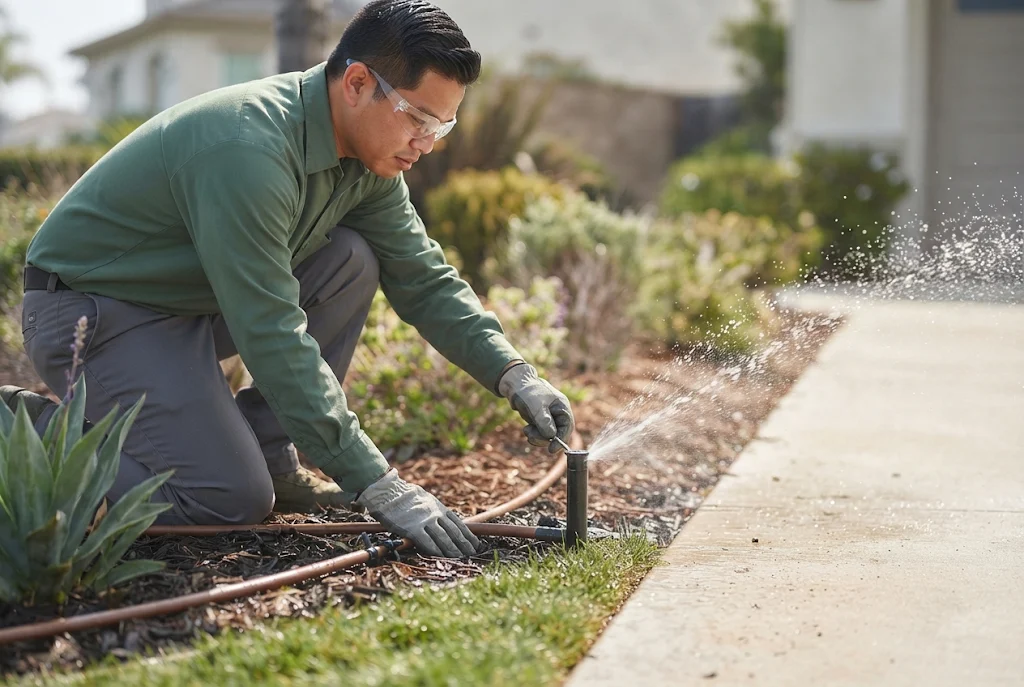
An irrigation check during a maintenance visit means running stations and watching what the water actually does. Most sprinkler problems are small and inexpensive when caught early, and costly in lost plants or wasted water when they are not.
Items we typically look for and correct as part of the maintenance scope include:
- Heads that are tilted, sunken, or knocked out of line by mowers and foot traffic
- Nozzles that are clogged or spraying onto walks, walls, and streets
- Spray patterns blocked by shrubs that have grown into them
- Drip tubing in planting beds that has been cut, kinked, or pulled loose
- Controller run times that no longer match the season
Broken valves, damaged lateral lines, controller replacement, and system redesign count as repair or upgrade work. We note what we found, explain it, and price the work for approval before anything is done. Our Irrigation Services page covers that side of the work in more detail.
Working within Newport Beach watering rules
The city keeps permanent water conservation requirements in place whether or not a drought has been declared. Watering that causes runoff is prohibited, and landscapes may not be irrigated during rain or within 48 hours afterward. City guidance also addresses watering hours and how long automated stations may run, and those details can tighten when water supply conditions change. We check the current City of Newport Beach water conservation requirements when we set controller schedules instead of carrying old settings forward. Irrigation tune-ups for maintained landscapes are one of the simplest ways to stay inside those rules while keeping plants healthy.
How Should Sod Care and Turf Maintenance Be Handled Between Mowings?
Good turf care mostly comes down to mowing correctly, watering deeply and evenly, and responding early when an area starts to thin.
Mowing height and frequency
Different grasses want different heights. Warm-season grasses such as bermudagrass tolerate a lower cut, while tall fescue lawns hold up better when left taller. A widely used guideline is to remove no more than about one-third of the leaf blade at a time; cutting harder than that stresses the lawn and opens the canopy to weeds. During the fastest spring growth, staying within that guideline can mean more frequent mowing than the same lawn needs in winter.
Edges, thatch, and compaction
Crisp edges are the detail people notice first. Below the surface, heavily used lawns can compact and build up thatch, which slows water penetration and encourages runoff on sloped areas. Periodic aeration can help where turf takes steady foot traffic.
Patching versus replacing
Small bare spots can often be repaired. When a lawn has thinned across large areas, or the grass no longer suits the shade and use of the yard, replacement may make more sense than another season of patching. Our Sod Installation Newport Beach CA page explains how new lawns are installed and established. Once a new lawn has rooted in, it moves into the same sod care and turf maintenance routine described here.
Put Your Newport Beach Landscape on a Steady Maintenance Schedule
Mowing, edging, irrigation checks, pruning, and seasonal work handled on a set schedule, with one contact for questions and approvals. Call (888) 601-1117, email info@landscaper-near-me.com, or request a call back to talk through your property.
How Are Shrubs, Hedges, Trees, and Palms Handled on a Maintenance Schedule?
Woody plants grow on a slower clock than turf. That makes them easy to put off and harder to bring back once they get away from a property.
Shrubs and hedges
Shearing keeps a formal hedge crisp, but repeated shearing alone builds a dense outer shell that shades out the growth underneath. Thinning a few stems by hand from time to time lets light back into the interior so the hedge stays full instead of hollow. For flowering shrubs, timing matters as much as technique; pruning soon after bloom generally protects the next season’s flowers.
Trees
Maintenance visits cover low, reachable work: clearing lower limbs away from walks and driveways, removing suckers and small dead twigs, and keeping branches off signs and light fixtures. Larger pruning, work at height, and removals are tree service rather than routine maintenance. Our Tree Service Newport Beach CA page explains how that work is handled.
Palms
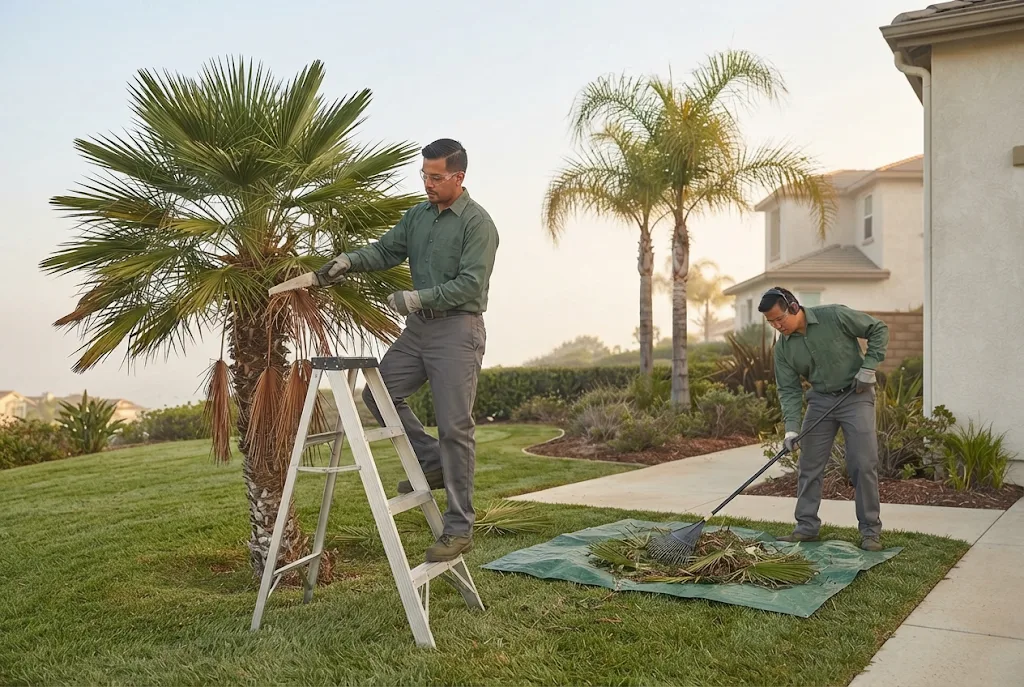
Palms are a familiar part of Newport Beach landscapes. Routine palm care means taking off fronds that are dead or hanging, along with spent flower and seed stalks. Cutting healthy green fronds well above the horizontal line removes leaves the palm still needs and can leave it weaker, so we keep frond removal conservative. Tree trimming and palm cleanup services are timed to the species and how quickly it sheds.
Cleanup after the work
Tree trimming and landscape cleanup belong together. Every pruning visit should end with cuttings gathered from beds and lawns, walks and drives blown clean, and green waste removed, so the only sign of the work is a neater landscape.
What Does Seasonal Landscape Maintenance Look Like Through a Newport Beach Year?
Newport Beach has a mild coastal climate, and most of its rain falls between late fall and early spring. The landscape never fully shuts down, so seasonal landscape maintenance is less about switching tasks on and off and more about shifting emphasis from one season to the next.
Winter
Rain does much of the watering, so controllers are turned down or paused, which also keeps the property inside the city’s rule against irrigating soon after rainfall. Storm debris, fallen branches, and clogged drain inlets get attention after each system passes. Many deciduous trees and shrubs are easiest to evaluate for structural pruning once their leaves are off.
Spring
Growth picks up quickly. Mowing frequency usually rises, hedges put on a flush of new growth, and weeds that germinated after winter rains need to come out before they set seed. Spring is also a common time to fertilize turf and refresh mulch in thin beds.
Summer
Irrigation demand peaks during the dry months, so checks for dry spots and blocked spray patterns matter most now. Overcast coastal mornings early in the season can hide how quickly beds dry once the sun breaks through, which is why we judge watering by soil moisture rather than by how the surface looks. Plantings that sit directly in ocean spray can also show salt burn on leaf edges, and that is worth noting when replacements are discussed.
Fall
Leaf drop picks up, controller run times come down as days shorten, perennials are cut back, and beds are mulched ahead of the rainy season. It is also a practical time to review the year and adjust the maintenance scope before the next growth cycle begins.
Starting Landscape Maintenance Newport Beach CA Service for Your Property
Getting started begins with a walk of the property, ideally with the person who will be our day-to-day contact. Newport Beach landscape maintenance works best when both sides agree from the beginning on what is being maintained, what condition it is in now, and what matters most.
What we look at during the first walk
- Turf areas, planting beds, slopes, and any shared or common areas
- How the irrigation is zoned and how the controller is currently programmed
- Trees and palms that may need work beyond routine maintenance
- Access, gate codes, parking for equipment, pets, and any HOA or tenant restrictions
- Areas that may need a one-time cleanup before a regular schedule makes sense
What helps us prepare an accurate estimate
It helps to know the property type, how often it is serviced now, any irrigation problems you already know about, and the two or three things about the current landscape that bother you most. For managed properties, a site map or a copy of the current scope makes comparison easier.
Next steps
Property managers responsible for several sites can see our broader Commercial Landscape Services for the other work we handle across the territory. For a home, an HOA common area, or a single commercial property, the simplest next step is a conversation. Call (888) 601-1117, email info@landscaper-near-me.com, or request a call back, and we will set up a time to walk the property and prepare a free estimate for Landscape Maintenance Newport Beach CA service that fits how your landscape is actually used.
FAQ's - Frequently Asked Questions
It depends on what is growing and how the property is used. Homes and commercial sites with active lawns are commonly serviced weekly during the growing season, while landscapes made up mostly of shrubs, groundcover, and low-water plants may do well on a less frequent rotation. We recommend a frequency after seeing the property, and the schedule can change with the seasons.
No. Most residential clients are not home when we visit. We do need reliable access to every area in the scope, so we ask about gate codes, locked side yards, pets, and any days or times that do not work before the first visit.
Routine checks and small adjustments, such as straightening a head or cleaning a nozzle, are part of the maintenance scope we propose. Repairs that need parts or more labor, like replacing a valve or fixing a broken line, are described and priced for your approval before the work is done, so there are no surprise charges.
Yes. Removing the clippings, trimmings, and debris our work produces is part of the standard scope we put in writing. Heavy storm debris or large tree removals are handled as separate items.
Yes. We walk the property first, note anything that has been missed, and recommend whether an initial cleanup is needed before regular visits begin. Sharing your current scope or contract helps us compare like for like.
We set visit days and times around the property’s needs wherever our schedule allows, including quiet hours in residential communities and early or off-peak visits for offices and retail sites. Any restrictions should be written into the maintenance scope so they are followed consistently.
Yes. Weeds are pulled or treated during regular visits, and we pay attention to bed edges and paving joints where they tend to settle in. Keeping a healthy layer of mulch in beds is one of the most effective ways to reduce how many weeds come back.
Call (888) 601-1117, email info@landscaper-near-me.com, or request a call back through our website. We will arrange a time to walk the property and then provide a free written estimate based on the scope we discussed.