
Commercial Irrigation Maintenance for Hotels
and Resort Grounds
Commercial Irrigation Maintenance for Hotels is recurring care for a system that is already in the ground: running each zone, correcting what has drifted, reporting what has failed, and keeping watering matched to the grounds as the seasons and the property’s use change. On a hotel site, all of that happens around guests who arrive at every hour, valet lanes that never fully empty, and event lawns booked weeks in advance. A sprinkler that soaks the porte-cochère at six in the morning is not a minor irrigation issue there. It is a guest complaint with an engineering ticket attached.
We wrote this page for the people who run that system day to day or decide who will: general managers, directors of engineering, facilities managers, grounds supervisors, and the regional operations and procurement teams who compare proposals. It explains what a maintenance scope can cover, where inspections concentrate on hotel and resort grounds, which symptoms deserve a call, how schedules shift through the year, and what records your team should receive after each visit. Landscaper-Near-Me.com provides this service to hotels, resorts, and extended-stay properties within our established service territory in Southeast Los Angeles County and Orange County.
What Does Commercial Irrigation Maintenance for Hotels Cover?
At its core, it is preventive work on an existing system. The point is to catch faults while they are still small: a head knocked off line by a luggage cart, an emitter buried under fresh mulch, a valve that keeps weeping after the zone shuts off. Repairs are part of the picture, but a recurring scope is built around inspection and adjustment rather than replacement.
Recurring Tasks a Maintenance Scope Can Include
When a property manager asks what belongs in an agreement, these are the items we usually talk through first. Not every hotel needs all of them, and a few depend on what equipment is actually installed on site.
- Running each zone and watching it operate, rather than trusting the controller display
- Re-aligning heads, adjusting arc and radius, and clearing debris from nozzles
- Raising, straightening, or uncovering heads that have sunk or tilted in turf and groundcover
- Checking drip lines for loose fittings, clogged or displaced emitters, and exposed tubing
- Watching for valve problems, such as zones that hesitate, chatter, or trickle after closing
- Reviewing controller programs and adjusting run times for the season
- Confirming that rain, soil-moisture, or flow sensors respond normally, where they exist
- Recording findings by zone and sending your team a written summary
Minor corrections found during a visit, like cleaning a nozzle or re-aiming a head, are normally handled on the spot. Exactly what counts as minor should be written into the agreement so nobody is guessing later.
Repairs That Usually Need Separate Approval
Some findings fall outside routine adjustment. A cracked lateral line under a walkway, a failed solenoid, a crushed valve box beside the drive, or a controller that needs replacing all involve parts, labor, and sometimes hardscape access that a recurring fee does not cover. We report these with the zone, the location, what we saw, and a recommended priority, and your team approves the work before it is scheduled. Many properties set a dollar threshold: below it we proceed, above it we wait for sign-off. For the kinds of fixes that fall into this category, see our sprinkler repair services.
Where Maintenance Ends and Bigger Projects Begin
Maintenance keeps the existing design working; it does not redesign it. Converting spray zones to drip, replacing an aging controller system, adding zones for a new courtyard, or rebuilding a mainline are installation and upgrade decisions. They are worth raising when the maintenance history shows the same zone failing again and again, and our commercial irrigation services page covers that broader work. This page stays with the recurring side.
Why Hotel Landscapes Are Harder on Irrigation Than Most Commercial Sites
Hotels ask more of an irrigation system than an office park or a distribution center does. The landscape is part of what the guest is paying for, it is in use around the clock, and it shares space with luggage carts, delivery vans, valet traffic, pool furniture, and event rentals. Each of those shortens the time between problems.
Water use raises the stakes as well. The EPA WaterSense overview of water use by facility type lists landscaping among the largest uses of water at hotels, next to restrooms, laundry, and kitchens. That puts the irrigation system in front of engineering and finance, not just the grounds crew.
There Is No Quiet Hour
An office building can water at night while the parking lot sits empty. A hotel has late arrivals, early checkouts, shift changes, and guests walking to breakfast. Watering windows have to fit around all of that, and overspray that would dry unnoticed on an office walkway becomes wet shoes and a slip concern at a hotel entrance.
Wear From Guest and Service Traffic
Heads along curbs and bed edges get clipped by tires and carts. Drip tubing near the pool deck gets dragged by lounge chairs being rearranged. Event crews stake tents and run cables across lawns with heads sitting just below the surface. Most of this damage stays invisible until the zone runs.
High Visibility, Low Tolerance
A dry patch on a back slope can wait a week. A brown stripe across the lawn guests see from the lobby, or a planter that soaks the welcome sign, usually cannot. On hotel grounds, maintenance is weighted toward the places guests actually see and walk through.
Where We Focus Inspections on Hotel and Resort Grounds
Every property is laid out differently, so we begin by walking the site with the engineering or grounds lead and agreeing on which areas matter most. The areas below show up on most hotel properties, and each one tends to fail in its own way.
Arrival Drives and Porte-Cochère Plantings
This is the first landscape a guest sees and the one most exposed to vehicles. We look for heads broken or pushed out of line by tires, spray landing on the drive or on parked cars, and dry strips where coverage stops short of the curb. Overspray here also leaves mineral spots on cars and glass, and the valet stand hears about it.
Lobby Entrances and Guest Walkways
Spray zones beside doors and paths need tight arcs and the right nozzles. A small misalignment puts water on concrete, and repeated wetting can stain pavers and leave slick spots. We check for puddling at walkway edges, low heads draining after shutoff, and entry-planter drip lines that run past the plants they were meant to serve.
Courtyards and Outdoor Event Lawns
Courtyards are often enclosed, shaded on one side, and planted with a mix of material, so water needs change within a few feet. Event lawns add another variable: schedules that need to finish well before a ceremony or reception so the turf is firm underfoot. We note which zones serve event areas and coordinate their run times with your events calendar.
Poolside Planting Beds
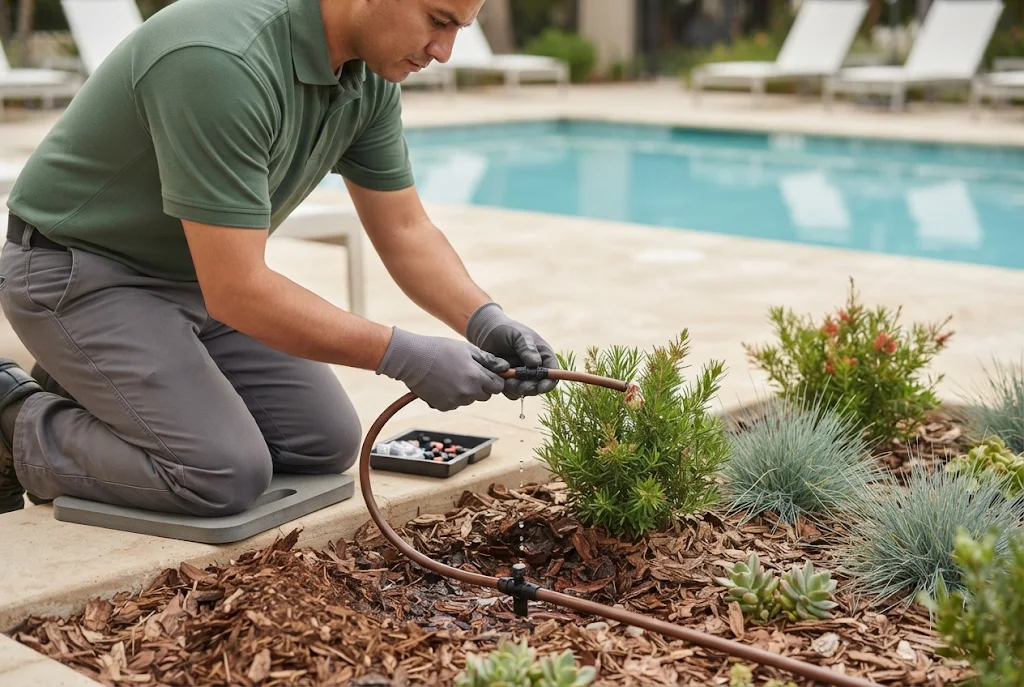
Pool areas usually rely on drip or low-volume spray to keep water off decks and furniture. Emitters there clog, get kicked loose, or disappear under mulch and leaf litter. We confirm that emitters are flowing at the plants they serve and that spray heads near the deck are not wetting loungers, towels, or walkways.
Parking-Lot Islands
Islands take hits from bumpers, bake in summer heat, and are easy to overlook because guests pass them quickly. A broken head in an island often sprays straight across the drive aisle, and it can run that way for days before anyone reports it. We check islands on every visit for that reason.

Free Estimates on Commercial Irrigation Maintenance for Hotels
Tell us which landscaped areas you want covered, which zones have been giving your team trouble, and when we can access the grounds. We will walk the property with your engineering lead and prepare a free estimate for recurring maintenance. Call (888) 601-1117 or email info@landscaper-near-me.com.
What We Check During Hotel Irrigation System Inspections
Hotel irrigation system inspections are the backbone of commercial irrigation maintenance for hotels, and they are only useful if they test the system the way it actually operates. That means running zones and watching them, not reading the controller screen and assuming the rest is fine. Here is what we look at, component by component.
Sprinkler Alignment and Coverage
Hotel sprinkler system maintenance starts with watching each spray and rotor zone run. We check whether heads stand vertical and sit at grade, whether arcs match the edge of the bed or lawn, and whether neighboring heads overlap enough to avoid dry gaps. Mismatched nozzles within a single zone are a common cause of uneven watering, and we note them for correction.
Damaged, Sunken, and Blocked Heads
Turf grows up around heads, shrubs grow in front of them, and mowers and service carts break them. A head that pops up inside a hedge waters the hedge and nothing behind it. Depending on what each one needs, we clear it, raise it, or flag it for replacement.
Drip Lines and Emitters
Hotel drip irrigation maintenance is mostly about things you cannot see from the walkway. We look for clogged emitters, emitters that have pulled away from the root zone, tubing that is exposed or chewed, leaking end caps, and filters that need cleaning. On a drip zone, a stressed plant next to a healthy one is often the clue that leads to a single blocked emitter.
Valves
Valves can stick open, fail to open, or leak slowly through a worn diaphragm. The signs include a zone that keeps trickling after shutoff, wet soil around a valve box, or a station that does nothing when called. We open and inspect the valve boxes we can reach and report any valve that needs repair or replacement.
Controllers and Sensors
Where a property has one or more controllers, we review programs, start times, and run times against the current season and confirm that each station is assigned to the area it is supposed to water. Where rain, soil-moisture, or flow sensors are installed, we check that they are connected and responding. We do not assume every hotel has this equipment; we record what is actually present in the site notes.
Warning Signs That a Hotel Irrigation Zone Needs Attention
Facilities teams usually hear about irrigation trouble from someone else first: a guest, a valet attendant, housekeeping, or the water bill. These are the triggers that most often prompt a call, along with what each one tends to point to.
- Overspray at entrances. Usually a misaligned or tilted head or the wrong nozzle, and occasionally pressure too high for the nozzles installed.
- Puddles beside walkways. Low-head drainage after shutoff, a leaking fitting, a valve that does not fully close, or run times longer than the soil can absorb.
- Recurring dry patches. Blocked nozzles, poor head spacing, a head hidden behind a plant, or a drip emitter that has stopped flowing.
- Zones that fail to run. A wiring fault, a failed solenoid, a programming error, or a valve problem.
- Zones that will not shut off. Often a valve stuck open or debris holding the diaphragm. This one deserves a fast response because it wastes water the entire time.
- Unexplained increases in irrigation water use. A hidden leak, a broken lateral, a program change nobody recorded, or a zone running more often than intended.
Hotel Irrigation Leak Detection
Leaks rarely surface where they start. Water can follow a pipe trench and appear several feet away, or soak into a deep planter without ever puddling. When a property has a dedicated irrigation meter, checking it while every zone is off shows whether water is still moving through the system. Where flow sensors are installed, their alerts can narrow the problem to one zone. Without those tools, hotel irrigation leak detection is methodical work: run zones one at a time, look for soft ground, unusually lush growth, or settling soil, and isolate sections until the source turns up.
When the concern is less about one leak and more about how much water the grounds use overall, our commercial water management services look at scheduling, efficiency, and water-use trends across the whole site.
Seasonal Irrigation Scheduling for Hotel Grounds
The right run time in July is rarely the right run time in January. Seasonal irrigation scheduling for hotel grounds means changing how often and how long each zone runs as temperatures, daylight, rainfall, and plant growth shift through the year.
Adjusting for Weather, Plants, and Site Conditions
We revise schedules based on more than the calendar. Shade that moves with the sun’s angle, slopes that shed water before it soaks in, compacted soil on heavily used event lawns, and new plantings that need extra water until they establish all change what a zone requires. Plant type matters too. Turf, shrubs, and succulents on separate zones can each be scheduled for what they actually use. When a mixed zone makes that impossible, we note it as a candidate for a future change instead of overwatering everything on it.
Southern California’s rainy season is short and irregular, so pausing schedules after meaningful rain and resuming them once the soil dries keeps the system from watering wet ground. Where a rain sensor or weather-based controller is installed, we make sure it is doing that job. Where one is not, those adjustments happen during our visits or through your engineering staff.
Coordinating With Engineering, Guest Traffic, and Events
Scheduling on a hotel property is as much about people as plants. We work with your engineering team to set watering windows that avoid peak arrival and departure times, outdoor breakfast service, pool hours, and staff walkways. For events, we ask for the calendar ahead of time so lawn zones can be adjusted before setup and paused where needed. Inspection visits are planned the same way, at times when the zones we need to test can run without spraying anyone.
Confirming Local Watering Rules
Water providers can set rules on watering days, hours, and run times, and those rules can change with supply conditions. Properties across our territory are served by different providers, so we confirm the rules that apply to your property with its water provider before building a schedule around them, rather than assuming one set of restrictions fits every site.
Overspray, Puddles, or Dry Patches?
Let's Trace Them Zone by Zone
Wet walkways at the entrance, a dry stripe on the event lawn, or a water bill that jumped without explanation usually trace back to specific zones. We will inspect the affected areas, document what we find, and give your team a prioritized repair list to approve.
How Zone Maps and Maintenance Records Help Hotel Facilities Teams
An irrigation system that only one person understands is a liability for any hotel. When that person changes jobs, the knowledge leaves with them. Good records keep the system understandable no matter who is on shift.
Zone Maps
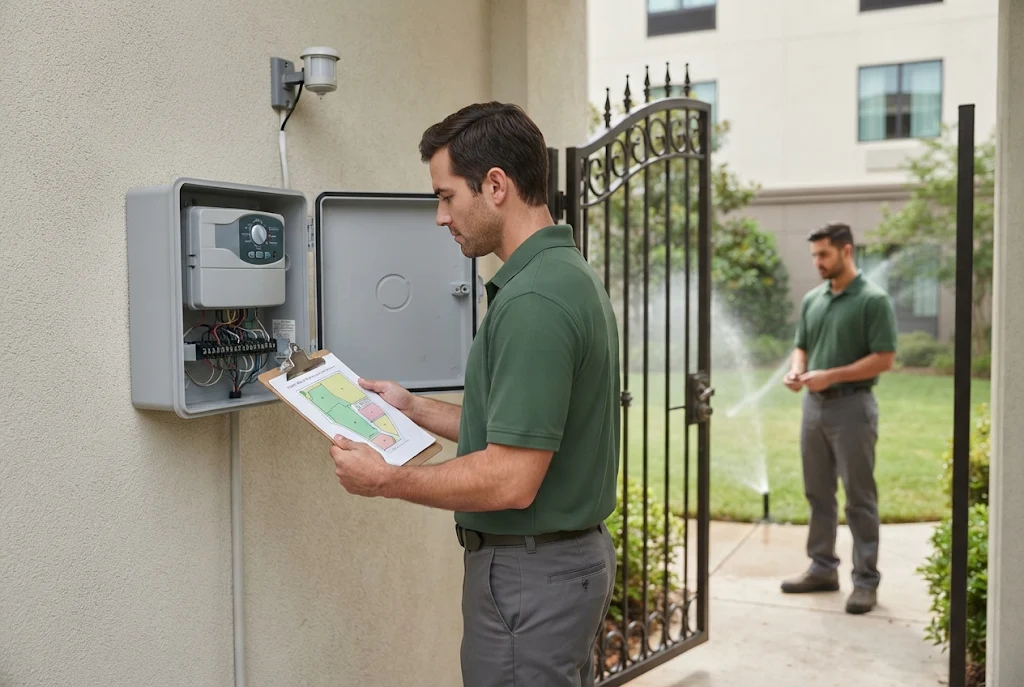
A zone map shows which controller station and valve serve each area, where the valves are buried, and whether each zone is spray, rotor, or drip. Plenty of properties have no current map, or one that stopped matching the site several renovations ago. We build or update a working map during the first visits and keep revising it as we learn the system. That map is what lets an engineer answer, at seven in the morning, which zone is soaking the valet lane and where to shut it off.
Inspection Notes and Repair Priorities
After each visit, your team should receive a summary of what was checked, what was adjusted, and what still needs attention. We organize findings by zone and assign each a priority, separating issues that affect guest safety or waste water from cosmetic items that can wait. That speeds up approvals, because the person signing off can see why one repair is urgent and another can roll into the next budget cycle.
Tracking Recurring Faults
Follow-up records reveal patterns a single visit misses. If the same head beside the drive is replaced three times in a year, the answer may be moving it or protecting it, not replacing it a fourth time. If one courtyard zone keeps appearing in leak notes, that history can justify a closer look at the lateral line. A written record turns recurring faults into decisions your team can approve with evidence behind them. Some properties also keep an irrigation maintenance checklist for hotel facilities managers so in-house staff know what to watch for between our visits.
Questions to Settle Before You Sign a Hotel Irrigation Maintenance Agreement
Hotel irrigation maintenance services vary widely in what they include, so comparing proposals means comparing scope, not just the monthly number. These are the questions we suggest engineering and procurement teams answer before choosing a provider.
How Often Will Someone Inspect the System?
Visit frequency should reflect the size of the property, the number of zones, how hard the grounds are used, and the time of year. A small extended-stay property with a handful of zones may need fewer visits than a resort with several courtyards and event lawns. Ask whether frequency changes by season, and whether every zone is run on every visit or zones are rotated.
Which Adjustments Are Included?
Get clear on what the recurring fee covers: head adjustments, nozzle cleaning, minor drip fixes, and schedule changes. Ask how parts are billed and whether small repairs found during a visit are included or quoted separately.
How Are Repairs Approved?
Agree in advance on an approval threshold and on who signs off. A clear process prevents delays on urgent fixes and surprise invoices on larger ones.
What Will the Reporting Look Like?
Ask to see a sample report. You want findings by zone, clear priorities, and a history that builds over time, not a one-line note that service was performed.
How Does Irrigation Fit With the Rest of the Grounds Work?
Preventive irrigation maintenance for hospitality properties works best when it is coordinated with mowing, pruning, and bed care, because those crews are often the ones who damage or bury heads. Resort landscape irrigation maintenance in particular overlaps with planting changes and seasonal color rotations. If you want irrigation handled alongside the rest of the landscape, our commercial landscape maintenance services cover recurring grounds care, and hotel landscape maintenance services can be scoped to include irrigation checks on every visit.
Requesting an Estimate for Commercial Irrigation Maintenance for Hotels
An accurate estimate starts with a few details about the property. Sharing them up front lets us plan the site walk and come prepared with the right questions.
- Property location and type: hotel, resort, or extended-stay
- Landscaped areas to include: arrival drive, entrances, courtyards, event lawns, pool areas, parking islands, and slopes
- Known system details: number and location of controllers, approximate zone count, any drip, rain, or flow sensors, and whether a zone map exists
- Problem zones: areas with overspray, puddling, dry patches, or zones that misbehave
- Access restrictions: hours we can work, areas that require an escort, event blackout dates, and vendor check-in procedures
- Water-use concerns your engineering or finance team has already noticed
From there, we walk the grounds with your team, run representative zones, and prepare a proposal that spells out visit frequency, what is included, how repairs are approved, and what reporting you will receive. The estimate is free and carries no obligation.
Landscaper-Near-Me.com provides Commercial Irrigation Maintenance for Hotels throughout our established service territory in Southeast Los Angeles County and Orange County. If your property is in that region, call (888) 601-1117, email info@landscaper-near-me.com, or request a callback, and we will set a time to look at the system with you.
Irrigation Maintenance Your Engineering Team Can Track
Zone maps, written inspection notes, and repair priorities after every visit, scheduled around your guests and events. Call (888) 601-1117 or request a callback to talk through visit frequency, approvals, and reporting for your hotel grounds.
The questions below cover details hotel engineering and facilities teams often raise when evaluating recurring irrigation maintenance. If yours is not answered here, call (888) 601-1117 or email info@landscaper-near-me.com and we will answer it directly.
FAQ's - Frequently Asked Questions
Yes. Most of the systems we maintain were installed by someone else. The first visits take longer because we are learning the layout, confirming which stations serve which areas, and building or updating the zone map. After that, routine visits settle into a predictable rhythm.
Yes. We plan visits with your engineering team around arrivals, departures, pool hours, and events. Because coverage has to be watched while a zone runs, we generally need enough daylight to see the spray pattern, so we look for times that balance visibility with low guest traffic in each area.
It can help, but we do not promise a specific result. Fixing leaks, stopping overspray, and matching run times to the season reduce wasted water, and those savings depend on the condition of the system, the weather, and how the grounds are used. We document changes so your team can compare water use over time.
Yes, and we prefer to. Your engineers are on site every day and often notice problems first. We share zone maps and findings with them, explain where to shut off a zone if needed, and coordinate on repairs they would rather handle in-house.
Turn the zone off at the controller first. If it keeps running, the valve is likely stuck open, and the zone or the irrigation supply may need to be shut off at a valve. The zone map we provide shows those locations. Then contact us so we can schedule the repair.
No. Conversions, controller replacements, new zones, and other upgrades are separate projects with their own proposals. We may recommend them when maintenance records show a recurring problem, but they are never folded into a maintenance fee without your approval.
No. Our work is limited to outdoor landscape irrigation: the controllers, valves, sprinklers, drip lines, and sensors that water turf, planting beds, and trees. Pool equipment, fountains, and decorative water features are handled by specialists in those systems.
We serve hotels, resorts, and extended-stay properties within our established service territory in Southeast Los Angeles County and Orange County. If you are not sure whether your property falls within that area, call us and we will let you know.