
Commercial Landscape Construction Services
for New Developments and Property Renovations
A finished building with bare dirt around it is not a finished project, and a twenty-year-old landscape that no longer fits the property will not fix itself through better mowing. Both situations call for the same thing: a defined piece of construction work that puts new planting, turf, irrigation, and supporting landscape features in the ground. That is what our Commercial Landscape Construction Services are built around.
Landscaper-Near-Me.com installs and rebuilds landscapes for office buildings and business parks, retail centers, industrial and warehouse properties, apartment communities, mixed-use developments, and HOA common areas. Some projects start from a set of landscape plans on a new development. Others start with a property manager pointing at a tired entry and asking what it would take to replace it. Either way, the work has a beginning, a defined scope, and a handover at the end, which is what separates it from the recurring care covered by our commercial landscape services.
This page is written for the people who commission that work: owners, property and facility managers, developers, builders, general contractors, multifamily ownership groups, and HOA boards. It explains what landscape construction includes, how we assess a site and define scope, how planting, hardscape, and irrigation are coordinated, how we work around tenants and other trades, and what shapes an estimate.
What Do Commercial Landscape Construction Services Include?
Commercial landscape construction is the project-based installation or rebuilding of a property’s outdoor landscape areas. It covers the work of turning a plan, or a clearly described goal, into planted ground: preparing the soil, setting trees and shrubs, building planting beds, installing turf where it makes sense, tying in irrigation, and integrating the walkways and edges that frame the planting. When the work is done, the property has a new or substantially improved landscape that is ready to be maintained.
Depending on the project, the scope can include:
- Removal of existing turf, plants, and worn-out landscape materials
- Landscape-related site preparation, fine grading of planting areas, and soil preparation
- Tree, shrub, and groundcover planting
- Planting bed construction, edging, and mulch
- Sod installation in areas where turf serves a real purpose
- Irrigation installation, modification, and integration with existing systems
- Landscape-related hardscape such as walkways, pavers, and bed edging
- Establishment care instructions and transition planning for ongoing maintenance
New Construction Landscaping for Commercial Properties
On a development project, the landscape is one of the last trades on site and one of the first things anyone sees. New construction landscaping for commercial properties means installing the landscape portion of that project: the planting, turf, landscape irrigation, and related features shown on the landscape plans. Grading of the overall site, civil and drainage engineering, utilities, structures, and paving outside the landscape areas belong to other trades. Our role is to build the landscape well within the conditions those trades leave behind, and to coordinate closely enough that the hand-off between them is clean.
Commercial Landscape Renovation and Improvements
A larger share of commercial projects involve properties that already have a landscape. Commercial landscape renovation replaces a landscape that has aged out, declined, or stopped matching how the property is used. Commercial landscape improvements are usually narrower: rebuilding an entry, converting a strip of struggling lawn to planting, replacing overgrown foundation shrubs, or redoing the beds around a monument sign. Renovation work comes with its own considerations, including what to keep, what the existing irrigation can support, and how to work while the property stays open.
How Is Landscape Construction Different From Landscape Design and Maintenance?
The three services overlap on the same ground, but they answer different questions. Design decides what the landscape should be. Construction builds it. Maintenance keeps it in condition once it exists. Knowing which one a project needs helps a property team ask for the right thing and compare proposals fairly.
Design Sets the Plan
Landscape design establishes layout, plant palette, materials, and how planting areas relate to the buildings and circulation around them. On larger developments, a landscape architect or other design professional typically prepares the plans, and those documents may be part of the permitting package. On smaller renovation projects, the plan may be a simpler layout and plant list developed with the owner. Our landscape design and installation page covers how design and installation are handled together when a property needs both.
Construction Implements a Defined Project
Construction starts once there is something specific to build. The questions shift from “what should go here?” to “how do we prepare this soil, where does this lateral line run, which areas go in first, and how do we protect them?” This page is centered on that stage: implementing a defined commercial landscape project accurately, in a sensible sequence, with the responsibilities written down before work begins.
Maintenance Protects the Result
Maintenance is the recurring work that follows: pruning, bed care, turf care, irrigation checks, and seasonal adjustments. It does not rebuild a landscape, and a declining landscape usually reaches a point where more frequent maintenance only slows the decline. Recognizing that point is often what moves a property from maintenance discussions into construction planning.
When Does a Commercial Property Need a Landscape Construction Project?
Most landscape construction projects begin with a specific event or a problem that routine care cannot solve. The common triggers we see include:
- A new building nearing completion. The structure is close to occupancy and the landscape shown on the plans still needs to be installed.
- Tenant improvements that reach the exterior. A new storefront, a relocated entrance, an added patio, or a reconfigured parking area can leave adjacent landscape areas torn up or no longer making sense.
- Outdated planting layouts. Shrubs planted decades ago have outgrown their space, block windows and signage, or crowd walkways, and pruning can no longer bring them back into scale.
- Deteriorated landscape features. Broken edging, failed bed borders, eroded mulch areas, and patchy turf signal that the landscape needs rebuilding rather than repair.
- Underused outdoor space. A courtyard nobody uses, a side yard that collects debris, or a wide lawn strip that costs water and labor without serving anyone can often be redeveloped into something more useful.
- Water-use and appearance goals. Owners and boards sometimes decide that the current landscape uses more water or labor than they want to keep paying for, and choose to replace it with planting better suited to the site.
Not every trigger means a full replacement. Part of our job during an early site visit is to separate the areas that need construction from the areas that only need better care, so the scope stays focused on what actually has to be rebuilt.

Free Estimates for Commercial Landscape Installation and Renovation
Tell us about the property and the landscape work you are planning. We will review the site and any plans, then prepare a free estimate that spells out planting, preparation, irrigation, and what is included.
What We Evaluate Before Scoping a Commercial Landscape Project
Reliable commercial landscape construction services start with what is actually on the ground. Plans describe intent; the site tells us what the installation will have to work with. Before we price a project, we walk the areas involved and look at the conditions that most often change how the work is done.
Existing Landscape Conditions
On renovation work, we note what is healthy, what is failing, and why. A bed full of declining shrubs may point to poor drainage, irrigation that never reached it, or plants that were simply wrong for the exposure. Understanding the cause keeps the new landscape from repeating it.
Sunlight and Exposure
Building shadows, reflected heat from glass and paving, and wind through breezeways create very different growing conditions on the same property. A north-facing entry and a south-facing parking island rarely suit the same plants, and we note those differences area by area.
Soil Condition and Drainage Patterns
Commercial soils are often disturbed, compacted by equipment, or mixed with construction debris. We look at how the soil handles water, where runoff collects, and whether planting areas drain away from buildings and walkways. Where soil testing would help guide amendments, we say so rather than guessing.
Irrigation Infrastructure
On existing properties, we check the controller, valves, zones, and coverage in the affected areas. On new construction, we confirm where the point of connection and main line are planned and how far landscape irrigation work extends. Either way, the irrigation has to match the planting that will go in, not the planting that came out.
Access Constraints and Features to Preserve
We note how equipment and materials can reach each area, where staging is realistic, and what must be protected: mature trees worth keeping, recently replaced hardscape, lighting, signage, utility boxes, and anything the owner considers part of the property’s character.
How Is the Scope of a Commercial Landscape Project Defined?
Scope is the written agreement about what will be built, with what materials, and who is responsible for what. On commercial projects, a clear scope protects everyone: the owner knows what is included, the property manager knows what to expect on site, and any other trades know where our work begins and ends.
We build the scope from the information available for the property:
- Available plans. Landscape and irrigation plans, site plans, and any approved planting palette or specifications.
- Site measurements. Planting areas, turf areas, bed edges, and irrigation zones measured or confirmed on site.
- Owner priorities. Appearance at entries, reduced water use, lower maintenance demand, tenant expectations, or HOA architectural guidelines.
- Material selections. Plant species and container sizes, mulch type, edging, turf variety, and irrigation components.
- Inclusions and exclusions. What we install, what we remove and haul away, and what is handled by others.
Inclusions, Exclusions, and Responsibilities
Exclusions deserve as much attention as inclusions. Common examples include permit fees, design services, electrical work for controllers or lighting, repairs to concealed utilities, rough grading outside landscape areas, and watering after the handover date. Spelling these out before work begins prevents the disagreements that tend to surface during the final walkthrough.
Developers and general contractors who issue bid documents get more comparable proposals when those documents state plant sizes, irrigation scope, soil preparation requirements, and maintenance-period expectations. Property managers soliciting proposals on their own benefit from the same discipline, and understanding how to prepare a commercial landscape construction bid package makes it easier to compare commercial landscape contractors on the same terms rather than on whichever assumptions each bidder made.
Commercial Softscape Installation: Planting Beds, Trees, Shrubs, and Turf
Softscape is the living part of the landscape, and on most projects it is the largest share of the work. Commercial softscape installation covers planting beds, trees, shrubs, groundcovers, mulch, and turf, all installed to suit the site conditions and the way each area will be used.
Site and Soil Preparation
Preparation usually decides how a planting performs more than the plants themselves do. In general terms, that means clearing debris and unwanted vegetation, relieving compaction where equipment has worked, shaping planting areas so they drain, and incorporating amendments when the soil calls for them. Where planting areas connect to broader site grading or storm drainage, we coordinate with the project’s design professionals and other trades rather than altering those systems on our own.
Planting Beds, Groundcovers, and Mulch
Beds are laid out to the plan or the agreed layout, edged to keep their shape, planted at spacing that accounts for mature size, and finished with mulch to reduce weed pressure and moisture loss. Our landscape bed design and installation page goes further into bed layout and construction for properties focused on that part of the work.
Tree and Shrub Planting
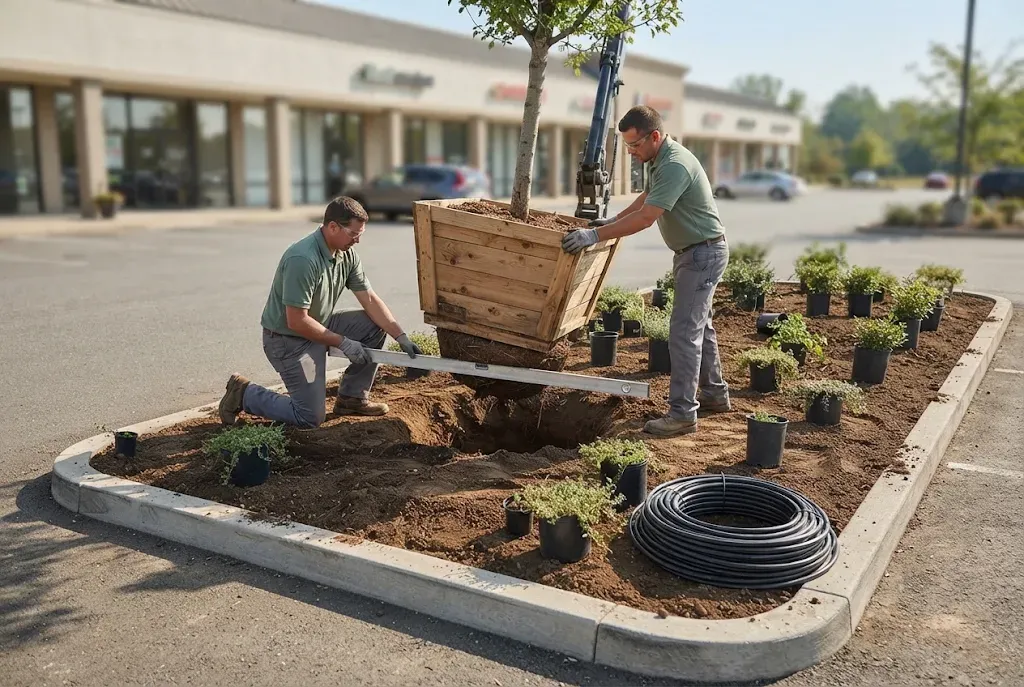
Trees are set at the proper depth with the root flare at or slightly above grade, in holes wider than the root ball, and staked only when they need support. Shrubs are positioned with their mature spread in mind, so they will not crowd walkways, cover signage, or block sightlines at driveways a few years from now. Commercial planting installation done this way costs little more up front and avoids years of corrective pruning.
Turf Where It Serves a Purpose
Turf earns its place where people actually use it, such as a gathering lawn at an apartment community or a usable open area at an office campus. Narrow strips and slopes that are hard to irrigate evenly are usually better as planting. Where lawn is part of the plan, our commercial sod installation page covers preparation and establishment in more detail.
Matching Plants to the Site and Its Future Care
Plant and material choices are weighed against exposure, mature size, water needs, durability near foot and vehicle traffic, visibility from entries and the street, and the maintenance each choice will demand later. A plant that looks right on installation day but needs frequent shearing to stay in bounds is a maintenance cost the property will pay every year. Grouping plants with similar water needs also makes irrigation scheduling simpler and more efficient.
Have Plans or Just a Rough Idea?
Let's Turn It Into a Defined Scope
We assess sun, soil, drainage, irrigation, and access on site, then help you settle plant selections, materials, and responsibilities before any work is priced or scheduled.
How Hardscape Features and Irrigation Fit Into the Installation
Planting rarely stands alone. It sits against walkways, pavers, curbs, and edging, and it depends on irrigation that has to be in place and working before plants go in. Coordinating those pieces is a large part of what makes a commercial property landscape installation look finished.
Walkways, Pavers, and Landscape Edging
Where the scope includes supported hardscape features, we plan them together with the planting so grades meet cleanly, mulch and soil stay off walking surfaces, and edges hold their line. Sequencing matters: hardscape generally goes in before adjacent planting so finished beds are not disturbed by base work. Material choices and construction methods for these features are covered on our hardscape design and installation page.
Irrigation Coordinated With Planting and Turf
Irrigation and planting are scheduled as one sequence. Lines and valves go in after rough preparation, emitters and heads are set or adjusted to match final plant locations, and the system is tested before planting areas are closed up. On renovations, we confirm whether existing zones can be reused, need modification, or should be converted so that drip-irrigated beds and spray-irrigated turf are not sharing a valve. Our irrigation construction page explains new system installation in more depth, and properties with ongoing system needs can review our commercial irrigation services.
Water-Efficiency Requirements and Water Management
For California properties, new and rehabilitated landscapes above certain size thresholds generally fall under the state’s water-efficiency rules, as adopted or modified by the local agency. The California Department of Water Resources overview of the Model Water Efficient Landscape Ordinance explains how the ordinance applies to new development and retrofitted landscapes. Where a project is subject to these requirements, the plans and documentation are typically prepared by the project’s design professional, and we install to those documents. After installation, our commercial water management services can help keep irrigation schedules and usage aligned with the new planting as it matures.
Landscape Construction for Occupied Commercial Properties and Active Job Sites
Most commercial landscape construction happens on properties that cannot shut down for it. Tenants still need their entrances, customers still need to park, residents still walk their dogs, and on a new development, other trades are often still finishing their work. Planning for those conditions is part of every scope we write for commercial landscape construction services, not an afterthought.
Working Around Tenants, Customers, and Residents
Before mobilizing, we work with property management to identify:
- Entrances, walkways, and accessible routes that need to remain usable or have a planned alternate
- Delivery routes, loading areas, and fire lanes that cannot be blocked
- Where materials and equipment can be staged without taking prime parking
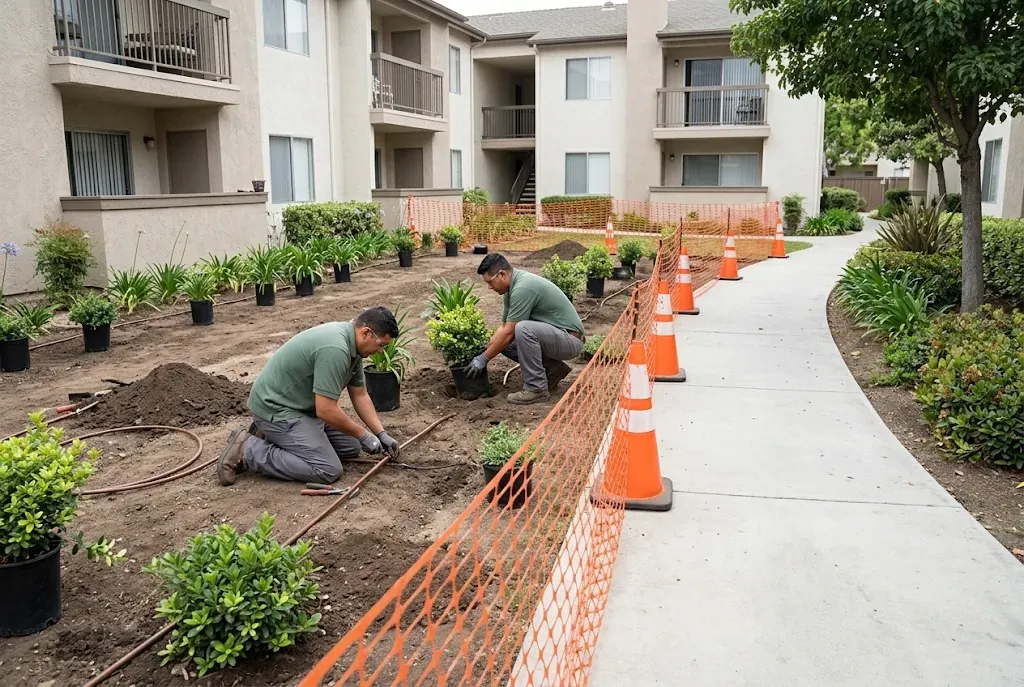
- How work areas will be separated with fencing, barricades, or cones
- Quiet hours, business hours, and any days when work should not occur
- Who on the property team receives schedule updates and notices for tenants or residents
Phased Commercial Landscape Installation
Phasing splits a project into areas that can be completed and reopened one at a time. A retail center might start with the parking islands farthest from storefronts and finish at the main entry. An apartment community might rebuild one courtyard while the others remain open. HOAs often phase work to match a board-approved budget across more than one fiscal period. Phasing reduces disruption, but it does not eliminate it, and it can extend the overall duration and add mobilization costs. Each phase also has to leave irrigation working in the areas that are not yet under construction. We plan phases realistically and adjust them when weather, material availability, or property needs change, rather than committing to an access plan or completion date that conditions may not allow.
Coordinating With Builders and Other Trades
On new construction, the landscape is installed in a space shared with concrete, paving, electrical, and finish trades. We coordinate with the builder or general contractor on sequencing so that irrigation sleeves are in place before paving, finish grades in planting areas are established before we start, and our work begins when heavy equipment traffic in those areas is largely complete. Completed landscape areas are vulnerable to vehicles, foot traffic, and wash-out from other trades, so protection and responsibility for damage after installation should be agreed in writing.
Commercial Landscape Construction Estimates, Completion, and Handover
Our commercial landscape construction estimates are built from the scope, the site conditions, and the way the work will need to be sequenced. Two projects of similar size can price very differently, and the reasons are usually visible on site.
What Affects the Cost and Timing of a Project
- Project area. Total square footage of planting, turf, and hardscape areas.
- Site condition. Debris, compaction, poor soil, or an existing landscape that has to be removed first.
- Preparation requirements. The extent of clearing, fine grading, and soil amendment.
- Plant quantities and sizes. Larger container sizes and boxed trees cost more and take more labor and equipment to set.
- Hardscape scope. Linear feet of edging, square footage of walkways or pavers, and their base requirements.
- Irrigation work. New installation, conversion of existing zones, or controller and valve changes.
- Access. Distance from staging to work areas, equipment limitations, and restricted hours.
- Phasing. Multiple mobilizations and the protection of areas between phases.
Those commercial landscape construction cost factors also drive timing. Material lead times, weather, inspection schedules on permitted projects, and the progress of other trades can all move a start or finish date, which is why we discuss timing as a range tied to conditions rather than a fixed promise.
Information That Helps Us Prepare an Estimate
The more we know at the start, the more accurate the first estimate will be. Helpful information includes the property location, photographs of the areas involved, any available landscape or irrigation plans, a description of the improvements you have in mind, the approximate size of the project, and your preferred timing or budget period.
Completion Review, Cleanup, and Initial Irrigation Checks
At the end of installation, we walk the completed areas with the owner or property representative to review the work against the scope and note any items to address. Cleanup includes removing excess materials, debris, and packaging and leaving walkways clear. We run the irrigation zones in the new areas to confirm coverage and operation, and we review controller settings for establishment. Property teams that want a structured way to run that walkthrough can use a commercial landscape installation inspection and handover checklist to confirm each area, zone, and open item before sign-off.
Establishment Care and the Transition to Maintenance
New plantings need closer attention than established ones, particularly in watering, during their first weeks and months. We provide establishment care information covering watering expectations, what to watch for, and how the irrigation schedule should change as plants root in. Whoever maintains the property after handover should receive that information. If you would like the same team to carry the new landscape forward, our commercial landscape maintenance services can begin where the installation ends.
Starting Your Commercial Landscape Construction Project
Whether you are finishing a new building, planning a phased renovation of an occupied property, or replacing one tired entry, the first step is a conversation about the site and what you need it to do. As a commercial landscape construction company focused on getting the planting, irrigation, and supporting features right, we will walk the property, review any plans, and prepare a free estimate with clearly stated inclusions and exclusions. Call (888) 601-1117, email info@landscaper-near-me.com, or request a callback to get started.
Talk Through Your Commercial Landscape Construction Project With Our Team
From a new development to a phased renovation of an occupied property, we are ready to discuss sequencing, timing, and handover. Call (888) 601-1117, email info@landscaper-near-me.com, or request a callback.
The questions below cover details owners, managers, and builders often raise once a landscape project moves from an idea toward a proposal. If something specific to your property is not answered here, we are glad to talk it through at (888) 601-1117 or info@landscaper-near-me.com.
FAQ's - Frequently Asked Questions
Yes. On development projects we install the planting, turf, landscape irrigation, and related landscape features, while site grading, utilities, structures, and paving outside landscape areas remain with the builder and other trades. We coordinate sequencing so our work starts once the areas are ready.
Yes. When a design professional has prepared landscape and irrigation plans, we install to those documents and raise any field conditions that conflict with them before proceeding. If a substitution is needed because a specified plant is unavailable, we discuss alternatives with you and the designer first.
Often, yes. We identify trees and plants worth saving during the site assessment and plan around them, including protecting root zones from equipment and keeping irrigation running to them. Some plants are not worth keeping because of their condition or location, and we will tell you which ones.
It depends on project size, site preparation, plant sizes, irrigation work, phasing, and access. A small entry renovation may take days, while a full development or multi-phase renovation can extend over weeks or longer. We provide a working timeline with the estimate and update it as conditions change.
Plant establishment depends heavily on watering and care after handover. Any coverage for plant replacement, and the conditions attached to it, should be written into the proposal before work begins. We review those terms with you so expectations are clear from the start.
Many trees and shrubs establish more easily when planted during cooler months, when water demand is lower. Construction schedules do not always allow that, so we adjust plant selection, watering plans, and sequencing to fit the timing the project actually has.
Some will. Requirements depend on the local agency, the size of the landscape area, and whether the project is new construction or a rehabilitation. The owner or the project’s design professional typically handles permit applications, and we install to the approved documents.
When it is part of the scope, yes. Removal of turf, plants, roots, old mulch, and worn edging, along with hauling and disposal, is listed in the estimate so you can see exactly what is included before approving the work.