
Flower Bed Installation for Front Yards, Entries, and Garden Borders
A strip of bare soil beside the front walk, a tired patch of lawn by the porch steps, a fence line that never seems to look finished. These are the spots where a well-planned bed of flowers changes how a property feels, and they are the spots where hurried planting most often disappoints. Flowers set into unprepared ground, crowded together, or placed where the sun and water do not suit them tend to look good for a few weeks and then fade out.
Our flower bed installation work is built around avoiding that outcome. We look at the location first, then plan the bed’s shape, plant choices, and spacing around the sunlight, soil, and water that are actually available. From there we prepare the ground, plant annuals, perennials, or a combination of the two, finish the bed with mulch, and explain what the new plants will need while they settle in.
This page is for homeowners and residential property owners planning color beds for front yards, entries, walkway borders, and backyard accents. Small commercial property owners, property managers, and HOA representatives with a defined ornamental planting project will find that the same planning and preparation steps apply. Landscaper-Near-Me.com provides flower bed installation services across our established service territory in Southeast Los Angeles County and Orange County, and every project starts with a free estimate.

Plan Your New Flower Bed With a Free Estimate
Tell us where you want color, whether beside the front walk, at the entry, or along a backyard border, and we will look at the sun, soil, and water in that spot before recommending flowers. Call (888) 601-1117 to request a free estimate for your flower bed installation.
What Is Included in Professional Flower Bed Installation?
Flower bed installation means preparing a designated area for ornamental flowering plants and then planting it, along with the layout, soil work, and finishing steps that area needs to succeed. The flowers are the visible result. Most of the effort that determines whether they thrive happens before the first plant comes out of its nursery pot.
Depending on the site and the agreed scope, a project can include:
- Marking out the bed shape and confirming its size
- Removing turf, weeds, old plants, rocks, or debris from the planting area
- Loosening compacted soil and adding amendments where they are warranted
- Selecting and arranging annuals, perennials, or both
- Planting at appropriate depth and spacing
- Coordinating with the irrigation already serving the area
- Applying mulch and tidying the bed edge
- Explaining establishment care for the first weeks
New Beds Versus Planting an Existing Bed
Many projects fall into one of two situations. A new flower bed installation creates planting space where there was none, usually by converting part of a lawn or a bare, unplanted area. That involves removing existing vegetation, preparing soil that may never have been cultivated, and establishing a clear edge. The second situation is an existing bed that has already been cleared, where the work centers on soil condition, plant selection, and planting. Both are installation projects, and both differ from routine upkeep.
How Installation Differs From Related Work
Ongoing care, such as weeding, deadheading, and replacing an occasional plant, is maintenance rather than installation. At the other end, a planting area choked with old shrubs, failing irrigation, and tangled roots may call for renovating an overgrown flower bed or a broader cleanup before any new flowers make sense. Mixed shrub plantings, structural borders, and larger bed layouts are covered on our landscape bed design and installation page. This page stays focused on flowering plants: choosing them, planning when they bloom, preparing the ground for them, and helping them establish.
Where Do New Flower Beds Make the Most Difference?
Flower beds have the most impact where people look, walk, and arrive. On most residential properties that points to four kinds of locations, each with its own planning considerations.
Front Yard Color Beds
A front yard flower bed installation is usually about how the home reads from the street and the driveway. Beds framing a lawn, beneath front windows, or along the foundation are viewed from a distance, so bold color groupings and clear shapes tend to read better than a scattered mix of single plants. Window height and the mature size of each plant matter here, because flowers that grow taller than expected can block views and light.
Entry Planting
Entry beds are seen up close by everyone who comes to the door. Plants here should look tidy at short range, stay clear of the walking surface, and avoid thorny or sprawling habits that brush against visitors. A modest, well-kept entry bed often does more for a home than a large planting that is hard to maintain.
Borders Beside Walkways
Narrow beds along paths and driveways need plants that stay within their width. Low, mounding flowers at the front edge keep the walkway clear, and spacing should allow for the plants’ full spread so they do not spill onto the pavement as they grow.
Backyard Accent Beds
In a backyard, a flower bed often anchors a patio, softens a fence, or gives a seating area something to look at. These beds can be more relaxed in style, but they still need to suit the light and water conditions in that part of the yard.
Residential flower bed installation makes up most of the projects this page describes. The same considerations apply to small commercial entrances and HOA common areas, where visibility, pedestrian clearance, and the property’s maintenance schedule weigh heavily in plant selection.
What Do We Assess Before Planting a Flower Bed?
Before recommending a single plant, we assess the site conditions that will decide what can succeed there. Two beds on the same property can call for very different flowers.
- Bed dimensions. Length, depth, and shape determine how many plants fit, how many layers the planting can have, and whether there is room for taller flowers at the back.
- Sunlight exposure. We note how many hours of direct sun the bed receives and at what time of day. Morning sun and harsh afternoon sun are not interchangeable, and choosing flowers for sun and shade starts with an honest reading of the spot.
- Reflected heat. Beds against south- or west-facing walls, beside driveways, or next to light-colored paving can run noticeably hotter than open ground, which narrows the list of suitable plants.
- Soil condition. Compacted soil, construction fill, heavy clay, or very sandy soil each affect root growth and water movement differently.
- Drainage. Areas where water pools after irrigation or rain can rot many flowering plants, while slopes may shed water before it soaks in.
- Existing roots. Nearby trees and large shrubs compete for water and nutrients and limit how deeply the soil can be worked.
- Irrigation access. We check whether existing sprinklers or drip lines reach the bed and whether they can be adjusted to suit flowers.
- Structures and pedestrian routes. Clearance from walls, windows, walkways, and doorways affects plant height, spread, and placement.
When the assessment shows that the bed needs more than routine adjustment, such as a new irrigation zone, a relocated valve, or controller changes, that work belongs with our irrigation services team and is coordinated with the planting schedule. Sorting these questions out at the start keeps the bed from being planted twice.
Match the Right Flowers to Your Bed's Sun, Soil, and Water
Hours of sunlight, reflected heat, drainage, and irrigation reach decide which flowers will hold up in a given bed. We can assess those conditions with you and build a planting plan around what the site actually offers.
How Do We Plan a Flower Bed Layout That Lasts Beyond the First Bloom?
A good layout anticipates how the bed will look months from now, not just on installation day. Flower bed design and installation work best together because layout decisions depend on what the assessment revealed about light, soil, water, and space.
Bed Shape and Viewing Angles
We start with where the bed will be seen from: the street, the front door, a kitchen window, or a patio chair. Curved edges tend to soften a straight foundation or fence, while clean straight lines can suit a more formal entry. Bed depth matters as well. A bed only a couple of feet deep usually works best with one or two rows of low and medium plants, while deeper beds can step up from front to back.
Mature Size and Spacing
Nursery plants are small compared with their eventual size. Spacing them according to their expected mature width leaves the bed looking a little open at first, but it prevents crowding, reduces disease pressure from poor air movement, and spares you from thinning plants out later. Tall plants generally belong at the back of a border bed or the center of an island bed, with shorter plants toward the edges.
Bloom Periods and Color
Different flowers bloom at different times, and some bloom for weeks while others flower briefly. Combining plants with staggered bloom periods can extend the time the bed shows color, though no planting flowers continuously all year. Color planning also matters: a limited palette repeated through the bed often looks more deliberate than many colors placed once each. Foliage color and texture help carry the bed between bloom cycles.
Access for Future Care
Someone will need to reach every plant for weeding, deadheading, and checking moisture. In deeper beds, we leave room to step in without crushing plants, or we arrange plantings so the back row can be reached from behind. If the flower bed is one part of a larger yard redesign that includes lawn, shrubs, and new layout, our landscape design and installation service is the better starting point.
Annuals, Perennials, or a Mix: Which Is Right for Your Flower Bed?
The choice between annuals and perennials comes down to how often you want to replant, how the bed should look through the seasons, and how much care you plan to give it. Annual and perennial flower planting can also be combined in the same bed.
Annuals
Annuals complete their life cycle within a single growing season. Many bloom heavily for a period and then decline, so they are typically replaced one or more times a year to keep the bed in color. That makes annuals a good fit for high-visibility spots where you want strong, consistent seasonal color and do not mind periodic replanting. Homeowners who like changing color each season sometimes plan around seasonal flower planting services for that reason.
Perennials
Perennials live for more than two years. They are not replaced each season, but they still need attention: cutting back, dividing some kinds as they spread, and replacing individual plants that decline. Many perennials have a defined bloom season and spend the rest of the year as foliage, so a perennial bed’s appearance changes noticeably over the course of a year.
Combining Both
A common approach is a backbone of perennials with a few pockets reserved for annuals. The perennials provide structure and longer-term presence, while the annual pockets allow seasonal color changes without replanting the whole bed.
Matching Plants to Site, Water, and Care
No flowering plant suits every yard. We match selections to the bed’s sun and heat exposure, soil and drainage, local climate, available irrigation, and the level of maintenance you are prepared to give the bed. A bed planned for low care should not be filled with flowers that need frequent deadheading to look their best. Where water use is a priority, we lean toward plants suited to drier conditions and plan to group them accordingly.
How Do We Prepare the Soil and Plant a New Flower Bed?
Careful preparation and planting give new flowers the best chance to root in and grow. Professional flower bed planting is mostly about getting these steps right.
Clearing the Planting Area
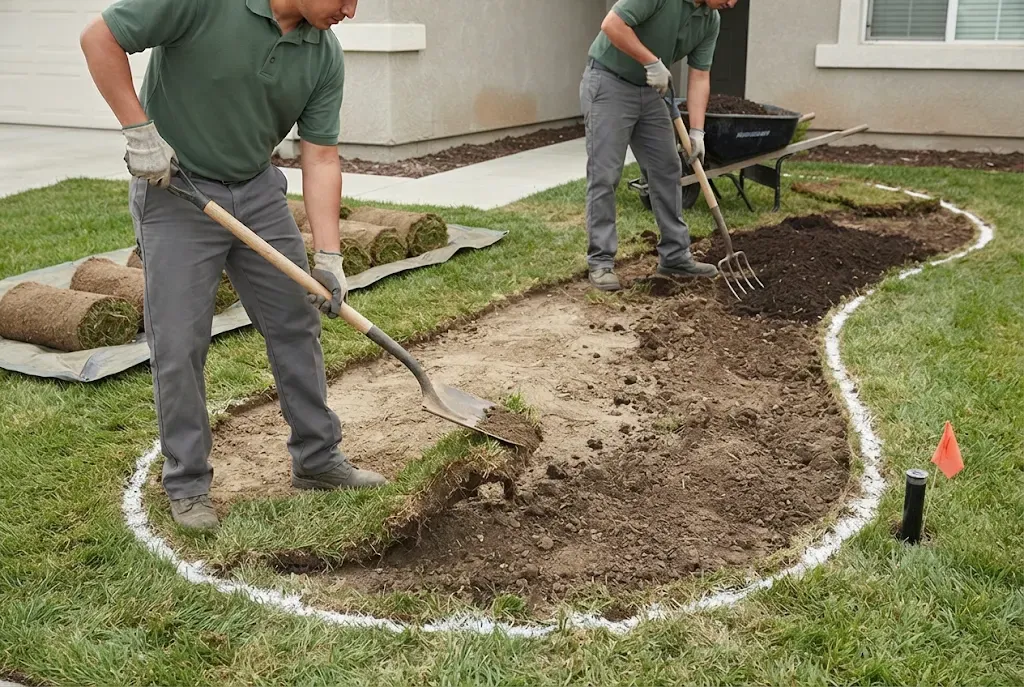
We remove turf, weeds, old plant material, rocks, and debris from the bed. When converting lawn, the grass and its roots need to come out so the turf does not regrow through the new planting. Perennial weeds with spreading roots are worth addressing thoroughly during this stage, because they are much harder to remove once flowers are in place.
Evaluating Soil and Compaction
Flower bed soil preparation starts with checking how the soil behaves. Soil near new construction or along walkways is often compacted, which restricts root growth and water penetration. Loosening the planting zone helps. Whether to add compost or other amendments depends on the existing soil and the plants chosen; many flowering plants benefit from added organic matter, while some drought-adapted plants prefer leaner soil. Where the right decision is unclear, or a bed has a history of plant failure, we may recommend a soil test before amending.
Setting Plants at the Right Depth and Spacing
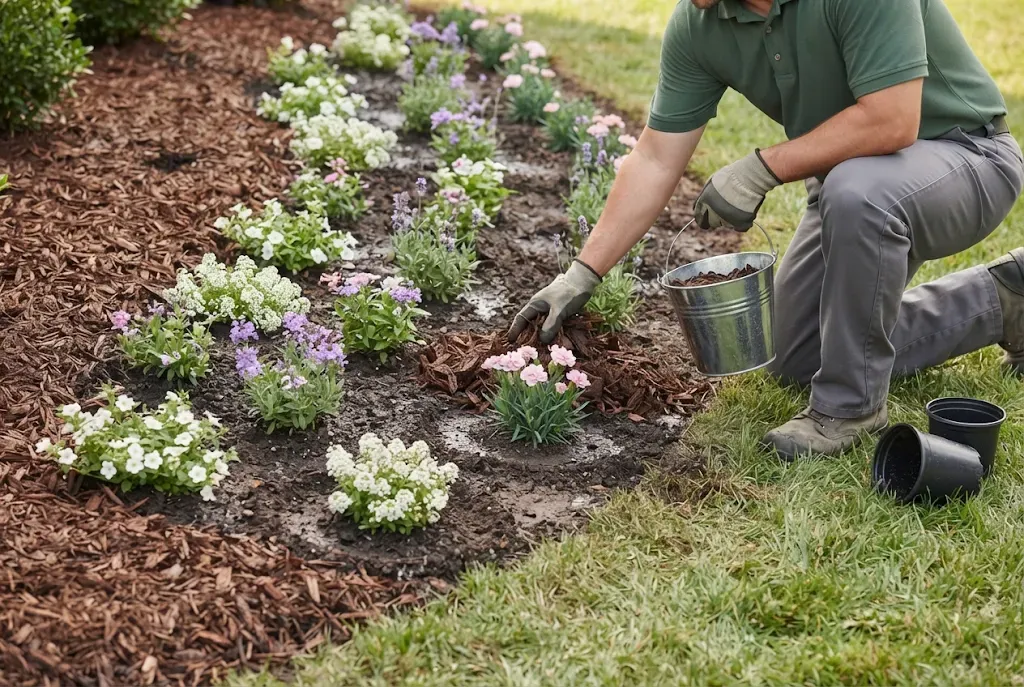
Before planting, we set out the plants in their containers according to the layout and adjust spacing on the ground. Each plant is generally set so its root ball sits at about the same level it grew in the nursery container, without burying the crown where the stems meet the roots. Root balls that are tightly circled may be loosened so roots can grow outward. The plants are then watered in so the soil settles around the roots.
Protecting the Existing Landscape
We work around existing trees, shrubs, sprinkler heads, drip lines, edging, and hardscape. That means avoiding deep digging in tree root zones, marking irrigation components before work begins, and keeping soil and debris off walkways and lawn.
Let Our Crew Prepare, Plant, and Mulch Your Flower Bed
From clearing the ground and loosening the soil to setting each plant at the right depth and finishing with mulch, we handle the full installation and explain how to care for the bed while it establishes. Call (888) 601-1117, email info@landscaper-near-me.com, or request a callback.
How Should a New Flower Bed Be Watered, Mulched, and Edged?
Water, mulch, and a clean edge finish the installation and protect the planting while it establishes. Each should be planned with the flowers in mind rather than added as an afterthought.
Irrigation Compatibility
A flower bed can only be watered one way at a time, so the plants in it should want roughly the same amount. Moisture-loving bedding annuals set beside a lavender or other dry-tolerant perennial force a compromise that leaves one of them stressed, either soggy or parched. We group plants by water needs where possible and check that existing irrigation reaches the bed evenly. Spray heads that once watered lawn can soak flower foliage or overspray onto paving, and some beds are better served by low-volume watering at the soil surface. Where a planting bed needs a new or converted system, we coordinate drip irrigation installation for planting beds as part of the project plan.
Mulch Selection and Placement
Mulch helps conserve soil moisture, moderates soil temperature, and suppresses many weed seeds by blocking light. For most flower beds, an organic mulch such as shredded bark or wood chips suits the planting; the right material and depth depend on the plants and the look you want. Placement matters as much as material. Mulch piled against stems and crowns holds moisture where it can encourage rot, so we keep it pulled back from each plant. The UC Statewide IPM Program’s guidance on landscape mulches explains how mulch suppresses weeds and why organic mulch should be kept back from trunks to help avoid root and crown problems. Flower bed planting and mulching are therefore done as a coordinated step, with mulch spread after the plants are set and watered in.
Edging and Simple Bed Boundaries
A defined edge keeps lawn from creeping into the bed and holds mulch in place. Where a bed already has edging in good condition, we work with it. For new beds, a cleanly cut edge or a simple installed edging can be included in the scope. Structural masonry planters, raised planter construction, and retaining walls are separate construction projects rather than part of flower bed installation itself.
What Happens After Installation, and When Should Planting Be Scheduled?
A newly planted bed is not yet established. The first several weeks decide much of how the planting performs, and the right installation timing depends on the plants and the site rather than one calendar date.
Establishment Care
New plants have small root systems that dry out faster than established roots. During establishment, the bed needs regular checks of soil moisture just below the surface, adjusting watering so the root zone stays moist but not saturated. Other early tasks include:
- Checking plants for wilting, yellowing, or damage and addressing causes early
- Removing weeds while they are small, before they compete with new plants
- Deadheading spent flowers on plants that benefit from it
- Light trimming or pinching where a particular plant’s growth habit calls for it
- Watching irrigation coverage as the plants grow and fill in
We explain what your specific planting needs when the installation is complete. Property owners who prefer not to handle this care can ask about ongoing flower bed maintenance services, and our broader landscape services cover recurring care for the rest of the property.
Installation Timing
There is no single correct planting season for every flower bed. Many annuals are sold and planted for a particular cool or warm season, while many perennials establish more easily when temperatures are moderate rather than at the peak of summer heat. Project readiness matters too: irrigation adjustments, soil preparation, and plant availability all affect when a bed can be planted. We recommend timing based on your plant choices and the conditions at your property, and we avoid planting into a heat wave when it can reasonably be scheduled around.
What Affects Flower Bed Installation Cost, and How Do You Get an Estimate?
Flower bed installation cost depends on the specific bed and the work it needs, so we price each project after reviewing the site. We do not quote a standard price per bed, because two beds of the same size can require very different amounts of labor and material.
Factors That Shape the Estimate
- Bed size. Square footage affects plant quantities, soil preparation, and mulch volume.
- Existing vegetation. Turf, weeds, or old plants that must be removed add labor.
- Access. Narrow side yards, steps, or long carries from the street affect how materials and debris are moved.
- Soil condition. Compacted or poor soil may require more preparation or amendment.
- Plant quantities and sizes. Larger container sizes cost more than smaller ones but provide more immediate presence.
- Removal and disposal. Debris, sod, and old plant material must be hauled away.
- Mulch. The type and amount of mulch selected for the bed.
- Edging. Whether a new edge or simple edging material is included.
- Irrigation adjustments. Modifying sprinklers or adding drip components to suit the flowers.
Details That Help Us Prepare Accurate Estimates
Accurate flower bed installation estimates come from good information. When you contact us, it helps to share:
- Photographs of the area from a few angles
- Approximate length and width of the bed
- How much sun the area receives and when
- What irrigation, if any, currently serves the area
- The look you have in mind, including colors you like or dislike
- How much ongoing care you plan to handle yourself
Planning Your Flower Bed Installation
If you have been searching for flower bed installation near me and your property is within our Southeast Los Angeles County and Orange County service territory, we would be glad to look at the space with you. We will review the site conditions, talk through annuals, perennials, and bloom timing, and explain what preparation the bed needs before planting. Call (888) 601-1117, email info@landscaper-near-me.com, or request a callback to schedule a free estimate for your flower bed installation.
FAQ's - Frequently Asked Questions
Yes. If the bed is already cleared, the work focuses on checking the soil, planning the layout, planting, and mulching. If it still contains weeds, old plants, or tired soil, we include that preparation in the estimate so the new flowers are not set into conditions that caused the last planting to struggle.
It can be, because perennials are not replaced every season. They still need cutting back, occasional division, and replacement of individual plants that decline. Annuals cost less per plant but are usually replanted one or more times a year. The better value depends on how much seasonal color you want and how much replanting you are comfortable with.
Most flower beds have periods of heavier and lighter bloom. Combining plants that flower at different times, and including attractive foliage, helps the bed look good between bloom cycles. We plan for an extended display, but no single planting flowers continuously through every season.
It depends on the plants, their container size, and their spacing. Many annuals fill in within a season, while perennials often take longer to reach their mature size. Beds spaced for mature growth look somewhat open at first; that space prevents crowding as the plants grow.
Not always. Many beds can be served by adjusting existing sprinklers or drip lines. If coverage is uneven, the bed shares a zone with plants that need very different watering, or spray is landing on walls and walkways, we may recommend modifications or drip irrigation for that bed.
Flower beds can be installed at many points in the year, but the best timing depends on the plants you choose and the conditions at your property. We recommend a window based on your selections, and we try to schedule planting around periods of extreme heat when possible.
You can care for the bed yourself, and we explain what the new plants need during establishment. If you prefer, you can ask us about ongoing care such as weeding, deadheading, and seasonal replanting as a separate maintenance arrangement.
We can talk through your project by phone, but an accurate price depends on details such as bed size, existing vegetation, soil condition, access, plant sizes, mulch, and any irrigation changes. Photos and approximate dimensions help us prepare your free estimate.