
Commercial Sod Installation for Business and Managed Properties
Commercial sod installation is the work of putting a living, natural grass lawn onto a business or managed property and getting it rooted, watered, and handed off in a condition the property can actually keep. On an office campus, a retail center, an apartment community, or an HOA common area, that lawn is part of how the property presents itself and often part of how people use it. It also sits inside a schedule of tenants, visitors, deliveries, and budgets that a backyard project never has to answer to.
Laying the rolls is the shortest part of the job. What decides whether the new lawn still looks right a year later is everything around it: whether natural turf suits the area and the water rules that apply to it, what caused the previous lawn to fail, how the soil is prepared and graded, whether the irrigation system can reach every part of the area, and who takes over the watering once our crew leaves. This page walks through how we handle sod installation for businesses and managed properties in roughly that order, from the first site visit to the handoff to ongoing maintenance, along with the factors that shape an estimate.
If you already have a project in mind, the quickest next step is a site visit. We can measure the lawn areas, look at the conditions with you, and put together a free estimate for the work.

Request a Free Estimate for Commercial Sod Installation
Tell us which lawn areas you plan to install or replace. We will walk the site, measure each area, and prepare a free estimate that spells out removal, soil preparation, sod selection, irrigation work, and phasing.
What Does Commercial Sod Installation Include?
Our commercial sod installation services cover natural grass installation for commercial properties from site preparation through establishment planning. Depending on the property, a project can include removing an old or failing lawn, clearing debris, preparing and grading the soil, checking and adjusting irrigation, coordinating sod delivery, installing the sod, and setting up the watering and care plan for the first weeks. A property assessment sets the scope rather than a standard package, because two lawns of the same size can need very different amounts of preparation.
Most projects fall into one of two categories:
- New installation on landscape areas that are being built or converted, such as a lawn panel at a new building, a renovated courtyard, or an area prepared as part of a larger landscape project.
- Replacement of a lawn that has worn out, thinned, or died back, where the existing turf and weeds come out and new sod goes down on corrected ground.
What Commercial Sod Installation Is Not
A few related services are easy to confuse with this one. Artificial turf is a synthetic surface with its own base construction and drainage requirements; everything on this page concerns living grass. Sod supply alone, where pallets are dropped off and the property arranges its own labor, leaves preparation, installation quality, and establishment to someone else. Recurring lawn maintenance, meaning mowing, edging, fertilizing, and routine irrigation checks, begins after installation rather than being part of it.
Our broader sod installation services page covers the general process. This page focuses on what changes once a property has tenants, visitors, several decision-makers, and a maintenance contract to fit into. Commercial sod installers have to plan access around business hours, phase work so entrances stay usable, document the scope clearly for whoever approves the budget, and leave the property with a defined plan for who waters the new lawn and when.
Is Natural Turf the Right Choice for This Area of Your Property?
Before we talk about grass varieties or square footage, we look at whether a lawn belongs in the area at all. For many California commercial properties that question has become as practical as it is aesthetic, and answering it early can keep an owner from paying to install a lawn that cannot be watered the way it needs.
Water-Use Rules Can Affect Commercial Turf
California has adopted a law, Assembly Bill 1572, that prohibits using potable (drinking) water to irrigate nonfunctional turf on commercial, industrial, and institutional properties and on properties of HOAs and common interest developments, with compliance dates phased in by property type. The State Water Resources Control Board’s guidance on nonfunctional turf and AB 1572 explains the basic distinction: grass used for recreation or community activities is generally treated as functional, while ornamental grass in places such as parking areas, street rights-of-way, and strips bordering buildings, signs, or sidewalks generally is not.
That distinction matters for installation planning. A play lawn at an apartment community or an event lawn at a hotel may be a reasonable place for natural sod. A decorative strip beside a parking lot may not be, even if it has been lawn for years. Water suppliers are also updating their own rules to carry out the law, and new or rehabilitated landscapes above certain sizes may fall under a local water-efficient landscape ordinance that limits turf area or sets irrigation design standards.
We do not make legal determinations for a property, and the rules vary by water supplier, property type, and water source. Before committing to new or replacement turf, we recommend confirming with your water supplier, and with the city or county where a permit or landscape plan review applies, how the area will be classified and what irrigation will be allowed there.
When a Different Surface Makes More Sense
Some areas fail the suitability check for reasons that have nothing to do with regulations: deep shade under mature trees, slopes that are hard to mow safely, narrow strips that irrigation cannot cover without overspray, or spaces nobody actually uses. Where turf is not the right fit, our commercial landscape services include planting, groundcover, and other alternatives that can be planned alongside the lawn areas that remain.
Why Does a Commercial Lawn Keep Failing, and Will New Sod Fix It?
New sod corrects the surface, not the conditions underneath it. If a lawn failed because of a problem in the site, a replacement laid on the same site will usually start failing in the same places. That is why we treat commercial sod replacement as a diagnosis first and an installation second.
The pattern of damage usually points toward the cause. Dry crescents at the outer edge of each sprinkler’s reach suggest a coverage problem. Thin grass that traces the outline of a tree canopy suggests the area no longer gets enough light. A bare path between a parking area and a building door is traffic and compaction. Patches that stay soft and yellow long after irrigation runs point to poor drainage or a leaking line. Diagnosing recurring bare patches in commercial lawns is largely a matter of reading those patterns against the irrigation layout, the sun exposure, and the way people move through the property.
Four conditions in particular will defeat new sod if they are left alone:
- Inadequate irrigation. Broken or tilted heads, mismatched nozzles, low pressure, and zones that were never designed to reach the full area.
- Unsuitable growing conditions. Shade that has increased as trees matured, reflected heat from walls and paving, or an exposure the original grass was never suited for.
- Persistent compaction. Soil pressed hard by foot traffic, equipment, or past construction, which restricts root growth and water penetration.
- Drainage problems. Low spots that hold water, slopes that shed it before it soaks in, or soils that stay saturated.
When irrigation is part of the problem, we schedule sprinkler repair before sod installation rather than after, since faults are far easier to find and fix while the ground is open. In some cases the right answer is a commercial lawn renovation with sod in only the failed sections, combined with correcting whatever caused the damage. In others, a full commercial property lawn replacement makes more sense because the problems are spread across the whole area. The site assessment is what tells us which approach fits.
Replacing a Commercial Lawn
That Already Failed Once?
Before new sod goes down, we look at the irrigation coverage, soil compaction, shade, and foot traffic that wore out the old lawn, so the replacement is not set up to fail in the same places.
What We Look at Before Planning a Commercial Lawn Installation
Every commercial lawn installation we price starts with a walk through the actual areas. We measure them, and we look at the conditions that will decide how much preparation the job needs and which grass can realistically succeed there.
- Intended use. Whether the lawn is ornamental, a gathering space, a pet area, or a play or event lawn, since use drives both grass selection and how much wear the turf has to tolerate.
- Sunlight and shade. Hours of direct sun across the area, including shade from buildings, trees, and structures that shifts through the year.
- Pedestrian pressure. Where people actually walk, including the shortcuts between parking, entrances, and amenities.
- Soil condition and compaction. Texture, firmness, and any sign of construction fill, rock, or buried debris.
- Existing vegetation. The current turf, weeds, and any aggressive grasses that must be removed thoroughly to keep them from growing back through the new sod.
- Surface drainage and slope. How water moves across the area during irrigation and rain, and whether grades carry it away from buildings and walks.
- Irrigation coverage. Head type and spacing, zone layout, visible damage, and the controller.
- Material access. Where a delivery truck can park, how pallets reach the work area, and whether gates, stairs, or enclosed courtyards will require moving sod by hand.
Compaction deserves particular attention on commercial sites. Managing compacted soil in commercial lawn areas starts during preparation, where loosening the root zone gives new sod a real chance, and continues afterward through traffic planning and maintenance. A lawn that sits between two building entrances will be walked on no matter what grass is installed, so the plan has to account for that traffic instead of hoping it stops.
Many commercial properties have more than one decision-maker. We document what we find so a property manager can share it with an owner, a board, or a facilities team, and so the estimate that follows is tied to observed conditions instead of assumptions.
Soil Preparation for Commercial Sod Installation
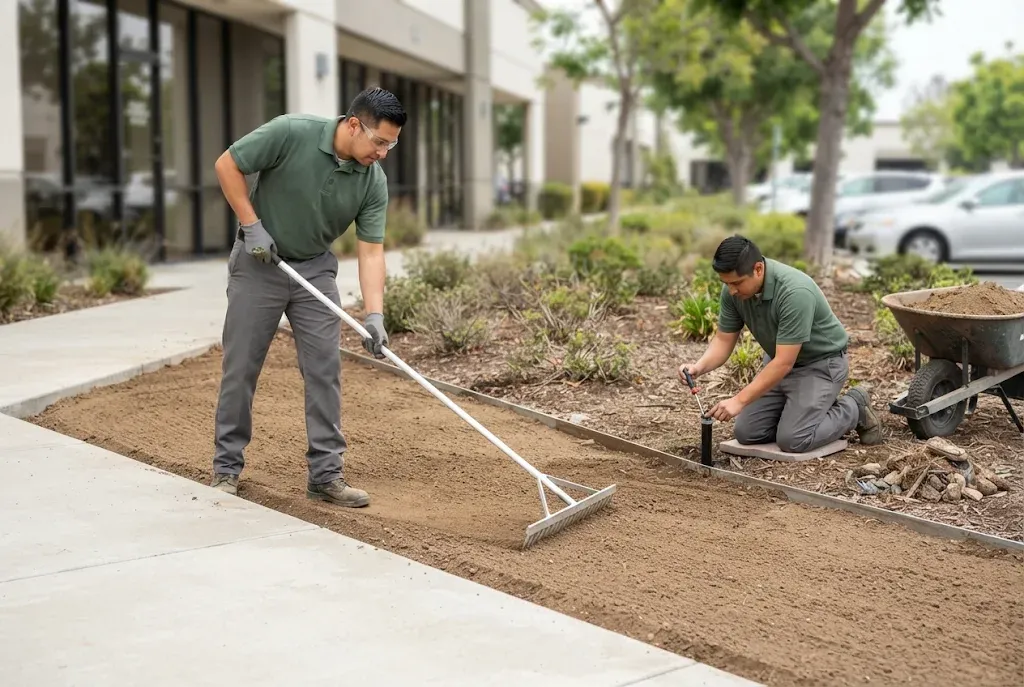
Soil preparation for commercial sod installation is where much of the labor in a typical project goes, and it is the step most likely to be shortchanged when a job is priced without anyone seeing the site. Sod needs direct contact with loose, moist soil in order to root into it, and it needs a surface that drains properly and finishes at the right height.
Removing the Existing Lawn and Debris
When an old lawn or a layer of weeds is present, it is removed rather than covered. Sod laid over existing grass rests on a layer that blocks root contact and tends to break down unevenly. Rock, construction debris, old edging, and other buried material are cleared so they do not create hard spots or dry areas under the new lawn. Some aggressive grasses can regrow from roots or runners left in the soil, so the removal method depends on what is growing there now.
Loosening, Amending, and Grading
Compacted soil is loosened to give new roots room to grow. Whether amendments are needed depends on the soil itself; we assess its condition and, where it calls for it, recommend testing before deciding what to add, instead of applying the same treatment to every site. The area is then graded so water moves away from buildings and walkways and does not collect in low spots, and the surface is smoothed and firmed so it does not settle unevenly after the sod goes down.
Finished Levels Around Hardscape and Sprinkler Heads
Commercial lawns are bordered by sidewalks, curbs, planting beds, mow strips, and utility boxes, and the finished surface has to meet each of them cleanly. We set the prepared grade below those edges by enough to allow for the thickness of the sod, so the finished lawn sits close to flush instead of humping above a walk or dropping below a curb. Sprinkler heads are checked against the new finished grade as well. A head left too low gets buried under the sod, and one left too high becomes a mowing and tripping problem. Getting these levels right is a small detail that changes how finished the whole property looks.
How Do We Choose Grass for a Commercial Property?
No single grass suits every commercial lawn, and we do not recommend one by default. Commercial turfgrass installation starts with matching the grass to the specific area, based on several factors:
- Climate and exposure. Coastal and inland sites, full sun and partial shade, and reflected heat near paving each favor different grasses.
- Intended use and wear. A lawn that hosts events or daily foot traffic needs a grass with strong recovery, while an ornamental panel can put appearance first.
- Maintenance capacity. Some grasses need more frequent mowing, regular edging to keep them out of beds, or specific mowing heights that the maintenance program has to support.
- Seasonal appearance. Warm-season grasses can lose color or go dormant in cooler months, while cool-season grasses generally stay green through winter but use more water in summer heat.
- Available irrigation. The water source, the allowed watering schedule, and the system’s capabilities can narrow the options considerably.
Warm-season options such as hybrid Bermuda, zoysia, St. Augustine, and seashore paspalum, and cool-season options such as tall fescue blends, each bring trade-offs in shade tolerance, wear, water use, and winter color. Our guide to choosing grass for Southern California conditions covers those differences in more depth.
Availability plays a part too. Sod farms grow particular varieties on their own schedules, so the final selection may depend on what is in supply and in good condition when the project is ready. We confirm the selection with you before ordering and explain what it will mean for maintenance, so the choice also works for whoever cares for the lawn afterward.
Plan Your Commercial Sod Project With a Clear Scope From Day One
Call Landscaper-Near-Me.com at (888) 601-1117, email info@landscaper-near-me.com, or request a callback. We will talk through the lawn areas, timing, property access, and who handles watering after installation.
Irrigation Preparation for Commercial Sod: What Has to Be Ready Before Delivery
Freshly cut sod arrives with only a shallow mat of roots, so it depends on irrigation for its first weeks. Irrigation preparation for commercial sod is therefore finished before the delivery is scheduled, not adjusted after the new lawn starts showing stress.
Before installation, we check:
- Coverage gaps. Running each zone to confirm that spray reaches the edges and corners, with no dry pockets between heads.
- Damaged components. Broken, tilted, clogged, or sunken heads, leaking lines and valves, and nozzles that do not match within a zone.
- Controller settings. Whether the controller can run the shorter, more frequent cycles that establishment usually calls for, and whether any water-supplier restrictions affect how it can be programmed.
- Overspray. Heads that throw water onto walks, walls, or parking areas, which wastes water and can leave slippery surfaces where people walk.
Where the system needs more than minor adjustments, such as new zones, a revised head layout, or a controller upgrade, the work is planned through our commercial irrigation services and sequenced ahead of the sod.
Who Waters During Establishment?
One question we raise on every commercial project is who will be responsible for establishment watering after installation. It may be the property’s own staff, an existing maintenance provider, or our team for a defined period. Any of these can work, but the arrangement should be agreed in writing before installation day, along with who adjusts the controller as the schedule tapers and who walks the lawn looking for dry spots. New sod can decline quickly in hot or windy weather, and an unclear handoff is one of the more common reasons a well-installed lawn struggles in its first month.
Installation Day, Phasing, and the First Weeks After
Sod is perishable. It is cut and stacked at the farm and begins to deteriorate while it sits on pallets, especially in heat, so delivery is scheduled to match the area that has been prepared and can be installed promptly. On a commercial site, that also means planning where the truck parks, where pallets are staged so they do not block entrances, fire lanes, or parking, and how material moves to each work area.
Laying the Sod
Installation details affect how the lawn looks months later. Pieces are fitted with tight seams and no overlaps or gaps, ends are typically staggered so seams do not line up across the lawn, and edges are cut cleanly against walks, curbs, and beds. The sod needs firm contact with the prepared soil, which is why the surface is smoothed beforehand and why installed sections are watered soon after they are laid. The exact sequence, equipment, and crew size depend on the size of the area, site access, and conditions on the day.
Phasing Work on an Occupied Property
Most commercial properties stay open during installation. Larger lawns can be divided into work areas completed in phases, so part of a courtyard or frontage stays usable while another section is prepared and installed. Phasing can also be arranged around tenant schedules, events, or leasing activity, and it lets irrigation run on separate schedules for areas installed on different days.
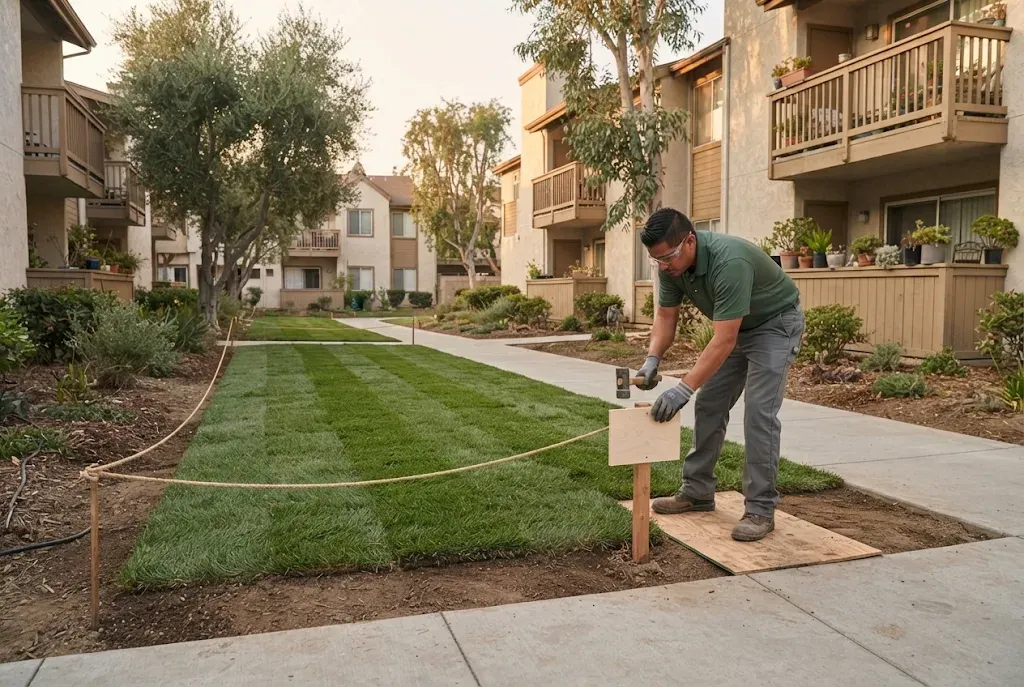
New sod is easily damaged by foot traffic before it roots, so protection is part of the plan. Planning pedestrian access around newly installed sod usually involves temporary stake-and-rope barriers, clear routes that keep people on the walkways, notices to residents or tenants, and coordination with property staff so carts and maintenance equipment stay off the new lawn. On apartment and multifamily properties, where residents and their pets use the lawns every day, communication matters as much as the barrier itself. Our apartment complex landscaping services page describes how we approach grounds work at those communities more broadly.
How the New Sod Establishes
Establishment is the period when roots grow out of the sod and down into the soil, and it is when the lawn is most vulnerable. How long it takes, how much water it needs, and when the lawn can be mowed and returned to normal use all depend on the turf type, the weather, the soil, and how well the site was prepared. Warm-season grasses generally root fastest during their active growing season, while cold snaps or extreme heat can slow any grass down. Our article on how long sod takes to root explains the typical timelines and what affects them.
In general, watering starts frequent to keep the sod and the soil directly beneath it moist, then shifts gradually toward deeper, less frequent cycles as roots develop. The first mowing waits until the sod has rooted firmly enough not to shift under equipment; a simple check is to gently lift a corner and see whether it resists. Day-to-day watering and early mowing guidance for new lawns is covered in our article on caring for sod after installation.
The Handoff to Property Staff or a Maintenance Provider
At the end of our installation scope, we hand off the lawn with clear expectations: the current watering schedule and how it should change, the areas to keep an eye on, and the signs that need attention. Seams and edges that shrink or turn tan usually mean drying. Sod that still lifts easily well after installation may not be rooting properly. Soft, constantly wet spots can point to overwatering or a drainage issue. Reporting any of these early gives the best chance of correcting them.
From there, the lawn moves into regular care: mowing at a height suited to the grass, fertilization timed to its growth, irrigation adjustments through the seasons, and attention to the traffic areas that wore out the previous lawn. That ongoing care is a separate scope from the installation itself.
What Affects Commercial Sod Installation Cost, and How Do You Get an Estimate?
Commercial sod installation cost depends on the property far more than on any per-square-foot figure, which is why we do not publish prices or minimum project sizes. Our commercial sod installation estimates are built from the site assessment and itemize the factors that drive the work:
- Measured lawn area, including the shape of each area and how much edge work it involves.
- Existing lawn removal and the method it requires.
- Preparation requirements, such as loosening compacted soil, amendments, grading, and debris removal.
- Sod selection, since varieties differ in cost and availability.
- Delivery access, including staging and any areas where sod has to be carried in by hand.
- Irrigation work needed before installation.
- Disposal of removed turf, soil, and debris.
- Project phasing, when work has to be split across days or scheduled around property operations.
A clear estimate also states what is not included, such as establishment watering when the property will handle it, so responsibilities are settled before the first pallet arrives. Ongoing maintenance is quoted separately; properties that want one provider from installation onward can continue with our commercial lawn care services.
If you were looking for commercial sod installation near me, we work with commercial and managed properties throughout our service territory in Southeast Los Angeles County and Orange County. A lawn that lasts begins with an honest look at whether turf fits the space, what went wrong with the last one, and what the site needs before the first roll goes down. To get started, call Landscaper-Near-Me.com at (888) 601-1117, email info@landscaper-near-me.com, or request a callback, and we will arrange a time to walk the property with you and prepare a free estimate for your commercial sod installation.
FAQ's - Frequently Asked Questions
Not as a rule. Existing grass and weeds create a layer between the new sod and the soil that interferes with rooting and tends to break down unevenly, leaving soft or uneven spots. We remove the old turf, correct the soil and grade, and then install the new sod on prepared ground.
Yes. On new construction we coordinate timing with the developer or general contractor so sod goes in after final grades are set and after irrigation, hardscape, and other site work that could damage it is complete. A lawn installed too early is easily driven over, trenched through, or buried in construction debris.
Sod can be installed through much of the year here, but timing affects how quickly it roots and how much water establishment takes. Warm-season grasses usually establish best in late spring and summer while actively growing, while cool-season grasses generally do better in fall or spring than in peak heat. We plan timing around the grass selected, the property schedule, and any watering restrictions in effect.
Yes, and many properties prefer that. We provide the starting watering schedule, explain how it should taper as the sod roots, and point out the areas most likely to dry out. The key is agreeing on who is responsible before installation day, so there is no gap in watering during the first critical weeks.
State guidance generally treats turf used for recreation or community activities as functional and ornamental turf, such as parking-area strips or grass bordering buildings and sidewalks, as nonfunctional. Your water supplier applies the rules to your property, so we recommend confirming how an area will be classified before installing new or replacement turf there. We can help identify how each area is actually used.
Let us know as soon as you notice it. Browning on new sod is most often a sign of drying from a coverage gap, a misadjusted head, or hot, windy weather, and it is much easier to correct when caught early. We will look at the area, check the irrigation, and recommend the next step based on what is causing it.
When a project requires it, removal and disposal of the existing turf, excess soil, and debris are included in the installation scope. These items are listed in the estimate, since the amount of material and how it has to be hauled out vary from one property to the next.
It will look much closer to finished than a seeded lawn, but seams may be visible for the first few weeks and usually fade as the sod roots and grows together. If a warm-season grass is installed in cooler months, it may stay partly dormant and lighter in color until temperatures rise.