
Sod Installation Newport Beach CA for New and Replacement Lawns
A new lawn can go down in a day, but whether it still looks good next year is mostly decided before the first roll of turf arrives. Sunlight, soil, drainage and sprinkler coverage determine how sod behaves once it is in the ground, and those conditions differ from one Newport Beach yard to the next.
This page explains how we approach sod installation Newport Beach CA projects at single-family homes and other residential properties. It follows the order a real project takes: working out whether the yard needs a new lawn or a replacement, assessing the site, choosing turf that suits the light and use the lawn will get, preparing the ground, and understanding what an estimate covers. For a wider look at the service across our territory, see our sod installation services page.
We offer free estimates. If you already know what the yard needs, call us at (888) 601-1117. If you are still weighing whether the existing lawn can be saved, the sections below should help you decide before you spend anything.

Free Estimates for Sod Installation in Newport Beach
Starting from bare soil or replacing a lawn that has worn out? We will assess your yard and prepare a free estimate for the work it needs. Call (888) 601-1117 or ask us to call you.
Is Your Newport Beach Yard a New Lawn or a Replacement Project?
Nearly every residential sod installation falls into one of two categories, and the category shapes the work, the schedule and the estimate. Knowing which one describes your yard makes the first conversation with any installer more productive.
Installing a Lawn on Bare Ground
Bare ground usually follows construction, a remodel, the removal of old planting, or a yard that was never finished. There is no turf to strip out, which saves a step, but bare soil brings its own issues. Ground that has carried construction traffic or stored materials tends to be compacted. Grades may have been left rough. Sprinklers may be missing, capped, or laid out for planting beds instead of turf. A new sod lawn installation on bare soil is largely a preparation job: loosening the soil, setting the grade, and confirming the irrigation before any sod is ordered.
Replacing Turf That Has Declined
The second scenario is a lawn that exists but no longer performs. It may have thinned across most of the yard, developed bare areas that return each year, or been overtaken by weeds and patches of a different grass. Sod replacement in Newport Beach involves everything a bare-ground project does, plus removal and disposal of the old turf. It also raises a question that bare soil does not: why did the lawn fail? If the cause was shade, drainage or uneven watering, new sod laid on the same conditions is likely to decline the same way. The cause needs to be identified during the site visit, before any turf is ordered.
When Does Replacing the Lawn Make More Sense Than Patching It?
Patching is the right repair when the damage is limited and the cause is known and fixed. A strip worn by foot traffic, a corner damaged by a broken sprinkler head that has since been repaired, or a spot where equipment sat during a project can each be cut out and re-sodded without disturbing the rest of the yard.
Replacement becomes the better investment when the problems are spread through the lawn. Signs that point in that direction include:
- Thin turf across much of the yard, with soil visible between the blades.
- Bare areas that have been patched or reseeded before and failed again.
- A lawn that has become a mix of several grasses and weeds with different colors and textures.
- Low spots, ridges or an uneven surface that cannot be corrected without regrading.
- A grass type that does not suit the light the yard now receives, for example after a tree matured or a second story was added next door.
Appearance matters here as well. New sod rarely matches an older lawn exactly, so several large patches can leave the yard looking pieced together even when each patch is healthy. Deciding when to replace a lawn instead of repairing bare patches comes down to how much of the yard is affected, whether the underlying cause has been corrected, and how uniform you expect the finished lawn to look. We give you our assessment during the estimate, including the cases where a repair is all the yard needs.
What Should a Site Assessment Cover Before Sod Installation in Newport Beach?
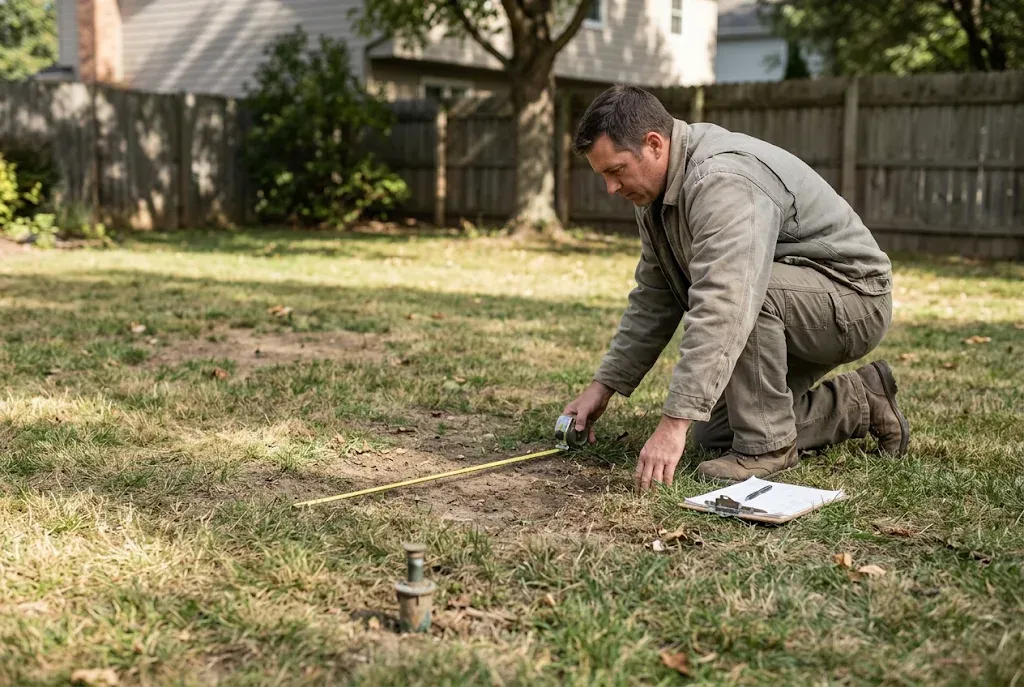
A site assessment should account for everything that will affect the sod after it is laid. Measuring square footage is only one part of it. When we walk a property, we look at six things.
- Sunlight. How many hours of direct sun each part of the lawn receives, and where buildings, walls, fences or trees cast shade. Light is the main factor in choosing a grass.
- Lawn size and shape. Total area, plus curves, narrow strips, tree wells and bed edges. Irregular shapes require more cutting and produce more waste than a simple rectangle of the same size.
- Soil compaction. Whether the soil is loose enough for roots to penetrate. Hard, compacted ground has to be worked before sod can root into it.
- Standing water. Any place where water collects after irrigation or rain, and where runoff from roofs, downspouts or paving ends up.
- Sprinkler coverage. Whether every part of the lawn area is reached, whether heads are broken, blocked or misaligned, and whether zones water evenly.
- Access. Gate widths, side-yard clearance, steps, and the distance from the street to the lawn. Pallets of sod are heavy, and old turf and soil have to leave the property by the same route.
Access deserves particular attention here. On the compact lots found in parts of the city close to the harbor and the beach, the only path to a backyard may be a narrow side yard, and space for a delivery truck can be limited. On larger lots, slopes and long carries add labor in a different way. None of this prevents the work, but it changes how materials are moved and how long the job takes, so it belongs in the assessment for any sod installation Newport Beach CA project and should not come as a surprise on installation day.
Find Out Whether Your Lawn Needs Patching or Full Replacement
We check sunlight, soil, drainage, sprinkler coverage and access, then tell you whether a repair will hold or a new sod lawn is the better use of your money.
Which Sod Fits an Open Sunny Lawn, and Which Fits a Shaded Backyard?
The right sod is the one that matches the conditions the lawn will live in. Four factors drive the choice: sun and shade, foot traffic, water needs, and the level of maintenance you are prepared to keep up. Two yards in the same city can call for different grasses.
An Open, Sunny Front Lawn
Consider a front lawn with full sun for most of the day, children and a dog using it, and an owner who wants to keep water use down. Warm-season grasses such as bermudagrass are generally suited to this kind of yard. They handle heat and wear, recover from damage, and typically need less water than cool-season lawns. The trade-off is winter dormancy: many warm-season grasses lose color in the cooler months, which some homeowners accept and others do not.
A Backyard Shaded by Buildings or Trees
Now consider a backyard enclosed by a two-story house, a neighboring building and a mature tree, where the lawn gets a few hours of direct sun at most. Bermudagrass tends to thin badly in those conditions. A more shade-tolerant choice, such as a tall fescue blend or St. Augustinegrass, is usually a better fit, with the understanding that tall fescue stays green year-round but generally needs more water in summer. In heavy shade no turfgrass performs well. When that is the case we will say so, and we can discuss reducing the lawn area or treating the darkest section differently.
Coastal conditions add another consideration. Yards near the water can see more overcast mornings and, close to the shoreline, some salt exposure. Both are worth raising when varieties are compared. Our guide to choosing a grass type for Southern California covers the main options in more depth. During an estimate, we recommend a variety based on the conditions in your yard and explain the reasoning, so you can weigh appearance, water and upkeep for yourself.
How Do Grading and Soil Preparation Affect a New Sod Lawn?
Sod is a thin layer of grass and soil, and it takes on the shape of whatever lies beneath it. Dips, humps, clods and debris left in the soil remain visible in the finished lawn and become harder to correct once the turf has rooted. Preparation is where most of the labor in a sod installation Newport Beach CA project goes, and it is the part of the job you cannot see afterward.
After old turf and weeds are removed, the soil is loosened so roots can grow down into it, amended where its condition calls for it, and raked to a smooth, firm surface. The grade is set so that water drains away from the house and does not settle in low areas.
Preparation Near Patios and Walkways
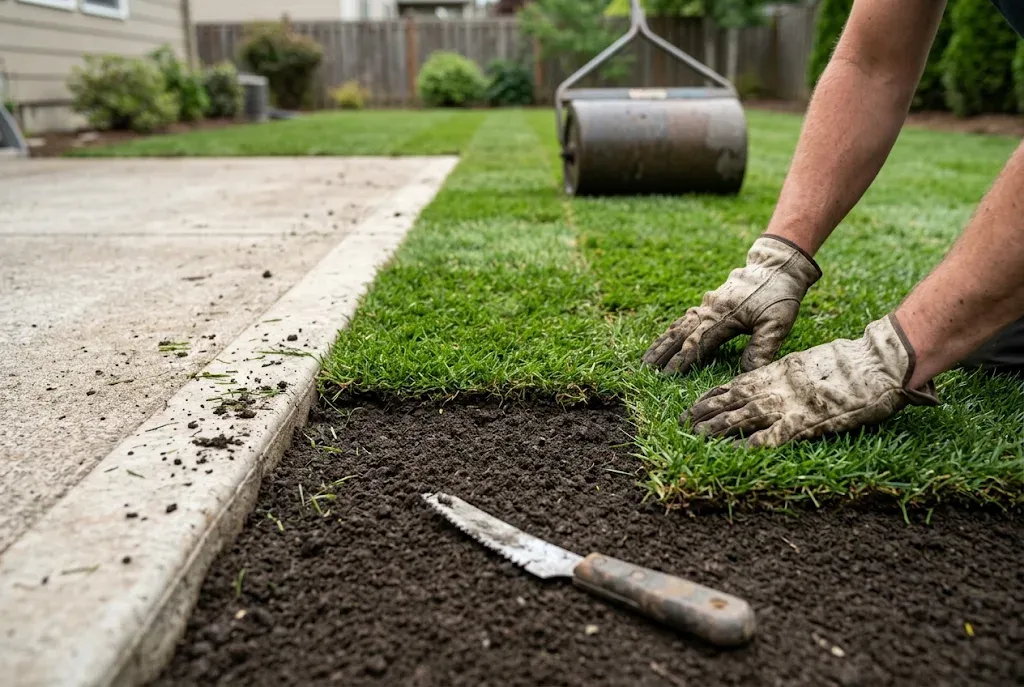
Edges need particular care. Along patios, walkways, driveways and mow strips, the prepared soil should finish lower than the hard surface by about the thickness of the sod. Set at that level, the new lawn sits even with the paving. If the soil is left too high, the sod stands above the concrete, the edge dries out and the mower scalps it. If the soil is too low, the result is a trough that collects water along the paving.
Why Sod-to-Soil Contact Matters
Sod roots only where its underside is pressed against moist, prepared soil. Air pockets under a piece leave the roots hanging in a gap where they dry out. For that reason the pieces are laid tight against one another with the seams staggered, trimmed to fit along edges and around sprinkler heads, and pressed or rolled into the surface. The University of California’s guidance on establishing a lawn from sod also recommends installing sod promptly after it is delivered and avoiding deep footprints or wheel tracks in the prepared soil, because depressions restrict root development and leave an uneven surface.
Why Check Sprinkler Coverage and Drainage Before the Sod Arrives?
New sod has shallow roots and depends entirely on water applied at the surface until it grows into the soil below. An irrigation problem that an established lawn could tolerate can damage new turf within days. The time to find and fix those problems is before lawn sod installation in Newport Beach begins, while the soil is open and the heads and pipes are easy to reach.
Two conditions get our attention during the assessment:
- Dry sprinkler zones. Areas the spray does not reach, usually because of a broken, clogged, sunken or misdirected head, or spacing that never provided full coverage. Sod in a dry zone shrinks, opens at the seams and browns from the edges.
- Pooling water. Low areas where irrigation or runoff collects. Sod that stays saturated roots poorly and is prone to disease and rot, and the soft ground settles unevenly.
We run the existing system, watch the coverage, and note what needs correcting. Some fixes are minor, such as replacing a head or adjusting a spray pattern. Others involve moving heads or adding to a zone because the shape of the lawn has changed. Irrigation corrections are identified in the estimate, and where repairs are needed our sprinkler repair services can be scheduled so the system is working before the turf is delivered. Pooling is addressed through grading when the cause is the surface, or flagged for a drainage discussion when water is arriving from somewhere else on the property.
Talk Through Your Newport Beach Sod Project With Our Team
Bring your questions about grass selection, grading or sprinkler coverage. Call Landscaper-Near-Me.com at (888) 601-1117, email info@landscaper-near-me.com, or request a call back.
What Does a Sod Installation Estimate in Newport Beach Usually Include?
An estimate should show what work is being priced, so you can compare proposals on equal terms. A sod installation estimate in Newport Beach may include the following items, depending on what the yard needs:
- Removal and disposal of existing turf. Cutting out the old lawn and hauling it away. This does not apply to bare-ground projects.
- Soil preparation. Loosening the soil, adding amendments where needed, and raking the surface smooth.
- Grading where needed. Correcting low spots, directing drainage, and setting the soil level against patios and walkways.
- Sod selection. The grass variety and the quantity, including an allowance for cutting and fitting.
- Installation. Delivery, laying, trimming and rolling, followed by cleanup.
- Irrigation corrections. Sprinkler repairs or changes, which are often quoted as a separate line so the lawn work and the irrigation work can be evaluated individually.
What affects the cost of sod installation in Newport Beach is mostly the same list seen from another angle: the size of the lawn, how much removal and grading the site requires, the variety chosen, how complicated the shape is, and how difficult the access is. Two lawns with the same square footage can price differently for those reasons. When you compare Newport Beach sod installers, check that each proposal covers the same scope. A lower figure that leaves out removal, soil preparation or irrigation repairs is not a like-for-like comparison.
What Happens After Installation Day? A Short Handoff Checklist
The first weeks after installation determine whether the sod establishes. At the end of the job we go over what the lawn needs from you. The short version:
- Watering. New sod is watered right after it is laid and kept consistently moist while it roots. The amount depends on the weather, the grass and your soil, so we review the specifics for your lawn and controller. Watering rules vary by provider and can change, so confirm the current rules for newly installed lawns with your property’s water provider before the installation date.
- Traffic. Keep people, pets and furniture off the lawn until it has rooted. Foot traffic on soft, wet sod shifts the pieces and leaves depressions.
- Rooting before the first mow. Gently lift a corner in a few places. When the sod resists and holds to the soil, it is rooting. Wait for that resistance before mowing, and keep the first cut light.
For step-by-step instructions, we have two detailed guides: how to care for freshly laid sod and how to help new sod take root. If something looks wrong during establishment, such as seams opening, corners browning or an area staying soggy, contact us early. These problems are easier to correct in the first few weeks than later.
How Do You Prepare for a Free Sod Installation Newport Beach CA Estimate?
A little preparation makes the estimate faster and more accurate. Before you call or submit a request, it helps to gather:
- Approximate lawn dimensions. Length and width of each lawn area, or a rough sketch with measurements. Exact figures are not necessary; we measure on site.
- Photos. A few wide shots of the whole lawn and close-ups of problem areas, taken in daylight.
- Current turf condition. Whether the area is bare soil, thin lawn, weeds or a mix, and how long it has looked that way.
- Sprinkler status. Whether there is a working system, where the controller is, and any zones or heads you know have problems.
- Access details. Gate widths, side-yard clearance, stairs, and any parking or delivery limits on your street or in your community.
It also helps to think about how the lawn will be used and when you would like the work done. If the property is in a community with landscape guidelines, have those available as well.
With that information in hand, we can assess the yard, explain whether repair or replacement makes sense, recommend a sod that suits the light and use, and give you an estimate that spells out the scope. We work with Newport Beach homeowners and residential property managers on both new lawns and replacements. To schedule a free estimate, call Landscaper-Near-Me.com at (888) 601-1117, email info@landscaper-near-me.com, or request a call back and we will contact you.
FAQ's - Frequently Asked Questions
The schedule depends on the size of the lawn, whether old turf has to be removed, how much grading and soil preparation the site needs, and how easy the access is. Preparation is completed first so the sod can be laid soon after it is delivered. We go over the expected timeline for your yard when we prepare the estimate.
Sod can be installed during much of the year in a mild coastal climate, although very hot spells are best avoided where possible. As a general guide, warm-season grasses establish best from mid to late spring, and cool-season grasses in early fall or early spring. We can advise on timing once a grass type has been chosen.
No. Sod has to rest directly on loosened, prepared soil to root. Laid over old turf, it sits on a layer of dying grass and thatch that blocks root contact and can hold too much or too little moisture. The existing lawn is removed first.
It helps. We need access to every lawn area, including gated side yards and the backyard, and it is useful to have someone who can run the sprinkler controller and describe how the lawn has behaved. If you cannot be there, tell us how to reach the yard and the controller when you schedule.
It can. Yards near the shoreline may get more overcast mornings and some salt exposure, and turfgrasses differ in how well they tolerate each. Mention how close the property is to the water when you contact us, and we will take it into account along with sun, shade and how the lawn is used.
Partial replacement is possible, but an exact match is hard to promise. Sod of the same grass type can still differ in color and texture from an older lawn, and the difference is usually most visible at first. We will tell you what to expect before you decide between a partial and a full replacement.
As soon as possible. Sod is a living product that begins to dry out and heat up while it is stacked, so the site is fully prepared before delivery and the turf is laid promptly once it arrives.
Outdoor watering rules are set by the water provider that serves your address, and they can change with supply conditions. Before your installation date, check the current rules for newly installed lawns with your property’s water provider. We do not quote a schedule or an exception without that confirmation.