
Sprinkler Repair Services
for Residential and Commercial Landscapes
A sprinkler system rarely fails all at once. More often, a single head stops popping up, a corner of the lawn starts browning while another stays soggy, or a zone keeps running after the controller says it should be off. Our Sprinkler Repair Services are built around those moments: we assess the irrigation system you already have, find out why it is misbehaving, and correct the fault so water goes where your landscape needs it.
This page focuses specifically on repair. That means diagnosing and fixing problems in an existing landscape sprinkler system, from broken heads and clogged nozzles to valves that will not open or close, leaking lines, and controller settings that no longer match the property. If you are planning a new system, a major expansion, or a complete redesign, our broader irrigation services page explains how we approach that larger work.
Below, we walk through the symptoms property owners and managers most often notice, what each one can point to, how we decide between adjustment, cleaning, localized repair, and replacement, and what to expect after the work is done. Whether you manage a single-family yard, a rental property, an HOA common area, or the planted frontage of an office or retail building, the goal is the same: a system that turns on when scheduled, shuts off when it should, and covers the landscape evenly without spraying the sidewalk.

Free Estimates for Sprinkler Repair Services
Tell us what your sprinklers are doing – a broken head, a soggy patch, a zone that refuses to run – and we will review the system and prepare a free estimate for the repair. Call (888) 601-1117 or email info@landscaper-near-me.com.
What Do Sprinkler Repair Services Actually Include?
Sprinkler repair services cover the diagnosis and correction of faults in an irrigation system that is already in the ground. The work starts with finding the cause of a symptom and ends with the affected zones operating properly again. It is different from installing a new system, where piping layout, zoning, and equipment are designed from scratch, and different from a full redesign, where the existing layout is reworked because it no longer suits the landscape.
A typical sprinkler system repair visit may involve any of the components a residential or commercial system relies on:
- Sprinkler heads and nozzles – spray heads, rotors, and the nozzles that shape their pattern and distance.
- Risers and fittings – the short connections between the lateral lines and the heads, which are easily cracked by mowers, foot traffic, or vehicles.
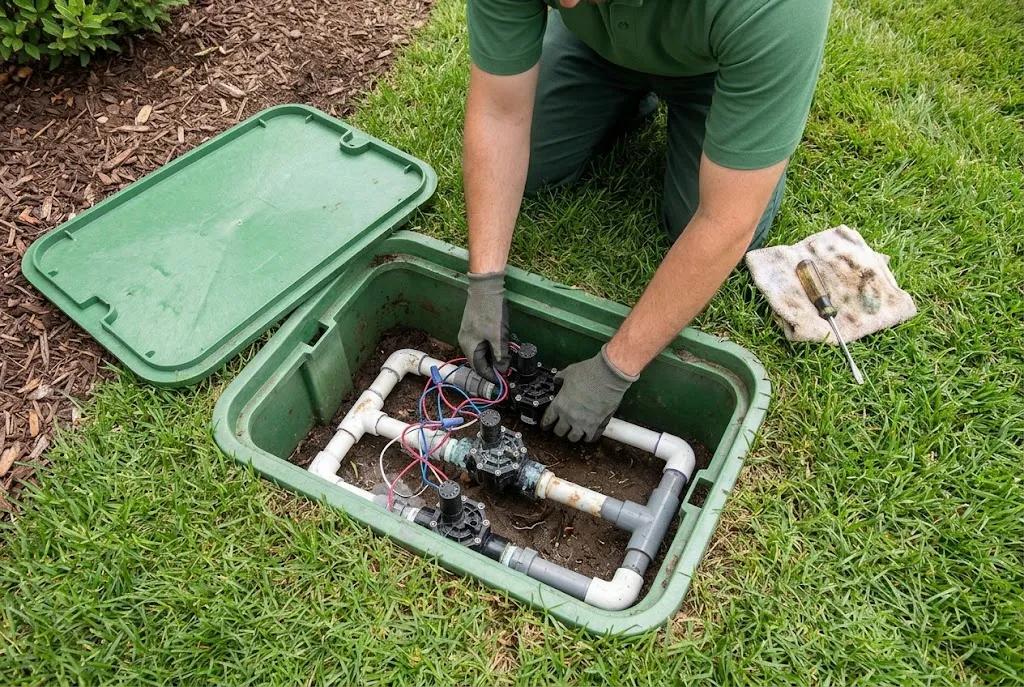
- Accessible valves – the zone valves that open and close to send water to each station, usually housed in valve boxes.
- Irrigation piping – the main and lateral lines that carry water underground.
- The controller – its programs, station assignments, and run times, which we review as part of diagnosis.
Not every finding calls for new parts. Some problems are solved by straightening a tilted head or redirecting a spray arc. Others need a nozzle cleaned, a fitting replaced, or a section of pipe repaired. We match the response to what the inspection actually shows rather than replacing components by default.
Repair Within the System You Already Have
Landscape irrigation repair works within the constraints of the existing system: its pipe sizes, its zone layout, and the types of heads already installed. When a planting area would be better served by a different watering method altogether, that becomes a separate conversation. Property owners weighing that question can start with our guide comparing drip irrigation and sprinkler systems.
Which Sprinkler Head Problems Are the Most Common?
Sprinkler heads are the most exposed part of the system, so they account for many service calls. They sit at or just below the soil surface, where mowers, edgers, delivery carts, and car tires can reach them. A damaged head can waste water, flood a low spot, or leave a strip of turf without coverage.
Signs a Head Needs Attention
- A head that is cracked, snapped off, or sitting crooked in the soil.
- A geyser or bubbling flow where a head used to be.
- A pop-up head that does not rise fully, or does not retract after the cycle ends.
- A sputtering, partial, or lopsided spray pattern, often from a clogged nozzle or debris in the filter screen.
- Spray hitting a wall, fence, window, or paved surface instead of planted ground.
- Fine misting or fogging rather than distinct droplets.
- Wet spots that persist around one head long after watering ends.
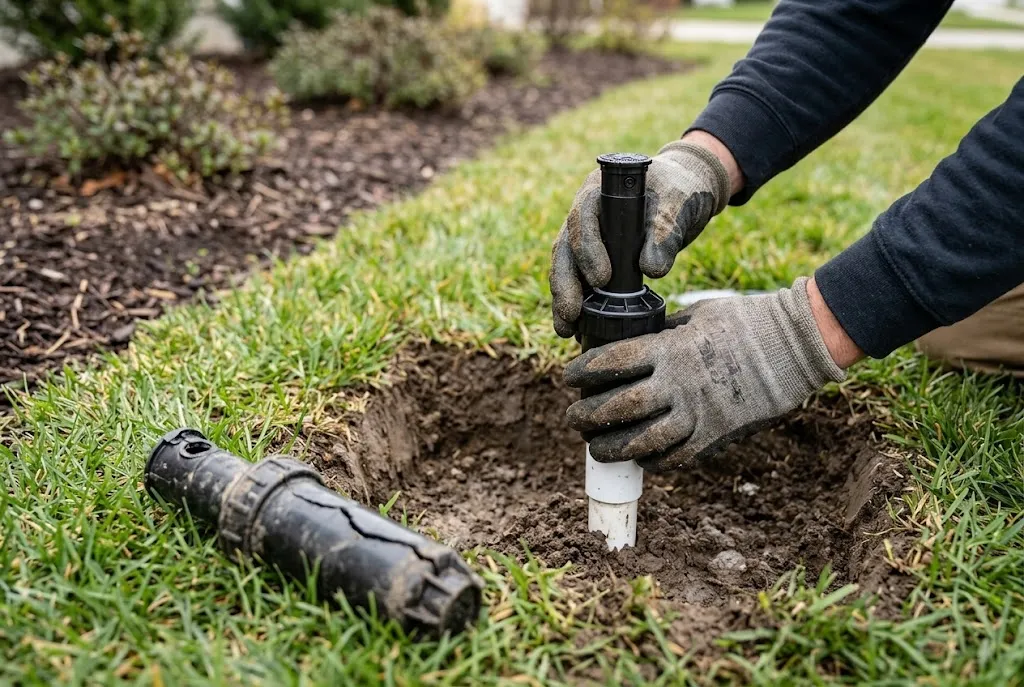
Broken sprinkler head repair is often straightforward when the damage is isolated, but the same symptom can have different causes. A head that will not pop up may be broken internally, packed with soil, blocked by grass that has grown over it, or simply not receiving enough pressure. That is why we check the head, the riser below it, and the behavior of other heads on the same zone before deciding on the fix.
When Sprinkler Head Replacement Makes Sense
Sprinkler head replacement is the right call when the body is cracked, the wiper seal no longer holds, or the head is worn to the point that it cannot be adjusted reliably. We pay attention to compatibility when we replace a head: a new head should match the type, pop-up height, and general watering rate of the heads around it. Mixing very different heads or nozzles on one zone can apply water unevenly even when every head technically works.
Why Are My Sprinklers Not Turning On or Not Shutting Off?
When an entire zone misbehaves, the cause is usually upstream of the heads. Sprinklers not turning on and sprinklers not shutting off are two of the most frustrating problems for property owners, and they are also two of the most misread. Similar symptoms can come from the water supply, a valve, the controller, or the connections between them, so careful sprinkler zone troubleshooting matters more than guesswork.
A Zone That Will Not Start
If one zone stays dry while others run, we look at whether water is reaching the valve, whether the valve is receiving a signal to open, and whether something inside the valve is preventing it from opening. Controller programming is part of that review: a station can be skipped, set to zero minutes, or assigned to a program that no longer runs. If no zones operate, the question shifts toward the water supply, the controller, or its power and settings.
A Zone That Will Not Stop
A zone that keeps running when the controller shows it is off is a different situation. Debris inside a valve, a worn diaphragm or seal, or a manual bleed left open can keep water flowing. Overlapping programs on the controller can also make it seem as if a zone never shuts off when it is actually being started again by a second schedule. Sprinkler valve repair or valve replacement may be needed once the cause is confirmed.
Where Controller and Wiring Questions Fit
Sprinkler controller troubleshooting is part of our assessment: we review programs, station assignments, start times, and run times to confirm the controller is asking for what the property needs. Electrical faults in the wiring between the controller and the valves require professional assessment, and we treat them that way rather than offering do-it-yourself fixes. Property owners who want background on why one sprinkler zone is not working can share what they have already checked when they contact us, which helps us plan the visit.
Zone Won't Start or Won't Shut Off? Let Us Trace the Cause
Heads, valves, controller settings, and supply problems can all produce the same symptom. We test each possibility on the affected zone so the repair addresses the real fault instead of the most obvious part.
How Do You Find and Fix a Sprinkler Line Leak?
We approach a suspected leak by gathering evidence before digging. The clearest warning sign is water that pools or keeps the soil saturated in the same area between watering cycles, especially when nearby areas are dry. Other clues include a soft or sunken patch of turf, a zone with noticeably weak spray at its far heads, or water flowing from a valve box. The U.S. Environmental Protection Agency’s WaterSense program lists pooling between cycles as a possible sign of an underground leak in its sprinkler spruce-up checklist, and it estimates that leaks and broken sprinklers can waste thousands of gallons over a single irrigation season.
Surface symptoms alone are not proof of a broken pipe, though. A wet area can come from a head with a failed seal draining after every cycle, from low-lying ground collecting runoff, from a valve that weeps slowly, or from drainage patterns unrelated to irrigation. Knowing how to recognize an underground sprinkler leak means ruling these possibilities in or out before excavating a lawn or planting bed.
What Sprinkler Line Leak Repair Usually Involves
Once the source is located, sprinkler line leak repair generally means exposing the damaged section, cutting out the failed pipe or fitting, installing a proper repair connection, and restoring the soil and turf above it. Roots, shifting soil, earlier repairs, and accidental damage from digging projects are common causes. When the same line has been patched repeatedly, we discuss whether the section is nearing the point where replacement is more practical than another repair.
What Causes Low Sprinkler Water Pressure and Uneven Sprinkler Coverage?
Pressure and coverage problems show up as weak spray that falls short of its target, heads that barely rise, heavy misting, or overspray onto pavement. Each of these points to a mismatch between the water the system receives and the way the heads are designed to apply it.
When Pressure Is Too Low
Low sprinkler water pressure can result from a leak on the zone, a partially closed or failing valve, a clogged filter screen, too many heads on one zone, or restrictions elsewhere in the supply. Heads may struggle to pop up and spray patterns may collapse, leaving dry rings between heads. Understanding what causes low pressure in a sprinkler system is a matter of testing one possible cause at a time.
When Pressure Is Too High
Excessive pressure produces the opposite effect: fine mist that drifts away in the breeze and evaporates before reaching the soil. That wastes water and can leave the same areas under-watered even though the system seems to be running hard.
Why More Watering Time Is Not the Default Fix
Uneven sprinkler coverage is often treated by adding minutes to the schedule. That rarely solves the underlying problem. If heads are blocked by shrubs, tilted, fitted with mismatched nozzles, or spaced so their spray does not reach the next head, extra run time simply over-waters the areas that were already wet. We look for obstructions, direction, nozzle compatibility, and spacing first, then adjust the schedule only after the distribution has been corrected.
Is a Dry Lawn Always a Sprinkler Problem?
No. Turf condition alone does not establish an irrigation fault. A dry or discolored area can reflect a coverage gap, but it can also come from compacted soil, heat reflected from nearby pavement or walls, shade changes, pests, disease, or turf that never rooted well in the first place. A brown strip along a hot driveway edge, for example, may need a coverage adjustment, a different watering approach, or attention to the soil itself.
That is why our lawn sprinkler repair visits include watching the affected zone run. If the heads are clearly reaching the area with good spray, the cause may lie elsewhere, and we will tell you that instead of replacing parts that are working. In some cases a broader landscape assessment is the more useful next step.
New Turf Needs Reliable Coverage
Freshly laid sod is especially sensitive to gaps in coverage and missed cycles, so a working irrigation system matters a great deal in its first weeks. Property owners planning sod installation services benefit from having sprinkler faults corrected beforehand, and those already establishing a new lawn can review our guidance on caring for newly installed sod alongside any repair work.
Get Clear Answers Before Any Sprinkler Repair Begins
Leaks, weak pressure, and dry spots deserve a proper diagnosis. We explain what we found, what we recommend, and why, so you can make the repair decision with confidence. Reach us at (888) 601-1117.
Should You Repair or Replace Sprinkler System Components?
Most sprinkler problems call for repair, not replacement. Whether a particular head, valve, or section of pipe should be fixed or swapped out depends on what the inspection finds. We weigh several factors:
- Component condition – whether the part is cracked, worn, or still sound apart from a clog or misalignment.
- Recurring failures – whether the same valve or line has needed attention repeatedly.
- Compatibility – whether matching replacement parts fit the existing heads, valves, and connections on that zone.
- Access – how difficult it is to reach the part without disturbing hardscape or established plantings.
- Extent of the problem – whether one component is involved or the symptoms are spread across several zones.
When several zones have aging parts or the layout no longer suits the landscape, the decision about when to repair or replace a sprinkler system becomes broader than a single repair. We explain what we found so you can decide with clear information.
What Shapes Repair Scope and the Estimate
Sprinkler repair cost factors depend on the property rather than a standard menu. Property access, the plantings and hardscape surrounding a component, how deep and where buried piping runs, and the number of zones affected all influence how much work a repair involves. A cracked head in an open lawn is very different from a leaking line under a mature planting bed. We review those conditions before preparing a free estimate so the scope reflects the actual property.
How Do Residential and Commercial Sprinkler Repair Needs Differ?
The mechanics of sprinkler system repair are similar at a house and at an office park, but the priorities around the work are not.
Homes and Small Rental Properties
Homeowners usually want even lawn coverage, healthy planting beds, and no overspray onto the driveway, the house, or the neighbor’s walkway. Owners of rental properties often need repairs coordinated around tenants and a clear explanation of what was found and fixed. For many residential clients, the main frustration is not knowing whether a problem is one broken head or something larger, and the first job is answering that question clearly.
HOAs, Multifamily Communities, and Commercial Sites
Property managers and facility managers deal with larger systems, more zones, and more people on site. Access needs to be coordinated, pedestrian areas need to stay safe while work is underway, and affected zones need to be documented so the board or owner understands what was addressed. Overspray onto walkways and parking areas is both a water concern and a slip concern. For larger or more specialized commercial systems, our commercial irrigation services page covers that work in more detail, and properties that also need ongoing turf care can review our commercial lawn care services.
What Happens After Sprinkler Repair, and How Do You Request an Estimate?
A repair is not finished until the system has been run and observed. After the work, we complete a sprinkler system inspection and adjustment on the affected zones. That includes:
- Running each affected zone from the controller.
- Checking repaired connections and fittings for leaks while under pressure.
- Watching spray direction, arc, and coverage, and adjusting heads where needed.
- Confirming that the controller starts and stops the affected zones as programmed.
If those checks reveal a second problem that was hidden by the first, such as a weak head downstream from a leak that was just fixed, we let you know before going further.
Information That Helps Us Prepare
Many people find us after searching for sprinkler repair near me, and the quickest way to a useful estimate is a clear picture of the problem. When you contact us, it helps to share:
- The symptoms you have noticed, such as wet spots, dry areas, broken heads, or a zone that will not start or stop.
- Which zones or areas of the property are affected.
- The controller brand or model, if you know it.
- Photographs of the problem areas, damaged heads, or the controller display.
- Any access constraints, such as gate codes, pets, tenant notice, or business hours.
Whether you are dealing with one snapped head or a system that has not run properly all season, our Sprinkler Repair Services start with a careful diagnosis and a clear explanation of what we found. Call us at (888) 601-1117, email info@landscaper-near-me.com, or request a callback to schedule your free estimate.
FAQ's - Frequently Asked Questions
An isolated problem usually affects one head while the rest of the zone sprays normally. If several heads on the same zone are weak, the whole zone fails to start, or wet spots appear away from any head, the cause is more likely a valve, leak, or supply issue. Running the zone and comparing heads is the first step in our inspection.
Repeat leaks often trace back to tree roots, shifting soil, a fitting that was never properly supported, or an older repair that has failed. We look at why the line broke, not just where, and if the section keeps failing we will discuss whether replacing it is more practical than another patch.
An inspection shows how each affected zone actually operates: whether heads rise and retract, where spray lands, whether valves open and close on command, whether connections leak, and whether controller settings match the property. It can also show when a dry area is not caused by irrigation at all.
Usually not as a first step. Dry patches are often caused by blocked, tilted, or mismatched heads, and extra run time mostly over-waters areas that were already wet. We recommend correcting coverage first and adjusting the schedule afterward.
First, turn the zone off at the controller. If water keeps flowing, close the irrigation system’s shutoff valve if you know where it is and can reach it safely, then contact us. A zone that runs with the controller off often points to a valve that is not closing fully.
Often it is. Many older systems need only a handful of repairs and adjustments to work well again. Replacement becomes worth discussing when failures keep recurring across several zones, compatible parts are hard to find, or the layout no longer fits the landscape.
We consider which zones are affected, the components involved, access to the work area, the plantings and hardscape around buried lines, and whether excavation is likely. Photos and a description of the symptoms help us plan the visit, and the estimate is free.
Yes. We work with property managers, HOA boards, and facility managers on repairs to existing landscape sprinkler systems, including coordinating access around residents, tenants, and pedestrian areas and documenting the zones that were addressed. Call (888) 601-1117 to confirm service availability for your property.