
Sod Installation Services for New and Replacement Lawns
Our sod installation services give homeowners and rental-property owners a practical way to turn bare soil, worn-out turf, or a tired front yard into a usable natural-grass lawn in a matter of weeks rather than a full growing season. Sod arrives as mature grass with an established root layer, so the visual change happens the day it goes down. Whether that lawn actually thrives, however, is decided by what happens before the first roll is unloaded: how the site is assessed, how the soil is prepared, and whether the sprinklers can keep new turf evenly moist while it roots.
This page explains how we approach professional sod installation from the first site visit through the hand-off to your aftercare routine. We cover what a project can include, which items are confirmed during an estimate rather than assumed, how grass is matched to the yard, and what influences scheduling and cost. If you are comparing sod installers for a residential front yard, a backyard play area, or lawn areas at a small multifamily property, the sections below will help you ask sharper questions and recognize the difference between a lawn that is simply laid and one that is installed to last.
Landscaper-Near-Me.com works with property owners in Southeast Los Angeles County and Orange County. When you contact us, we confirm that your address falls within our current service area before scheduling a visit.

Plan Your New Lawn With a Free Sod Installation Estimate
Tell us about the lawn area you want to install or replace. We will review measurements, soil, irrigation, and access, then outline the scope of your Free Estimate. Call (888) 601-1117 or email info@landscaper-near-me.com.
What Do Professional Sod Installation Services Include?
At its core, lawn sod installation means preparing a planting surface and covering it with harvested strips or rolls of living grass so the roots can knit into the soil below. The finished result looks simple. The work behind it is a sequence of decisions, and each one affects how quickly the sod roots and how well the lawn holds up to daily use.
New Lawn Installation Versus Replacing Existing Turf
A new lawn installation usually starts on ground that has never held turf or has been bare for some time: a newly built home, a backyard cleared of an old patio, or a side yard that has been dirt and weeds for years. The main challenges there are soil quality, compaction from construction traffic, and establishing proper grades and irrigation coverage from scratch.
Replacement work starts with an existing lawn that has thinned out, filled with weeds, or died back. Here, the extra steps are removing the old turf and figuring out why it failed. Putting fresh sod on top of the same underlying problem tends to reproduce the same result.
Scope Items We Confirm During Your Estimate
Every property is different, so we treat project components as items to clarify rather than a fixed package. Depending on the site, a sod project may involve:
- Removal of existing grass, weeds, or groundcover
- Hauling and disposal of removed turf and debris
- Soil cultivation and any amendments the assessment calls for
- Rough and finish grading to set surface slope and final elevations
- Sod supply, delivery coordination, and installation
- Fitting sod around walkways, beds, trees, and other boundaries
- Rolling the new lawn and site cleanup
- Initial watering and care guidance for the establishment period
Some of these items are part of a standard installation, while others, such as irrigation repairs, significant regrading, or removal of large amounts of debris, may be quoted separately. Your estimate should spell out which is which so there are no surprises once work begins.
When Should an Existing Lawn Be Replaced With Sod?
Sod replacement makes sense when a lawn has declined beyond what overseeding, aeration, or routine care can reasonably recover, and when the cause of that decline has been identified. Patchy dead areas, heavy weed invasion, uneven ground, and thin grass that never seems to fill in are common reasons property owners call us.
Our sod replacement services begin with a question: what damaged the original turf? Before recommending lawn removal and sod installation, we look for the cause. Frequent culprits include:
- Uneven irrigation coverage that leaves dry arcs or soggy low spots
- Soil compaction from foot traffic, vehicles, or past construction
- Shade from trees or structures that has increased as landscaping matured
- Poor drainage that keeps the root zone saturated after watering
- A grass type poorly suited to the site’s sun, water, or use
If one of these factors is not corrected, new sod can struggle in the same places the old lawn did. Sometimes the answer is to fix the irrigation and replace only part of the lawn. In other cases, a full replacement with a better-suited grass is the more sensible investment. For rental and small multifamily properties, where lawn areas see heavier and less predictable use, matching the turf to that traffic matters even more.
What Happens During a Sod Installation Site Assessment?
The site assessment is where we gather the information that shapes your sod installation estimate. It is also the best opportunity to raise questions about how you plan to use the lawn. We typically look at the following.
Measurements, Sun, and Intended Use
We measure the lawn area so sod can be ordered accurately, with allowance for cuts around curves and edges. We note how many hours of direct sun each part of the yard receives, since a strip along the north side of a house may behave very differently from an open backyard. We also ask how the space will be used: children’s play, pets, entertaining, or mostly visual appeal from the street. Expected foot traffic influences both grass selection and how the lawn should be handled after installation.
Soil, Compaction, Drainage, and Slope
We check soil texture and condition, look for compaction, and note signs of poor drainage such as standing water, algae, or hardpan. Slopes are evaluated for runoff and for how well sod can be secured and irrigated. Surface grade near the house matters too, because finished soil should direct water away from foundations.
Irrigation Coverage and Delivery Access
We review the existing sprinkler system, if there is one, for head placement, coverage gaps, and visible damage. Finally, we consider access. Sod is heavy and perishable, so we need to know how pallets can reach the work area, whether gates are wide enough, and where material can be staged without damaging other parts of the property.
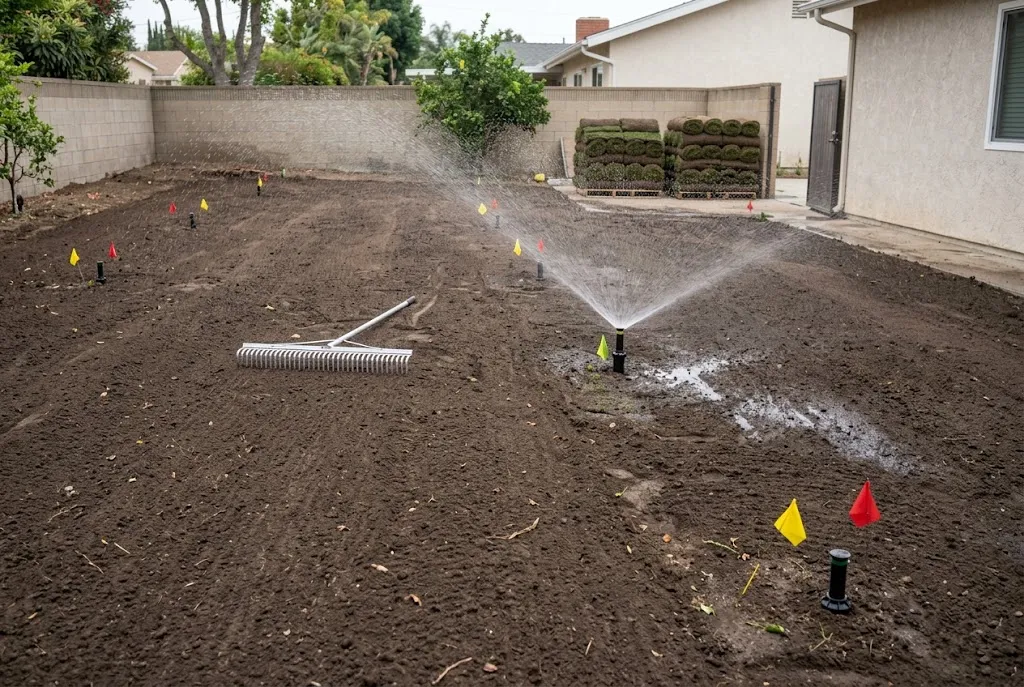
Get the Soil and Sprinklers Right Before the Sod Arrives
Most new-lawn problems begin below the surface. We can review grading, soil condition, and sprinkler coverage with you, and identify which corrections belong in your project before installation day.
How Do We Choose the Right Grass for a Sod Installation?
The right sod is the one that suits your site, not simply the one that looks greenest on the pallet. We weigh sunlight and shade, water availability, the local climate, how much wear the lawn will take, and how much mowing and maintenance you are prepared to provide.
In coastal and inland parts of Southern California, homeowners commonly consider warm-season grasses such as bermudagrass, St. Augustinegrass, and zoysiagrass, along with cool-season tall fescue blends. Each has trade-offs. Warm-season grasses generally handle heat and use water efficiently in summer but may go off-color during cooler months, while tall fescue tends to stay greener year-round and tolerates some shade but typically needs more water during hot weather. Sod availability from local growers also plays a role, because not every variety is in stock at every time of year.
For a deeper side-by-side look, our guide to choosing grass for Southern California compares the most common turf types. Property owners trying to reduce outdoor water use can also review our overview of drought-tolerant grass options before the estimate visit.
Sod or Seed?
Natural grass installation does not always have to mean sod. Seeding costs less in materials but takes longer to fill in, and the area needs protection from traffic and weeds while it establishes. Sod costs more up front but gives an immediate surface and a shorter establishment window. If you are weighing the two approaches, our article on lawn seeding in Southern California explains when seed may be the better fit.
Why Is Soil Preparation for Sod So Important?
Sod roots only as well as the soil beneath it allows. Soil preparation for sod is the part of the job you will not see once the lawn is down, and it is the part most responsible for whether new turf roots evenly or develops dry, thin spots in the months that follow.
Clearing and Cultivating the Planting Area
Once old turf, weeds, rocks, and debris are removed, the soil is cultivated to break up compaction and clods so roots can move downward. On heavily compacted sites, such as yards that held construction equipment, this step may need to go deeper or be repeated.
Amendments Based on What the Site Needs
We do not add the same amendment to every yard. Organic matter, starter fertilizer, or other soil inputs are selected according to what the assessment shows about texture, drainage, and existing fertility. In some cases a soil test is the most reliable way to decide, particularly when a lawn has failed before for reasons that are not obvious.
Grading and Finished Elevations
Grading shapes the surface so water moves where it should. University of California turf guidance notes that a gentle slope of roughly 1 to 2 percent away from buildings is generally sufficient for drainage, while steep berms can increase runoff. We also set the finished soil elevation so that, once sod is laid, the grass sits at a sensible height next to walkways, driveways, and edging rather than ending up as a raised lip or a sunken trench. After grading, the soil is lightly firmed and, when time allows, watered to settle it and expose low spots that need filling.
Sod-to-Soil Contact
New roots need direct contact with moist, prepared soil. Air pockets, dry crusts, or loose fluffy soil beneath the sod slow rooting and create weak areas. A firm, even, slightly moist surface at the time of installation gives the sod its best start.
Is Your Irrigation System Ready for New Sod?
Irrigation readiness should be confirmed before any sod is ordered. Newly laid sod has a shallow root system that depends on frequent, even watering for its first couple of weeks, and gaps in sprinkler coverage tend to show up quickly as yellow or brown strips.
During the assessment we look for problems that could affect establishment, including:
- Broken, clogged, sunken, or tilted sprinkler heads
- Heads that are spaced too far apart for the area they serve
- Mixed nozzle types that apply water at different rates in the same zone
- Low or uneven pressure that leaves dry areas at the edge of the spray
- Controller settings that are not suited to a new lawn
It is usually far easier to correct these issues while the soil is open than after the sod is in place. If repairs or upgrades are needed, our irrigation services can be coordinated with the installation so the lawn and the watering system are finished together.
Local watering rules are another consideration. Water agencies in Southern California may set watering days or other outdoor-use limits, and those rules can change. We recommend checking your agency’s current requirements before installation so the watering plan for your new lawn fits within them.
Move Forward on Sod Installation With a Clear Plan
You know what goes into a well-installed lawn. Now let us look at yours. Request a call back or reach us at (888) 601-1117 to discuss grass selection, scope, and timing for your property.
How Is Sod Laid So Seams Close and Edges Stay Tight?
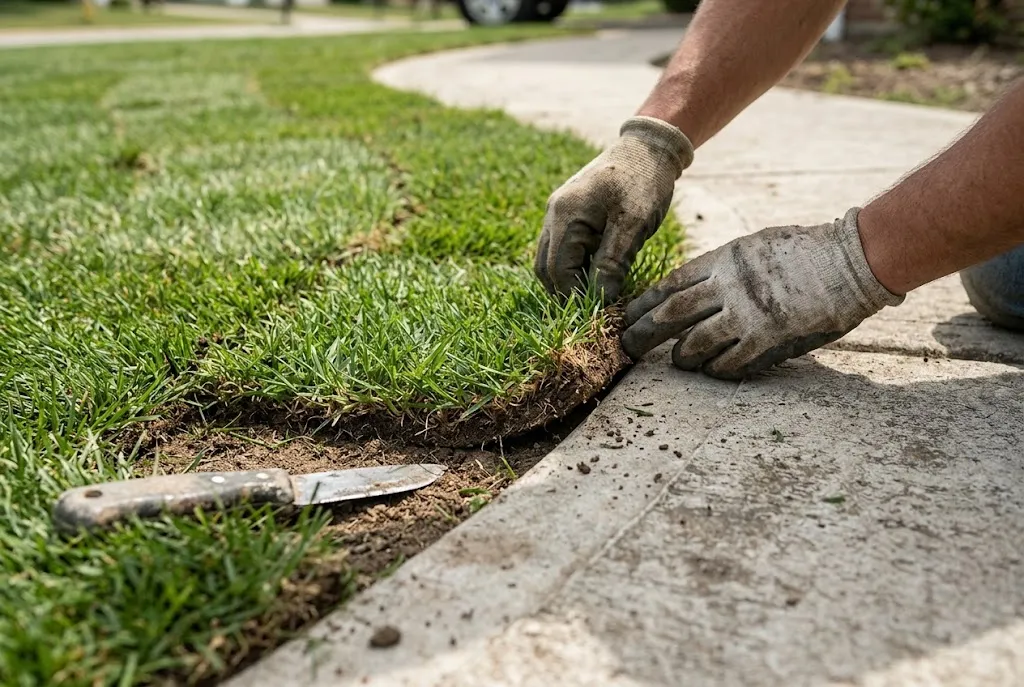
The quality of the installation itself shows up in the seams. Well-installed sod knits together into a continuous lawn, while poorly fitted pieces leave visible lines, dry edges, and gaps that weeds are happy to fill.
Sod is perishable, so timing matters from the moment it is harvested. The University of California Integrated Pest Management Program’s sod installation guidance recommends laying rolls in a staggered, brick-like pattern, rolling the sod immediately after laying, and keeping it moist until it is well rooted. We coordinate delivery so pallets are not left stacked in the sun while the crew works.
Details we pay attention to during installation include:
- Staggered seams so joints do not line up into long continuous cracks
- Tight butt joints with edges pushed together, without stretching the sod
- No overlapping pieces, which create ridges that dry out and scalp when mowed
- Clean cuts around curved beds, trees, sprinkler heads, and hardscape edges
- Small pieces placed inside the lawn rather than at the outer edges, where they are more likely to dry out
- Rolling to press the sod into firm contact with the soil
Slopes need extra attention. Depending on the grade, sod may be laid across the slope and secured so it does not shift before the roots take hold.
What Affects Sod Installation Scheduling and Cost?
Scheduling Factors
Installation dates depend on weather, sod availability, site readiness, and delivery coordination. Extreme heat can stress freshly cut sod, and heavy rain can make soil too wet to grade properly. Some varieties are also harvested on specific schedules. Because these factors shift, we give you a realistic timeline after the assessment rather than a fixed completion date up front. The best time to install sod in Southern California also depends on whether a warm-season or cool-season grass is selected, since each establishes most vigorously in different conditions.
Sod Installation Cost Factors
Every sod installation estimate is built around the specific property. The main variables include:
- Total lawn area and the amount of cutting needed around boundaries
- The type of sod selected and its local availability
- Whether existing turf must be removed and hauled away
- Soil condition, compaction, and any amendments required
- The extent of grading or leveling
- Access for delivery pallets and equipment
- Irrigation repairs or changes needed before installation
- Debris and green-waste disposal
Because these factors vary so much from one yard to the next, we do not quote a one-size price per square foot without seeing the site. When you compare proposals, sod installation cost factors and estimate comparisons are easiest when each quote lists the same scope items, so you can tell whether a lower number simply leaves out removal, soil preparation, or irrigation work.
What Happens After Installation, and How Do You Get Started?
New sod needs consistent attention for its first few weeks. At hand-off, we walk you through a starting plan, and that plan should be adjusted to the turf type, the weather, your soil, and how quickly roots are developing.
The First Weeks of Establishment
- Watering: Keep the sod and the soil just beneath it consistently moist, especially in the first days. Watering frequency usually tapers as roots move downward.
- Monitoring moisture: Lift a corner occasionally to check the soil below. Edges, seams, and areas near hardscape tend to dry out first.
- Limiting traffic: Keep people, pets, and equipment off the lawn as much as possible until it has rooted.
- First mowing: Wait until the sod resists a gentle tug and the grass has grown enough to need cutting, then mow with a sharp blade and avoid removing too much leaf at once.
For detailed guidance, see our article on how to take care of sod after installation, our explanation of how long sod takes to root, and our broader overview of sod care. If patches begin to discolor, troubleshooting new sod that is turning brown usually starts with irrigation coverage and soil moisture; contact us if the cause is not clear.
Information That Helps Us Prepare Your Estimate
If you are searching for sod installation near me, sending a few details in advance makes the first conversation more productive:
- Property address or nearest cross streets
- Approximate lawn size, even a rough estimate
- Current lawn condition: bare soil, weeds, thin grass, or existing turf to remove
- A few photos of the lawn area and how it is accessed
- Gate widths, steps, or other access limitations
- Whether the area has working sprinklers and any known irrigation problems
A healthy lawn starts with a site that is understood before anything is installed. We offer Free Estimates for residential sod installation, including replacement lawns and new lawn areas at rental and small multifamily properties. Call us at (888) 601-1117, email info@landscaper-near-me.com, or request a call back, and we will talk through your sod installation services project with you.
FAQ's - Frequently Asked Questions
In nearly all cases, yes. Laying sod over old grass or weeds prevents good sod-to-soil contact and lets existing weeds grow up through the new lawn. We remove the old turf, prepare the soil, and then install the sod. Removal and disposal are confirmed as scope items in your estimate.
Yes. New sod depends on even watering while it roots, and coverage gaps usually show up as brown strips within days. Repairing heads, adjusting spacing, or correcting pressure is easier while the soil is open. We can identify these issues during the assessment and coordinate repairs with the installation.
Make sure we can reach the entire lawn area, including side yards and backyards behind gates. If you can, run each sprinkler zone briefly beforehand so you know which ones work, and note any areas that stay soggy or dry. Photos of past problem spots are helpful too.
A useful estimate lists the lawn area, the sod type, and each scope item, such as turf removal, disposal, soil preparation, grading, delivery, installation, and cleanup. It should also identify any irrigation work or other items quoted separately so you can compare proposals accurately.
Some grasses tolerate partial shade better than others, but every lawn grass needs a meaningful amount of sunlight. During the assessment we note how much sun each area receives. For heavily shaded spots, a different grass type or an alternative planting may be more successful than sod.
Keep traffic light until the sod has rooted, which is commonly a couple of weeks for many lawns but varies with grass type, soil, and weather. A simple check is to tug gently on a corner. When it resists lifting, the lawn can start taking light use.
Yes. We work with rental-property owners and small multifamily property managers on lawn installation and replacement. For occupied properties, we discuss access, scheduling, and how tenants can help keep traffic off the new lawn while it establishes.
It depends on your goals. Sod provides an immediate lawn surface and a shorter establishment window, while seed costs less in materials but takes longer to fill in and needs more protection early on. We can explain both options for your site during the estimate.