
Lawn Seeding in Southern California for New, Thin, and Patchy Lawns
A lawn grown from seed can be one of the most rewarding improvements a property owner makes, but in our region it rarely works as a scatter-and-wait project. Lawn Seeding in Southern California depends on choosing a grass that fits the site, planting it during the window that grass actually prefers, preparing soil so the seed can make contact and root, and keeping the seedbed evenly moist through a dry climate that does not offer much help from rainfall for much of the year.
We provide lawn seeding services in Southern California for homeowners first, along with property managers, HOAs, and commercial sites that maintain turf. Some of our clients are starting a new lawn installation from seed on bare ground. Others have a front yard that has thinned out under a tree, a backyard worn down by dogs and kids, or a common area where irrigation gaps left brown streaks. Each situation calls for a slightly different approach: new seeding, overseeding, or targeted reseeding.
This page walks through how we think about each of those decisions, from timing and grass selection to watering, germination, and the first months of care. It is written to help you understand what a successful seeding project requires, whether you plan to handle part of it yourself or would like our team to take it on as part of our broader Professional Landscape Services.

Free Estimates for Lawn Seeding in Southern California
Starting a new lawn from seed or thickening a tired one? We’ll look at your soil, sun, irrigation, and existing grass, then outline a seeding plan that fits your property. Call (888) 601-1117 or request a callback for your free estimate.
What Does Lawn Seeding in Southern California Actually Involve?
Lawn seeding is the process of establishing grass by sowing seed into prepared soil or into an existing lawn, rather than laying pre-grown sod. It sounds simple, yet the result depends on a chain of conditions: the right species, a receptive seedbed, good seed-to-soil contact, consistent moisture, and enough time for young plants to develop roots before they face heat, traffic, or drought.
We generally divide seeding work into three categories, because the preparation and expectations are different for each.
New Lawn Installation from Seed
This is a full start on bare or cleared ground. Existing weeds and debris are removed, the soil is loosened and graded, and seed is applied to the entire area. New seeding gives you the widest choice of grass species and a uniform lawn, but it also requires the most patience, since the whole area begins as bare soil.
Lawn Overseeding
Lawn overseeding in Southern California usually means adding seed to a lawn that is still mostly healthy but has become thin. The goal is to increase density without tearing out what is already growing. Overseeding only works well when the new seed is compatible with the grass already in place, which is why we identify the existing species before recommending anything.
Lawn Reseeding Services for Bare Spots
Reseeding targets specific bare or damaged patches: a strip along a driveway, a spot where a pool cover sat all summer, or an area that died back after a broken sprinkler head. Seeding patchy or thinning lawns in this way can be efficient, but the cause of the damage has to be corrected first, or the new grass is likely to fail in the same place.
For residential lawns, most projects fall into overseeding or patch reseeding. Commercial lawn seeding and HOA work more often involves larger renovations, where scheduling, foot traffic, and coordination with ongoing maintenance become part of the plan. In every case, a professional assessment before seeding tends to prevent the most common and expensive mistake: putting good seed into conditions that cannot support it.
When Is the Best Time to Seed a Lawn in Southern California?
The best time to seed a lawn in Southern California depends on which grass you are planting. There is no single month that works for every lawn in the region, and a schedule that suits one type of grass can set another type up to struggle.
Cool-Season Grass Seeding
Cool-season grasses such as tall fescue and perennial ryegrass grow most actively in mild temperatures. Fall is generally the strongest window for cool-season grass seeding, because the soil is still warm enough for quick germination while air temperatures are easing. Early spring is the usual second choice. Seeding these grasses in midsummer exposes tender seedlings to heat stress before their roots are deep enough to handle it.
Warm-Season Grass Seeding
Warm-season grasses, including common bermudagrass, need warm soil to germinate and grow. Warm-season grass seeding is typically most successful from mid-spring into early summer, once soil temperatures have risen. The University of California’s guidance on planting times generally places seeded warm-season species in the mid-April to mid-May range, with late spring and early summer as acceptable timing for seeded bermudagrass. Fall seeding of a warm-season grass is usually a poor bet, since the plants slow down and go dormant as the weather cools, before they have had time to establish.
The University of California planting times and seeding rates for turfgrass is a helpful reference if you want to compare recommended windows by species.
Coastal, Inland, and Hotter Locations
Our service area spans properties near the coast, such as those in Long Beach and Newport Beach, as well as inland communities like Anaheim, Whittier, and Downey. Coastal properties tend to experience milder summers and more marine influence, while inland neighborhoods typically see higher summer temperatures and faster drying of the soil surface. That difference changes how forgiving a seeding window is. A cool-season seeding that holds up well near the coast in early fall may need closer moisture attention a few miles inland, where warm afternoons can linger.
Temperature is only one factor. Seasonal rainfall, the reliability of your irrigation, sun exposure, and soil condition all play a role. We plan seeding dates around the selected species and the actual site, rather than around a fixed calendar date.
Which Grass Seed Works Best for Southern California Lawns?
The best grass seed for Southern California lawns is the one that fits your property’s sun, water, traffic, and appearance expectations, and that can actually be grown from seed. We keep this section focused on seeding decisions; for a broader comparison of species, our article on What Type of Grass Grows Best in Southern California covers the options in more depth.
Tall Fescue Grass Seed in Southern California
Tall fescue grass seed in Southern California is a common choice for homeowners who want a green lawn through most of the year. It is a cool-season grass with relatively deep roots for its type and tolerates partial shade better than bermudagrass. In hot inland locations, it generally needs consistent irrigation through summer to keep its color.
Perennial Ryegrass
Perennial ryegrass germinates quickly and is often used in mixes or for overseeding. It establishes fast, which is helpful for quick cover, but in many Southern California settings it does not handle summer heat as well as tall fescue, and it is commonly used for winter color over dormant warm-season lawns.
Bermuda Grass Seed in Southern California
Bermuda grass seed in Southern California appeals to property owners who want strong heat tolerance, good wear recovery, and lower water needs during the growing season. Two points are important here. First, bermudagrass goes dormant and turns tan in cooler months. Second, only common bermudagrass types are typically established from seed. Hybrid bermudagrass varieties, which are often chosen for fine texture and dense growth, are generally established vegetatively through sod, sprigs, stolons, or plugs. Not every turfgrass variety is available as reliable commercial seed, so the variety you have seen on a golf course or sports field may not be an option for a seeded lawn.
Matching Seed to the Site
When we help select grass seed for the Southern California climate on a particular property, we weigh:
- Hours of direct sun versus shade from trees, fences, or buildings
- How much foot traffic, play, or pet activity the lawn receives
- Whether year-round green color matters or winter dormancy is acceptable
- How much irrigation the property can reasonably provide
- How much mowing and maintenance the owner or manager expects to handle
A shaded backyard and a sunny HOA parkway may need entirely different seed, even on the same street.
Overseed, Reseed, or Start Fresh? Let's Check Your Lawn First
The right answer depends on the grass you already have, the season, and what is happening under the surface. We’ll identify your existing turf, check compaction and sprinkler coverage, and recommend seed that suits your sun, traffic, and water. Reach us at (888) 601-1117 or info@landscaper-near-me.com.
How We Evaluate a Lawn and Prepare Soil Before Seeding
Before any seed goes down, we look at what caused the lawn to fail or thin in the first place. Seeding over an unresolved problem usually produces a short burst of green followed by the same decline.
What We Look For
- Turf density and species: how much healthy grass remains and what type it is.
- Bare patches and uneven coverage: where they are and whether they follow a pattern, such as sprinkler gaps or foot paths.
- Soil compaction: hard soil that resists a screwdriver or probe often restricts roots and water movement.
- Sun and shade: trees that have grown larger over the years often explain a lawn that has thinned gradually.
- Drainage: low spots where water collects can drown seed and encourage disease.
- Irrigation coverage: dry spots, broken heads, or mismatched nozzles.
- Weeds and unwanted vegetation: anything that will compete with young grass for light, water, and nutrients.
From there, we can recommend whether seeding alone, a partial renovation, or complete lawn replacement makes the most sense. Lawn renovation and reseeding is often the right answer when more than half of a lawn is weeds or bare soil.
Soil Preparation for Grass Seed
Soil preparation for grass seed comes down to one goal: putting each seed in firm contact with loose, moist soil. Seed that sits on top of thatch, debris, or a hard crust is far less likely to establish.
For a new lawn, preparation typically includes removing debris and unwanted vegetation, loosening compacted soil, grading the surface for drainage, and creating a smooth, firm seedbed. Soil amendments should be chosen according to actual conditions rather than applied by habit; a soil test can show whether organic matter, nutrients, or pH adjustments are needed. Poor drainage, heavy compaction, or very sandy or clay-heavy soil can each interfere with establishment if they are ignored.
Overseeding preparation is lighter, since the goal is to keep the existing lawn. It usually involves mowing low, raking out debris and thatch, and opening the surface so seed can reach soil. Lawn aeration before overseeding is especially useful on compacted lawns, because core aeration relieves compaction and creates openings where seed can lodge and root.
Professional Lawn Seeding Methods
Professional lawn seeding, sometimes called grass seed installation, is mostly about precision: the right seed, at the right rate, spread evenly and placed at the right depth. Lawn size, the condition of existing turf, and site access all influence how we approach the work, and not every lawn needs the same equipment or steps.
Choosing Seed and Application Rates
Seeding rates vary widely by species. Fine-seeded grasses such as bermudagrass are sown at much lower rates per square foot than larger-seeded grasses like tall fescue, and overseeding rates differ from new-lawn rates. We use quality seed suited to the site and set rates according to the species and project, rather than guessing or doubling up, since excessive seed creates crowded seedlings that compete with one another.
Spreading and Seed-to-Soil Contact
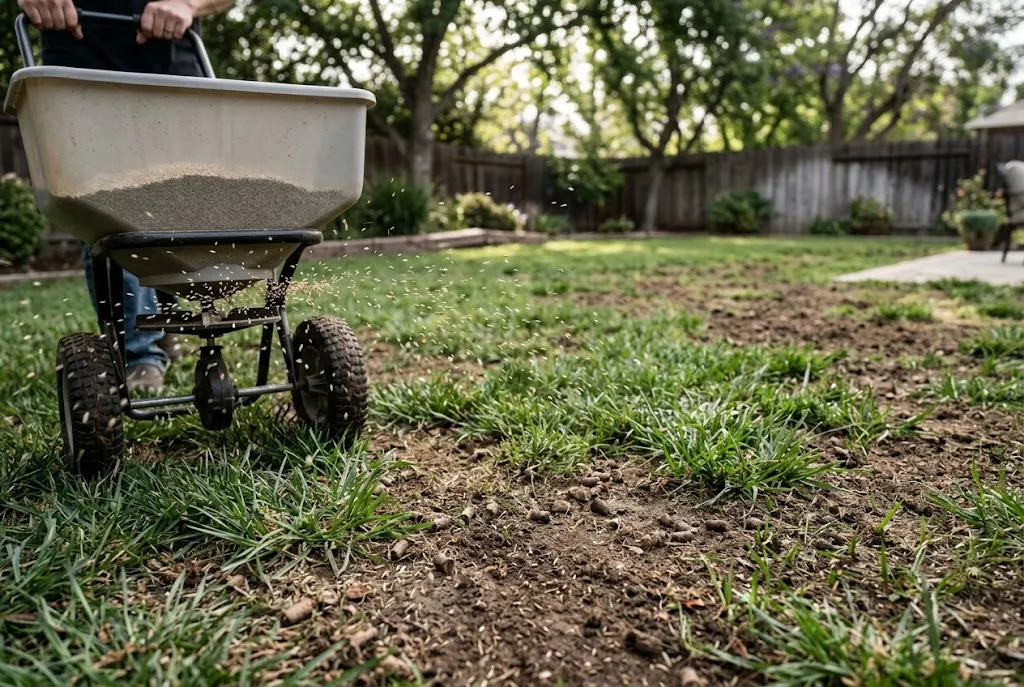
On most residential lawns, broadcast seeding with a calibrated spreader, often applied in two passes at right angles, gives even coverage. Larger or renovation projects may call for specialized seeding equipment that places seed into slits in the soil. After spreading, the surface is lightly raked or rolled to press seed into contact with the soil.
Covering and Topdressing
Most grass seed needs only a very shallow covering. A light topdressing of fine compost or soil can help hold moisture and protect seed when it suits the species and site, but burying seed too deeply can keep it from emerging. Uneven application or heavy covering are two of the most common reasons a seeded lawn comes in patchy.
Watering Newly Seeded Lawns Through Germination and Establishment
Watering newly seeded lawns is the step that most often decides success, especially in Southern California, where warm, dry air can dry out the top layer of soil in a matter of hours.
During Germination
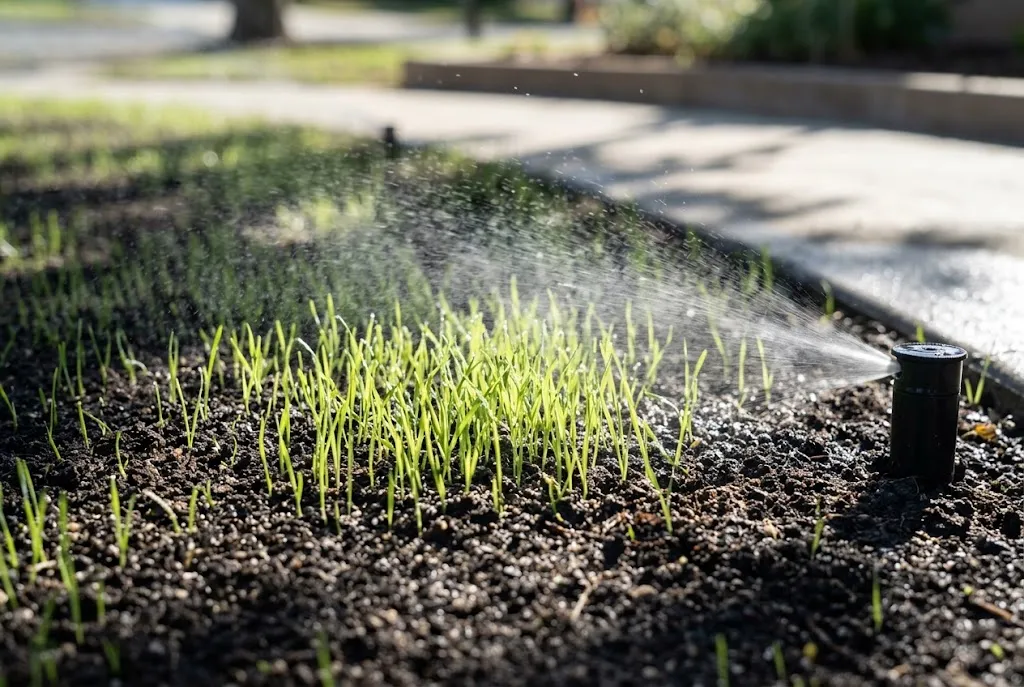
Until the seed sprouts, the goal is to keep the top inch or two of soil consistently damp without saturating it. That typically means short, frequent watering cycles, sometimes several times per day in warm weather, rather than one long soak. Too much water at once can float seed into low spots, cause runoff, or leave soil waterlogged, while letting the surface dry out can kill germinating seed.
After Seedlings Develop
As seedlings establish, watering gradually shifts from frequent, light cycles toward deeper, less frequent irrigation that encourages roots to grow down. The exact schedule depends on grass species, soil type, weather, and how evenly your system covers the lawn.
Checking Sprinkler Coverage First
Because establishment depends on even moisture, we recommend checking sprinkler coverage before seeding. Dry arcs and overlapping wet zones translate directly into patchy germination. If repairs or adjustments are needed, our Irrigation Services for New and Established Lawns can handle them as part of the project. For property owners deciding how to water lawns versus planting beds, our comparison of Sprinkler vs. Drip Irrigation Systems explains why turf areas are usually served by sprinklers while drip suits shrubs and beds.
Many Southern California cities and water providers maintain watering rules that can change with supply conditions, and some offer allowances for establishing new landscapes. Please verify current requirements with your local water provider before planning an establishment watering schedule.
Grass Seed Germination and Establishment Timelines
Grass seed germination and establishment depend on species, seed quality, soil temperature, moisture, and growing conditions. Perennial ryegrass usually emerges faster than tall fescue, and bermudagrass needs warm soil to germinate well. We avoid promising a fixed number of days, because a cool week or a sprinkler problem can shift the timeline.
It also helps to separate visible germination from establishment. The first green fuzz shows the seed sprouted, but those seedlings remain fragile and can be damaged by drying, foot traffic, or poor soil conditions. Building a dense, usable lawn with a developed root system takes considerably longer, often several weeks to a few months, depending on the grass and the season.
Give Your New Grass Seed a Stronger Start
Successful establishment comes from good preparation, the right timing, and steady watering. Tell us about your yard, HOA common area, or commercial turf, and our team will walk you through the next steps. Call (888) 601-1117 or request a callback.
Caring for a New Lawn and Solving Common Seeding Problems
The first few months after seeding shape how the lawn will perform for years. Young grass needs protection, patience, and adjustments as it matures.
Mowing, Traffic, and Feeding
Keep people, pets, and equipment off newly seeded areas as much as possible; temporary stakes and ribbon can help on busy properties. The first mowing should wait until the grass has grown noticeably taller than its target mowing height and the roots have anchored, so the mower does not pull up seedlings. On that first cut, use a sharp blade, mow when the grass is dry, and remove no more than about one-third of the blade length. Fertilizer decisions should be based on soil conditions and the needs of the selected grass rather than a standard bag schedule.
Early Weeds
Weeds often appear alongside new grass, since the same water and open soil that help seed also help weed seed. Many weed-control products, including common pre-emergent herbicides, can prevent grass seed from germinating or injure immature turf. We recommend holding off on chemical weed control until the lawn has matured and the label clearly allows use on young turf.
Common Lawn Seeding Problems in Southern California
- Poor or uneven germination: often linked to inconsistent watering, irregular spreading, or seed buried too deep.
- Seed drying out: warm, dry afternoons can dry the surface quickly, especially inland.
- Excessive watering and runoff: saturated soil and runoff can rot seed or wash it into low areas.
- Poor seed-to-soil contact or compaction: seed resting on thatch or hard soil seldom roots well.
- Weed competition: fast-growing weeds can crowd out young grass.
- Wrong grass for the site: sun-loving grass seeded into shade, or a cool-season grass seeded at the start of summer.
- Seeding outside the preferred season: warm-season grass seeded in fall, for example.
- Inconsistent irrigation coverage: broken heads or mismatched nozzles leaving dry streaks.
When germination is uneven, we evaluate the cause before adding more seed. Light follow-up reseeding of thin areas is common and expected on many projects, but it works best once the underlying problem has been addressed.
Lawn Seeding Versus Sod Installation
Lawn seeding versus sod installation is one of the first comparisons property owners make. Both can produce a healthy lawn; the difference is mostly in speed, preparation, selection, and cost structure.
Sod provides near-instant ground coverage because it arrives as mature turf. Seed requires germination and establishment, so the lawn develops over weeks and months instead of days. Seed, however, offers a wider choice of species and blends in some cases, and material costs are generally lower than sod for the same area. Sod is often preferred where quick coverage, erosion control on slopes, or immediate use matters most, and it is also how most hybrid bermudagrass lawns are installed.
Both methods need careful soil preparation and consistent watering at the start. If you are weighing timelines, our article Lawn Seeding vs. Sod Establishment: How Long Does Sod Take to Root? compares how quickly each approach becomes established. For owners leaning toward sod, our guide to Sod Care and Lawn Establishment explains what the first weeks typically involve.
Because cost depends on area, access, preparation, and materials, we provide pricing through individual Free Estimates rather than general figures.
Planning Residential and Commercial Lawn Seeding Projects
Residential lawn seeding remains the heart of what we do in this area. Front lawns are often about appearance and curb appeal, while backyard lawns usually have to stand up to play, pets, and gatherings, which influences both grass selection and how long the area needs to be protected after seeding. For homeowners, the most common projects are overseeding a thinning tall fescue lawn in fall and repairing worn or bare areas.
Commercial lawn seeding and HOA projects add other considerations. Apartment communities and HOA common areas often need seeding scheduled around residents, with temporary barriers and signs to keep people off new grass. Office and retail properties usually require coordination with ongoing landscape maintenance so mowing, blowing, and irrigation schedules do not undermine establishment. Property usage also shapes the choice of grass: a heavily walked courtyard needs different seed than a decorative parkway. Our Commercial Lawn Care Services can incorporate seeding and renovation into an ongoing maintenance plan.
Steps in Planning a Lawn Seeding Project
- Measure the lawn and document its current condition.
- Decide among complete seeding, overseeding, or targeted reseeding.
- Identify soil preparation needs, including aeration, grading, or amendments.
- Select a turfgrass suited to the site and plan around its preferred season.
- Test and correct irrigation coverage.
- Plan how the area will be protected while it establishes.
Site preparation, lawn size, grass selection, and existing conditions together determine how involved a project will be. If part of your property ends up better suited to sod, our guide on How to Take Care of Sod After Installation can help you plan that portion as well.
If you are considering lawn seeding, overseeding, or renovation, we would be glad to look at your property and give you a clear recommendation. Professional lawn seeding estimates from our team are free. Call us at (888) 601-1117, email info@landscaper-near-me.com, or request a callback, and we will help you plan a seeding project that fits your lawn, your schedule, and the way you use your property.
FAQ's - Frequently Asked Questions
We recommend keeping foot traffic, pets, and equipment off the area until the grass has been mowed a few times and feels firmly rooted. That often takes several weeks or longer, depending on the grass and season. Light, necessary traffic such as adjusting sprinklers is fine if you step carefully.
Winter overseeding is common, but the ryegrass competes with the bermudagrass as it comes out of dormancy in spring. Without a planned transition, such as adjusted mowing and watering as temperatures rise, the bermuda may green up more slowly. We help owners decide whether winter color is worth that tradeoff.
Some grasses tolerate partial shade better than others; tall fescue generally handles it better than bermudagrass. In dense shade, though, most lawn grasses thin out over time. In those cases we may suggest pruning to increase light or using a groundcover or mulch in the shadiest spots.
Existing weeds should be managed before seeding, but timing matters. Some herbicides remain active in the soil and can prevent grass seed from germinating, so product labels must be checked for reseeding intervals. We plan weed control around the seeding date to avoid harming the new lawn.
Not usually. Seeding well above the recommended rate creates crowded seedlings that compete for light, water, and nutrients, which can lead to weak plants and disease. Even coverage at the correct rate for the species works better than heavy seeding.
Hydroseeding sprays a slurry of seed, water, and mulch onto prepared soil. It can be useful on large or sloped areas, while broadcast or slit seeding often suits residential lawns. Either way, the same soil preparation, timing, and watering principles apply.
Yes, when we can identify the existing grass and source a compatible seed. Patches may look slightly different in color or texture at first and usually blend better as they mature. If the lawn is a hybrid bermuda, matching areas are typically repaired with sod or plugs rather than seed.
It helps to know roughly how long the lawn has been thinning, whether sprinklers have been repaired recently, and how the area is used. Photos of problem spots are useful too. We’ll review the lawn’s condition, sun, soil, and irrigation during our visit and explain your options.