What Is Crown Reduction in Tree Trimming?
If you have been asking, “what is crown reduction in tree trimming?”, the short answer is that crown reduction is a pruning technique used to decrease a tree’s overall canopy height, spread, or both through selective reduction cuts made back to suitable lateral branches — not by cutting branches at random points or removing large sections of the crown outright.
Property owners typically start researching crown reduction when a tree has grown too large for its space, when limbs are extending too close to a roofline or structure, or when a canopy has become visibly unbalanced. Understanding what proper crown reduction actually involves, and how it differs from more damaging pruning approaches, is an important first step before any pruning work begins. As part of our tree care services, we perform crown reduction pruning using techniques intended to protect a tree’s long-term health and structural integrity rather than simply making it smaller.
Get a Free Estimate for Crown Reduction Pruning
Wondering if crown reduction is right for a tree on your property? Tell us about the tree and the concern, and we’ll provide a free, no-obligation estimate for professional crown reduction pruning.
Understanding Crown Reduction in Tree Trimming
A tree’s crown is the branch and foliage structure that grows above the trunk. Crown reduction is a form of structural tree pruning that decreases the overall height and/or spread of that crown by shortening selected leaders and branches back to lateral branches capable of assuming the growing role of the limb that was removed. This is commonly referred to as a reduction cut.
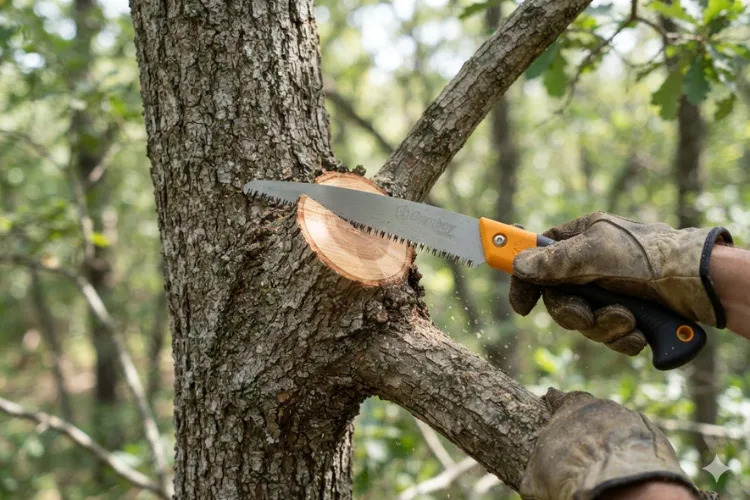
A properly placed reduction cut is made just above a lateral branch that is large enough, generally at least about one-third the diameter of the limb being removed, to take over as the new terminal growth point. This approach allows the tree to retain a natural branching pattern and a functioning canopy after pruning, rather than being left with blunt, stubbed-off limbs.
Crown reduction is typically used when a tree needs to be made smaller or more compact for a specific reason, rather than as a routine maintenance practice performed on every tree every year. Because each reduction cut changes how a tree grows afterward, reduction pruning should always be approached with a clear objective in mind.
In practice, crown reduction pruning involves working methodically around the canopy, evaluating each major limb individually before making a cut. An experienced pruning crew will typically start by identifying the tree’s primary leaders and scaffold branches, then locate a suitable lateral on each limb that needs to be shortened. Cuts are made with clean, sharp tools to avoid tearing bark or crushing wood fibers, since a rough cut heals more slowly than a clean one. On larger limbs, this often means pre-cutting to remove weight before the final cut is made, which helps prevent the bark from tearing down the trunk or parent limb as the branch falls.
Crown Reduction vs. Tree Topping: Why the Difference Matters
Crown reduction is often confused with tree topping, but the two practices are not the same, and the difference matters for the tree’s long-term health. Topping involves indiscriminately cutting branches or leaders down to stubs or to lateral branches that are too small to assume the terminal role. Because these cuts are made at arbitrary points rather than back to a suitable lateral, topping typically triggers a flush of weakly attached, fast-growing sprouts, creates large wounds that are slow to close, and can lead to decay and long-term structural weakness.
Crown reduction, when performed correctly, avoids these problems by relying on selective reduction cuts back to appropriately sized laterals rather than arbitrary heading cuts. According to the International Society of Arboriculture, reduction pruning helps maintain a tree’s natural form and structural integrity, while topping is widely regarded as one of the most harmful pruning practices in use today. Any pruning proposal that describes “cutting the tree back” without reference to lateral branches or reduction cuts should be evaluated carefully before work begins.
What Is the Difference Between Crown Reduction and Crown Thinning?
Crown reduction and crown thinning are both selective pruning techniques, but they accomplish different things. Crown reduction changes the overall dimensions of the canopy — it makes the tree shorter, narrower, or both by shortening leaders and branches back to laterals. Crown thinning, sometimes called crown thinning in tree trimming, does not change the overall size of the canopy. Instead, it selectively removes some interior branches to reduce branch density within the existing crown, which can improve light penetration and airflow.
Crown Reduction vs. Crown Thinning at a Glance
- Crown reduction decreases the tree’s overall height and/or spread through reduction cuts made back to suitable lateral branches.
- Crown thinning reduces the density of branches within the existing canopy without significantly changing its overall size.
- A tree may sometimes benefit from a combination of the two approaches, depending on its condition and the objective of the pruning.
Choosing between crown reduction, crown thinning, or another structural pruning approach depends on the specific problem being addressed on that tree, which is why a professional assessment is typically the best starting point before scheduling work.
Have a Large or Structurally Unbalanced Tree?
Overextended limbs, roofline clearance issues, and uneven canopy weight are common reasons property owners look into crown reduction. Let us assess the tree and recommend the right approach.
When Crown Reduction May Be Considered
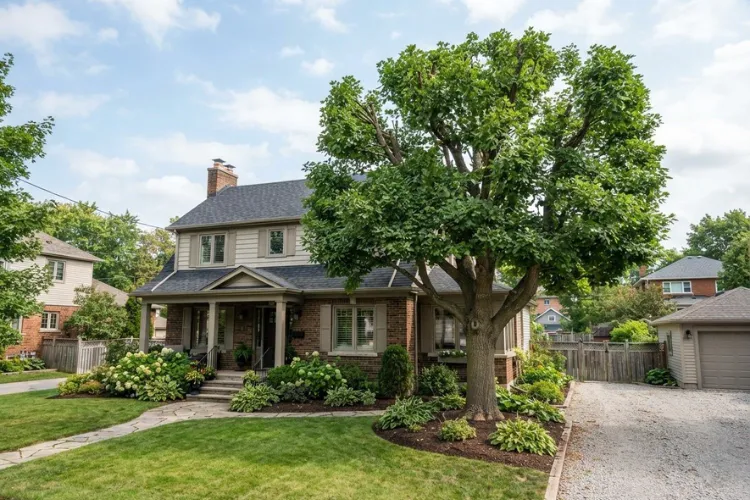
Crown reduction is not appropriate for every tree, but there are a number of situations where property owners and managers commonly ask about it. These include a canopy with excessive spread relative to the available space, individual limbs that have grown unusually long or end-heavy, clearance concerns near rooflines, structures, walkways, or utility lines, and visible structural imbalance where one side of the canopy has become significantly heavier than the other.
Crown reduction may also be discussed as part of managing branch loading, which refers to the weight carried by individual limbs as a tree matures. In cases where a tree has extensive decay, significant structural defects, or has outgrown its site to a degree that pruning cannot reasonably correct, tree removal may ultimately be the more appropriate recommendation. A qualified assessment can help determine which approach best fits the tree’s actual condition.
Factors That Influence Proper Crown Reduction
There is no single formula for crown reduction that applies equally to every tree. Several factors influence what an appropriate reduction looks like on any individual tree, including branch selection, the exact placement of each cut, the tree’s current condition, its species, its age, its canopy architecture, and the specific pruning objective being addressed.
For example, a young, vigorous tree may respond differently to reduction pruning than a mature tree that is already under stress. Some species tolerate reduction cuts better than others, and a tree with a naturally rounded canopy architecture will require different branch selection than a tree with a more upright or spreading form. This is one of the reasons selective tree pruning decisions should be made branch by branch, based on the individual tree in front of the crew, rather than applied as a generic template.
The tree’s growing environment also plays a role in what a reasonable reduction looks like. A tree growing in an open yard with no nearby structures may tolerate a different pruning approach than a tree growing close to a building, fence line, or overhead utility line, where clearance requirements can influence which limbs are prioritized. Root conditions, soil compaction, recent construction activity, and any visible signs of disease or pest activity should also be factored into the pruning plan, since a tree that is already under stress from other causes is generally a poorer candidate for aggressive reduction than a healthy, well-established tree.
How Does Crown Reduction Impact a Tree’s Structural Integrity and Health?
Crown reduction can meaningfully affect a tree’s structural integrity and health, and the direction of that effect depends heavily on how the work is performed. Removing length from a limb changes branch leverage and weight distribution, which can reduce structural loading on an over-extended limb and lower the risk of future failure when the reduction is done correctly.
However, excessive removal of live crown or poorly placed cuts can have the opposite effect. Removing too much foliage at once can stress a tree, particularly if it is already weakened, and can trigger weakly attached regrowth at cut points rather than the intended lateral branching. Cuts that are not made back to a properly sized lateral can also leave the tree vulnerable to decay entering through the wound.
Because of these variables, the actual impact of crown reduction on a specific tree’s structural integrity and health depends on factors including the tree’s condition, species, the pruning objective, branch selection, cut placement, canopy architecture, and the total amount of live crown removed. Crown reduction is not universally appropriate or beneficial for every tree, and a tree that is already in poor health or has significant structural defects may not be a good candidate for reduction pruning at all.
Trust Our Team With Your Tree’s Crown Reduction Pruning
Crown reduction done incorrectly can affect a tree for years. Our crews use proper reduction-cut technique to protect your tree’s structure and health. Call us or request a callback to get started.
Regrowth and Realistic Expectations After Crown Reduction
Trees typically respond to reduction pruning by producing new growth from the buds near each cut. Over time, this regrowth can begin to restore some of the height or spread that was removed, which means crown reduction is generally not a one-time, permanent fix for a tree that is outgrowing its space. Most trees that receive crown reduction will need periodic follow-up pruning to manage that regrowth and maintain the intended canopy size.
How quickly a tree regrows, and how it should be maintained afterward, depends on the species, its age, its overall health, and the growing conditions on the property. Scheduling pruning at an appropriate point in the year can also support better wound closure and a more predictable growth response; property owners can review our guidance on when is the best time of year to trim trees for more detail on seasonal timing.
It is also worth setting realistic expectations about appearance immediately after crown reduction. A freshly reduced canopy will often look noticeably different than it did before pruning, particularly if a meaningful amount of length was removed from several major limbs. This is a normal, expected result of the technique rather than a sign that something went wrong, and the canopy will generally fill back in as new growth develops over the following one to several growing seasons, depending on the species and the extent of the reduction.
How Crown Reduction Fits Into Broader Tree Care
Crown reduction rarely happens in isolation. It is typically one part of a broader structural pruning program that may also include removing dead or hazardous wood, addressing crossing or rubbing branches, and monitoring the tree over multiple seasons. Our guide on what is deadwooding in tree trimming covers a related pruning practice that is often performed alongside crown reduction to remove dead limbs that no longer contribute to the tree’s structure.
Because tree canopy management affects the appearance and safety of the entire property, it is also worth considering how tree pruning fits into the rest of a property’s landscape maintenance plan. Trees that are proactively managed tend to require less corrective work later, which supports both the health of the tree and the overall condition of the surrounding landscape services on the property.
When to Call a Professional for Crown Reduction Pruning
Pruning mature or large trees involves real safety considerations, including working at height, handling heavy limbs, and, in some cases, working near structures or utility lines. Because incorrect cuts can affect a tree for years afterward, crown reduction is generally best handled by an experienced pruning crew rather than attempted as a do-it-yourself project, particularly on larger trees.
A professional tree assessment is especially worth considering when a tree’s canopy has grown significantly out of proportion to its space, when limbs are approaching a roofline or utility line, when a canopy appears structurally unbalanced, or when previous pruning on the tree looks inconsistent with proper reduction technique. If you are located in our service area and searching for a tree service near me or tree care services near me, our crews provide crown reduction pruning and other professional tree trimming throughout the communities we serve, including Whittier, Santa Fe Springs, and Newport Beach.
If you are trying to determine whether crown reduction, crown thinning, or another pruning approach is the right fit for a tree on your property, our team is available to take a look, explain what we recommend and why, and provide a free estimate for the work.
FAQ's - Frequently Asked Questions
As a general guideline, most trees tolerate removal of up to about one-quarter of their live crown in a single pruning, though the safe amount varies by species, age, and the tree’s current health. Removing significantly more than that in one visit increases the risk of stress, decay, and weak regrowth.
Most trees that have been reduced will need follow-up pruning every few years to manage regrowth, though the exact interval depends on the species, growth rate, and how much was originally removed. We can recommend a maintenance schedule after assessing the specific tree.
Yes. Crown reduction is a common solution when limbs are extending too close to a roofline, wall, or other structure, since it shortens the branches back to appropriate laterals while preserving the tree’s overall form.
Crown reduction performed correctly, with proper cut placement and a reasonable amount of crown removed, is generally well tolerated by healthy trees. Excessive removal or poorly placed cuts, however, can stress the tree, which is why the technique should be performed by an experienced pruning crew.
Timing depends on the species and the tree’s condition, though many trees respond best to reduction pruning outside of periods of active spring growth flush. Some species also have disease-related pruning windows that should be avoided. Our team can advise on the right timing for your specific tree.
No. Crown reduction is not appropriate for every tree. Trees with significant existing decay, poor structure, or declining health may not be good candidates, and in some of those cases a different recommendation, such as targeted deadwood removal or tree removal, may be more appropriate.
The time required depends on the tree’s size, condition, and accessibility. A single mature tree may take a few hours, while larger trees or those requiring more extensive reduction can take longer. We can provide a time estimate as part of your free estimate.
Reducing the length and weight of overextended limbs can lower the leverage and load those limbs carry, which may help reduce (though not eliminate) the risk of limb failure during high winds. It is not a guarantee against storm damage, and a professional assessment is the best way to evaluate a specific tree’s risk.